
Aydın
Aydın is the inland capital of Aydın Province in Türkiye's Aegean region, recognised for its fig production and its position between the fertile Büyük Menderes valley, the coastal district of Kuşadası and several major ancient sites.
Aydın is the capital city of Aydın Province in western Türkiye, sitting inland in the Aegean region within the broad valley of the Büyük Menderes (Great Meander) River. It is a provincial administrative and agricultural centre rather than a coastal resort, and it is best known across Türkiye for its fig production, especially dried figs, as well as for its role as a gateway to the Aegean coast and to some of the region's most important archaeological sites.
Where Aydın Sits in the Aegean Region
Aydın occupies the floor of the Büyük Menderes valley, the long river corridor that cuts westward through the Aegean region toward the sea. The city spreads across fertile alluvial plains, with mountain ranges rising on either side of the valley. The surrounding landscape is dominated by farmland — fig orchards, olive groves, cotton fields and vineyards — which has shaped the city's economy and identity for centuries. Unlike the nearby coastal towns, Aydın is distinctly inland, and its character is formed by agriculture, regional trade and provincial administration.
From Ancient Tralles to the Aydınoğulları
The city stands near the site of ancient Tralles, a settlement that controlled the Maeander valley in antiquity. Over the centuries the area passed through Hellenistic, Roman and Byzantine hands before the arrival of Turkic groups in the medieval period. The city takes its name from the Aydınoğulları, the Anatolian principality that ruled the region and left a lasting mark on the province's identity. Later absorbed into the Ottoman Empire, Aydın developed into an important administrative and agricultural centre of the interior Aegean.
Agriculture and Regional Produce
Figs are the emblem of Aydın. The province is the country's foremost producer of dried figs, a status rooted in the climate and soil of the Menderes valley. Alongside figs, the region is known for olives and olive oil, cotton, chestnuts and other orchard crops. This agricultural base is not merely an economic fact; it defines the rhythm of the city, its markets and its relationship with the surrounding countryside. The produce of the valley is one of the main reasons Aydın registers so strongly in the minds of Turks.
The City Itself
As a modern inland provincial city, Aydın mixes recent urban development with a smaller stock of historic monuments. Urban life centres on a compact commercial core of shops, markets and civic buildings, typical of a Turkish provincial capital, with residential neighbourhoods spreading outward into the plain. Above the modern town, the remains of ancient Tralles sit on a hill overlooking the area, linking the visible present to an older past. The city is not built around a single monumental skyline; its interest lies more in its everyday function and in the history layered around it.
The Coast: Kuşadası, Didim and the Aegean Shoreline
Aydın Province also reaches the Aegean Sea, and its coastal districts give the province a second identity. Kuşadası, one of Aydın's best-known districts, is a major coastal settlement on the Aegean and a regular stop for cruise ships. Further south, Didim and the surrounding shore offer long beaches and a more relaxed seaside atmosphere. These coastal districts are administratively part of Aydın but feel quite different from the inland capital, and they draw a large share of the province's visitors.
Gateway to Ancient Sites and Nature
Inland, the province contains several celebrated archaeological sites, including Aphrodisias, a remarkably well-preserved ancient city in the interior near Karacasu. Closer to the coast lie Miletus, Didyma and Priene, part of the dense layer of Ionian and Carian history that covers this stretch of the Aegean. Where the Büyük Menderes meets the sea, the river forms a delta of wetlands that is significant for birdlife. Together these places make Aydın a natural base for exploring both history and nature across the western interior.
Climate and When to Visit
Aydın has a Mediterranean climate, with hot, dry summers and mild, wet winters. Spring and autumn are generally the most comfortable periods for exploring the city and the surrounding valley, when temperatures are moderate and the landscape is green. The heat of the inland plain in high summer can be intense, whereas the coastal districts benefit from sea breezes. Winter is cooler and rainier but rarely severe. Travel conditions vary noticeably between the inland city and the coast, even though both belong to the same province.
Reaching Aydın and Moving Around
Aydın lies on the main transport corridor between İzmir and the interior of the Aegean, connected by both road and rail. North of the city lies İzmir, whose international airport is the nearest major air gateway to the area. From Aydın, roads branch out toward the coastal districts and toward the archaeological sites of the interior, and the city also serves routes heading east across the province. This central position makes Aydın a practical starting point for a wider trip through the region.
Aydın in the Wider Region
Aydın acts as the inland anchor of a province that stretches from the Menderes plain to the Aegean coast. It is neither a resort nor an archaeological site but a working regional capital whose importance comes from agriculture, transport and administration. For travellers, it offers a genuine view of the Aegean interior and a convenient, central position between İzmir, the coastal resorts and the historic sites scattered across the province. Understanding Aydın as a hub rather than a single attraction helps explain how the whole surrounding area fits together.
Discover Food in Türkiye
All food →
Simit
Simit is a ring-shaped Turkish bread covered in sesame seeds, strongly associated with Istanbul and sold as everyday street food. It is eaten fresh, most often with tea, and has a crisp crust around a chewy crumb.
Explore →
Bazlama
Bazlama is a soft, thick Turkish flatbread made from a leavened dough and cooked on a hot griddle. It is a staple of village baking across Anatolia, eaten warm with butter or used to wrap other foods.
Explore →
Gözleme
Gözleme is a thin, hand-rolled Anatolian flatbread folded around savory fillings such as cheese, spinach, or minced meat and cooked on a sac griddle. The article covers its regional variations, cooking method, texture, and traditional serving style.
Explore →Related content
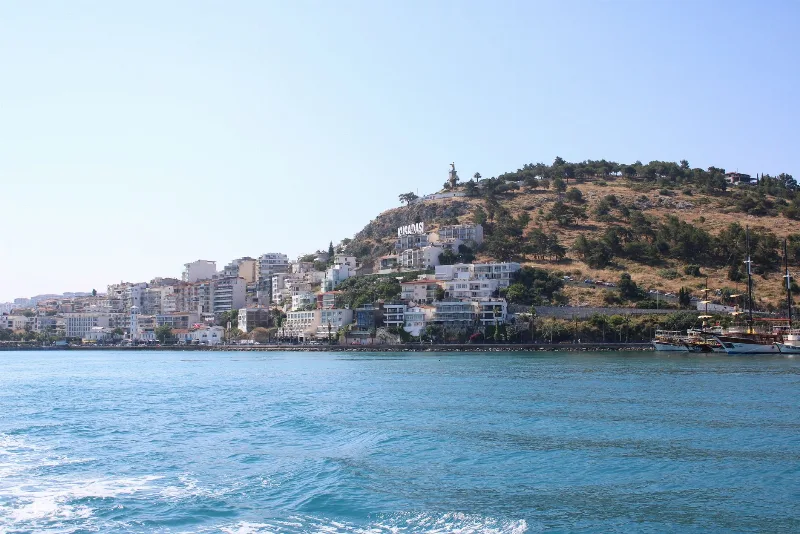
Kuşadası
Kuşadası is a lively Aegean resort town and cruise port in Aydın Province, best known for its proximity to the ruins of Ephesus and for a coastline of sandy bays backed by pine-covered hills.

Aegean Region
The Aegean Region of Türkiye is celebrated for its beautiful coastline, ancient cities, olive groves and charming seaside towns. From the historic streets of İzmir to the natural beauty of its bays and countryside, the region brings together Mediterranean landscapes, cultural heritage and a distinctive coastal lifestyle.

Didim
Didim is a coastal district in Aydın Province on Türkiye's Aegean shore, built around the ancient oracular sanctuary of Didyma and its Temple of Apollo, with the sandy beach of Altınkum at its holiday centre.
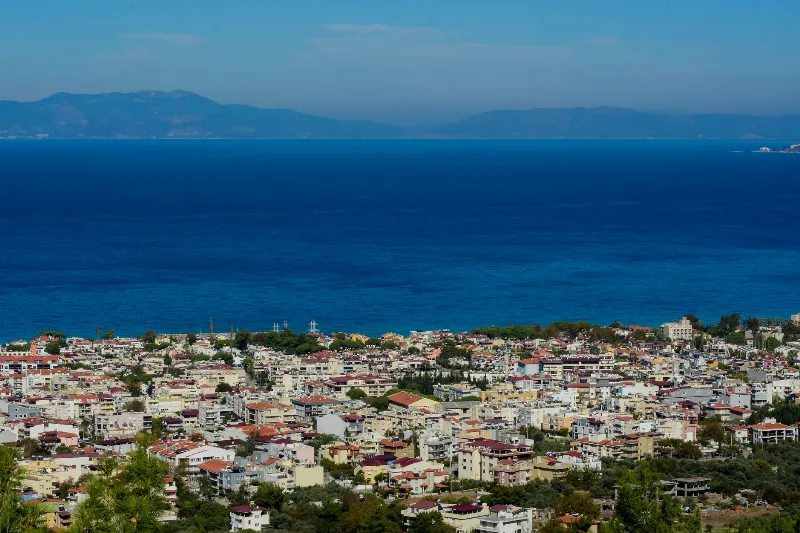
Nazilli
Nazilli is an inland district of Aydın Province in Türkiye's Aegean region, set in the Büyük Menderes valley and known for figs, cotton and its long-standing market town character.
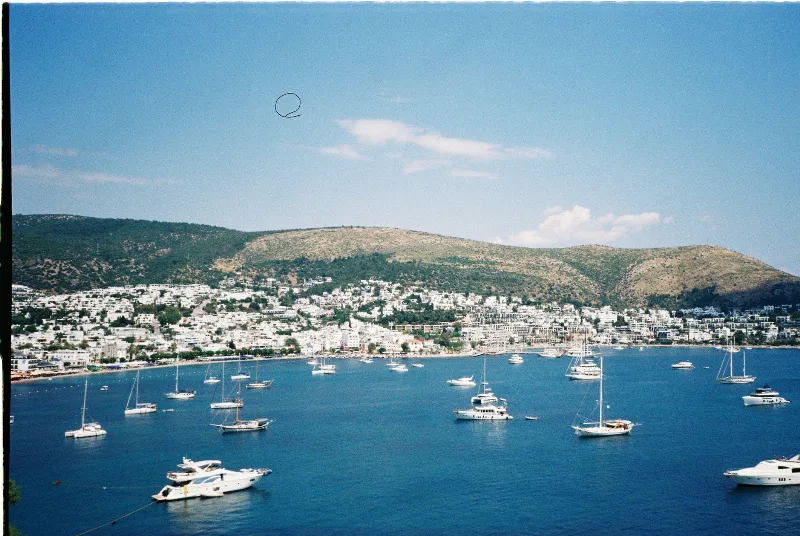
Aegean Coast of Türkiye
Explore the Aegean coast of Türkiye, renowned for its picturesque towns and stunning azure waters.
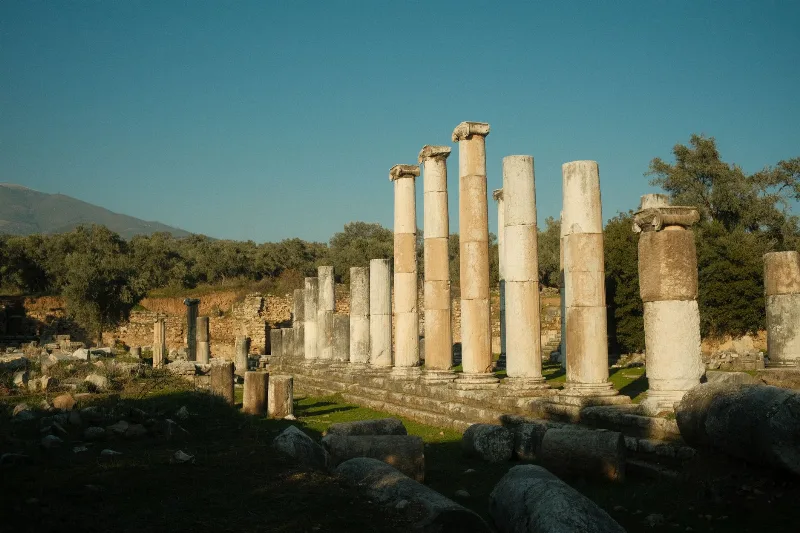
Söke
Söke is an agricultural district in Aydın Province, set on the fertile Büyük Menderes plain near the Aegean coast. It is known for cotton and olive production and provides access to Priene and the Dilek Peninsula National Park.