
Söke
Söke is an agricultural district in Aydın Province, set on the fertile Büyük Menderes plain near the Aegean coast. It is known for cotton and olive production and provides access to Priene and the Dilek Peninsula National Park.
Söke is a district of Aydın Province in Türkiye’s Aegean region, situated on the Söke Plain near the Aegean coast and the lower course of the Büyük Menderes River. It is a working agricultural town rather than a resort, known for cotton and olive production and as a practical starting point for the ancient city of Priene and the Dilek Peninsula National Park.
Where Söke Sits in the Aegean Landscape
The district occupies a broad alluvial plain that has been built up over centuries by the Büyük Menderes River, known in antiquity as the Maeander. This flat, fertile land extends westwards towards the Aegean, where the river delta meets the sea. Söke’s centre lies slightly inland, surrounded by irrigated fields and a scatter of villages that depend on the plain for their livelihood. To the south and west, the land changes character: the plain gives way to the delta wetlands and the wooded slopes of the Dilek Peninsula, while the Aegean coastline forms the district’s western edge. The climate is Mediterranean, with hot, dry summers and mild, wet winters; spring and autumn are generally the most comfortable seasons for exploring the area on foot or by car.
An Agricultural Economy Rooted in the Plain
Agriculture shapes Söke more than tourism does. Cotton has long been a staple crop, and in late summer the fields around the town turn white before harvest. Olive groves are also widespread, producing oil and table olives that are part of the regional identity. The town centre functions as a service hub for the surrounding countryside: it holds the main banks, offices, schools and weekly market that villagers from the plain come to use. This gives Söke a steady, everyday rhythm that is quite different from the seasonal bustle of nearby coastal resorts. Visitors interested in regional produce will find that the district’s identity is tied to the land rather than to a promenade or beach strip.
The Town Centre and Urban Character
Söke’s urban core is compact and practical. The streets around the central market area are lined with small businesses, bakeries and tea gardens that serve local residents rather than a tourist crowd. There is no preserved old town of the kind found in some Aegean towns; instead, the town has developed as a modern administrative and commercial centre for the plain. A few older buildings and mosques remain, but the overall impression is of a busy district capital that works for a living. This makes Söke a useful place to stock up, arrange local transport or simply observe everyday life in the Aegean hinterland before heading out to the surrounding sites.
History and the Ancient Sites Nearby
The lower Büyük Menderes valley has been settled for thousands of years, and Söke’s modern role is inseparable from the archaeology that surrounds it. The ancient city of Priene lies to the south-west of the district centre, near the village of Güllübahçe. Priene was a Greek city with a grid plan and a dramatic setting beneath the Mycale mountains; its ruins include a theatre, a temple of Athena and a council house. Söke itself served as a market town for the region during the Ottoman period and continued that function after the founding of the Turkish Republic. The district is also close to other major sites of the lower Meander, such as Miletus and Didyma, though these lie in neighbouring districts. For travellers, Söke is a geographic anchor for understanding how the ancient cities related to the river, the sea and the fertile plain.
Coast, Delta and the Dilek Peninsula
West of Söke, the plain dissolves into the Büyük Menderes Delta and the Aegean coast. Much of this area is protected within the Dilek Peninsula-Büyük Menderes Delta National Park, which preserves wetlands, maquis-covered slopes and a coastline of cliffs and coves. The delta is important for birdlife, especially during migration, and the national park offers walking and scenery rather than developed resort facilities. The district’s coastline is not a continuous strip of holiday villages; it is a mix of protected natural areas, agricultural land and small settlements. This makes Söke a different kind of Aegean base—one oriented towards nature and archaeology rather than beach tourism.
Villages, Rural Life and Regional Connections
Surrounding Söke are numerous villages tied to the agricultural cycle. Güllübahçe, near Priene, is one example of a village that combines rural life with a flow of visitors to the ancient site. Other villages across the plain are known for cotton, olives, figs and market gardening, and many hold small local markets. Söke is well connected by road to Kuşadası, Selçuk and Didim, placing it within easy reach of Ephesus, the Dilek Peninsula and the Aegean coast. The nearest major airports are in İzmir and Bodrum, both of which are connected by highway. The district is not a destination in itself for most international visitors, but it is a practical and informative hub for the lower Meander valley and its layers of history.
When to Visit and How to Plan Around Söke
Spring and autumn are the best seasons for visiting Söke and the surrounding sites, when temperatures are moderate and the plain is green or harvesting begins. Summer can be very hot inland, although the nearby coast and national park offer some relief. Winter is mild and wet, with occasional rain that keeps the plain fertile. Because Söke is a working district rather than a resort, visitors should plan around the opening hours of archaeological sites and the national park, and use the town as a base for day trips. The area rewards those who are interested in agriculture, ancient history and the natural transition from river delta to Aegean Sea, rather than in nightlife or beach holidays.
Discover Food in Türkiye
All food →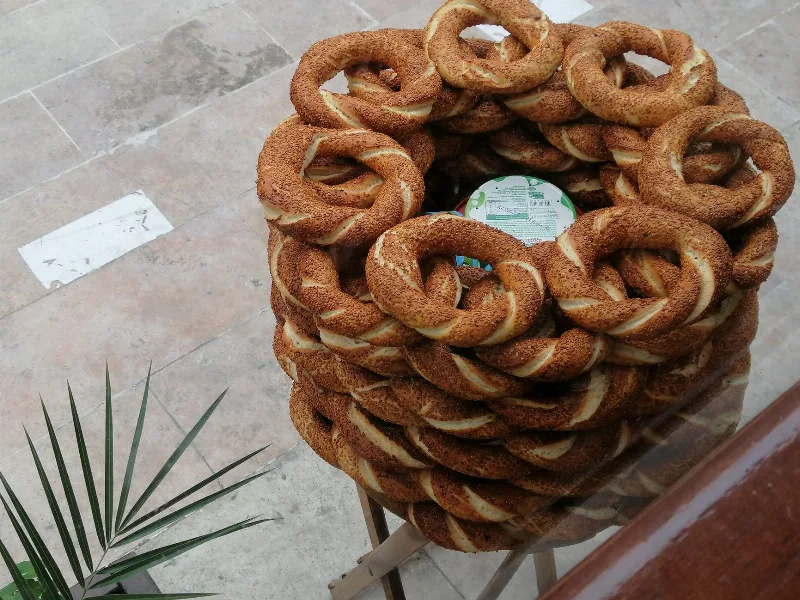
Simit
Simit is a ring-shaped Turkish bread covered in sesame seeds, strongly associated with Istanbul and sold as everyday street food. It is eaten fresh, most often with tea, and has a crisp crust around a chewy crumb.
Explore →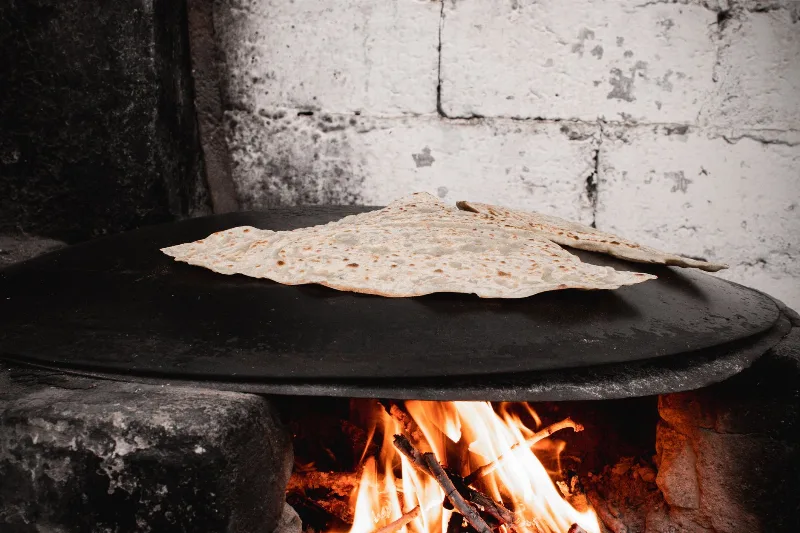
Bazlama
Bazlama is a soft, thick Turkish flatbread made from a leavened dough and cooked on a hot griddle. It is a staple of village baking across Anatolia, eaten warm with butter or used to wrap other foods.
Explore →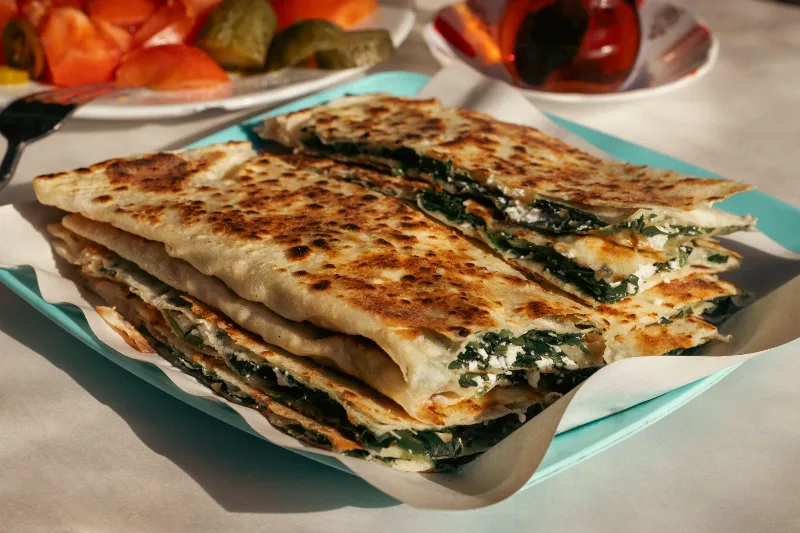
Gözleme
Gözleme is a thin, hand-rolled Anatolian flatbread folded around savory fillings such as cheese, spinach, or minced meat and cooked on a sac griddle. The article covers its regional variations, cooking method, texture, and traditional serving style.
Explore →Related content
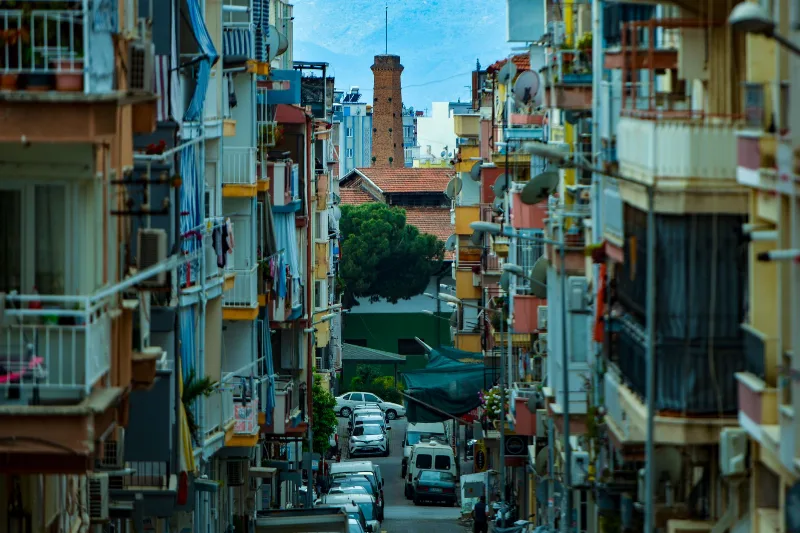
Aydın
Aydın is the inland capital of Aydın Province in Türkiye's Aegean region, recognised for its fig production and its position between the fertile Büyük Menderes valley, the coastal district of Kuşadası and several major ancient sites.
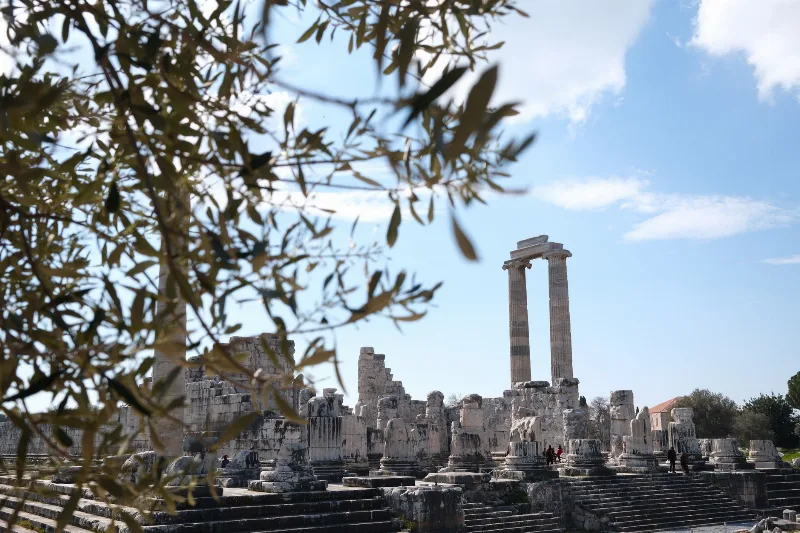
Priene
Priene is a planned ancient Greek city on the slopes of Mount Mycale in Aydın Province, Türkiye, whose grid streets, theatre and Temple of Athena Polias still trace a Hellenistic urban layout.
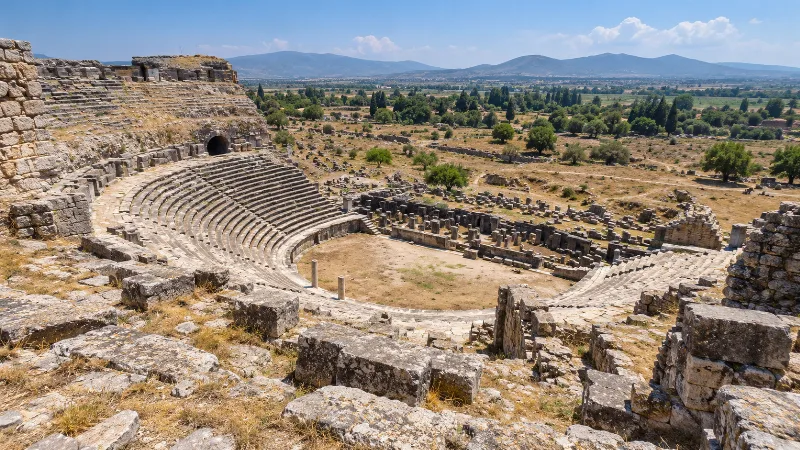
Miletus
Miletus was one of the great Ionian Greek cities of western Anatolia, a major maritime power and the birthplace of the Milesian school of philosophy. Today its extensive ruins near Balat in Aydın Province include one of Anatolia's largest ancient theatres.
Miletus
Miletus is an ancient Greek city in Aydın Province whose Great Theatre, harbour monuments and Miletian school of philosophy made it one of the defining sites of Ionia — now stranded inland by the Meander River.

Didim
Didim is a coastal district in Aydın Province on Türkiye's Aegean shore, built around the ancient oracular sanctuary of Didyma and its Temple of Apollo, with the sandy beach of Altınkum at its holiday centre.
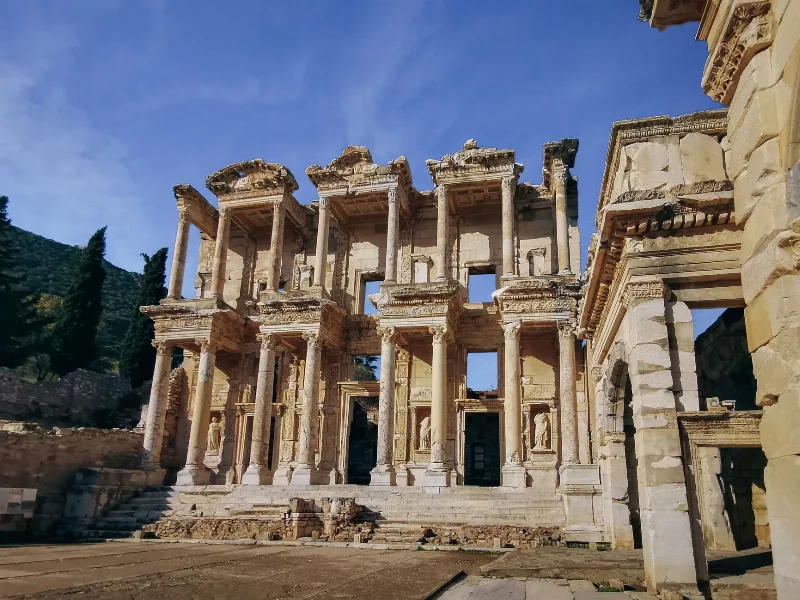
6-Day Aegean Ancient Cities Route
A six-day linear journey from Izmir to Denizli through the great ancient cities of the Aegean, linking Ephesus, Priene, Miletus, Didyma, Lake Bafa, Pamukkale, Laodicea and Aphrodisias in one coherent corridor.