
Priene
Priene is a planned ancient Greek city on the slopes of Mount Mycale in Aydın Province, Türkiye, whose grid streets, theatre and Temple of Athena Polias still trace a Hellenistic urban layout.
Priene is an ancient Greek city in Ionia, situated near the present-day village of Güllübahçe in the Söke district of Aydın Province, western Türkiye. It occupies the southern slopes of Mount Mycale, overlooking the plain of the Büyük Menderes, the river the Greeks and Romans knew as the Maeander. Priene matters because its ruins preserve an unusually coherent example of a planned Hellenistic Greek city: a regular street grid, a hillside theatre, the Temple of Athena Polias, an agora and a council house remain clearly readable in the terrain.
The setting beneath Mount Mycale
Priene was not built on flat ground but stepped across a steep, south-facing hillside, terraced so that public buildings could be placed on level platforms while streets ran up and down the slope. The choice of position was strategic as well as practical. In antiquity the city stood close to the sea, with a harbour that supported trade and contact with the wider Greek world. Over the centuries the Maeander carried heavy sediment into its delta, and the coastline retreated until the sea lay several kilometres away. The silting of the river mouth removed the harbour that had helped sustain the city, and this environmental change is inseparable from its eventual decline. Today the site is shaded by pines and Mediterranean scrub, which gives the ruins a rural, wooded character.
Historical background
Priene existed in more than one location. An earlier settlement of the same name is known from written sources, and the classical city on the Mycale slope represents a relocation that took place within the fourth century BC. The move reflects the political instability of Ionia in that period, when Greek cities on the Anatolian coast lived between larger powers. In its new position Priene became a small but carefully organised polis, one of the Ionian Greek cities of the region.
Its fortunes were tied to the great Hellenistic kingdoms. After the campaigns of Alexander the Great, Priene fell within the orbit of the rulers who divided his empire, and later it came under the influence of the Attalid kingdom of Pergamon. During the Roman period the city continued to function, with building activity and repairs to older structures, before gradually shrinking in late antiquity. In the Byzantine era it served as a bishopric, and a number of its pagan buildings were adapted for Christian use. As the harbour silted and the regional centre of gravity shifted, Priene was eventually abandoned, leaving its buildings to be buried by soil and vegetation.
The grid plan and Hippodamian layout
Priene is often cited as a model of the so-called Hippodamian plan, the system of orthogonal streets associated in ancient tradition with the Milesian planner Hippodamus. The association of Priene itself with Hippodamus is an attribution rather than a documented fact, but the regularity of the design is not in doubt. Streets cross at right angles, dividing the city into rectangular blocks, and the grid adapts to the slope by means of terraces and stairways. The city is regularly described as having been laid out on a modest scale, with a comparatively small number of residential blocks arranged below the public centre. This combination of a rigid plan with an uneven natural site is one of the most instructive features of the ruins, because it shows how Greek planners reconciled geometry with topography.
The Temple of Athena Polias
The most celebrated structure at Priene is the Temple of Athena Polias, the guardian deity of the city, which stood on a prominent terrace above the theatre. It was built in the Ionic order, and its architect is identified in ancient sources as Pytheos, a figure also connected with the Mausoleum at Halicarnassus. Alexander the Great is linked with the sanctuary: after his arrival in the region in the 330s BC, he is said to have offered to fund the completion of the temple, and a dedication connected with him survives. The temple's proportions and its position, framed against the hillside, made it one of the defining monuments of Priene.
The theatre
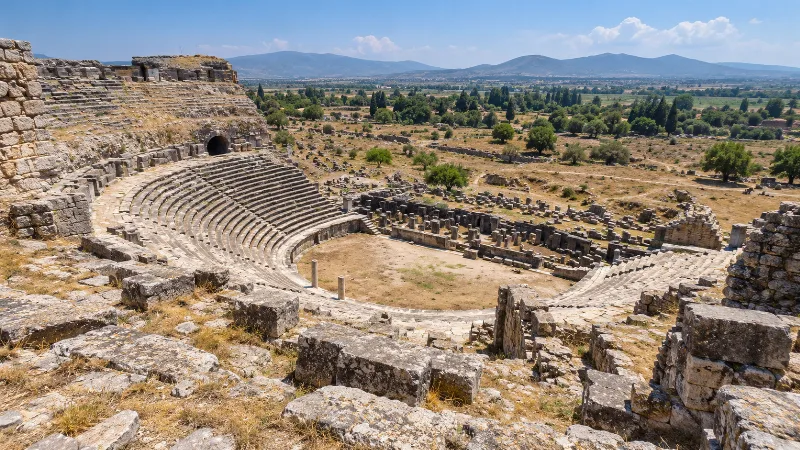
Priene's theatre is cut into the slope below the Temple of Athena, so that its cavea of stone seating rises with the hill and looks out over the city and the plain. It is a Hellenistic theatre that was modified in the Roman period, when the stage building and some seating arrangements were altered to suit contemporary tastes. Even in its ruined state the shape of the auditorium, the retaining walls and the line of the stage structure can be traced, and it remains one of the clearest surviving buildings on the site.
Public buildings and the city centre
Below the temple and theatre, Priene's civic heart included an agora, the commercial and public square of the city, bordered by stoas and other structures. Nearby stood the bouleuterion, the council house where the city's assembly of citizens met. The bouleuterion at Priene is notable among ancient Greek examples for the preservation of its seating and its compact, roofed form, and it is frequently studied for what it reveals about how Greek civic business was conducted. Other buildings recorded at the site include a prytaneion, gymnasia on different levels, and sanctuaries such as the Sanctuary of Demeter and Kore. Together these structures show the full range of institutions that a modest Greek polis maintained.
Roman and Byzantine phases
Priene did not stop changing with the Hellenistic period. Under Roman rule the city saw rebuilding and adaptation, including work on the theatre and additions such as baths. In late antiquity and the Byzantine period, religious life shifted toward Christianity. A church was established near the theatre, and parts of earlier monumental architecture were reused in its construction, a common practice in cities whose classical fabric was being quarried for new purposes. The bishopric of Priene is recorded in church organisation, indicating that the settlement retained a degree of importance even as its urban form contracted.
Excavation and rediscovery
The site was systematically investigated by German archaeologists at the end of the nineteenth century, work associated with the excavations directed from 1895 onward. These campaigns cleared large areas and produced detailed plans and studies that made Priene one of the best-documented ancient Greek cities of its size. Because so much of the city was excavated and published, Priene became a reference point in the study of Greek town planning and Hellenistic architecture, and its buildings are regularly discussed alongside those of nearby Miletus and Didyma.
What visitors can see today
A walk through Priene follows the ancient grid uphill. Visitors can distinguish the rectangular street layout, the terraced platforms of the public buildings, the theatre rising into the slope, the remains of the Temple of Athena Polias, and the compact bouleuterion. House foundations, sections of city walls, stoas and the reused church near the theatre add to the picture of a complete, if ruined, city. Because the buildings were laid out to a plan, the relationship between the streets, squares and sanctuaries is easier to grasp here than at many ancient sites where later construction has obscured the original design.
Visiting context and the surrounding region
Priene sits near the town of Söke in Aydın Province, in a landscape of river plain, low hills and pine woodland. The site is on sloping ground, with terraces, uneven stone surfaces and paths between the ruins, so a visit involves walking on inclines and uneven footing. Spring and autumn generally offer the mildest conditions, while summer brings considerable heat to this part of the Aegean coast, and shade is limited away from the wooded areas. Practical details such as hours and facilities can change, so it is sensible to check locally before travelling.
Priene belongs to a wider archaeological landscape that includes the ancient city of Miletus and the sanctuary of Didyma, both within the same broader region of the former Maeander delta, and the coastal resort area around Didim and Kuşadası lies within reach. For anyone interested in Greek town planning, Hellenistic architecture or the archaeology of Ionia, Priene offers a place where the shape of an ancient city can still be read in the ground.
Routes
All routes →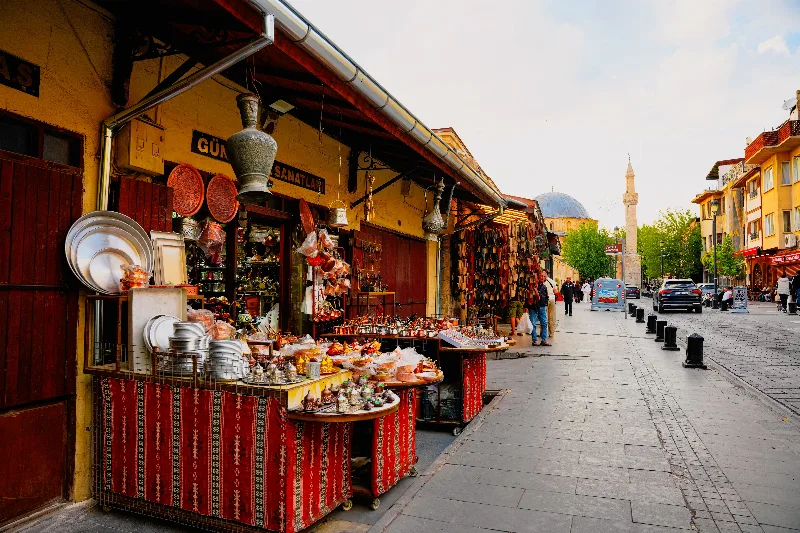
1-Day Gaziantep Route
A compact one-day route through central Gaziantep, moving from the Zeugma Mosaic Museum to the castle hill, the historic hans and bazaars, and a baklava finish in the old centre.
Explore →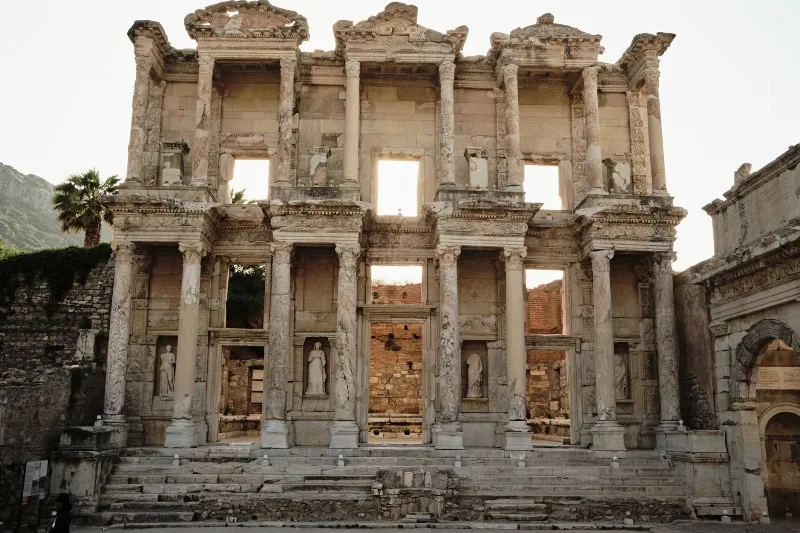
4-Day Ephesus and Pamukkale Route
A four-day west-to-east Aegean route that links the ancient city of Ephesus and the House of Virgin Mary in Selçuk with the white travertine terraces and Hierapolis ruins at Pamukkale, near Denizli.
Explore →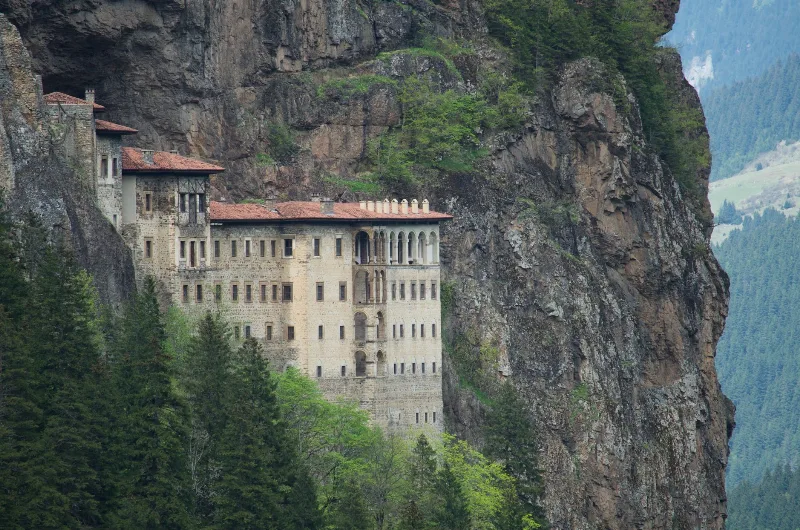
7-Day Eastern Black Sea Highlands Route: Trabzon to Artvin
A seven-day driving route through the Eastern Black Sea highlands, from Trabzon and Sumela to Uzungöl, Ayder, the Kaçkar Mountains and the forests of Şavşat, ending at Artvin.
Explore →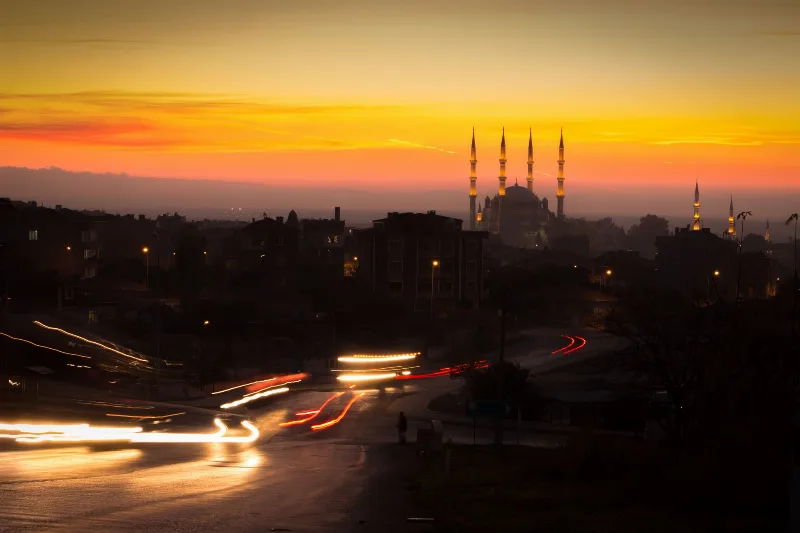
3-Day Thrace Route: Edirne, Kırklareli and Tekirdağ
A practical three-day west-to-east, then south, driving route across Turkish Thrace, linking Edirne's Ottoman monuments with Kırklareli's inland towns and Tekirdağ's Marmara vineyards and coast.
Explore →Related content

Aydın
Aydın is the inland capital of Aydın Province in Türkiye's Aegean region, recognised for its fig production and its position between the fertile Büyük Menderes valley, the coastal district of Kuşadası and several major ancient sites.
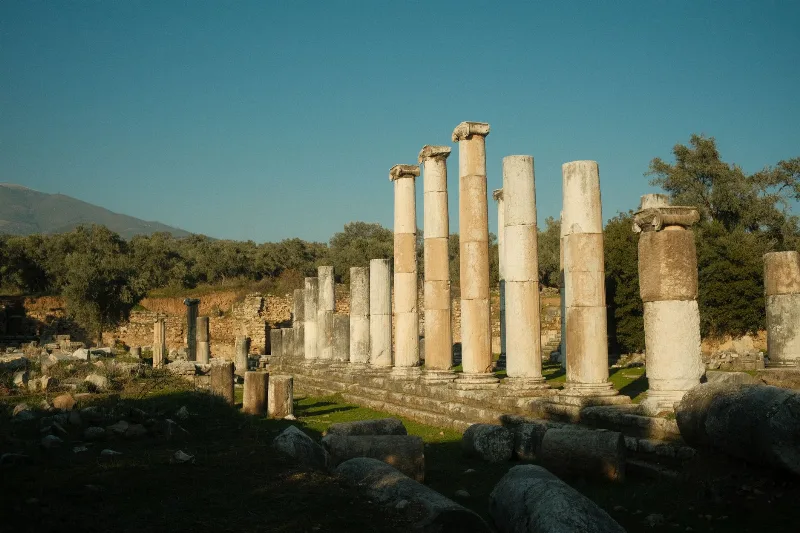
Söke
Söke is an agricultural district in Aydın Province, set on the fertile Büyük Menderes plain near the Aegean coast. It is known for cotton and olive production and provides access to Priene and the Dilek Peninsula National Park.
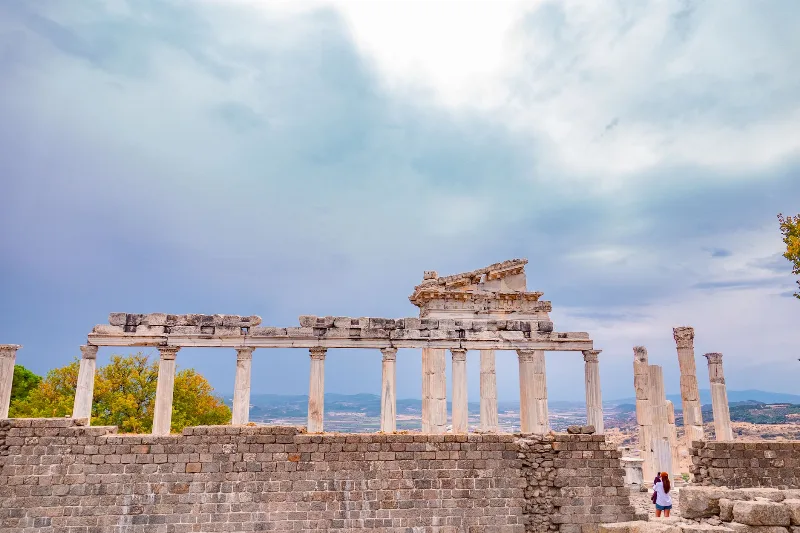
Pergamon
Pergamon was the Hellenistic capital of the Attalid dynasty in western Türkiye, built around a steep acropolis above the modern town of Bergama. Its Great Altar, theatre and Sanctuary of Asclepius make it one of the most important archaeological sites in Anatolia and a UNESCO World Heritage Site.
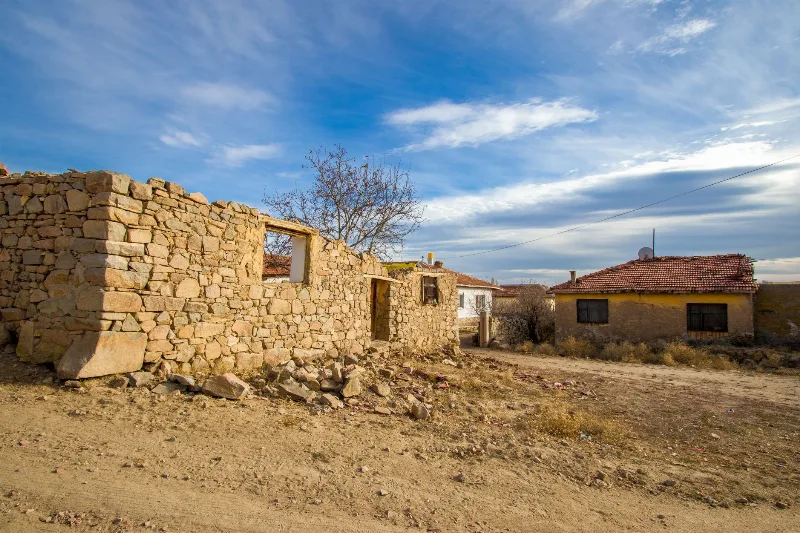
Doğanbey
Doğanbey is a village in the Söke district of Aydın, split between a modern settlement on the plain and an older, largely abandoned quarter of stone houses once inhabited by a Greek community. Its hilltop streets and coastal setting make it one of the more distinctive places on the Aegean edge of Türkiye.
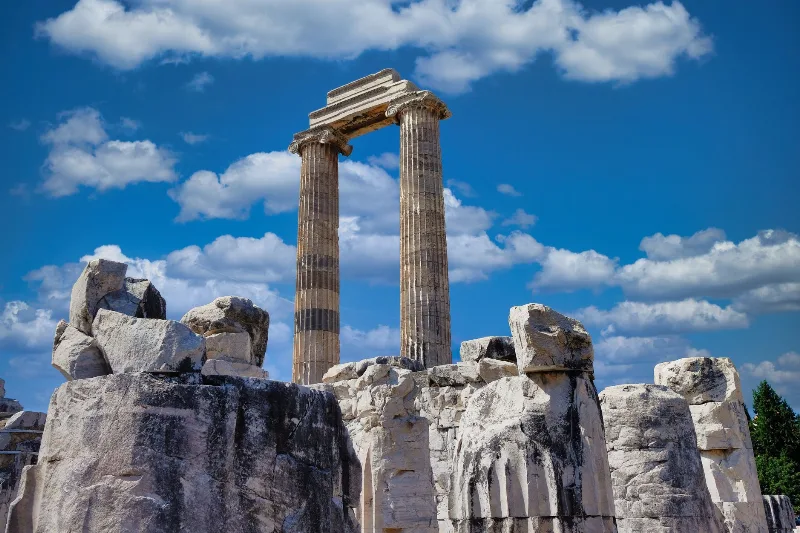
Didim
Didim is a coastal district in Aydın Province on Türkiye's Aegean shore, built around the ancient oracular sanctuary of Didyma and its Temple of Apollo, with the sandy beach of Altınkum at its holiday centre.
Miletus
Miletus is an ancient Greek city in Aydın Province whose Great Theatre, harbour monuments and Miletian school of philosophy made it one of the defining sites of Ionia — now stranded inland by the Meander River.