
Didim
Didim is a coastal district in Aydın Province on Türkiye's Aegean shore, built around the ancient oracular sanctuary of Didyma and its Temple of Apollo, with the sandy beach of Altınkum at its holiday centre.
Didim is a district and coastal town in Aydın Province, on the Aegean coast of western Türkiye. It occupies the tip of a small promontory at the southern edge of the plain formed by the Büyük Menderes river, facing the Aegean Sea. What sets Didim apart from the other holiday towns of the Aydın coast is that one of the ancient Greek world's great oracular sanctuaries, Didyma, lies inside the modern settlement rather than at a distance from it, so the Temple of Apollo is part of everyday town life.
Where Didim Stands
The town centre sits close to the shore, with the temple grounds near its middle and the main beach quarter, Altınkum, a short distance to the south. The district stretches inland and north-east across low coastal terrain, taking in further bays and small settlements along the water. To the north, the land opens into the delta of the Büyük Menderes, a broad, flat wetland zone where the river meets the sea; much of this delta area is protected for its birdlife and marsh habitat and contrasts sharply with the built-up coastline. The general landscape is gentle rather than dramatic: low hills, olive groves, farmland and pockets of pine, with the sea always within reach.
Didyma and the Temple of Apollo
Didyma was the sanctuary and oracle of Apollo belonging to the great Ionian city of Miletus, and it was linked to that city by a processional road, the Sacred Way. The oracle here was among the most consulted in the ancient Greek world. Construction of the surviving temple began in the Hellenistic period, after the passage of Alexander the Great through the region, and was planned on an exceptionally large scale, with a forest of tall Ionic columns and a courtyard open to the sky. The building was never finished. Over the centuries the sanctuary was reused and then abandoned, and its remains were later buried and built over before systematic excavation brought them back into view. Visitors today walk among the standing columns and the carved Medusa heads and can see how the temple platform relates to the surrounding town layout.
From Yenihisar to a Modern District
For much of the twentieth century the settlement here was a modest coastal community administratively attached to Söke, and it was known as Yenihisar before taking the name Didim. It became a district in its own right in 1991, and growth followed quickly, driven first by domestic tourism and then by second-home ownership and a sizeable resident community of foreign nationals, particularly from Britain. The result is a town that functions as a full-year administrative centre with schools, services and a permanent population, while its economy and rhythm are still strongly shaped by the summer season.
Altınkum and the Beach Quarter
Altınkum, whose name refers to golden sand, is the district's principal beach area and the focus of most of its holiday accommodation, cafes and evening activity. The beach is a broad stretch of sand with shallow water, which is why it suits families and casual swimmers, and it forms the natural southern anchor of the town. The seafront here is best understood as the resort core of the district, while the area around the temple holds the historic and civic centre. Detailed coverage of the beach itself belongs with the dedicated coastal pages for the region.
Akbük and the Rest of the Coastline
In the northern part of the district lies Akbük, a sheltered bay with its own small settlement and a markedly quieter character than Altınkum. Much of the accommodation around Akbük is in the form of holiday homes and low-rise complexes, and the bay is valued for calmer water and a less crowded shoreline. Between the two main centres, the coast alternates between built-up stretches and open ground, and a number of smaller coves and waterfront spots are scattered along the district's edge. These varied shorelines give Didim two distinct faces: a busy, developed southern beach town and a slower northern bay.
Miletus, Balat and the Wider Historical Landscape
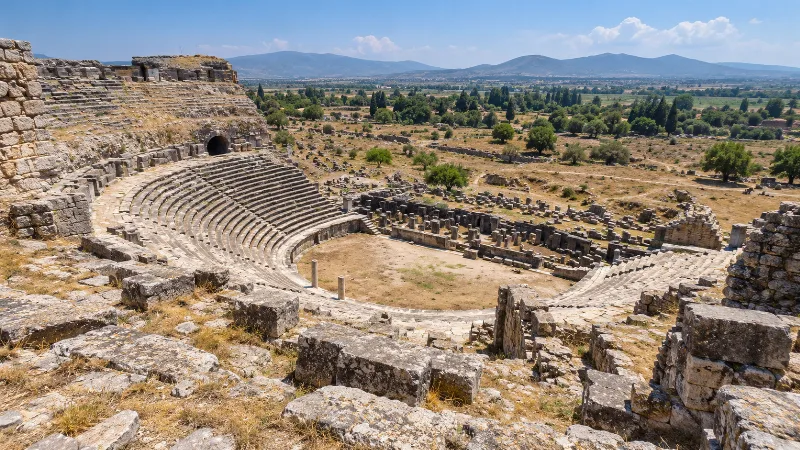
Didim's territory also contains the ruins of Miletus, the Ionian city that once controlled the sanctuary at Didyma. Because the Büyük Menderes has carried silt into the gulf over the centuries, the ruins now stand well inland, near the village of Balat, and include a large theatre, baths, market areas and stretches of city wall. Balat itself retains something of an older village character, with stone houses and a small archaeological museum holding finds from the surrounding sites. The wider region adds further context: the ancient city of Priene and the shore of Lake Bafa lie to the north and east, while the Menderes delta wetlands provide a natural counterpoint to the archaeological landscape.
Climate and the Best General Time to Visit
Didim has a Mediterranean climate, with long, hot, dry summers and mild, wet winters. Swimming is generally comfortable from late spring through early autumn, and the height of summer brings intense heat and the busiest conditions. Spring and autumn are the most comfortable periods for exploring the temple, Miletus and the surrounding countryside on foot, when temperatures are moderate and the light is clear. Winter is quiet, with some seasonal businesses closing and rainfall concentrated in the cooler months, but the town remains inhabited and functional throughout the year.
Getting There and Its Place in the Region
Didim is reached by road, most commonly from the direction of Söke, which is the main inland hub for this part of Aydın Province. The nearest airports serving the district are Bodrum–Milas to the south and Izmir Adnan Menderes to the north, and the coastal route along the Aegean connects Didim with Kuşadası and the northern resorts as well as with the Bodrum peninsula further south. Within Aydın Province, Didim forms the southern end of the province's Aegean coastline, sitting apart from the provincial capital Aydın in the interior. That position, between the Menderes delta and the open sea, explains much of its character: a working district, a long-established summer destination and the custodian of one of the region's most significant ancient sanctuaries.
Discover Food in Türkiye
All food →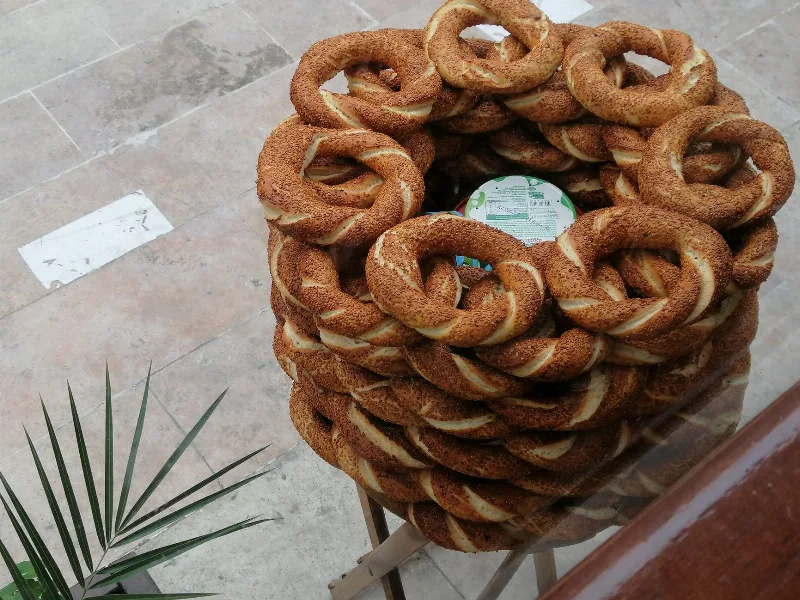
Simit
Simit is a ring-shaped Turkish bread covered in sesame seeds, strongly associated with Istanbul and sold as everyday street food. It is eaten fresh, most often with tea, and has a crisp crust around a chewy crumb.
Explore →
Bazlama
Bazlama is a soft, thick Turkish flatbread made from a leavened dough and cooked on a hot griddle. It is a staple of village baking across Anatolia, eaten warm with butter or used to wrap other foods.
Explore →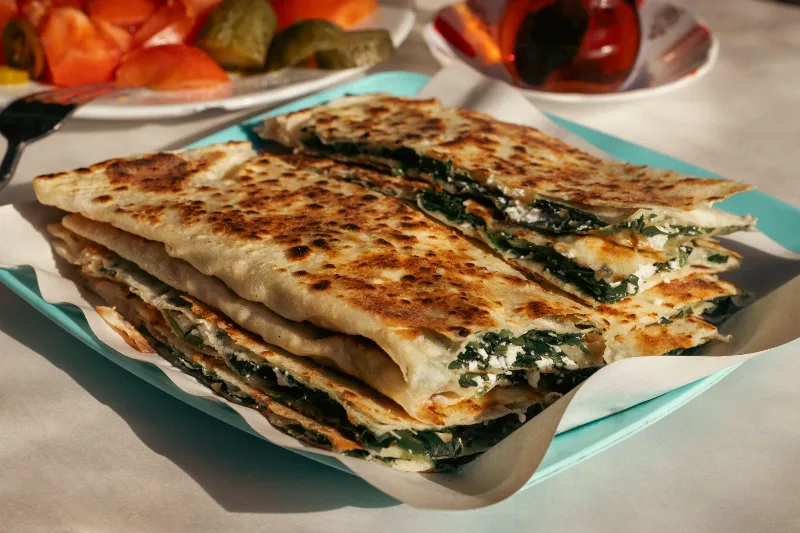
Gözleme
Gözleme is a thin, hand-rolled Anatolian flatbread folded around savory fillings such as cheese, spinach, or minced meat and cooked on a sac griddle. The article covers its regional variations, cooking method, texture, and traditional serving style.
Explore →Related content
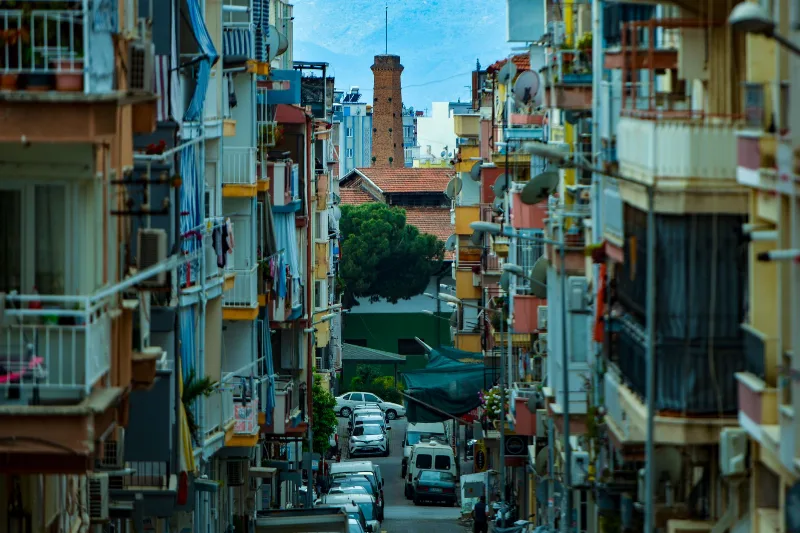
Aydın
Aydın is the inland capital of Aydın Province in Türkiye's Aegean region, recognised for its fig production and its position between the fertile Büyük Menderes valley, the coastal district of Kuşadası and several major ancient sites.
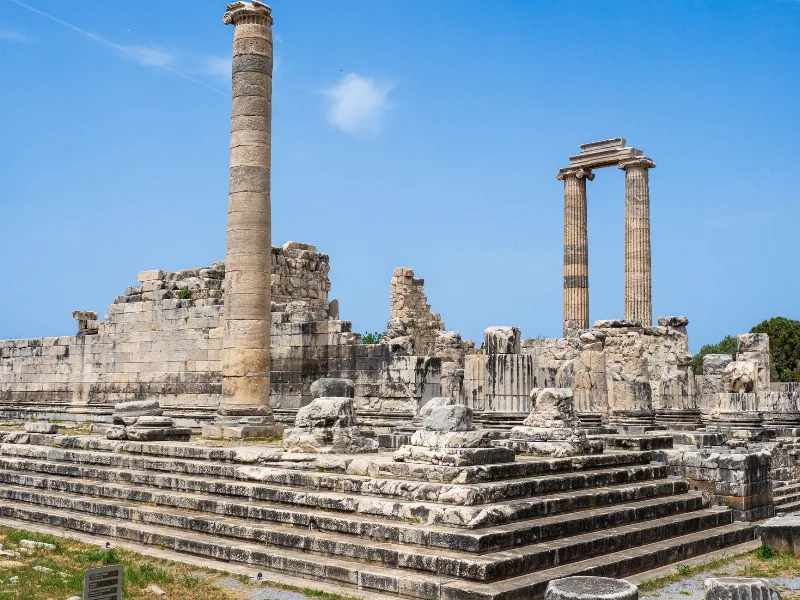
Didyma
Didyma is an ancient Greek sanctuary and oracle of Apollo in Aydın Province, Türkiye, whose vast Temple of Apollo is one of the largest ever built in the Greek world. Its surviving platform, columns, reliefs and Sacred Way make it a major archaeological site on the coast near Miletus.
Miletus
Miletus was one of the great Ionian Greek cities of western Anatolia, a major maritime power and the birthplace of the Milesian school of philosophy. Today its extensive ruins near Balat in Aydın Province include one of Anatolia's largest ancient theatres.
Miletus
Miletus is an ancient Greek city in Aydın Province whose Great Theatre, harbour monuments and Miletian school of philosophy made it one of the defining sites of Ionia — now stranded inland by the Meander River.
6-Day Aegean Ancient Cities Route
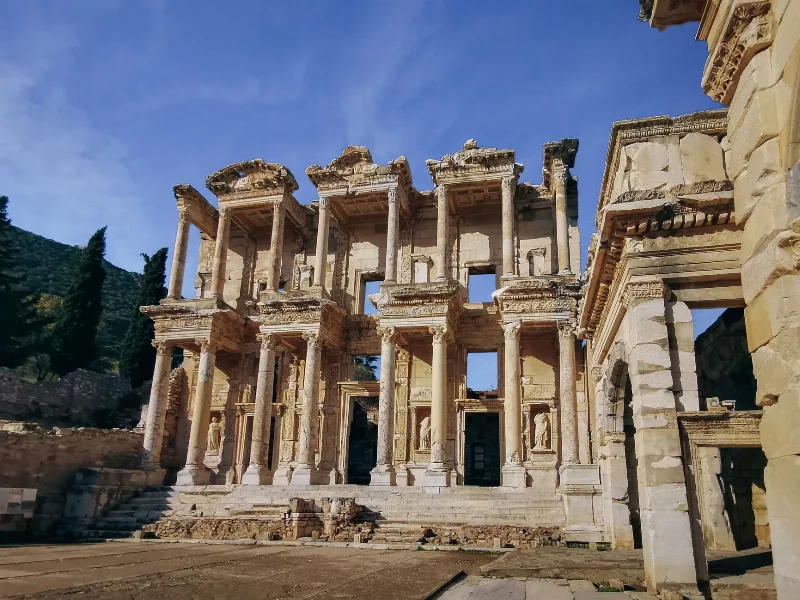
A six-day linear journey from Izmir to Denizli through the great ancient cities of the Aegean, linking Ephesus, Priene, Miletus, Didyma, Lake Bafa, Pamukkale, Laodicea and Aphrodisias in one coherent corridor.
Priene
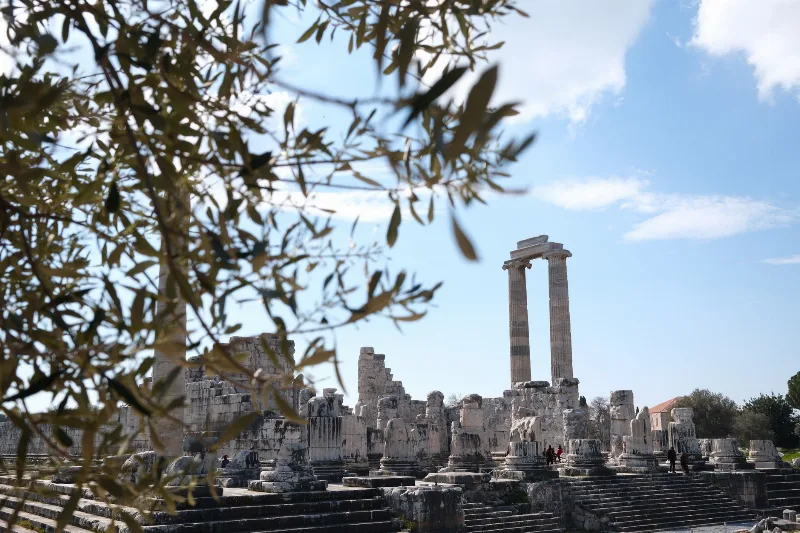
Priene is a planned ancient Greek city on the slopes of Mount Mycale in Aydın Province, Türkiye, whose grid streets, theatre and Temple of Athena Polias still trace a Hellenistic urban layout.