
Didyma
Didyma is an ancient Greek sanctuary and oracle of Apollo in Aydın Province, Türkiye, whose vast Temple of Apollo is one of the largest ever built in the Greek world. Its surviving platform, columns, reliefs and Sacred Way make it a major archaeological site on the coast near Miletus.
Didyma is an ancient Greek sanctuary on the Aegean coast of western Türkiye, in the modern Didim district of Aydın Province. It served as the sanctuary and oracle of Apollo belonging to the Ionian city of Miletus, and its Temple of Apollo is among the largest temples ever attempted in the Greek world. The site is significant for two distinct reasons: as a centre of prophecy that ranked among the most respected oracles of antiquity, and as a monument of ancient engineering whose enormous, never-completed temple preserves physical evidence of a building project that was worked on for centuries.
Where Didyma is located
The sanctuary stands in Didim district on the southern Aegean coast, south of İzmir and within the modern town of Didim, which grew up around the ruins. The coastal setting is not incidental: Didyma was never an independent city but the sacred territory of Miletus, whose own ancient city lies roughly twenty kilometres to the south-east. That relationship shaped everything about the site, from how it was funded to how pilgrims reached it. The surrounding landscape is low and coastal, with long beaches such as Altınkum nearby and the plains and river mouth of the Büyük Menderes delta further inland. Balat, the modern village beside Miletus, and the ancient site of Priene and Lake Bafa lie within the same broader archaeological region, making Didyma a natural stop on a route through the historical corners of Aydın and the lower Meander valley.
The oracle of Apollo and its link to Miletus
Didyma's importance rested above all on prophecy. The sanctuary housed an oracle of Apollo that was consulted by individuals and by states, and in reputation it was often placed second only to Delphi. The presence of a sacred spring at the site is central to how the cult functioned: water was understood to be the medium through which the god's answers were received, delivered through priests rather than through the ecstatic utterances associated with some other sanctuaries. The name Didyma itself means "twins" in Greek, a reference commonly connected with Apollo and Artemis, although the precise origin of the name remains a matter of interpretation. Around the cult there gathered legends, including the tradition that the oracle was founded by Branchus, a figure favoured by Apollo; such stories belong to myth rather than to documented history and should be read as the sanctuary's own account of its origins.
The Archaic temple and the Persian destruction of 494 BC
A temple to Apollo already stood at Didyma in the Archaic period, built in the sixth century BC by the Milesians as a marble structure worthy of their wealth and of the oracle's standing. This early temple did not survive. In 494 BC, after the Persian fleet defeated the Ionian Greeks at the Battle of Lade during the Ionian Revolt, the Persians sacked Miletus and Didyma. The temple was destroyed, the sanctuary was plundered, and the cult statue of Apollo was carried away to Persia. With the statue gone and the priests scattered, the oracle fell silent, and Didyma remained largely inactive for well over a century. This break is one of the defining events in the site's history and explains why the great temple visible today belongs to later periods rather than to the Archaic age.
Rebuilding in the Hellenistic period
The sanctuary's revival is tied to Alexander the Great, who took Miletus in 334 BC and whose arrival is associated with the reopening of the oracle. From the late fourth century BC onwards, and especially under the patronage of the early Hellenistic kings, Miletus began an immense programme of reconstruction. A new Temple of Apollo was laid out on a scale that surpassed the Archaic building, and construction continued for hundreds of years without ever being fully finished. The temple of the Hellenistic project measures roughly 109 metres by 51 metres, making it one of the largest Greek temples ever designed, and its completion was still incomplete in Roman times, when emperors including Trajan and Hadrian are associated with continuing works. The result is a building that is exceptional precisely because it documents centuries of changing ambition and technique.
How the Temple of Apollo was designed
The Hellenistic temple is architecturally unusual. It was planned as a dipteral temple, meaning that the outer colonnade ran in two rows around the sanctuary, and its columns were of a scale approaching twenty metres in height. Rather than a conventional roofed interior, the central chamber, or cella, was left open to the sky, creating a vast hypaethral court within the colonnade. At the western end, a monumental staircase descended into this sunken court, an arrangement that gave the approach to the god's dwelling a dramatic spatial sequence. Inside the open court stood a small temple-like structure, a naiskos, which housed the cult statue of Apollo. Close by was the sacred spring that gave the site its meaning. Carved reliefs, including the well-known Medusa heads on the inner architecture, decorated parts of the building. The combination of an open-air interior, an internal shrine and a sacred well is what distinguishes Didyma from most surviving Greek temples.
The Sacred Way and the Branchidae
Pilgrims travelling from Miletus reached Didyma along the Sacred Way, a processional road that linked the city to its sanctuary. The route was lined with statues and dedications, and it carried the ceremonial movement of worshippers, officials and offerings between the two places. The oracle was administered by a hereditary priesthood, the Branchidae, whose role was both religious and political, and whose memory is preserved in sculpture. Many of the statues set up along the Sacred Way were removed in the nineteenth century, together with other antiquities from the site, and are now held in the British Museum rather than in Türkiye. The surviving bases and fragments at Didyma, along with an adjacent stadium, give a sense of how the approach to the sanctuary was organised and monumentalised over time.
The Roman era and later history
In the Roman imperial period Didyma remained a functioning sanctuary and continued to attract patronage, with further building and dedication at the temple and around it. As Christianity spread, the site was transformed rather than simply abandoned: a basilica was built within the temple's central court, and Didyma became the seat of a bishopric in late antiquity. Over the following centuries the great temple was quarried for stone and gradually fell into ruin. Scientific excavation began in the nineteenth century, and research has continued since, deepening understanding of the temple's construction phases and of the sanctuary's wider layout.
What survives at Didyma today
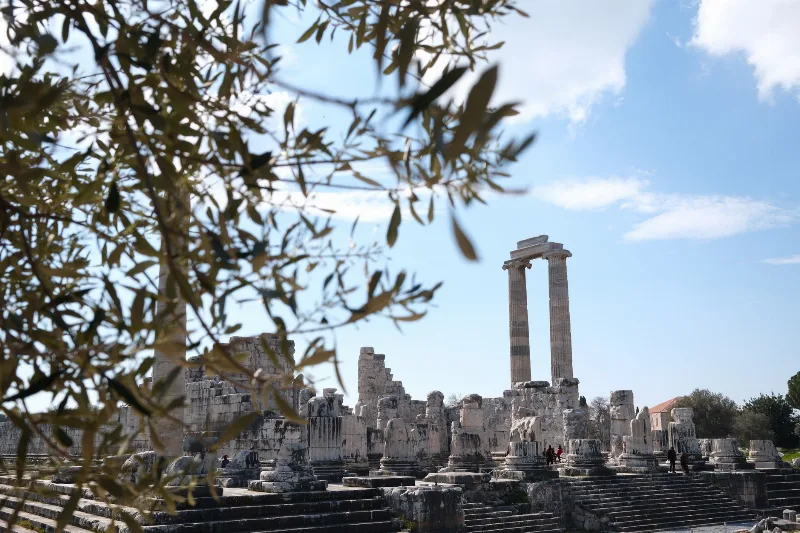
Visitors encounter the massive platform and foundations of the Temple of Apollo as the dominant feature of the site. A small number of colossal columns still stand, giving a direct sense of the original height and scale of the colonnade. The great staircase leading down into the open court, the remains of the inner shrine and the area of the sacred spring can all be traced within the temple. The Medusa reliefs are among the most recognisable sculptural details. Beyond the temple, the site preserves the stadium and scattered remains associated with the Sacred Way and the sanctuary's auxiliary structures. Because so much of the temple survives at foundation level, the plan of the building is unusually legible on the ground, allowing visitors to follow the sequence from colonnade to court to inner shrine.
Nearby ancient sites and practical visiting notes
Didyma is best understood as part of a group of ancient sites in the same coastal region. Miletus, the city that owned the sanctuary, lies to the south-east near the village of Balat and retains its theatre, baths and other monuments. Priene, another Ionian city, sits further north near the slopes above the plain, and Lake Bafa preserves its own archaeological and natural character. Together these sites allow a fuller picture of Ionia and of the relationship between a city and its oracle. The terrain at Didyma is generally flat and the main paths are straightforward, though the temple itself involves steps and uneven ancient stone, so sturdy footwear is useful. The site is exposed to the sun, and the Aegean summer can be hot, making spring and autumn the more comfortable periods for a visit; winter is milder and quieter. Because opening arrangements and facilities can change, it is worth confirming current details locally before travelling.
Routes
All routes →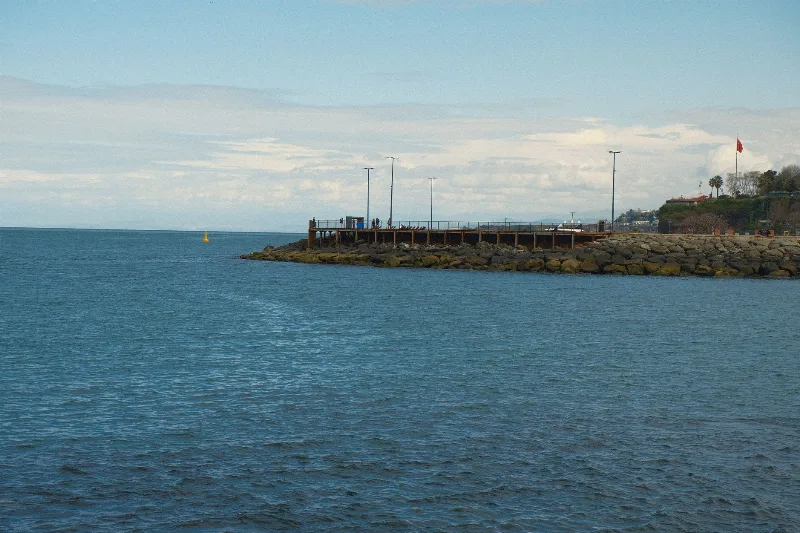
6-Day Central Black Sea Route
A six-day journey along Turkey's Central Black Sea coast from Samsun to Trabzon, visiting Ordu and Giresun with highland and beach stops.
Explore →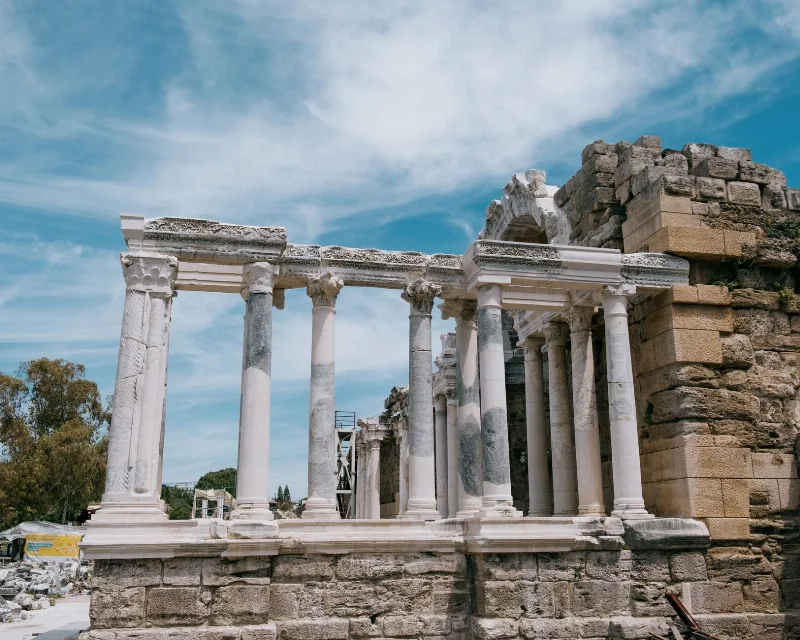
3-Day Antalya to Side Ancient Coast Route
A three-day coastal journey from Antalya to Side that links the archaeological sites of Perge and Aspendos with the Manavgat Waterfall and the ruins of Side, with a clear day-by-day sequence of stops.
Explore →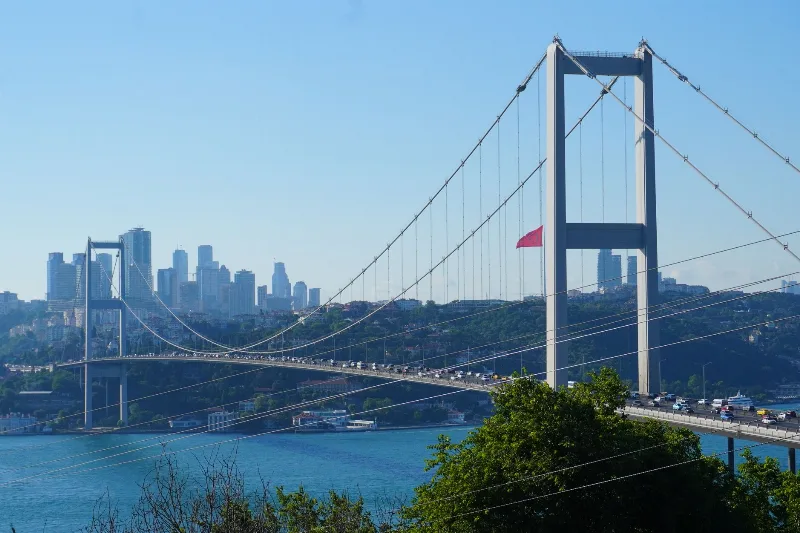
3-Day Istanbul to Bursa Route
Explore the first Ottoman capital on a three-day route from Istanbul to Bursa, combining historic city sites, the mountain landscapes of Uludağ, and the preserved village of Cumalıkızık.
Explore →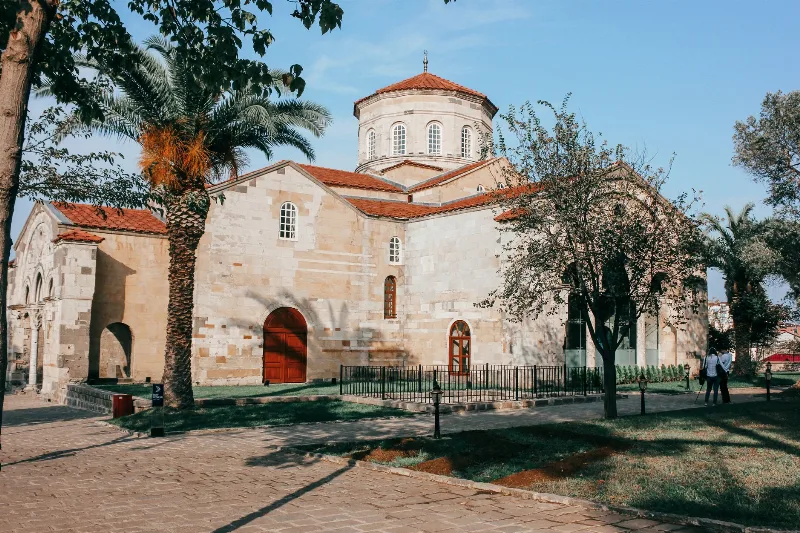
3-Day Trabzon and Uzungöl Route
This 3-day route in Türkiye's Eastern Black Sea region starts and ends in Trabzon, visiting Hagia Sophia, Sümela Monastery, and Uzungöl Lake. It blends city sightseeing, mountain driving, and lakeside relaxation.
Explore →Related content
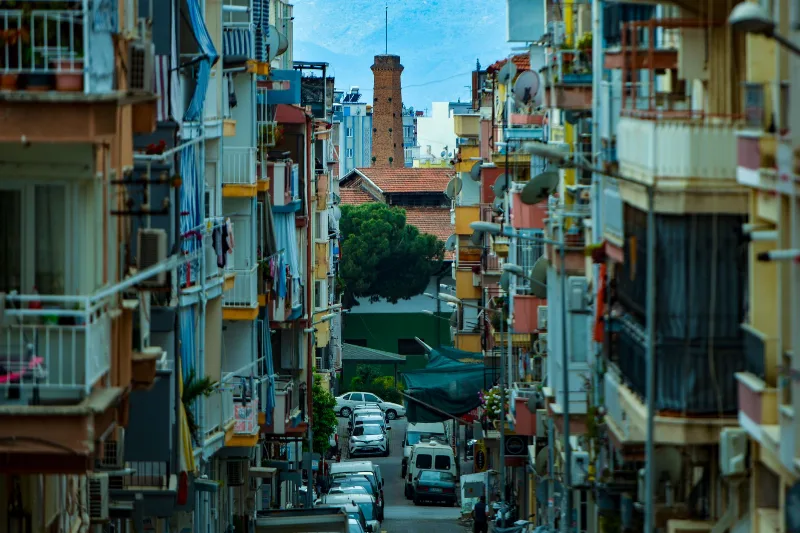
Aydın
Aydın is the inland capital of Aydın Province in Türkiye's Aegean region, recognised for its fig production and its position between the fertile Büyük Menderes valley, the coastal district of Kuşadası and several major ancient sites.
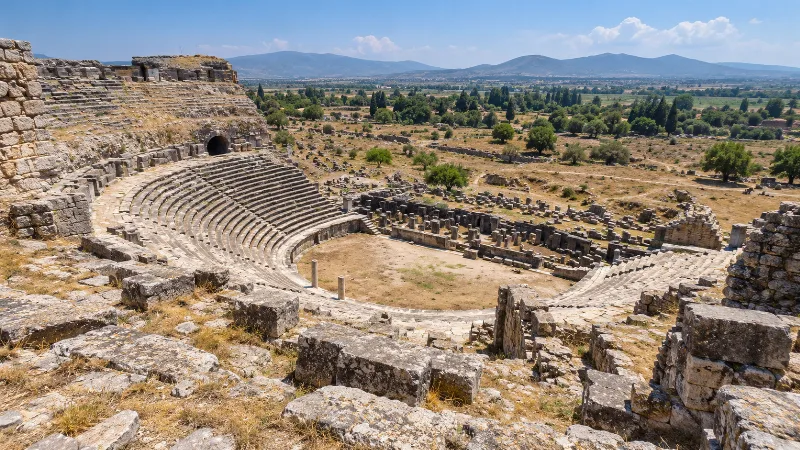
Miletus
Miletus was one of the great Ionian Greek cities of western Anatolia, a major maritime power and the birthplace of the Milesian school of philosophy. Today its extensive ruins near Balat in Aydın Province include one of Anatolia's largest ancient theatres.
Miletus
Miletus is an ancient Greek city in Aydın Province whose Great Theatre, harbour monuments and Miletian school of philosophy made it one of the defining sites of Ionia — now stranded inland by the Meander River.
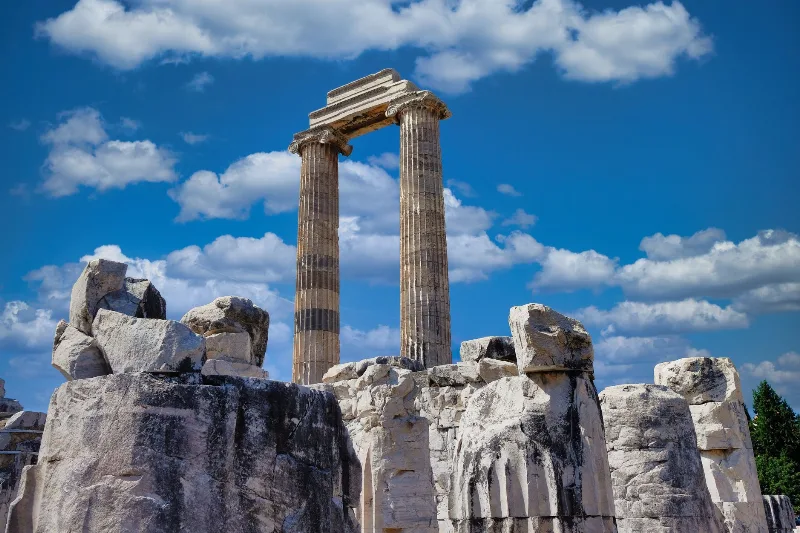
Didim
Didim is a coastal district in Aydın Province on Türkiye's Aegean shore, built around the ancient oracular sanctuary of Didyma and its Temple of Apollo, with the sandy beach of Altınkum at its holiday centre.
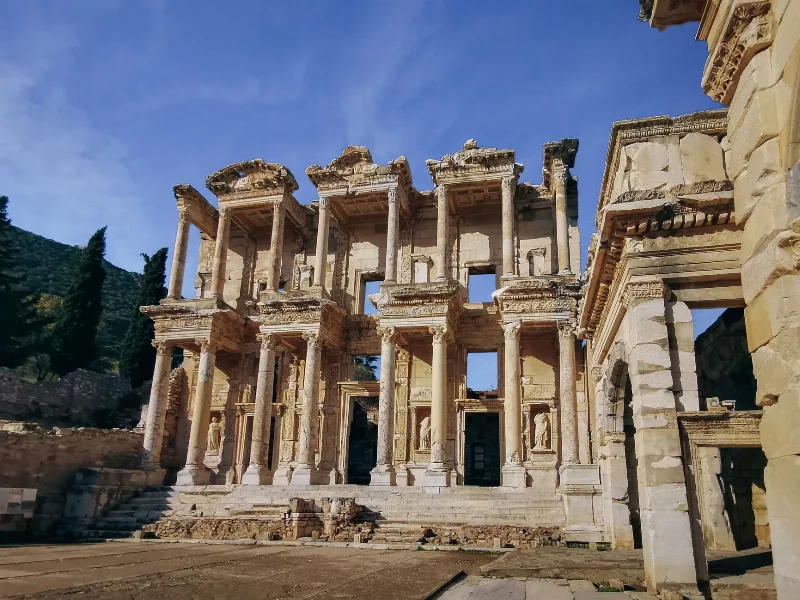
6-Day Aegean Ancient Cities Route
A six-day linear journey from Izmir to Denizli through the great ancient cities of the Aegean, linking Ephesus, Priene, Miletus, Didyma, Lake Bafa, Pamukkale, Laodicea and Aphrodisias in one coherent corridor.
Priene
Priene is a planned ancient Greek city on the slopes of Mount Mycale in Aydın Province, Türkiye, whose grid streets, theatre and Temple of Athena Polias still trace a Hellenistic urban layout.