
Aphrodisias
Aphrodisias is an ancient city in Aydın Province, Türkiye, built around a sanctuary of Aphrodite and celebrated for its marble sculpture and remarkably intact public buildings. It has been a UNESCO World Heritage Site since 2017.
Aphrodisias is an ancient city in the Karacasu district of Aydın Province, in south-western Türkiye, built around the sanctuary of the goddess Aphrodite. Its ruins stand near the village of Geyre, in an inland valley at the foot of the Baba Dağ range, known in antiquity as Salbakos. The city was most prosperous in the Hellenistic and Roman periods, and it is valued today both for its surviving architecture and for one of the richest collections of marble sculpture to come from the ancient world. Aphrodisias was added to the UNESCO World Heritage List in 2017.
Setting and Location
Aphrodisias lies inland from the Aegean coast, in the region the ancients called Caria, close to the borders with Lydia and Phrygia. It occupies a valley floor and a low acropolis mound beside the Dandalas river, known in antiquity as the Morsynos, which drains towards the Büyük Menderes (Maeander) system. The valley is enclosed by hills and mountains, and the nearest small town is Karacasu. The city's inland position meant it was never a major port, but the surrounding highlands supplied the white marble that shaped its identity. The quarries in the Baba Dağ massif above the city were the foundation of its fame, because the stone was close, abundant and of high quality.
The modern village of Geyre grew up over part of the ancient site. During the twentieth century the village was relocated so that excavation could proceed, and the houses that had been built among the ruins were cleared. This is why the ancient street grid is now visible again rather than buried under later settlement.
From Sanctuary to City
The site was occupied long before the classical city existed. Excavations on the acropolis mound have revealed traces of prehistoric settlement, showing that the valley was inhabited in early periods. The historical city, however, grew out of a sanctuary of Aphrodite whose origins reach back into the Hellenistic era. The cult gave the settlement its name, and the temple became the religious and civic heart of the community.
In the Hellenistic period Aphrodisias was laid out on a regular grid plan of the kind associated with Hippodamian town planning. Streets crossed at right angles, defining blocks for houses and public buildings. The city developed steadily from the second century BC onward, and it established a close relationship with Rome. A remarkable record of that relationship survives on the stage wall of the theatre, where a long series of inscribed letters and decrees from Roman emperors and officials was carved for public display. These inscriptions are one of the most important documentary archives from the Greek East, documenting privileges, disputes and the city's ties with the imperial administration.
The Cult of Aphrodite
The Aphrodite worshipped at Aphrodisias was not simply the Greek goddess of love in her familiar form. The local cult image, reproduced on the city's coins, combined Greek ideas of Aphrodite with features associated with older Anatolian fertility deities. This distinctive representation was housed in the sanctuary that stood at the centre of the city and gave the community its religious prestige. Festivals and priesthoods connected with the cult were central to civic life, and the sanctuary attracted dedications and benefactions that helped the city grow.
Roman Prosperity and the School of Sculpture
Aphrodisias reached its height under Roman rule, roughly between the first and third centuries AD. Public building, private wealth and the marble trade reinforced one another. Sculptors trained in the city's workshops worked with the local stone and became famous far beyond Caria. Aphrodisian sculptors are recorded by signature and style in Rome, Greece, North Africa and elsewhere in the empire, which shows how highly their work was regarded. The combination of accessible quarries and skilled workshops turned the city into an important producer of statues, sarcophagi and architectural decoration.
This sculptural tradition is the reason the site is so closely associated with marble art. Many of the statues, reliefs and decorative elements recovered here are of a quality that is uncommon in the archaeological record, and they allow detailed study of the techniques and tastes of ancient craftsmen.
The Sebasteion
One of the most distinctive monuments is the Sebasteion, a complex dedicated jointly to Aphrodite and to the Julio-Claudian emperors. Built in the first century AD, it took the form of a long colonnaded street leading to a temple, with two upper storeys decorated by a series of relief panels. These panels combined scenes from Greek mythology with images celebrating the imperial family and Roman power. The reliefs are among the most historically valuable sculptures found at the site, and many of them are now displayed in the on-site museum, where they can be studied at close range.
The Temple of Aphrodite and Its Christian Reuse
The Temple of Aphrodite stood at the centre of the city, and its surviving columns are among the most recognisable features of the site. In the early Byzantine period the temple was converted into a Christian basilica. The transformation reused the standing structure: the temple's inner space was adapted to serve as the nave of the church, and the building was given a new religious function. This reuse shows how a pagan sanctuary could be absorbed into the Christian city rather than simply abandoned. Aphrodisias later became a bishopric, and the name Stauropolis was applied to it in the Byzantine era.
The Stadium and Public Buildings
The stadium at Aphrodisias is one of the best-preserved ancient stadiums in the Mediterranean world. Built in the first century AD, it is a long, narrow structure with seating along both sides and at the ends, and it is often estimated to have held about 30,000 spectators. Because it survives almost in its entirety, it gives a clear impression of how such venues were laid out and used.
Other public buildings illustrate the range of civic life. The Tetrapylon, a monumental gate with a group of columns, marked a major crossing and has been partly restored to show its original form. The bouleuterion, or council house, served as a meeting place for the city's governing body and could also be used as an odeon. The theatre, whose lower part belongs to an earlier phase and whose stage building was later modified, sat against the slope of the acropolis and carried the famous inscription archive. Baths associated with Hadrian, an agora and other colonnaded spaces completed the urban centre. Together these structures show a city planned for administration, entertainment, bathing and commerce, not only for worship.
The Sculpture Museum
An on-site museum holds many of the finest finds, especially sculpture from the Sebasteion and other monuments. Seeing the reliefs and statues indoors, close to where they were found, helps explain why Aphrodisias is treated as a key site for the study of Roman marble carving. The museum is part of the archaeological area rather than a separate attraction, which makes it convenient to combine with a walk through the ruins.
Decline, Abandonment and Rediscovery
The city's fortunes changed in late antiquity. Earthquakes and unsettled conditions damaged buildings, public life contracted, and the urban area shrank. Over the following centuries the site was gradually abandoned, and later settlement focused on the village of Geyre, whose houses were built partly over the ancient remains. Systematic excavation began in the twentieth century and continues, uncovering the grid plan, the monuments and the sculpture that define the site today. The removal of the village allowed large parts of the ancient city to be studied and presented to visitors.
Visiting Aphrodisias
Aphrodisias is an inland site, and summers in the valley are hot, with limited shade among the ruins. Spring and autumn are generally more comfortable for walking. The archaeological area is extensive, with a defined route linking the temple, the theatre, the Sebasteion, the Tetrapylon, the stadium, the baths and the museum. Surfaces include ancient paving, uneven stone and some stepped or sloping ground, so sturdy footwear is useful. Because the site is large, allowing several hours is reasonable for a thorough visit.
The site can be reached by road from the surrounding towns and from the wider Denizli and Aydın regions. The nearby town of Karacasu serves as a local reference point, while the village of Geyre stands immediately beside the ruins.
Related Places in the Region
Aphrodisias belongs to the broader archaeological landscape of inland south-western Türkiye. Other historic places in the same part of the country include Hierapolis near Pamukkale and the ancient city of Laodikeia near Denizli, both of which developed in the same Maeander basin and share the region's Roman and late antique heritage. The Carian hinterland around Karacasu, with its marble-bearing mountains, forms the physical setting that made Aphrodisias possible.
Routes
All routes →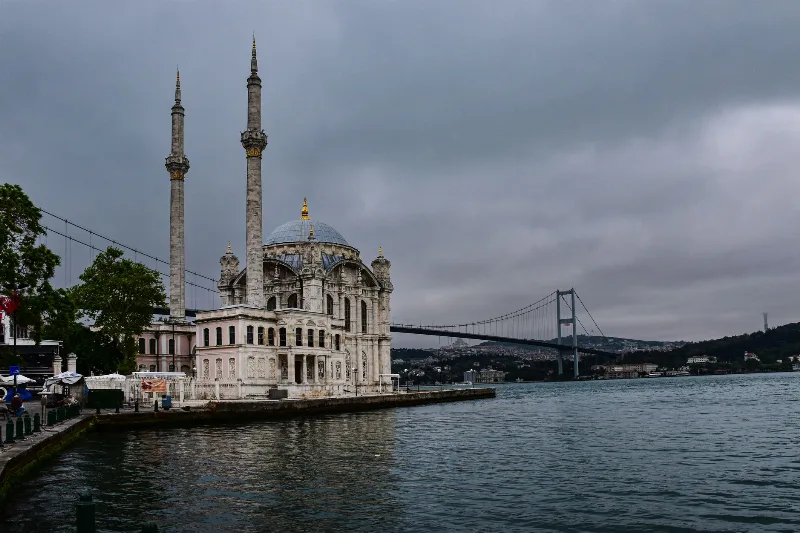
2-Day Istanbul Bosphorus Route
A two-day Bosphorus route that starts on Istanbul's European shore at Ortaköy and Bebek, includes a ferry cruise up the strait, then crosses to the Asian side for Kadıköy and Üsküdar.
Explore →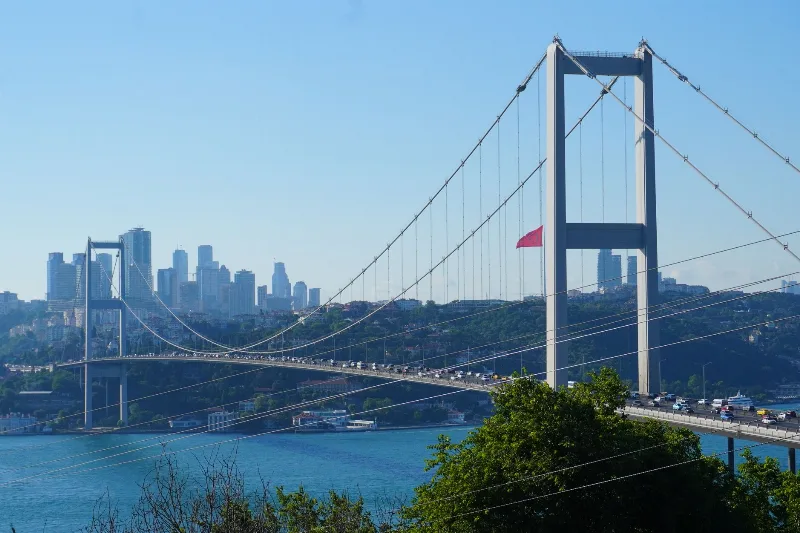
3-Day Istanbul to Bursa Route
Explore the first Ottoman capital on a three-day route from Istanbul to Bursa, combining historic city sites, the mountain landscapes of Uludağ, and the preserved village of Cumalıkızık.
Explore →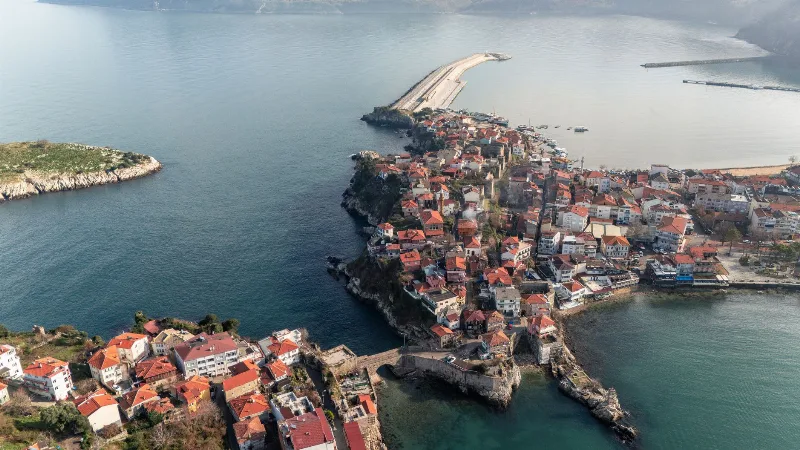
4-Day Western Black Sea Route
A four-day driving route through Türkiye's Western Black Sea region, linking the historic town of Safranbolu with the coastal town of Amasra and the inland city of Kastamonu.
Explore →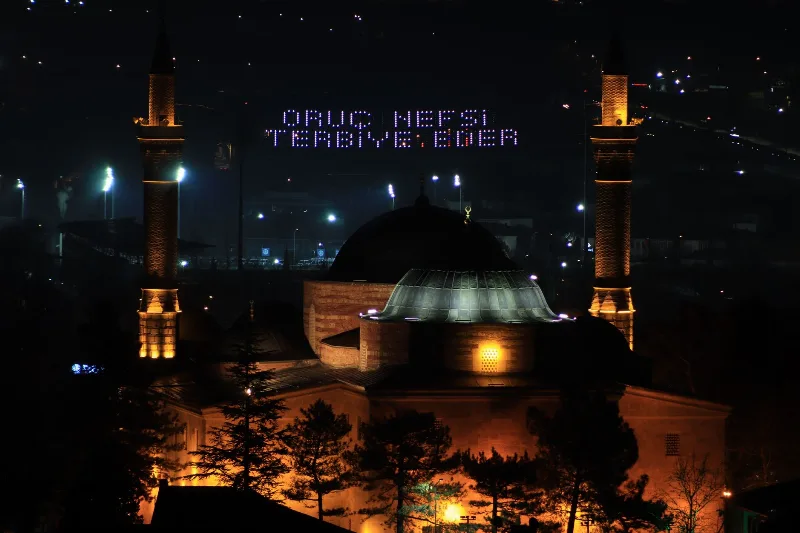
2-Day Bursa and Uludağ Route
A two-day route through Bursa's Ottoman monuments and up to the Uludağ National Park by cable car, combining city walking with mountain hiking or skiing.
Explore →Related content
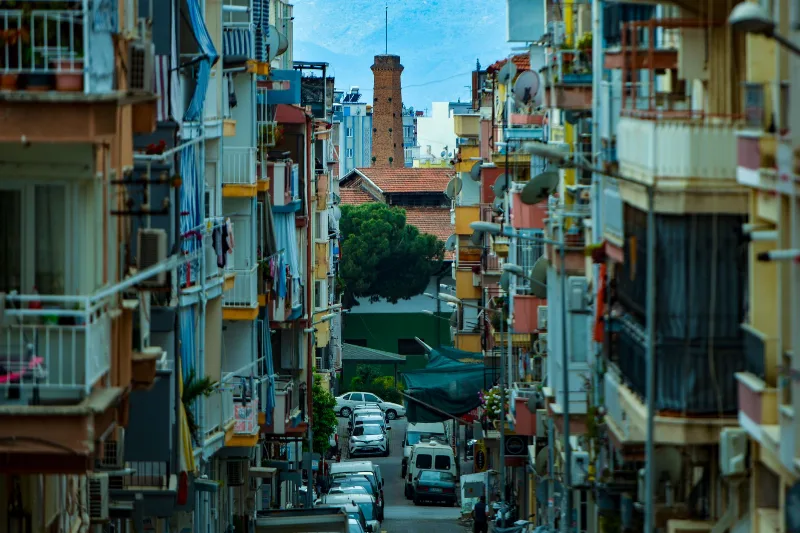
Aydın
Aydın is the inland capital of Aydın Province in Türkiye's Aegean region, recognised for its fig production and its position between the fertile Büyük Menderes valley, the coastal district of Kuşadası and several major ancient sites.
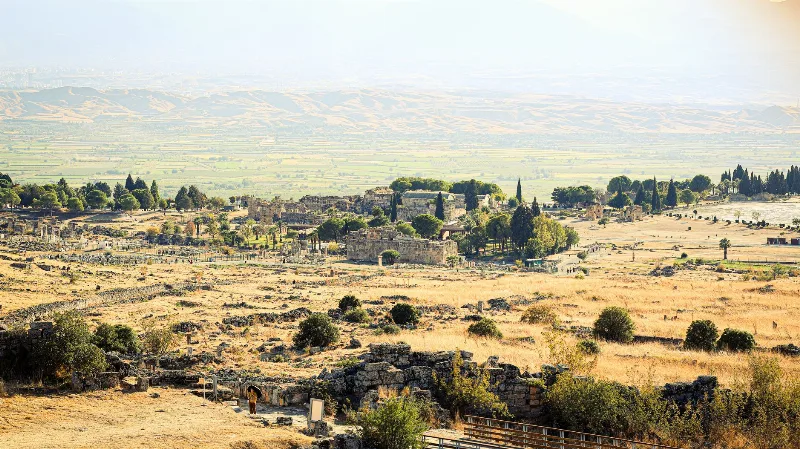
Denizli
Denizli is the inland capital of Denizli Province in Türkiye's Aegean region, known internationally for the Pamukkale travertine terraces and ancient Hierapolis, and at home as a major textile city with its own long-crowing rooster breed.
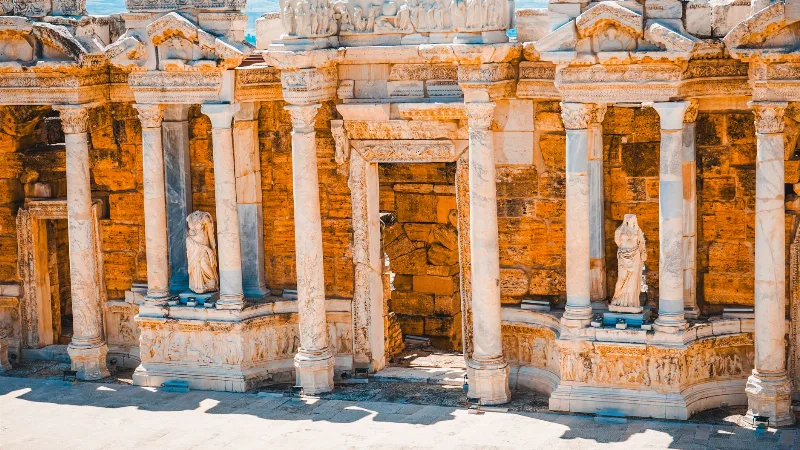
Hierapolis
Hierapolis is an ancient city in Denizli Province, Türkiye, built beside the hot springs and travertine terraces of Pamukkale. Its Roman theatre, vast necropolis, baths and the sanctuary of Apollo make it one of the most extensively preserved Greco-Roman cities in Anatolia and a UNESCO World Heritage Site.
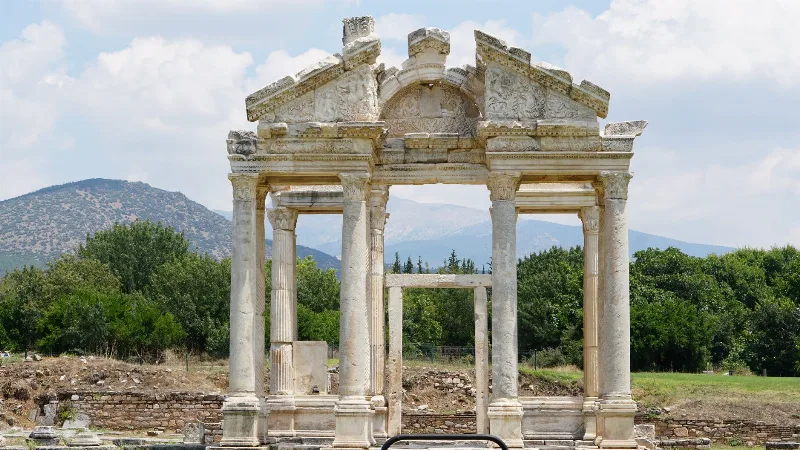
Aphrodisias
Aphrodisias is an ancient Greek city in Aydın Province dedicated to the goddess Aphrodite, a UNESCO World Heritage Site known for its stadium, temple and rich marble sculpture tradition.
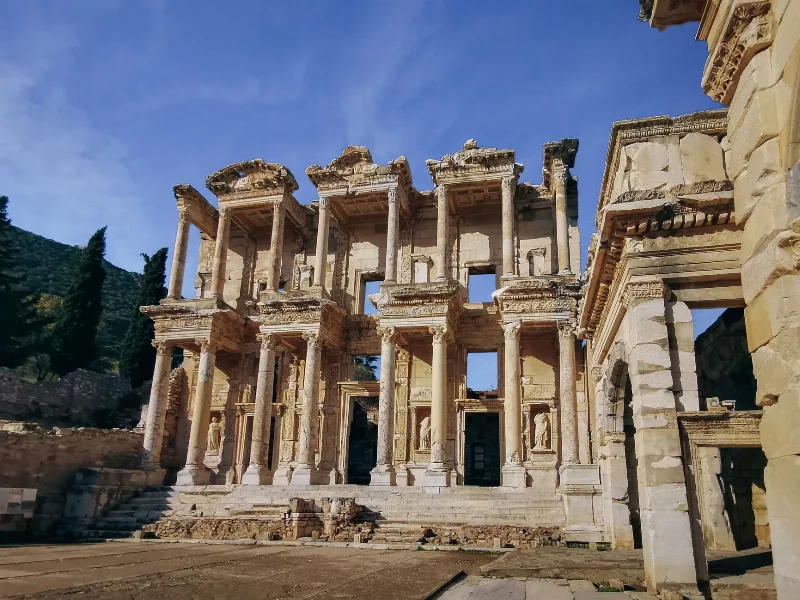
6-Day Aegean Ancient Cities Route
A six-day linear journey from Izmir to Denizli through the great ancient cities of the Aegean, linking Ephesus, Priene, Miletus, Didyma, Lake Bafa, Pamukkale, Laodicea and Aphrodisias in one coherent corridor.
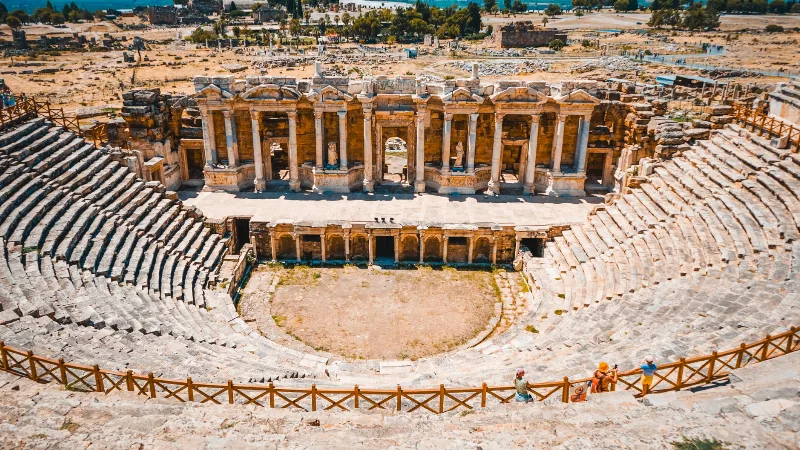
Hierapolis
Hierapolis is an ancient Graeco-Roman city built directly on the plateau above the travertine terraces of Pamukkale in southwestern Türkiye. Its thermal springs, the Plutonium, the necropolis and the martyrion of Philip made it one of the most distinctive sanctuaries of the ancient world.