
Aphrodisias
Aphrodisias is an ancient Greek city in Aydın Province dedicated to the goddess Aphrodite, a UNESCO World Heritage Site known for its stadium, temple and rich marble sculpture tradition.
Aphrodisias is an ancient Greek city in the Karacasu district of Aydın Province in western Türkiye, built around the worship of Aphrodite, the goddess of love. Its ruins occupy a plateau above the Büyük Menderes (Meander) river valley, at the foot of the mountain known as Baba Dağ, and the site holds UNESCO World Heritage status. It is best known for a large and unusually well-preserved stadium, a temple of Aphrodite, and an exceptional body of marble sculpture that was made in the city itself and is now displayed in an on-site museum.
Where Aphrodisias Is Located
The city sits inland in southwestern Anatolia, in the upper reaches of the Meander valley, rather than on the Aegean coast. This inland position explains much about it: the settlement grew where a marble source and a fertile valley met, and it developed its own identity instead of following the fortunes of the coastal Greek cities. Aydın is the provincial capital, and Karacasu is the surrounding district. The modern village of Geyre lies directly at the edge of the ruins, so arriving visitors pass through contemporary village life before reaching the ancient streets.
The Sanctuary of Aphrodite and the City's Origin
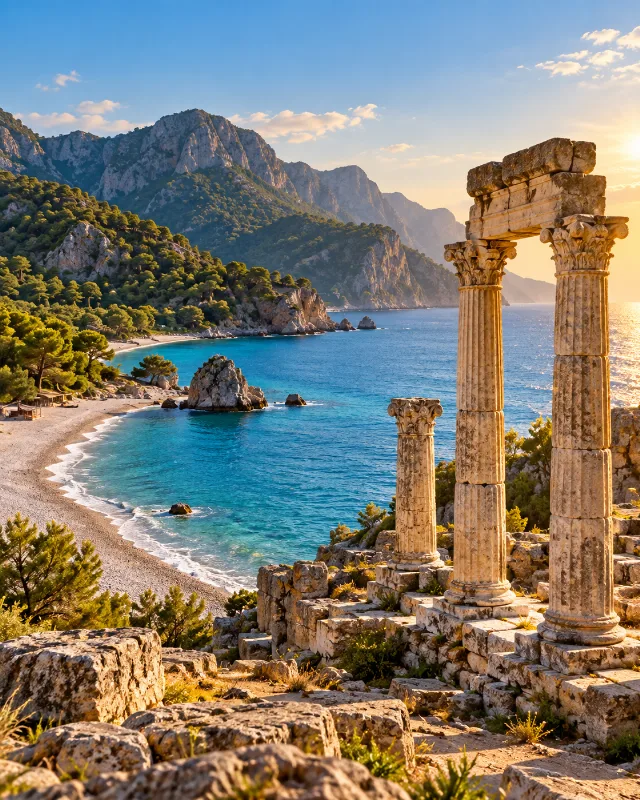
The name Aphrodisias is simply the city of Aphrodite, and the temple at its heart was the reason the settlement existed in the first place. What began as a sanctuary grew into a Hellenistic city and later a prosperous Roman one. The temple itself is one of the defining monuments of the site. Its columns were later reused when the building was converted into a Christian basilica in late antiquity, so what stands today shows two religious phases layered on the same footprint. That visible reworking is one of the reasons the site is valuable to historians: it documents the transition from pagan cult to Christian worship within a single structure.
The Stadium
The stadium is often the single image that brings people to Aphrodisias. It is a long, narrow oval carved into the ground, with stone seating that survives along much of its length, making it one of the most complete ancient stadiums anywhere in the Mediterranean world. Athletic contests and other public events were held here. Because the seating is largely intact, visitors can still read the shape of the spectator experience, something that is lost at many other ancient sites where only fragments of the structure remain.
The Tetrapylon, Theatre and Public Buildings
A tetrapylon, a monumental gateway formed by four groups of columns, marks one of the approaches into the city centre and has been re-erected so its original form is easy to understand. Beyond it, the urban core contains a theatre built into the slope, a council house where civic business was conducted, an agora that served as the commercial and social heart of the city, and a set of baths associated with the emperor Hadrian. Together these buildings give a sense of a well-planned Roman provincial city with a full range of civic amenities rather than a single famous temple.
The Sebastion and the Imperial Cult
Aphrodisias also hosted a sanctuary dedicated to the imperial family, known as the Sebastion. Relief panels carved for this complex depict members of the Julio-Claudian dynasty and mythological scenes, blending Roman political loyalty with local sculptural skill. The surviving reliefs are among the most distinctive artistic documents from the site, because they place emperors and gods in the same decorative program and show how a provincial city expressed its connection to Rome.
Marble and the Aphrodisias School of Sculpture
What truly sets Aphrodisias apart is its marble. Quarries in the surrounding mountains supplied stone of high quality, and the city became a centre of sculpture production whose workshops exported finished works across the Roman world. Portrait busts, statues, sarcophagi and architectural decoration were carved here in large numbers. Because so much sculpture was found in and around the city, Aphrodisias functions today both as an archaeological site and as a record of a working sculptural industry. Recognising this helps a visitor understand why the museum matters as much as the ruins themselves.
What Can Actually Be Seen
A walk through the site takes in the temple, the stadium, the tetrapylon, the theatre, the council house, the agora, the baths and the imperial sanctuary, along with stretches of paved streets, colonnades and city walls. Inscriptions, carved names and decorative details remain visible on many stones. The on-site museum houses sculpture recovered during excavation, including portrait and idealised figures, which gives context to the empty pedestals and broken forms outside. Planning time for both the open ruins and the museum is worthwhile, because the two halves of the visit explain each other.
Terrain, Walking and Practical Visiting Notes
The site is spread over uneven ground, with a mix of paved paths, gravel, grass, steps and ancient stone surfaces. Comfortable walking shoes are more useful than sandals, and a hat and water are sensible because shade is limited and the plateau is exposed. Visitors with limited mobility should expect some sections to be difficult, while the main axes of the city are generally walkable. The ruins lie a short distance from the village of Geyre and are normally reached by road, usually by private car or organised transport, with Aydın and Denizli serving as the main regional hubs.
Seasons and Timing
Summers in inland Aydın are hot and bright, and the lack of shade on the plateau makes midday hours uncomfortable. Spring and autumn offer more moderate temperatures and are generally the most pleasant periods for walking the site at length. Winter visits can be quiet and cool, and rain occasionally makes paths slippery. Because the ruins are large, allowing several hours rather than a quick stop produces a far better understanding of how the buildings relate to one another.
Related Places in the Surrounding Region
Aphrodisias belongs to a wider landscape of ancient sites in the Meander valley. The town of Karacasu and the village of Geyre provide the immediate setting. Further afield, Denizli is the gateway to the travertine terraces and ancient city of Hierapolis at Pamukkale, and to Laodicea, both of which share the Roman provincial character found at Aphrodisias. The marble-bearing slopes of Baba Dağ above the site connect the ruins to the material that made the city famous, and the wider Büyük Menderes valley links Aphrodisias to a chain of settlements that once depended on the same river system.
Related content
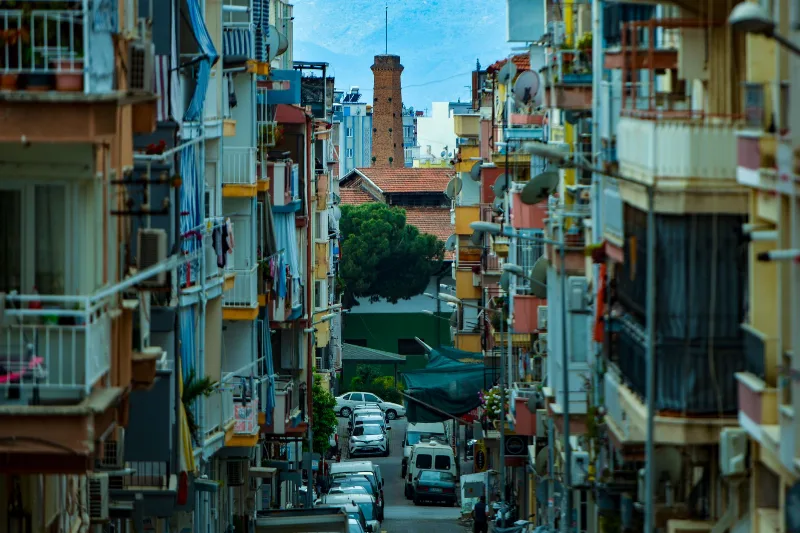
Aydın
Aydın is the inland capital of Aydın Province in Türkiye's Aegean region, recognised for its fig production and its position between the fertile Büyük Menderes valley, the coastal district of Kuşadası and several major ancient sites.
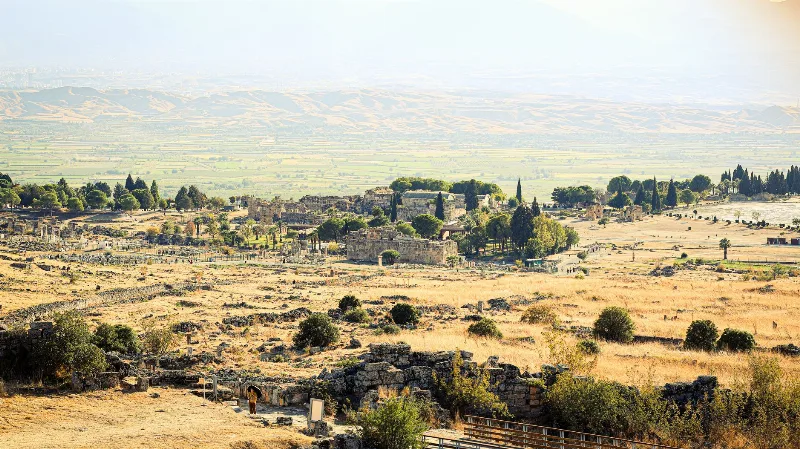
Denizli
Denizli is the inland capital of Denizli Province in Türkiye's Aegean region, known internationally for the Pamukkale travertine terraces and ancient Hierapolis, and at home as a major textile city with its own long-crowing rooster breed.
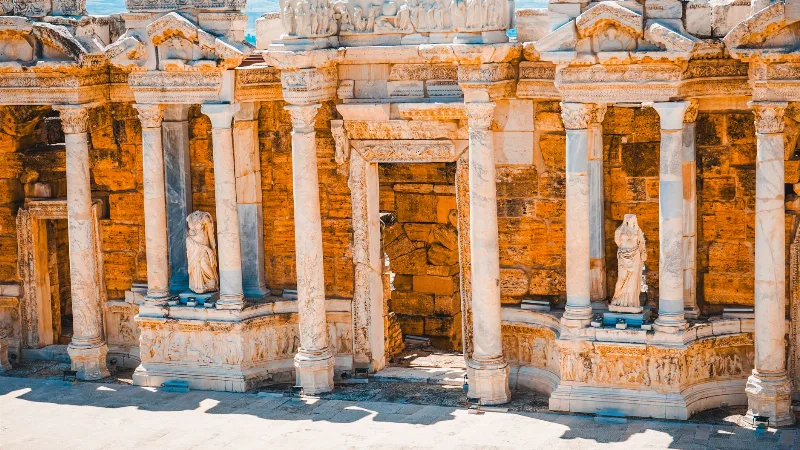
Hierapolis
Hierapolis is an ancient city in Denizli Province, Türkiye, built beside the hot springs and travertine terraces of Pamukkale. Its Roman theatre, vast necropolis, baths and the sanctuary of Apollo make it one of the most extensively preserved Greco-Roman cities in Anatolia and a UNESCO World Heritage Site.
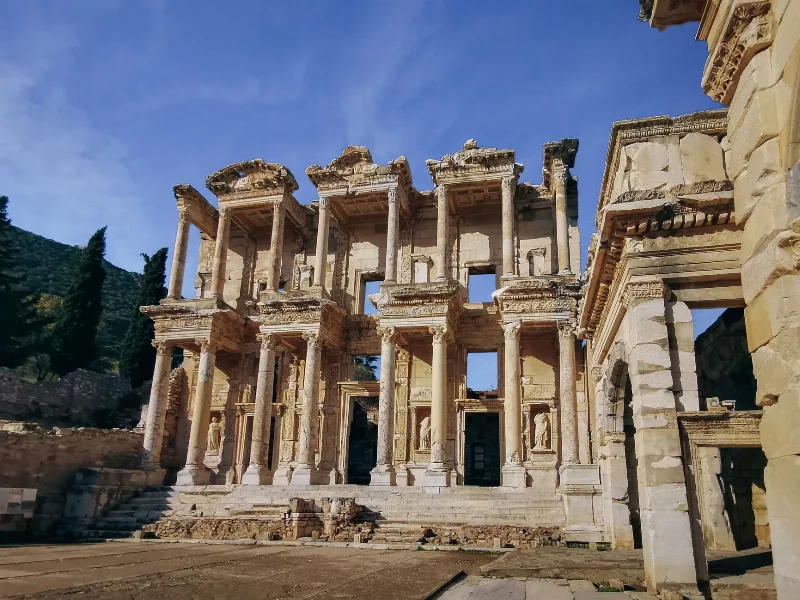
6-Day Aegean Ancient Cities Route
A six-day linear journey from Izmir to Denizli through the great ancient cities of the Aegean, linking Ephesus, Priene, Miletus, Didyma, Lake Bafa, Pamukkale, Laodicea and Aphrodisias in one coherent corridor.
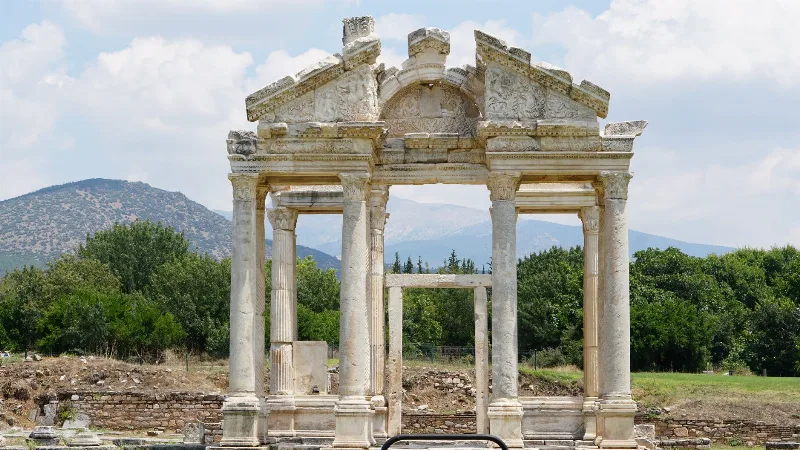
Aphrodisias
Aphrodisias is an ancient city in Aydın Province, Türkiye, built around a sanctuary of Aphrodite and celebrated for its marble sculpture and remarkably intact public buildings. It has been a UNESCO World Heritage Site since 2017.
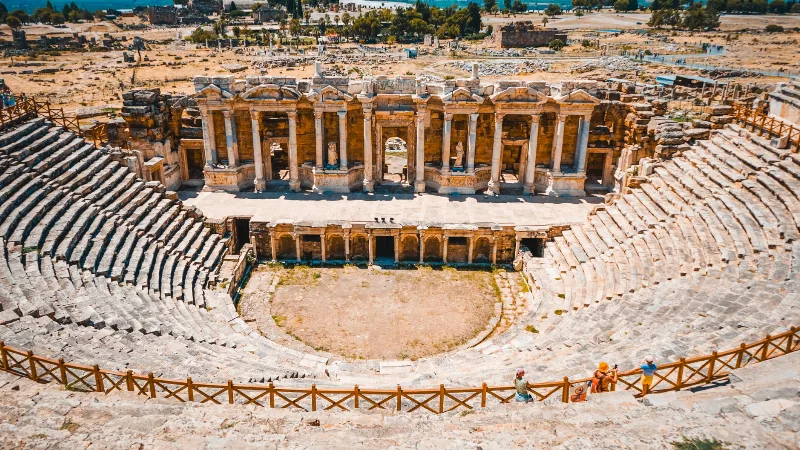
Hierapolis
Hierapolis is an ancient Graeco-Roman city built directly on the plateau above the travertine terraces of Pamukkale in southwestern Türkiye. Its thermal springs, the Plutonium, the necropolis and the martyrion of Philip made it one of the most distinctive sanctuaries of the ancient world.