
The Ancient City of Aphrodisias in Aydın
STORIES FROM TÜRKİYE
Aphrodisias lies inland in the province of Aydın, in western Türkiye, where the plain meets the foothills of the mountains. The ancient city takes its name from Aphrodite, the goddess of love, whose sanctuary stood here long before Roman rule arrived. Close to the village of Geyre, the site is one of the country's most rewarding archaeological destinations, with white marble monuments rising among poplars and hills.
Known by other names in later centuries, the ruins spread across a green valley roughly two hours inland from the Aegean coast. Visitors who travel here find a city that was planned, built and decorated with unusual care.
A City Named for Aphrodite
The settlement grew around a sanctuary that drew worshippers and gifts from across Anatolia. In the first century BCE the community was refounded with Roman support and formally took the name Aphrodisias, sealing a bond with the goddess that had existed for generations. Its wealth came from marble quarries in the nearby hills and from the people who knew how to work that stone.
The Temple of Aphrodite stood at the heart of the city, an unusually long Ionic building whose columns can still be counted among the ruins. In late antiquity it was converted into a church, a change that helped preserve parts of the structure. A monumental gateway known as the Tetrapylon frames the approach to the sanctuary, its columns carved from local marble.
The Stadium and Public Buildings
The stadium is among the most completely preserved of its kind in the Mediterranean world. It is a long oval arena for foot races and athletic contests, with banks of seating that once held tens of thousands of spectators. Standing at one end, it is easy to picture the noise and colour of a Roman festival day.
Elsewhere in the city, a theatre, a council house known as the bouleuterion, a bath complex and a colonnaded street suggest the rhythm of daily life. The Sebasteion, a monumental complex decorated with sculpted panels, honoured the Roman emperors and the imperial family alongside scenes from myth.
A Workshop of Marble Sculpture
Aphrodisias was also a centre for sculpture, and its workshops supplied statues, portrait busts and architectural decoration to cities across the Roman world. Marble came from the surrounding hills, so quarrying, transport and carving could happen within a short distance of one another. The relief panels of the Sebasteion are often cited as fine examples of this local skill.
Many finished and unfinished pieces have been found in the city, which offers a rare look at how a workshop of this period operated. Sculptors worked with mythological figures, emperors, athletes and private individuals, and their output influenced tastes far beyond Caria.
From Roman City to Quiet Village
The city prospered through the Roman and early Byzantine periods, then declined as earthquakes, changing trade routes and political upheaval took their toll. Its name changed, its buildings slowly collapsed, and marble was reused in new structures. A small village eventually grew over part of the ruins.
Interest revived in the twentieth century, when systematic excavation began and much of the ancient city was uncovered again. Aphrodisias was added to the UNESCO World Heritage List in 2017, recognising both the monuments and the long record of research carried out here.
Walking Through the Ruins Today
The site sits in a valley framed by hills and poplar trees, and exploring it on foot takes several hours. Columns, gateways and seating banks appear at intervals along gravel paths, and the scale of the stadium becomes clear only when you stand beside it.
A museum at the site displays finds from the excavations, including sculptures and portrait heads that give a sense of the people who once lived here. Spring and autumn bring mild weather, wildflowers on the surrounding slopes and soft light that suits the marble. The nearby countryside remains agricultural, with fields and orchards that hint at how the valley has supported settlement for thousands of years.
Historic places
Explore history →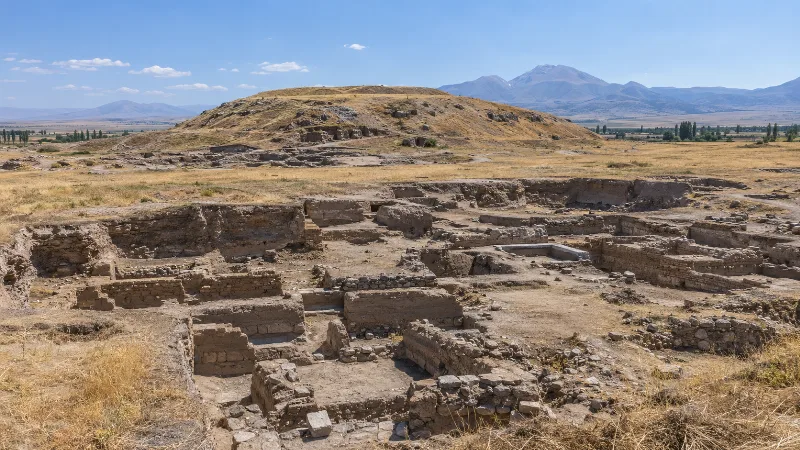
Kültepe
Kültepe, the ancient city of Kanesh, is a Bronze Age mound and lower-city site northeast of Kayseri in central Türkiye. Its Assyrian merchants left behind thousands of cuneiform tablets, the earliest written records discovered in Anatolia.
Explore →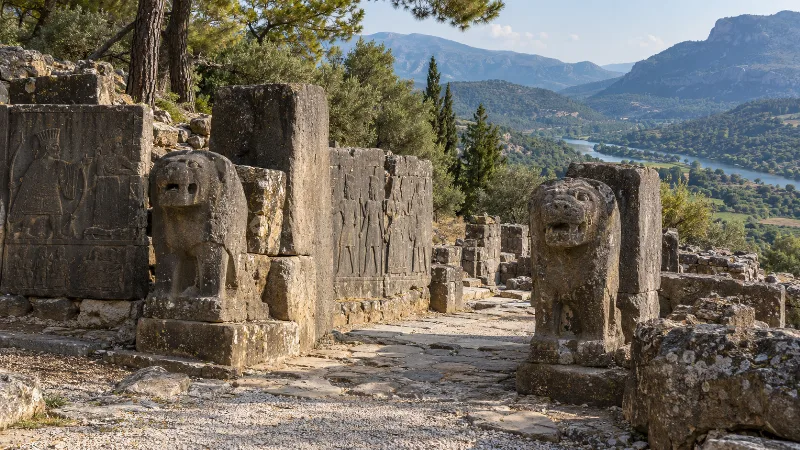
Karatepe
Karatepe is an 8th-century BC Hittite fortress above the Ceyhan River in Osmaniye Province, whose Phoenician–Luwian bilingual inscriptions unlocked the reading of Anatolian hieroglyphs.
Explore →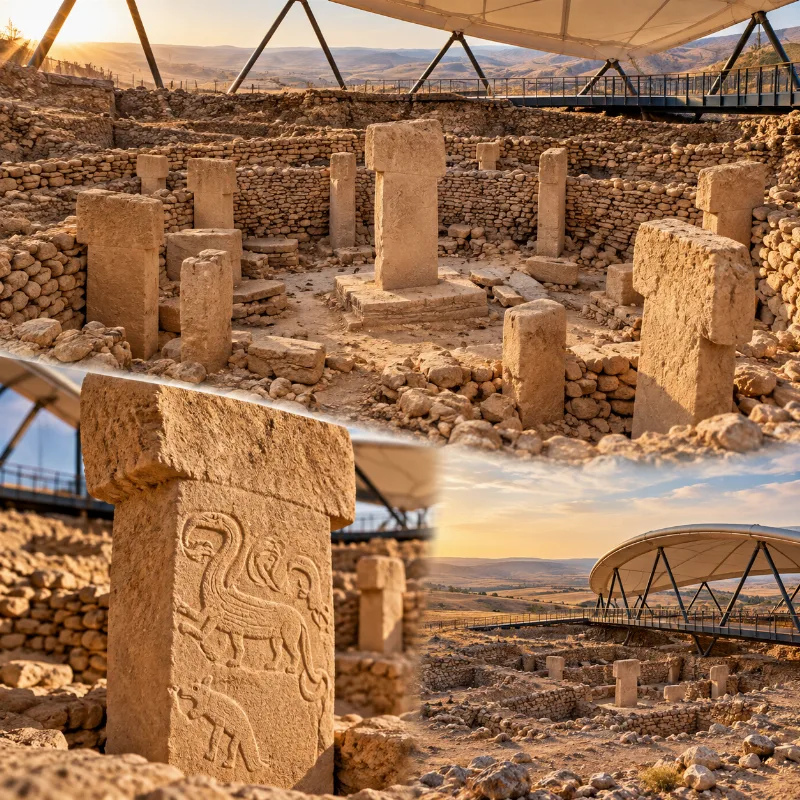
Göbeklitepe
A major Neolithic archaeological site near Şanlıurfa, known for its monumental stone enclosures and carved T-shaped pillars.
Explore →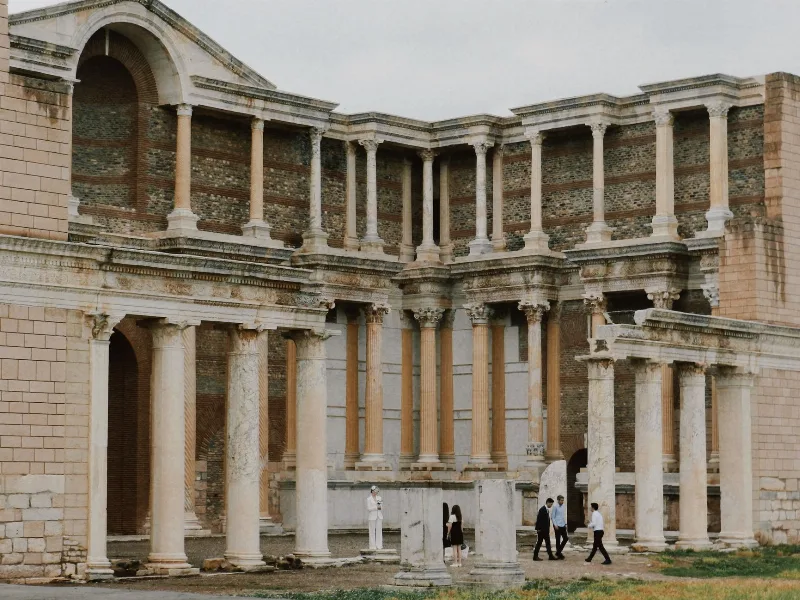
Sardis
Sardis was the Iron Age capital of the Lydian Kingdom in western Anatolia and later a major Roman and Byzantine city. Its surviving monuments include the Temple of Artemis, a vast bath-gymnasium complex and one of the largest ancient synagogues ever found.
Explore →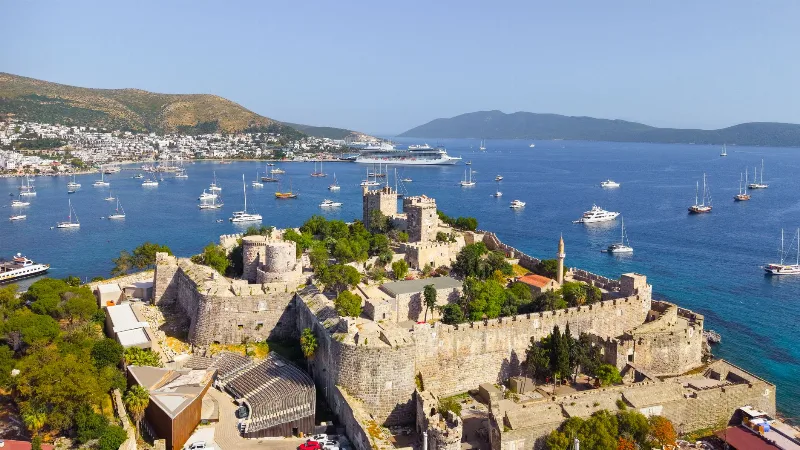
Bodrum Castle
Raised by the Knights Hospitaller above ancient Halicarnassus, Bodrum Castle is both a medieval fortress and the home of one of the world's leading museums of underwater archaeology.
Explore →Related content
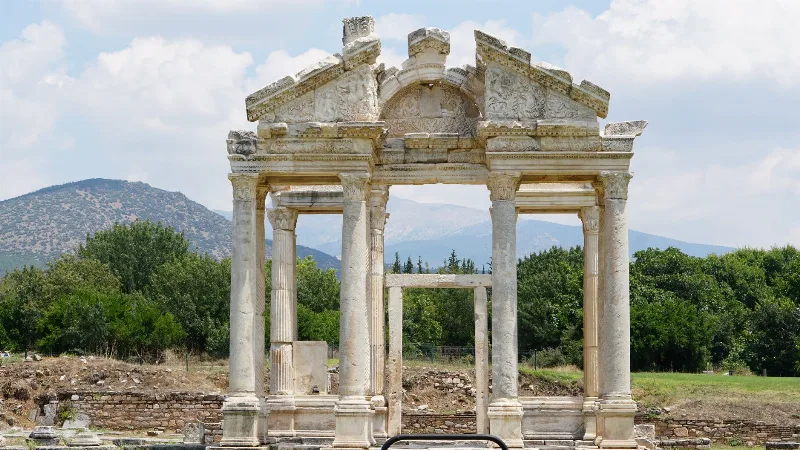
Aphrodisias
Aphrodisias is an ancient city in Aydın Province, Türkiye, built around a sanctuary of Aphrodite and celebrated for its marble sculpture and remarkably intact public buildings. It has been a UNESCO World Heritage Site since 2017.
Aphrodisias
Aphrodisias is an ancient Greek city in Aydın Province dedicated to the goddess Aphrodite, a UNESCO World Heritage Site known for its stadium, temple and rich marble sculpture tradition.
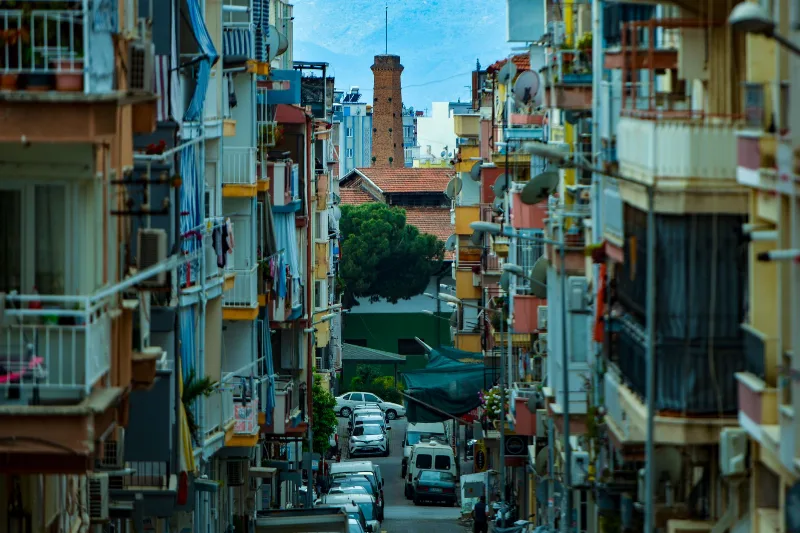
Aydın
Aydın is the inland capital of Aydın Province in Türkiye's Aegean region, recognised for its fig production and its position between the fertile Büyük Menderes valley, the coastal district of Kuşadası and several major ancient sites.
Karacasu Pottery Tradition in Aydın
In the inland hills of Aydın Province, Karacasu keeps a working pottery tradition built on local red clay, hand-turned wheels and modest kilns.
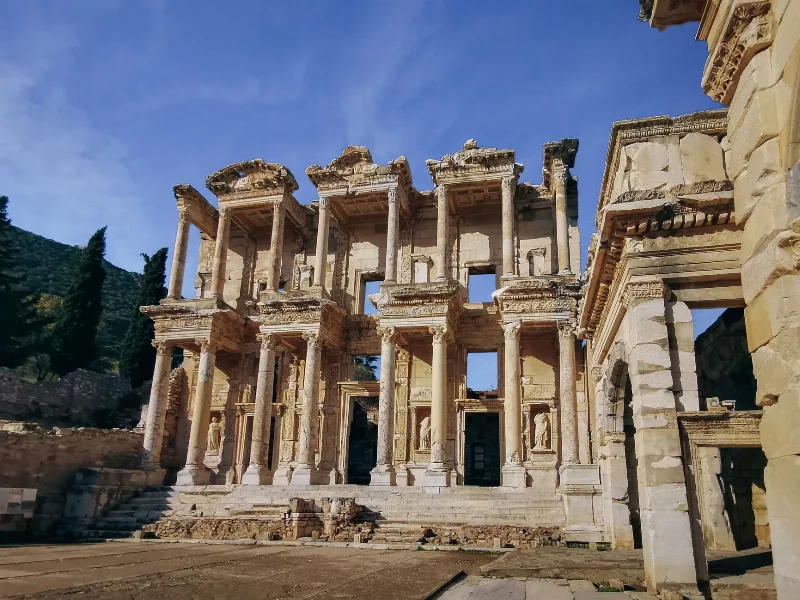
6-Day Aegean Ancient Cities Route
A six-day linear journey from Izmir to Denizli through the great ancient cities of the Aegean, linking Ephesus, Priene, Miletus, Didyma, Lake Bafa, Pamukkale, Laodicea and Aphrodisias in one coherent corridor.
Nazilli
Nazilli is an inland district of Aydın Province in Türkiye's Aegean region, set in the Büyük Menderes valley and known for figs, cotton and its long-standing market town character.