
Sardis
Sardis was the Iron Age capital of the Lydian Kingdom in western Anatolia and later a major Roman and Byzantine city. Its surviving monuments include the Temple of Artemis, a vast bath-gymnasium complex and one of the largest ancient synagogues ever found.
Sardis was an ancient city in the Hermus (Gediz) River plain of western Anatolia, in what is now Manisa Province, near the town of Sart in the Salihli district. It served as the capital of the Lydian Kingdom during the Iron Age and remained an important centre through the Persian, Hellenistic, Roman and Byzantine periods. Its wealth came largely from the gold-bearing alluvium of the Pactolus stream, and the city is widely regarded as one of the places where the minting of coins began. Among the main surviving remains are the Temple of Artemis, a large Roman bath-gymnasium complex and a synagogue that is among the largest and best preserved of the ancient world.
Where Sardis Is Located
Sardis lies at the southern edge of the Gediz (ancient Hermus) plain in Manisa Province, at the foot of Mount Tmolus (modern Boz Dağı), roughly ten kilometres west of Salihli. The Pactolus (Sart Çayı) runs through the area, and the ancient city spread across a broad, gently sloping zone between the flat river plain and a steep hill to the north that served as its acropolis. The modern village of Sart sits within and around the archaeological zone, so the ancient ruins and a small present-day settlement share the same ground. The surrounding landscape is open agricultural plain, framed by the Boz Dağı range, and the setting explains much of the city's history: a defensible hill, a river carrying mineral wealth, and a fertile valley crossed by routes linking the Aegean coast to the Anatolian interior.
The Lydian Capital and the Origins of Coinage
Sardis was the seat of the Lydian kings, whose kingdom dominated western Anatolia in the Iron Age. The dynasty known as the Mermnads, associated with rulers such as Gyges, Alyattes and Croesus, ruled from Sardis from around the seventh century BCE. Lydian power rested on control of the Hermus valley and on the gold and silver that the Pactolus carried down from the mountains. Archaeologically, the site preserves evidence of the refining and working of precious metals, and the Lydians are generally credited with producing some of the earliest coins, struck in electrum, a natural gold-silver alloy, during the seventh century BCE. This combination of resources, technology and political power made Sardis one of the wealthiest cities of its age.
The most famous Lydian ruler, Croesus, reigned in the sixth century BCE and became a byword for riches. According to the Greek historian Herodotus, Croesus consulted the oracle at Delphi before going to war with Persia and was told that a great empire would fall; he attacked, and his own empire was the one destroyed. In 546 BCE the Persian king Cyrus the Great defeated Croesus and took Sardis. The story of the oracle is a literary tradition rather than a documented fact, but the fall of Lydian Sardis to Persia is well established.
Sardis under the Persians and the Coming of Alexander
After the Persian conquest, Sardis became the administrative centre of a satrapy and one of the western anchors of the Achaemenid Empire. Herodotus describes a great royal road that linked Sardis to Susa in the Persian heartland, a route that underlined the city's role as a bridge between the Aegean world and the Persian interior. Sardis was not always peaceful: during the Ionian Revolt in 498 BCE, the city was attacked and burned by Greek and Ionian forces, an event that helped trigger the wider Persian Wars. In 334 BCE, Alexander the Great entered Sardis during his campaign against Persia and granted the city a degree of autonomy, marking the end of Achaemenid control.
Hellenistic and Roman Sardis
After Alexander's death, Sardis passed through the hands of his successors and was contested by the Seleucid kings and other Hellenistic powers. Following the Roman victory over the Seleucids and the settlement of the early second century BCE, the region was assigned to the Attalid kingdom of Pergamon. When Attalus III bequeathed his kingdom to Rome in 133 BCE, Sardis passed under Roman rule. The city prospered in the imperial period, but it was struck by a serious earthquake in 17 CE. The emperor Tiberius provided funds and tax relief for rebuilding, and the city was renewed on a grander scale. By late antiquity, after the Roman provincial reorganizations, Sardis had become the capital of the province of Lydia, confirming its continuing administrative importance.
The Temple of Artemis
The Temple of Artemis is the most conspicuous monument at Sardis. Its site had earlier religious significance: a large Lydian altar dedicated to Artemis, dated to the sixth century BCE, stood here and ranks among the biggest known altars of the ancient world. The Hellenistic temple built over and around this earlier cult place was begun in the third century BCE and was designed in the Ionic order on a very large scale. It was never fully completed, and its construction history spans several centuries. Some of its columns still stand, and the massive foundations and lower colonnade give a clear sense of its intended size. In the fourth century CE, a small church was built into part of the temple, an early example of a Christian place of worship inserted directly into a pagan sanctuary.
The Roman Bath-Gymnasium Complex
Sardis preserves one of the largest surviving bath-gymnasium complexes of the Roman world. Built in the second century CE, the complex combined bathing halls, exercise areas and social spaces in the manner typical of Greek and Roman civic life. Its most celebrated element is the so-called Marble Court, an elaborate colonnaded court faced with coloured marble, parts of which have been re-erected so that visitors can read its architectural design. The complex also included a large open palaestra for athletic activity. The scale of the building reflects the wealth and status of Sardis in the Roman imperial period, when public architecture was a principal way for a city to display its standing.
The Sardis Synagogue
Attached to the bath-gymnasium complex is a synagogue that was discovered in 1962. It ranks among the largest ancient synagogues known and dates to late antiquity, generally placed in the fourth to fifth century CE. Its plan includes a colonnaded forecourt and a long main hall, with floors partly paved in marble and partly decorated with mosaics. At one end stood an apsidal shrine that held the Torah scrolls. More than eighty Greek inscriptions were found in the building, many of them dedicatory texts naming donors and officials, and Hebrew is also present. The synagogue's position within a major civic complex is significant, showing that a substantial Jewish community lived and worshipped in the city and that it was embedded in the public life of Sardis during the Roman and early Byzantine periods.
Byzantine Sardis and the End of the Ancient City
Sardis continued as a Christian city in the Byzantine period and was the seat of a bishopric, later a metropolitan see. Over time, however, its extent shrank, as it did in many Anatolian cities facing warfare, economic change and shifting settlement patterns. The ancient urban area was gradually abandoned, and occupation contracted to a smaller settlement. Systematic archaeological work at the site began in the early twentieth century under Princeton University, and large-scale excavation resumed in 1958 through a long-running Harvard-Cornell expedition. That work has recovered the Lydian levels, the Roman civic buildings and the synagogue, and it continues to shape understanding of the site.
What Survives Today
Visitors to Sardis can see several distinct groups of monuments. The Temple of Artemis, with its standing columns, unfinished colonnade and incorporated church, is the most visually striking. The bath-gymnasium complex, including the restored Marble Court, shows Roman civic architecture at a grand scale, and the synagogue beside it preserves mosaic floors and the apsidal Torah shrine. Traces of the colonnaded main street survive in the lower city, and the steep acropolis hill above retains ancient fortification walls. In the plain, remains associated with the Lydian period, including areas linked to craft production, have been identified. The site therefore spans a very long chronological range, from the Iron Age Lydian kingdom through the Persian, Hellenistic, Roman and Byzantine periods.
Practical Notes for a Visit
Sardis is reached from the town of Salihli in Manisa Province, with the ruins lying close to the village of Sart. The nearest larger cities are Manisa and İzmir, and the site is generally approached by road. The lower city area is mostly level and relatively easy to walk, while the acropolis involves a steep climb over rough ground and is considerably more demanding. The climate is Mediterranean, with hot, dry summers and mild, wetter winters, so spring and autumn are usually the most comfortable seasons for exploring the ruins on foot. Sturdy shoes, water and sun protection are sensible, particularly for the uphill sections. Because conditions and facilities at archaeological sites can change, it is worth confirming current access arrangements locally before travelling.
Related Places in the Region
Sardis belongs to the wider historical landscape of the Gediz valley and the surrounding mountains. The nearby Boz Dağı range forms the natural backdrop to the site, and the modern towns of Salihli and Sart are the immediate reference points for reaching it. The broader region of Manisa and the Aegean coast contains numerous other ancient and later historic sites, so Sardis is often visited as part of a wider route through western Anatolia. Its combination of Lydian, Persian, Hellenistic, Roman and Byzantine remains makes it one of the most historically layered archaeological sites in Türkiye.
Routes
All routes →
5-Day Fethiye to Kaş Lycian Coast Route
A five-day linear route along the Lycian coast from Fethiye to Kaş, linking Ölüdeniz, Kabak, the Xanthos valley, Patara and Kalkan by road and on foot.
Explore →
7-Day North Aegean to Ephesus Route
A seven-day southbound route through Troy, Assos, Bozcaada, Ayvalık, Bergama, İzmir and Ephesus, combining archaeology, coastal towns and Aegean culture.
Explore →
6-Day Central Black Sea Route
A six-day journey along Turkey's Central Black Sea coast from Samsun to Trabzon, visiting Ordu and Giresun with highland and beach stops.
Explore →
3-Day Antalya Ancient Coast Route
A three-day route combining Antalya’s old city with Perge, Aspendos, Side, Olympos and the Mediterranean landscapes around Çıralı.
Explore →Related content
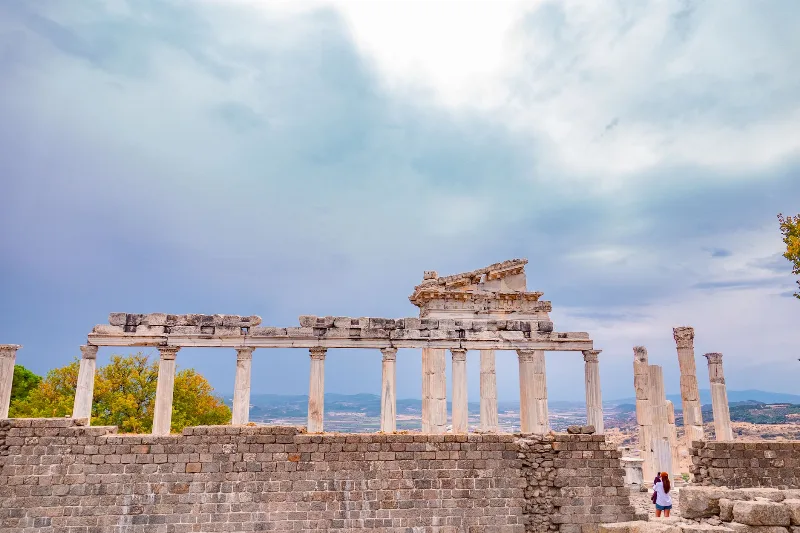
Pergamon
Pergamon was the Hellenistic capital of the Attalid dynasty in western Türkiye, built around a steep acropolis above the modern town of Bergama. Its Great Altar, theatre and Sanctuary of Asclepius make it one of the most important archaeological sites in Anatolia and a UNESCO World Heritage Site.
Pergamon
Pergamon is an ancient Greek city in Aeolis, today the modern town of Bergama in İzmir Province, Türkiye. Its acropolis, library and Great Altar of Zeus, together with the Asclepion healing sanctuary, form one of the most important archaeological settings in the eastern Mediterranean.
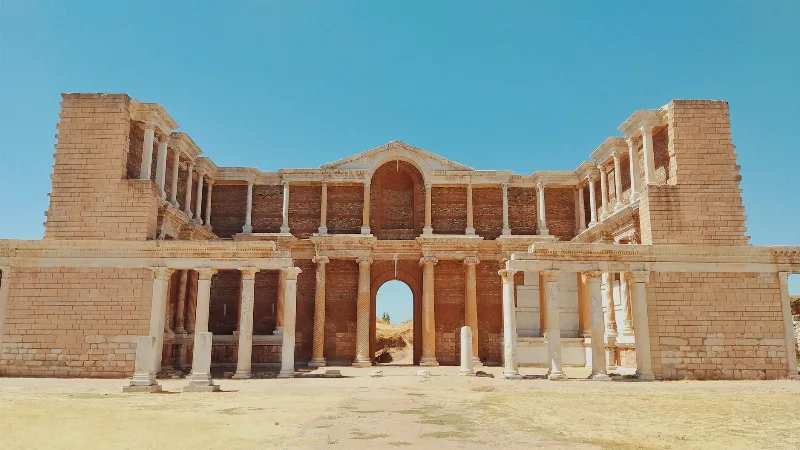
The Ancient City of Sardis in Lydia
Sardis, the ancient capital of Lydia in western Türkiye, preserves a monumental synagogue, a Roman gymnasium and the gold-bearing Pactolus river.
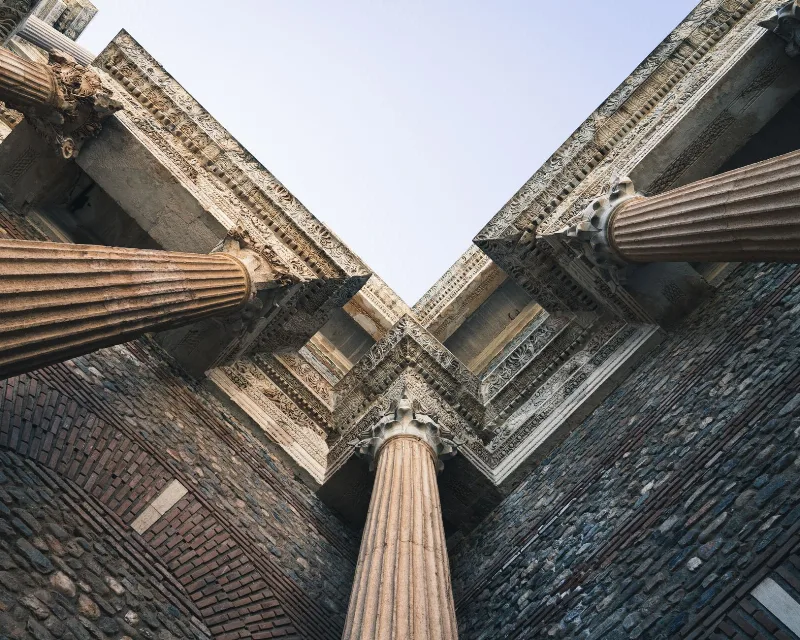
Sardis: The Lydian Capital of Croesus and the First Coins
Sardis was the capital of the Lydian kingdom and the place where coined money first appeared in the Western world. Its ruins in Manisa Province include a colossal Temple of Artemis, an ancient synagogue and the royal burial mounds of Bin Tepe.
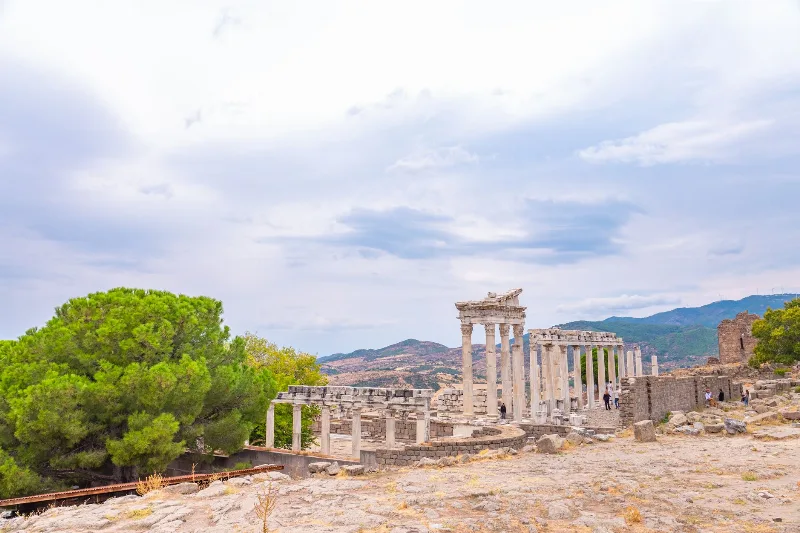
The Ancient City of Pergamon and Its Acropolis
Pergamon, now Bergama in Türkiye, is a UNESCO World Heritage Site with a dramatic acropolis, a Hellenistic theater, and a library that once rivaled Alexandria. Its ruins offer a deep dive into ancient history and culture.
Bergama and the Acropolis of Pergamon
Bergama in İzmir Province is the modern town beneath ancient Pergamon, where a hilltop acropolis, a healing sanctuary and a Roman basilica reveal centuries of Anatolian history.