
Sardis: The Lydian Capital of Croesus and the First Coins
Sardis was the capital of the Lydian kingdom and the place where coined money first appeared in the Western world. Its ruins in Manisa Province include a colossal Temple of Artemis, an ancient synagogue and the royal burial mounds of Bin Tepe.
Sardis was the capital of the kingdom of Lydia and one of the most consequential cities of the ancient Mediterranean world. It lies in the Gediz River valley in the modern Manisa Province of western Türkiye, immediately beside the village of Sart in Salihli district, at the northern foot of Mount Tmolus, the mountain now called Bozdağ. The city is known for two achievements above all others: it was the seat of the Lydian kings, including the famously wealthy Croesus, and it is generally credited with the earliest minting of coined money in the Western world. Its archaeological remains — a vast Temple of Artemis, one of the best-preserved ancient synagogues anywhere, a Roman bath-gymnasium complex and the royal tumulus cemetery at Bin Tepe — place it among the most significant excavated sites in Anatolia.
Where Sardis Actually Stands
Sardis occupies the southern edge of the broad, fertile Gediz plain, the ancient Hermus valley, which runs east from the Aegean coast toward the interior of Anatolia. The city was built against the lower slopes of Mount Tmolus, a mountain range that rises steeply to the south and separates the Gediz valley from the interior. A small stream, the ancient Pactolus and today the Sart Çayı, ran through the settlement and carried alluvial gold — a geological detail that shaped the city's history and its reputation for wealth.
The ruins are not a single compact cluster. They are divided into distinct sectors spread across the plain and the hillside: the Temple of Artemis stands in the flat ground near the modern road, the bath-gymnasium and synagogue complex sits a short distance away, and the acropolis occupies the rocky ridge above, reached by a steep climb. This layout means that visiting Sardis involves moving between separate areas rather than walking one continuous circuit.
Capital of Lydia and the Origins of Coinage
Lydia was one of the major powers of Iron Age Anatolia, and Sardis was its political and economic centre from at least the seventh century BC. The Lydian kings controlled the routes between the Aegean coast and the interior, and their capital benefited from the gold-bearing deposits of the Pactolus and the wider region. It was in this environment that the first coins were struck, made not of pure gold or silver but of electrum, a naturally occurring alloy of the two metals found in local riverbeds. The earliest pieces were simple lumps of electrum stamped with a punch mark, and over time they developed into stamped issues bearing the image of a lion, the emblem associated with the Lydian royal house.
Because this innovation is usually attributed to Lydia and its capital, Sardis is often described as the birthplace of coinage. Whether the very first struck coin came from the city itself or from another Lydian centre remains a matter of scholarly discussion, but there is no serious doubt that Sardis was the heart of the system that replaced weighed metal with standardised, state-issued money.
Croesus and the End of the Lydian Kingdom
The last Lydian king, Croesus, ruled in the middle of the sixth century BC and became a byword for riches in Greek and later European literature. His reign ended abruptly when he clashed with the expanding Achaemenid Persian empire. According to Herodotus, Croesus consulted the oracle at Delphi and was told that if he attacked the Persians he would destroy a great empire — a prophecy that turned out to refer to his own. The decisive battle was fought in 546 BC, and the Persian king Cyrus the Great took Sardis shortly afterwards.
Under Persian rule, Sardis did not fade. It became the capital of the satrapy of Sparda and the western terminus of the Royal Road that Herodotus describes running eastward to Susa. In 498 BC, during the Ionian Revolt, the city was sacked and burned by Greek forces, including Athenian troops — an act that helped set the stage for the later Persian invasions of Greece. Sardis later passed to Alexander the Great in 334 BC and then into the Hellenistic and Roman worlds.
The Temple of Artemis
The Temple of Artemis is the most striking monument at the site and the reason many visitors come. Construction began in the Hellenistic period, in the third century BC, on ground that had already been sacred for centuries — an earlier Lydian altar to Artemis stood in the same location. The building was designed as an enormous Ionic temple, one of the largest ever attempted in the Greek world, with columns roughly seventeen metres high.
It was never fully completed. Work continued over generations, was interrupted, and was resumed under Roman sponsorship, but the temple was left unfinished. Only two of its columns remain standing today, re-erected in the twentieth century from fallen drums, and their scale gives a clear sense of what the original structure would have looked like. In late antiquity a small church and other structures were built into part of the temple platform, a common fate for large pagan monuments after the spread of Christianity.
The Synagogue and the Late Antique City
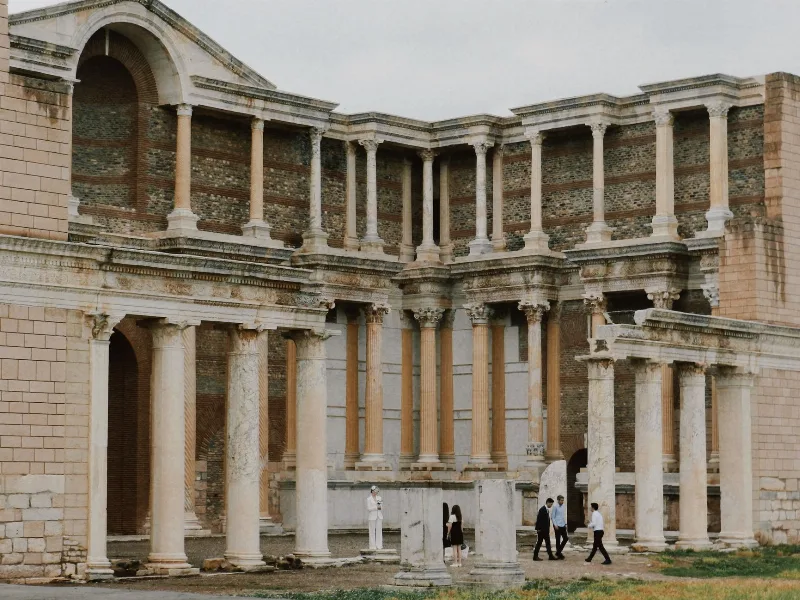
One of the most important discoveries at Sardis is its synagogue, excavated in the 1960s as part of a larger Roman bath and gymnasium complex. It is among the largest and best-preserved ancient synagogues known, and it dates in its main form to the late third or fourth century AD. The main hall was lined with columns and its floor covered in mosaics, while the walls were once faced with coloured marble. Inscriptions in Greek and Hebrew, along with depictions of Jewish symbols, have been found in and around the building.
Sardis also appears in the Christian New Testament as one of the seven churches addressed in the Book of Revelation. That reference reflects the city's continued importance in late antiquity, when it remained a regional administrative and religious centre. Its fortunes declined after a devastating sack in the early seventh century and subsequent raids, and the settlement shrank over the Byzantine and medieval periods.
The Gymnasium, Baths and Roman Road
The bath-gymnasium complex near the synagogue illustrates how a Roman imperial city of this size functioned. It includes a palaestra, or open exercise court, a series of bathing halls and an ornate entrance area often referred to as the Marble Court, which was decorated with columns and imperial-era sculpture. Nearby, sections of a colonnaded Roman road have been exposed, showing the street layout of the later city. Together these remains show a prosperous Roman and late antique Sardis built over the earlier Lydian and Persian settlement.
Bin Tepe and the Lydian Royal Tombs
A short distance north of the main ruins, on the open plain, lies Bin Tepe, the burial ground of the Lydian elite. It consists of around a hundred earthen tumuli of varying sizes, the largest of which is traditionally identified with King Alyattes, the father of Croesus. This mound is one of the biggest burial tumuli in the world, comparable in scale to far more famous mounds elsewhere. Bin Tepe is an integral part of understanding Sardis: it shows the wealth, labour and political organisation of the Lydian kingdom that the city governed.
Landscape and Physical Character
The setting is dominated by the contrast between the flat, irrigated Gediz plain and the steep slopes of Bozdağ behind it. Summer heat is intense on the plain, where agriculture — vineyards, orchards and field crops — covers much of the land around the ruins. The acropolis ridge above the site is rocky and exposed, with wide views across the valley. Much of the excavated area is open ground with low vegetation, and walking between the sectors involves crossing unpaved paths and uneven ancient surfaces.
Visiting Sardis: Practical Points
Sardis is a managed archaeological site with an admission ticket and a small site museum that displays finds from the Lydian, Persian, Greek, Roman and Byzantine periods. Because the monuments are spread out, allow several hours if you want to see the temple, the synagogue and gymnasium area, and the acropolis. The climb to the acropolis is steep and should be avoided in the hottest part of the day and in wet weather, when the path becomes slippery. Sturdy shoes, water and sun protection are useful, and there is little shade across much of the site.
The ruins sit close to the main İzmir–Ankara highway corridor, which makes them reachable by car from the coastal cities of western Türkiye. The nearby town of Salihli serves as the practical base, with the larger city of Manisa and the metropolis of İzmir both within comfortable driving distance. Public transport options exist along the valley, but a private vehicle gives far more flexibility for combining the main ruins with Bin Tepe.
Seasons and When to Go
Spring, roughly April to May, and early autumn, September to October, are the most comfortable periods. Temperatures are moderate, the plain is green in spring, and the exposed walking areas are manageable. Summer in the Gediz valley is genuinely hot, and the site offers almost no shade, so early morning visits are advisable if you travel between June and August. Winters are mild and often rainy, with occasional frost on higher ground; the ruins remain open in most conditions, but paths can become muddy.
Nearby Places That Add Context
Bin Tepe lies within the same archaeological landscape and is best combined with the main site. The town of Salihli and the city of Manisa, the ancient Magnesia ad Sipylum, sit along the same valley. Further afield, the ancient site of Philadelphia at modern Alaşehir, the ruins of Ephesus to the west, and the mountain recreation area of Bozdağ all fall within reach of a longer itinerary through western Anatolia. Together they help place Sardis within the wider history of Lydia, Ionia and the Roman province of Asia.
Related content
Sardis
Sardis was the Iron Age capital of the Lydian Kingdom in western Anatolia and later a major Roman and Byzantine city. Its surviving monuments include the Temple of Artemis, a vast bath-gymnasium complex and one of the largest ancient synagogues ever found.
Ankara
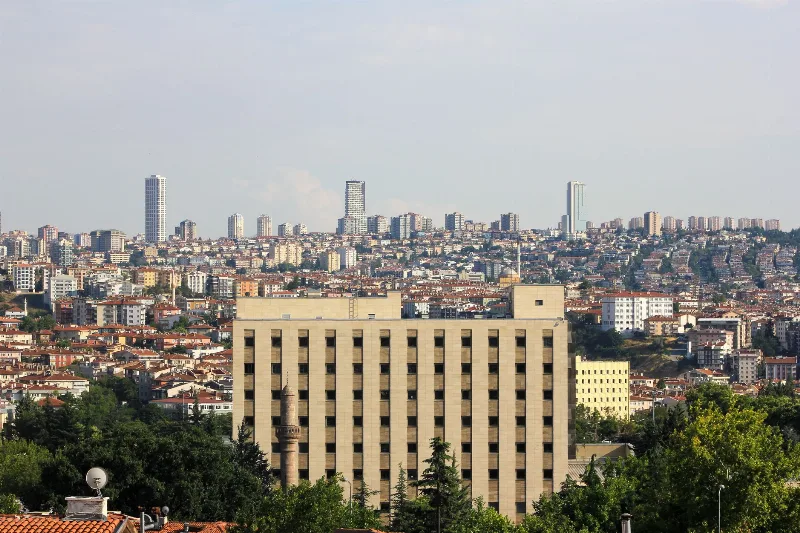
Ankara is the capital of Türkiye and the country's second-largest city, set on the high plateau of Central Anatolia and defined by its republican institutions, its long pre-Ottoman history and the mausoleum of Mustafa Kemal Atatürk.
Ephesus
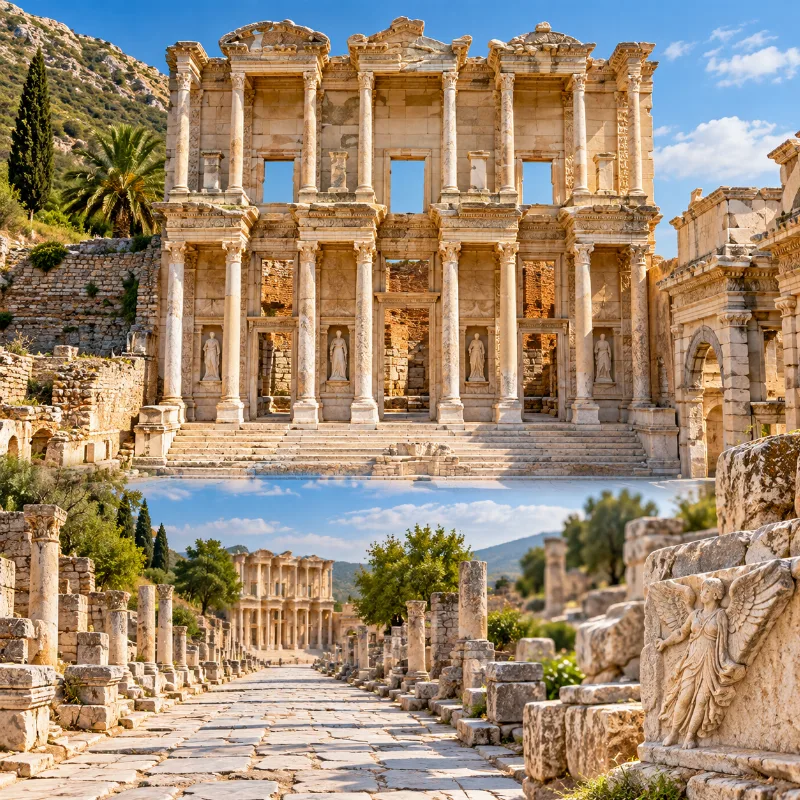
One of the best-preserved ancient cities in the Aegean, known for its monumental streets, library, theatre and Roman-era remains.
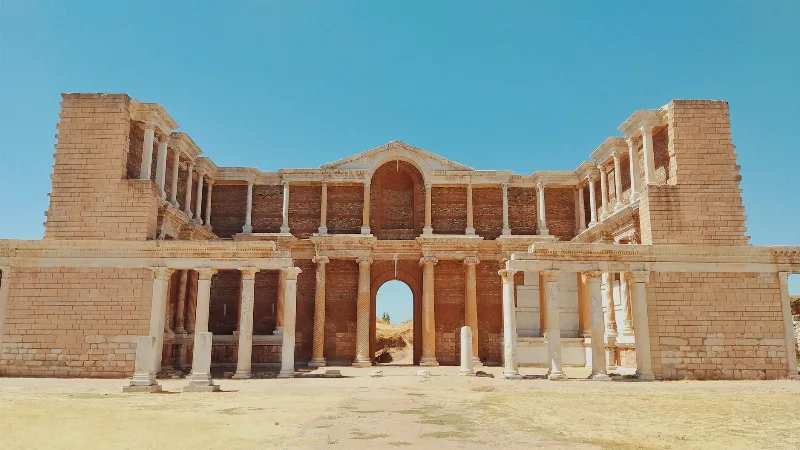
The Ancient City of Sardis in Lydia
Sardis, the ancient capital of Lydia in western Türkiye, preserves a monumental synagogue, a Roman gymnasium and the gold-bearing Pactolus river.
Traditional Turkish Baths
A traditional Turkish bath, or hamam, blends marble architecture, warm water and centuries of social ritual. Discover how hammam culture shapes daily life across Türkiye.
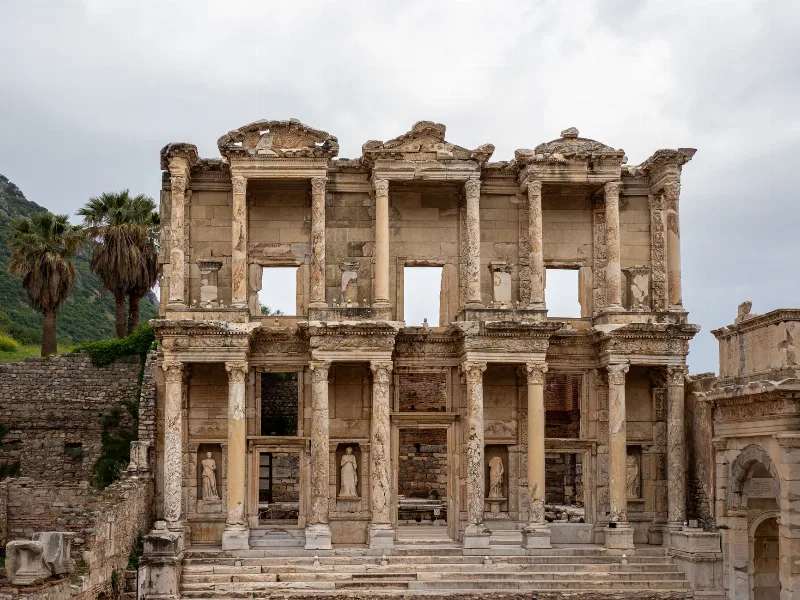
Ephesus
Ephesus is an ancient Greek and Roman city near Selçuk in İzmir Province, Türkiye, whose ruins include the Library of Celsus, the Great Theatre and the remains of the Temple of Artemis.