
Kapuzbaşı Waterfall
Kapuzbaşı Waterfall is a cluster of karst spring waterfalls in the Aladağlar Mountains of Kayseri, Turkey. Fed by limestone springs, it forms a distinctive multi-chute cascade that varies with snowmelt and season.
Kapuzbaşı Waterfall is a group of karst spring waterfalls located in the Yahyalı district of Kayseri Province, in south-central Turkey. The falls emerge from the limestone slopes of the Aladağlar mountain range and drop in several distinct chutes over a rocky step. The water is cold, clear, and mineral-rich, and it feeds the upper Zamantı River system. Unlike a single river waterfall, Kapuzbaşı is formed by multiple springs that burst from the ground close together, creating a rare multi-source cascade within a dry, mountainous landscape.
Where the Kapuzbaşı Waterfalls Are Located
The waterfalls lie in Yahyalı, a district of Kayseri Province. They are situated in the foothills of the Aladağlar, a major mountain range in the Taurus system. The village of Kapuzbaşı stands nearby, and the falls are found where the mountains meet the upper Zamantı valley. This is a rural, highland setting rather than an urban or coastal one. The Aladağlar rise to the south and east, forming a rugged backdrop. The area is part of the wider Aladağlar region, which is protected as a national park covering parts of Kayseri, Niğde, and Adana provinces. The waterfalls are not in a city centre; they are reached by a mountain road from Yahyalı.
Karst Springs and the Geology Behind the Falls
Kapuzbaşı is a karst spring system. Rain and snowmelt on the high Aladağlar limestone infiltrate the rock through fractures, sinkholes, and cave systems. The water travels underground and re-emerges at Kapuzbaşı as a series of springs. This means the falls are not fed by a surface river upstream; they are born directly from the ground. The limestone geology of the Aladağlar is largely Mesozoic in age, and karst processes have created a complex underground drainage network. At the surface, the water drops over a limestone step, forming several chutes that can be seen side by side. The surrounding landscape is rocky, with bare limestone, scree, and patches of soil. The constant moisture from the springs supports a green strip of vegetation along the cascade, contrasting with the drier slopes nearby.
Seasonal Flow and Weather Conditions
The flow of Kapuzbaşı Waterfall changes markedly through the year. In spring, snowmelt from the Aladağlar feeds the karst aquifer, and the falls are at their most powerful. Late spring and early summer often provide the strongest and most consistent flow. In summer, the flow decreases but usually continues because the karst system stores water underground. Autumn brings lower flow as rainfall becomes more variable. Winter can bring snow and ice to the area, and the falls may partially freeze, though the springs can continue to run. The climate is continental: summers are hot and dry, while winters are cold and snowy. The water itself remains cold throughout the year. Visitors should be prepared for sudden weather changes in the mountains, especially in spring and autumn.
Vegetation, Wildlife, and the Surrounding Habitat
The Aladağlar region supports a range of habitats. Higher slopes have coniferous forests, including black pine and fir, along with juniper and oak scrub at lower elevations. Around the waterfalls, moisture-loving trees and shrubs grow close to the water, creating a greener microhabitat. The wider Aladağlar National Park is known for wildlife such as the Anatolian wild goat, wolves, foxes, and birds of prey including eagles and vultures. The waterfalls themselves are primarily a geological and hydrological feature rather than a wildlife viewing site. The vegetation immediately around the falls is denser than on the surrounding dry slopes, and this contrast is one of the distinctive visual features of the area.
What Can Be Seen and Experienced at the Falls
Visitors to Kapuzbaşı see a group of waterfalls emerging from the limestone. The water falls in multiple chutes, creating pools, spray, and a constant sound. The scene is framed by rock walls and the valley beyond. The immediate area is a natural site without developed visitor infrastructure. Walking is on uneven, rocky ground, and the stones near the water can be slippery. The water is cold and the flow can be strong, so swimming is not a typical or safe activity here. Photography is common, especially in spring when the flow is highest. The experience is mainly scenic and observational. The falls are not a large resort or a theme park; they are a raw natural feature in a mountain setting.
Practical Conditions Before Visiting
Kapuzbaşı Waterfall is in a remote mountain area. The nearest town with services is Yahyalı, and the final approach is along a mountain road. Visitors should be prepared for limited facilities and should carry what they need. Weather can change quickly, and the sun can be strong in summer while winter conditions can be cold and icy. Sturdy footwear is useful for the rocky terrain. The elevation is moderate but the area is still mountainous. There is no reliable guarantee of mobile phone coverage in all parts of the valley. Because the water is cold and fast, visitors should keep a safe distance from the edge and avoid entering the water.
How to Reach Kapuzbaşı Waterfall
Access to the waterfalls is generally by road. From Kayseri, the route goes south to Yahyalı, and then continues toward Kapuzbaşı village. The road follows the Zamantı valley, with views of the Aladağlar along the way. The falls are located near the village. Public transport to the immediate area is limited, so most visitors arrive by private vehicle. The drive is winding in parts, and the final section is a mountain road. Visitors should allow enough time for the journey and plan to visit during daylight hours.
Protected Status and Nearby Natural Places
The waterfalls are located within the Aladağlar National Park, a protected area established in 1995. The park covers a large part of the Aladağlar massif and includes high plateaus, glacial lakes, and deep canyons. Nearby natural features include the Zamantı River, which continues downstream from the Kapuzbaşı springs, and the higher Aladağlar peaks such as Demirkazık, Kaldı, and Emler. The town of Yahyalı is the main gateway to the area. Other parts of the national park offer alpine meadows and rocky summits. The protected status helps conserve the karst springs, the waterfall system, and the surrounding mountain habitat. Visitors should respect the natural environment and follow any local regulations.
Beaches & bays
See the coast →
Related content
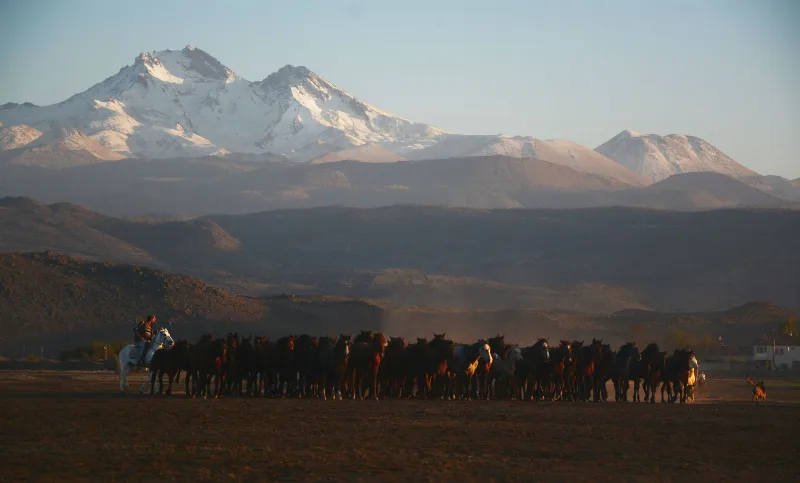
Kayseri
Kayseri is a major inland city in Central Anatolia, set on a plain at the foot of Mount Erciyes, and known for its Seljuk architecture, its manufacturing economy and a food culture built on pastırma and mantı.
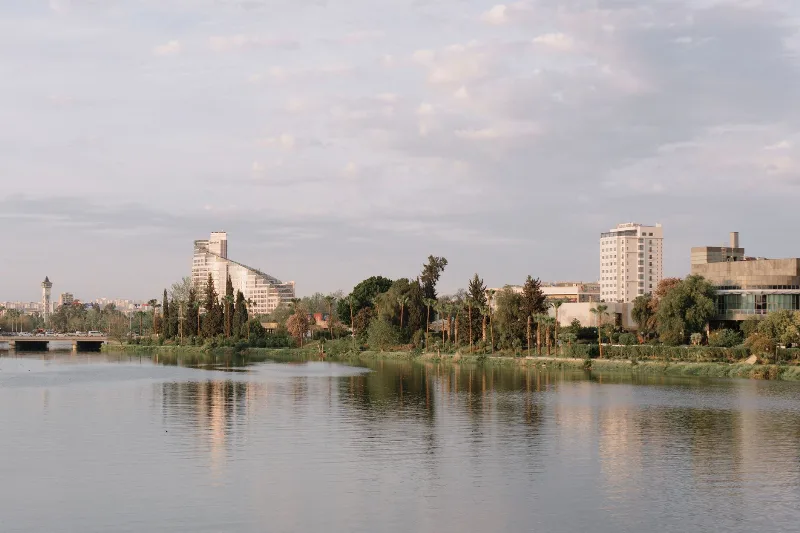
Adana
Adana is a major metropolitan city in southern Türkiye and the urban heart of the Çukurova plain, defined by the Seyhan River, a Roman-era stone bridge and a deeply rooted kebab and agricultural culture.
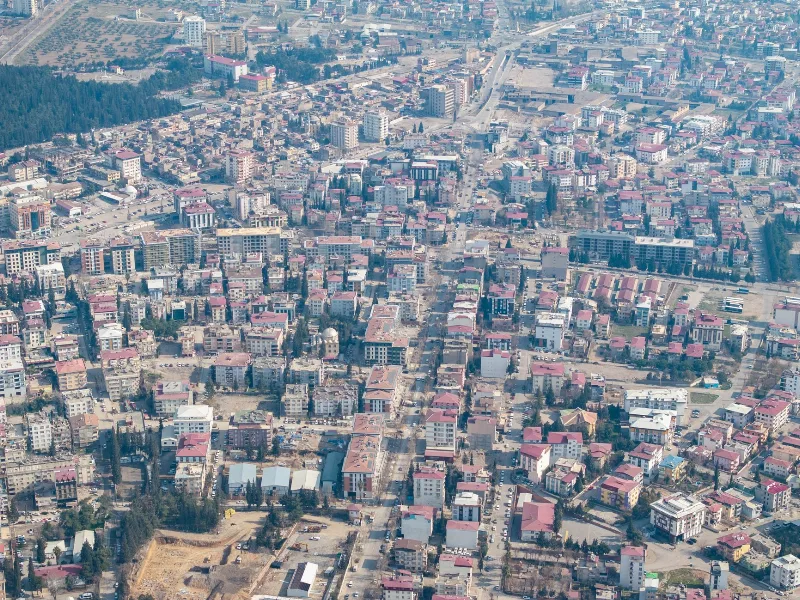
Kahramanmaraş
Kahramanmaraş is an inland city in southern Türkiye, set on a plain below the Taurus Mountains, known worldwide for its elastic salep-based dondurma and for a textile industry built on denim.
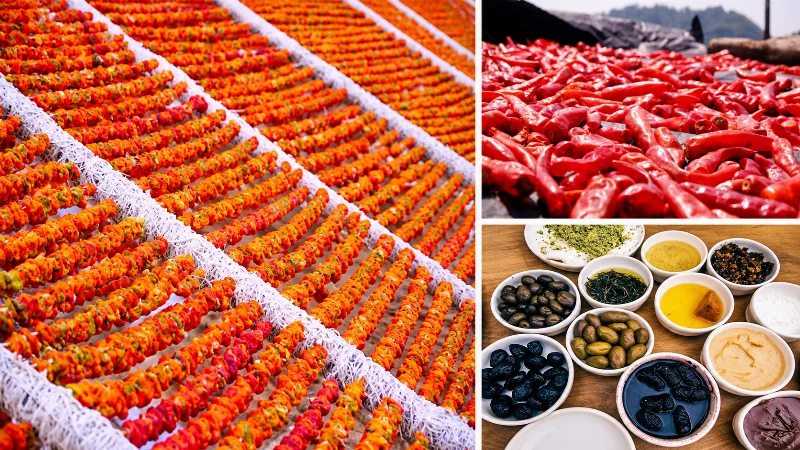
Why Turkish Food Changes from Region to Region
Climate, geography, agriculture and local history shape the ingredients, cooking methods and everyday dishes found across Türkiye. Türkiye’s cuisine is often described as a single national tradition, but food changes considerably from one region to another. Coastal climate, mountain geography, agricultural production, local history and available ingredients all influence what is cooked and how meals are prepared. A dish common on the Black Sea coast may be uncommon in southeastern Türkiye, while ingredients associated with the Aegean can play a much smaller role in the interior. These regional differences form one of the main characteristics of Turkish food culture.
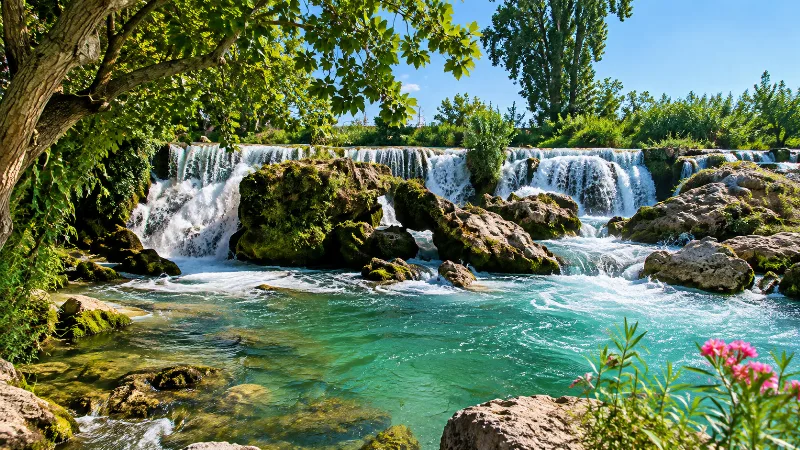
Tarsus Waterfall
Tarsus Waterfall is a river cascade on the Berdan River in Mersin Province, formed where the water drops over a rocky ledge just north of the town of Tarsus. It is a low, wide fall fed by a river that carries Taurus Mountain water toward the Mediterranean coast.
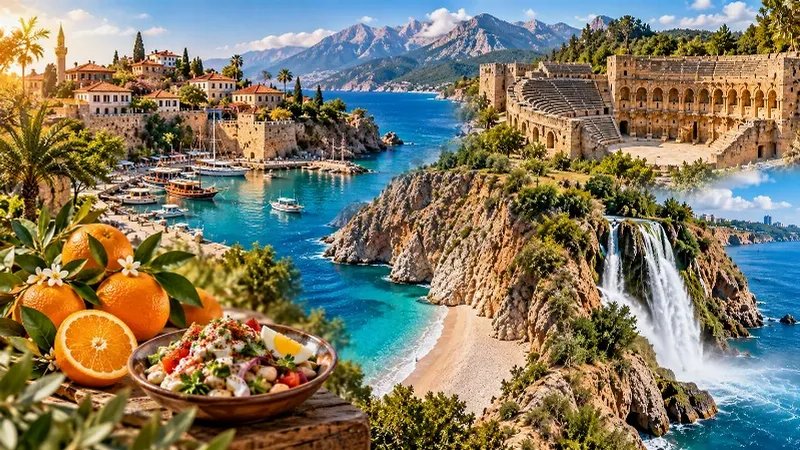
Mediterranean Region
Türkiye's Mediterranean Region combines turquoise coastlines, dramatic mountains, ancient cities and fertile landscapes. From Antalya's beautiful beaches to the historic settlements of the eastern Mediterranean, the region offers a rich blend of natural scenery, cultural heritage and traditional local life.