
Kars and the Ruins of Ani
In eastern Türkiye, the highland city of Kars stands near Ani, a medieval settlement whose churches, walls and gorges still shape the surrounding plateau.
In the far northeast of Türkiye, where the Anatolian plateau meets the highlands of the Caucasus, the city of Kars opens the way to one of the country's most evocative historic landscapes. A short distance to the east, on a windswept plateau above the Arpaçay river, stand the ruins of Ani, a medieval settlement that was once a prosperous centre of trade, craft and architecture.
Ani Across the Centuries
Ani first appears in the records as a fortress settlement, and it grew into a substantial city during the 10th and 11th centuries, when it served as a capital of the Bagratid Armenian kingdom. Its position along routes linking Anatolia, the Caucasus and Persia attracted merchants and artisans, and the wealth of the city showed itself in an unusual concentration of churches, monasteries and public buildings. At its height, Ani is described as a dense urban centre enclosed by powerful walls, with suburbs spreading beyond them along the river.
Architecture of a Medieval City
The monuments that survive at Ani still suggest the scale of the original city. The Cathedral of Ani, begun in the late 10th century, is the largest of the structures that remain, with a domed plan and pointed arches that reflect the craftsmanship of the period. Nearby, the Church of the Redeemer stands as a partly intact shell, while the Church of St Gregory of Tigran Honents preserves fragments of frescoes inside. The Menuçehr Mosque, founded after the Seljuk conquest in the late 11th century, is among the earliest surviving mosques in Anatolia. Caravanserais, bathhouses and stretches of paved street show that Ani was a working city as well as a ceremonial one.
Walls, Gorges and Open Plateau
Ani's defences follow the natural shape of the land. On its western side, the Arpaçay river has cut a deep gorge that forms a natural boundary, and the walls rise directly from the rock above the water. Walking among the ruins today, the surrounding landscape is largely empty: short grass, scattered stone and wide views toward the Armenian highlands. The setting gives the site much of its character, since the quiet of the plateau contrasts with the density of the buildings that once filled it.
Kars and Its Highland Character
Kars itself holds a layered heritage. Kars Castle crowns a hill above the city, and the streets below mix Ottoman stone buildings with the straight avenues and façades of the late 19th century, when the city lay at the edge of the Russian Empire. The highland climate shapes daily life: winters are long and snowy, while summers are short and green. Local traditions include the raising of geese, celebrated in the regional dish known as Kars kazı, alongside Kars gravyer cheese and honey gathered from the surrounding meadows. To the north, Lake Çıldır spreads across the plateau and freezes over in winter.
A Place of Layers
Kars and Ani together offer a view of eastern Türkiye that is both historical and geographical. The ruins of Ani record centuries of building, trade and changing rule, while Kars provides the living context — a highland city with its own architecture, food and seasonal rhythms. For travellers drawn to history and landscape, the region rewards slow exploration, with the plateau, the gorge and the standing monuments all part of the same story.
Related content
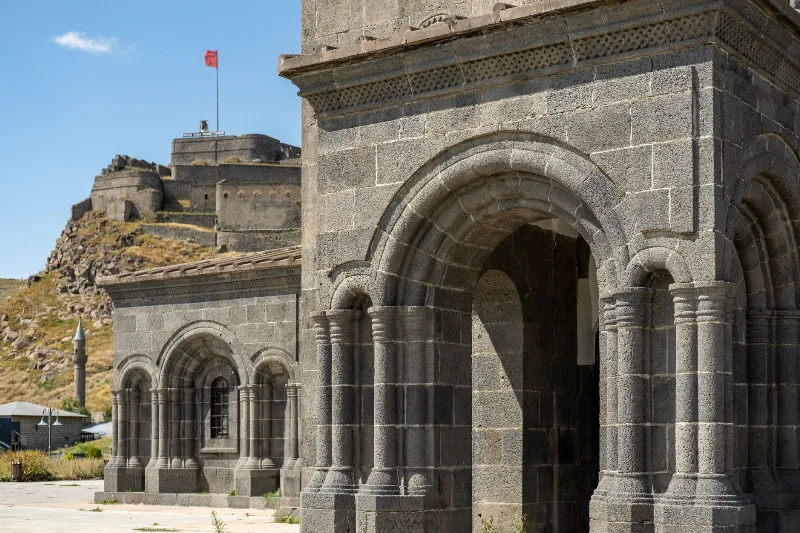
Kars
Kars is a high-plateau city in northeastern Türkiye, close to the Armenian border, shaped by decades of Russian rule and known for its cheesemaking tradition and the nearby medieval ruins of Ani. It serves as the main urban base for exploring this remote corner of Eastern Anatolia.
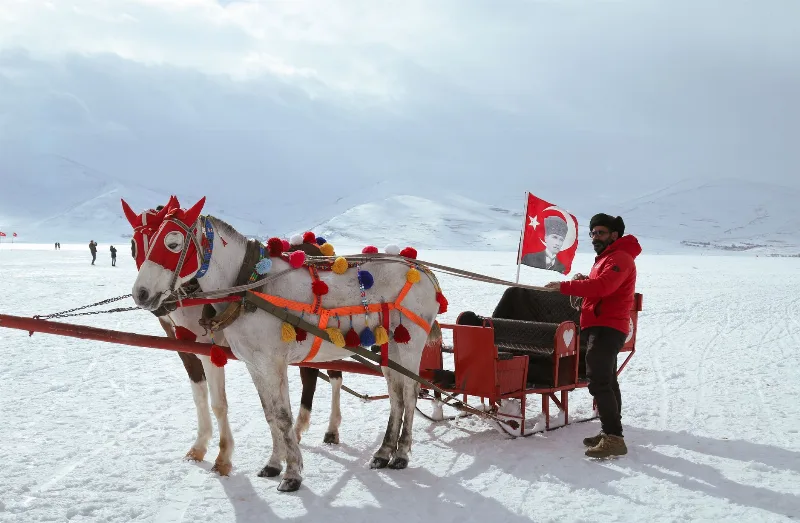
Lake Çıldır
Lake Çıldır is a large freshwater lake in northeastern Türkiye, set on a high steppe plateau between Ardahan and Kars and known for freezing solid during the long eastern Anatolian winter.
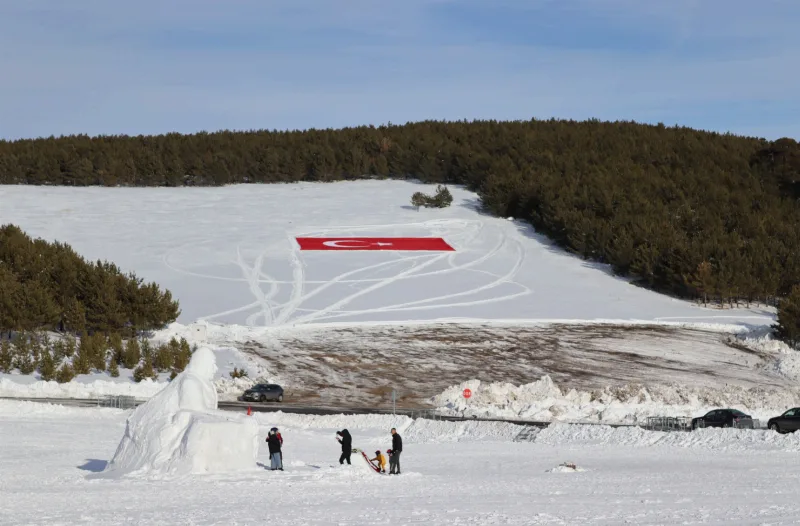
Winter in Sarıkamış, Kars
Sarıkamış in Kars is known for its crystal snow and a winter season that typically runs from December to March. The ski terrain sits among pine forests, and the district also carries a heavy historical legacy.
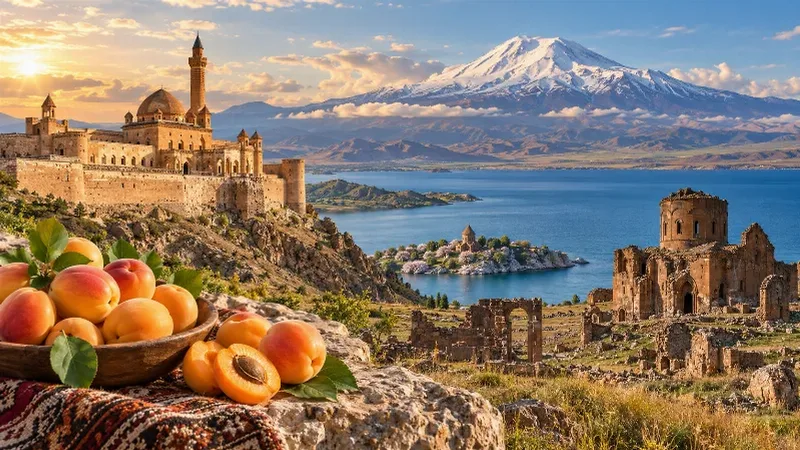
Eastern Anatolia Region
Eastern Anatolia is a region of majestic mountains, vast highlands, beautiful lakes and ancient cultural heritage. Home to Mount Ararat, Lake Van and historic settlements, it offers some of Türkiye's most dramatic natural landscapes alongside distinctive architecture, local traditions and regional cuisine.
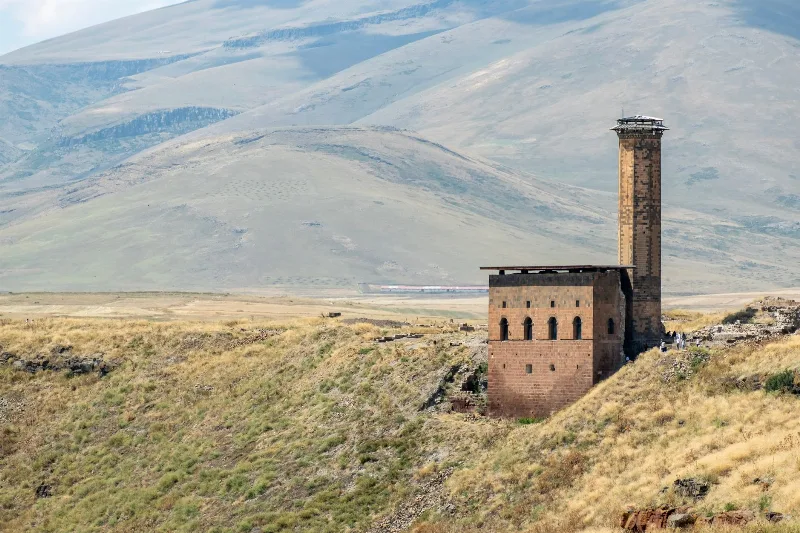
The Ancient City of Ani in Eastern Türkiye
Ani, an abandoned medieval city on the Turkish-Armenian border, offers a fascinating glimpse into a rich past with its well-preserved churches, mosque, and walls. Located near Kars, this ancient site invites travelers to explore its haunting beauty.
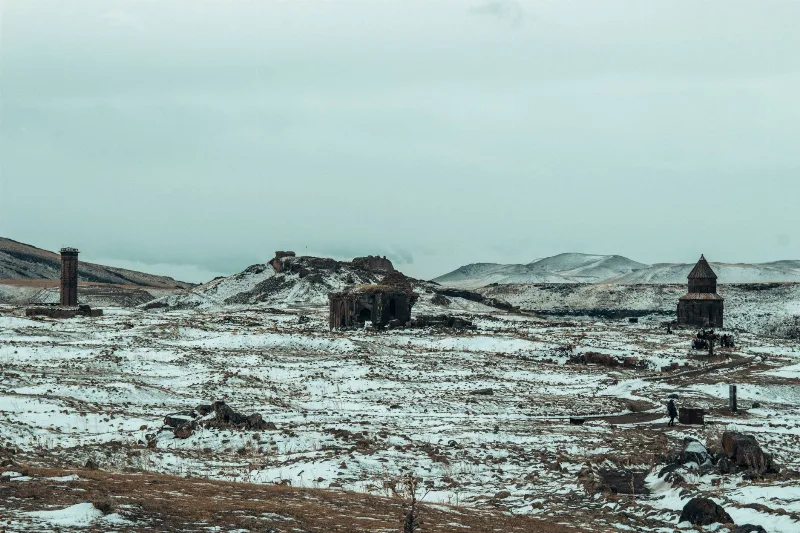
Ani
Ani is a ruined medieval city on a basalt plateau in Kars Province, eastern Turkey, once a major Silk Road centre and now a UNESCO World Heritage Site known for its churches, cathedral and walls.
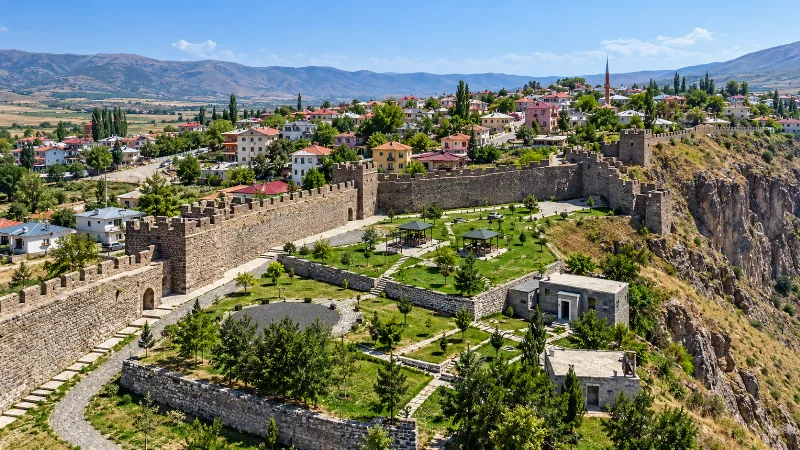
Ardahan
Explore Ardahan, northeastern Türkiye: history, standout sights, landscapes, local food and practical travel advice for an unforgettable journey in Türkiye.
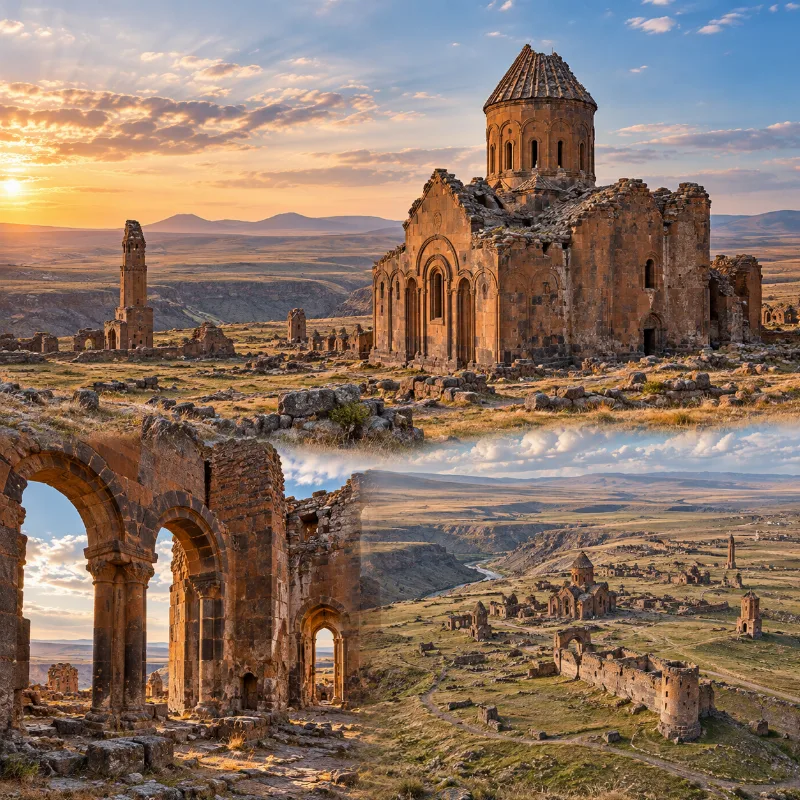
Ancient City of Ani
A medieval archaeological city near the Turkish-Armenian border, with churches, fortifications and monumental stone buildings.