
The Ancient City of Ani in Eastern Türkiye
STORIES FROM TÜRKİYE
Perched on a remote plateau in Eastern Türkiye, the ancient city of Ani stands as a silent witness to centuries of history. Just a short drive from the city of Kars, this abandoned medieval capital lies right on the border with Armenia, separated by the Arpaçay River. Its crumbling yet majestic ruins, including churches, a mosque, and formidable walls, create a hauntingly beautiful landscape that captivates all who visit.
A Medieval Capital
Ani flourished between the 10th and 13th centuries as the capital of the Bagratid Armenian Kingdom. At its peak, it was a thriving metropolis with a population that may have reached 100,000, earning it the nickname "City of 1001 Churches." Its strategic location on the Silk Road brought wealth and cultural exchange, making it a significant center of trade and learning.
However, the city's prosperity was not to last. Invasions by various forces, including the Byzantines, Seljuks, and Mongols, led to its decline. By the 14th century, Ani was largely abandoned, left to the elements and the shifting sands of time.
Architectural Marvels
Despite its abandonment, Ani's architecture remains remarkably intact. The Cathedral of Ani, built in the 11th century, is a masterpiece of Armenian architecture, with its pointed arches and intricate stone carvings. It was later converted into a mosque, reflecting the region's changing religious landscape.
Other notable structures include the Church of the Redeemer, with its distinctive cylindrical shape, and the Church of St. Gregory of Tigran Honents, adorned with colorful frescoes. The Menuçehr Mosque, built in the 11th century, is one of the oldest mosques in Anatolia and stands as a testament to the city's multicultural past.
Many of these buildings are decorated with elaborate stonework, including depictions of animals, geometric patterns, and inscriptions. The use of local tuff stone gives the ruins a warm, reddish hue that changes with the light.
Defensive Walls
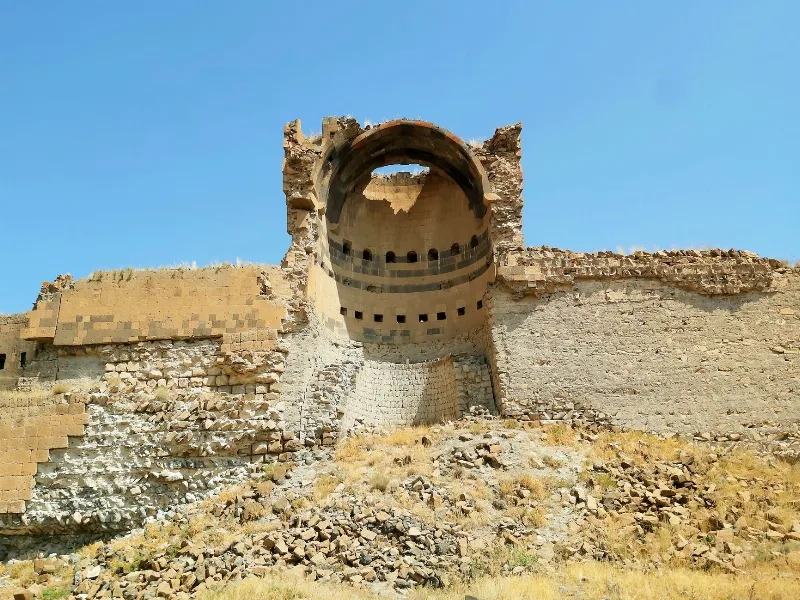
Ani was protected by a double line of walls, built from local tuff stone. These fortifications stretched for over a kilometer and included towers and gates. The Lion Gate, one of the main entrances, is named after the lion relief that once adorned it. Walking along these ancient walls offers panoramic views of the surrounding Arpaçay Valley.
The walls also feature inscriptions and carvings that provide insights into the city's history and the people who built them. They are a remarkable example of medieval military architecture.
The Ghost City Today
Today, Ani is a UNESCO World Heritage Site, attracting visitors from around the world. Conservation efforts are ongoing to preserve its unique heritage. A visit to Ani is a journey through time, where one can imagine the bustling streets of a bygone era. The site is especially atmospheric at sunrise or sunset, when the golden light brings the stones to life.
A designated visitor path allows exploration of the main monuments, and informative signs provide context. The site is open year-round, though winter can be harsh. Spring and autumn offer pleasant weather for walking.
Nearby Kars
The city of Kars, often the starting point for trips to Ani, is worth exploring in its own right. Known for its Ottoman-era architecture and the imposing Kars Castle, it offers a contrast to the ancient ruins. The local cuisine, featuring hearty dishes like Kars gravyer cheese and goose kebab, adds to the regional experience.
Kars also has a rich cultural heritage, with influences from Armenian, Georgian, and Turkish traditions. The city's museum and historic buildings provide further context for the region's history.
Historic places
Explore history →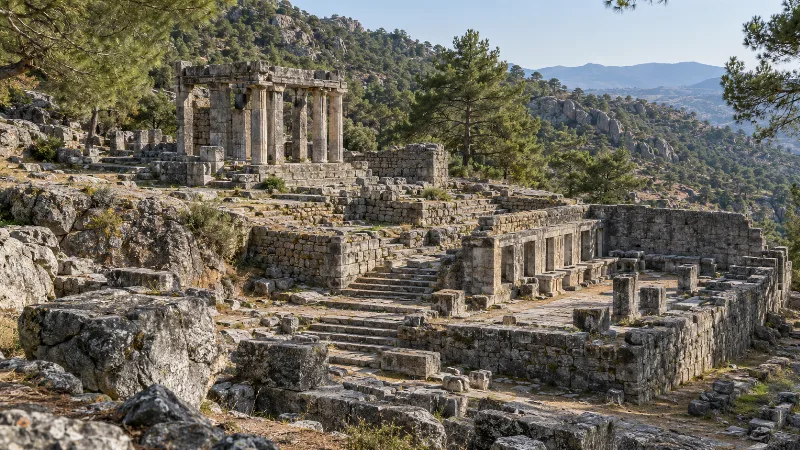
Labranda: The Ancient Carian Sanctuary of Zeus Labraundos
Labranda is an ancient Carian sanctuary of Zeus Labraundos in the hills north-east of Milas, Muğla Province, whose temples, banqueting halls and processional way were largely built in the 4th century BC under the Hekatomnid dynasty.
Explore →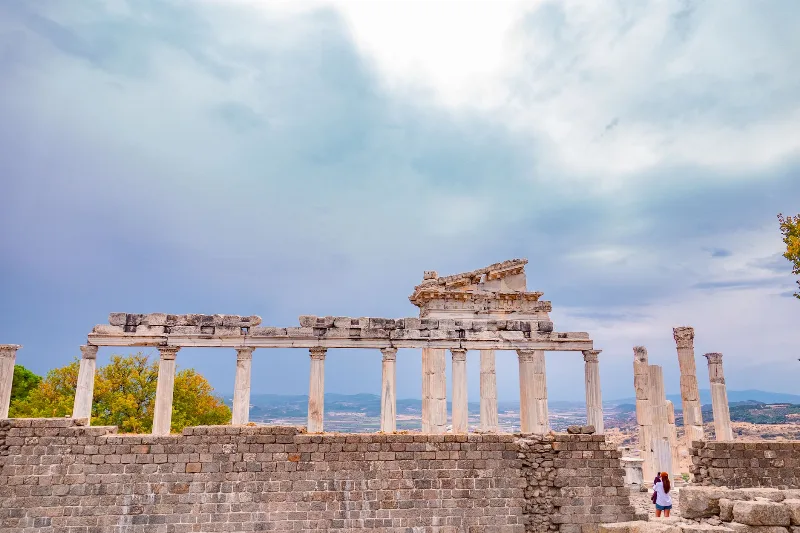
Pergamon
Pergamon was the Hellenistic capital of the Attalid dynasty in western Türkiye, built around a steep acropolis above the modern town of Bergama. Its Great Altar, theatre and Sanctuary of Asclepius make it one of the most important archaeological sites in Anatolia and a UNESCO World Heritage Site.
Explore →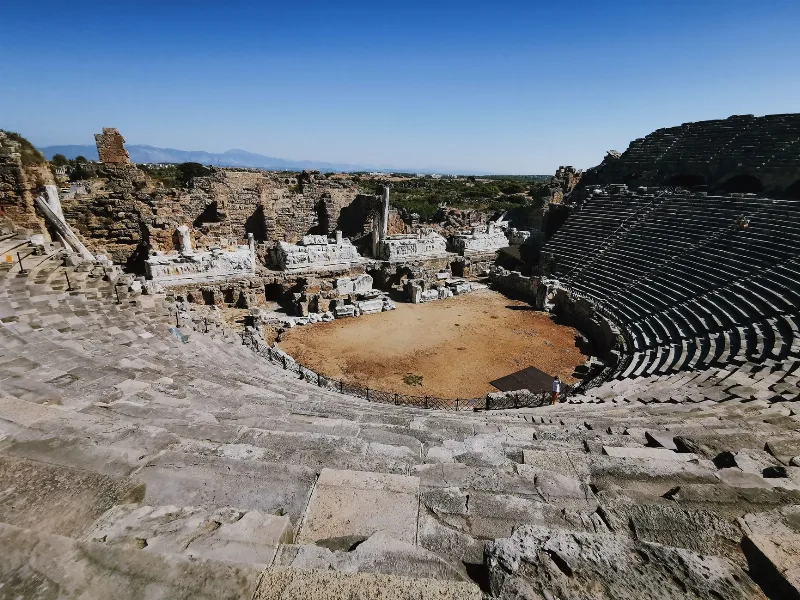
Side
Side is an ancient Pamphylian port city on a peninsula in Antalya Province, Türkiye, known for its well-preserved Roman theatre, the temples of Apollo and Athena, and a museum housed in Roman baths. It flourished under Hellenistic and Roman rule and was abandoned by the 10th century, leaving extensive ruins that visitors can explore today.
Explore →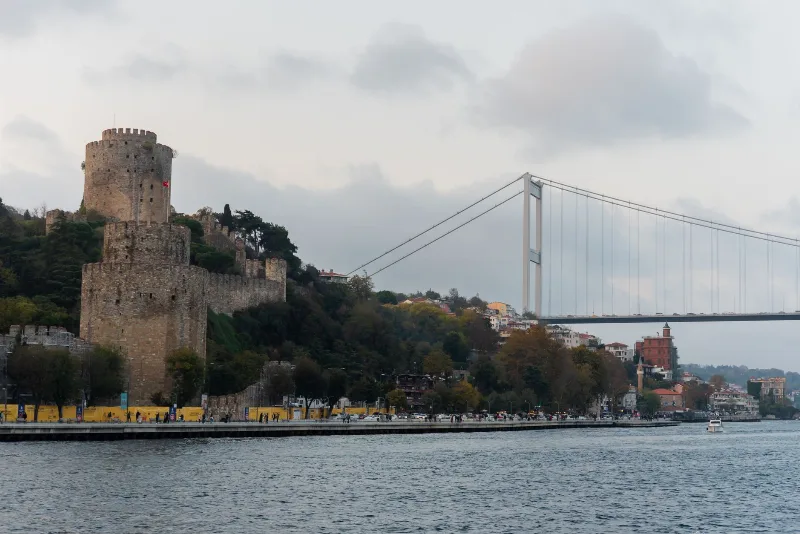
Rumeli Hisarı
Rumeli Hisarı is a 15th-century Ottoman fortress on the European shore of the Bosphorus in Istanbul, built by Sultan Mehmed II in 1452 to control the strait before the conquest of Constantinople. It survives today as a monumental open-air museum.
Explore →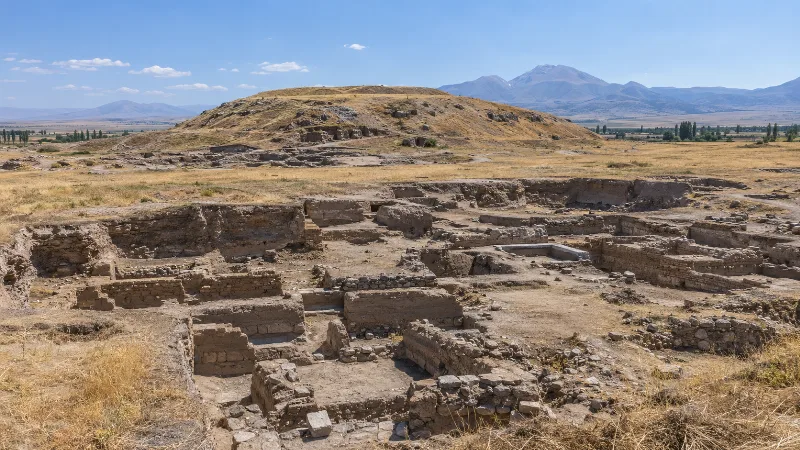
Kültepe
Kültepe, the ancient city of Kanesh, is a Bronze Age mound and lower-city site northeast of Kayseri in central Türkiye. Its Assyrian merchants left behind thousands of cuneiform tablets, the earliest written records discovered in Anatolia.
Explore →Related content
Kars
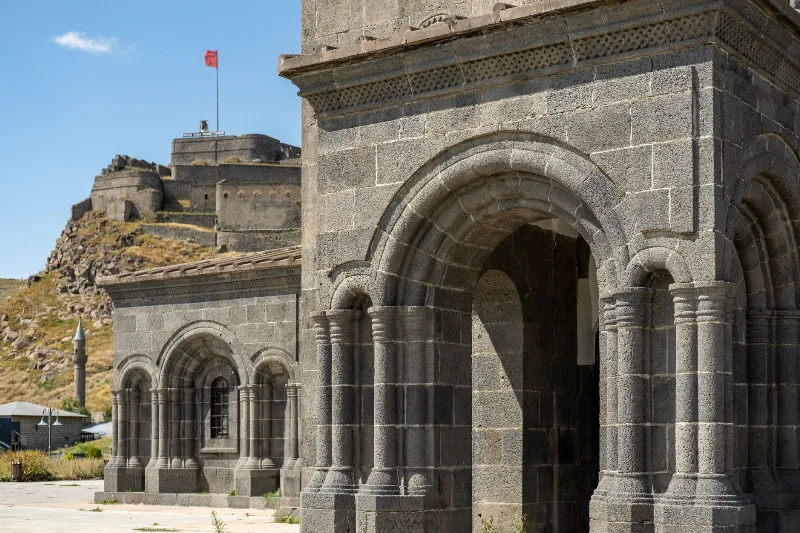
Kars is a high-plateau city in northeastern Türkiye, close to the Armenian border, shaped by decades of Russian rule and known for its cheesemaking tradition and the nearby medieval ruins of Ani. It serves as the main urban base for exploring this remote corner of Eastern Anatolia.
Kars and the Ruins of Ani
In eastern Türkiye, the highland city of Kars stands near Ani, a medieval settlement whose churches, walls and gorges still shape the surrounding plateau.
Eastern Anatolia Region
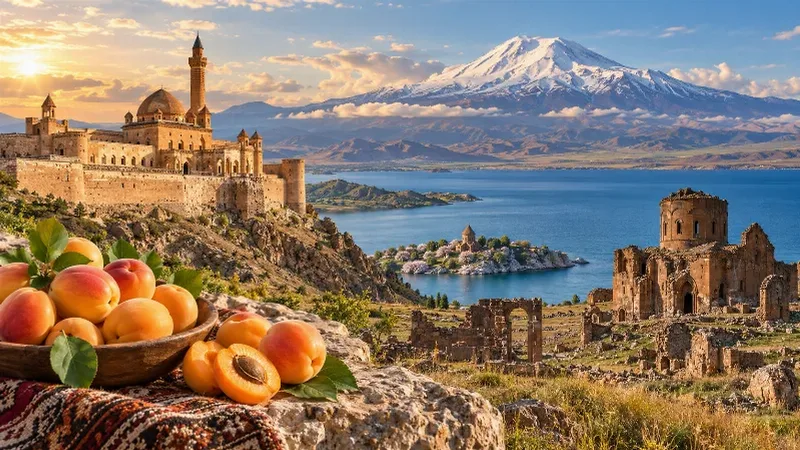
Eastern Anatolia is a region of majestic mountains, vast highlands, beautiful lakes and ancient cultural heritage. Home to Mount Ararat, Lake Van and historic settlements, it offers some of Türkiye's most dramatic natural landscapes alongside distinctive architecture, local traditions and regional cuisine.
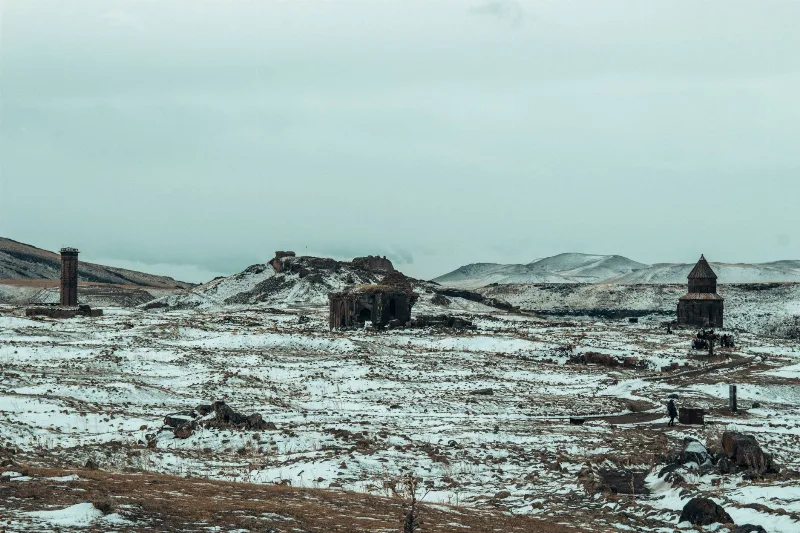
Ani
Ani is a ruined medieval city on a basalt plateau in Kars Province, eastern Turkey, once a major Silk Road centre and now a UNESCO World Heritage Site known for its churches, cathedral and walls.
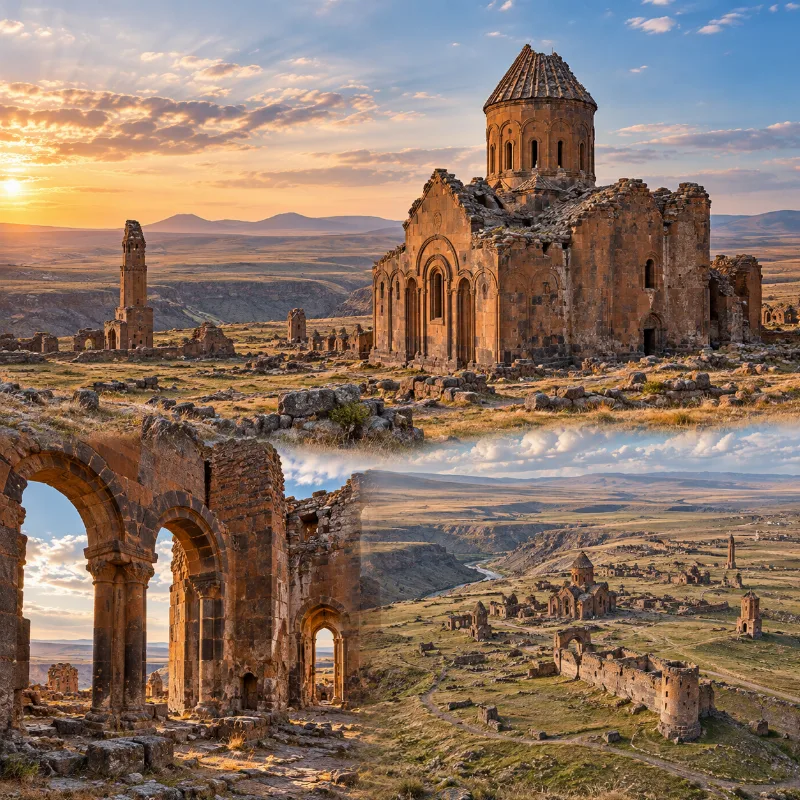
Ancient City of Ani
A medieval archaeological city near the Turkish-Armenian border, with churches, fortifications and monumental stone buildings.
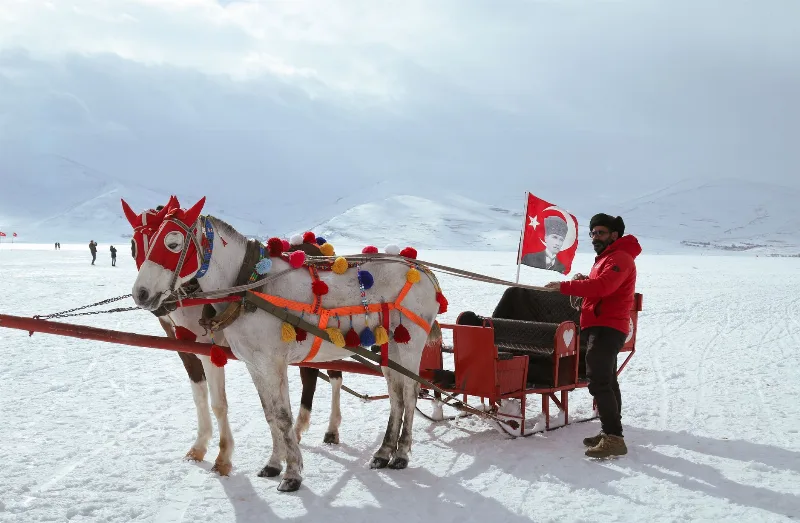
Lake Çıldır
Lake Çıldır is a large freshwater lake in northeastern Türkiye, set on a high steppe plateau between Ardahan and Kars and known for freezing solid during the long eastern Anatolian winter.