
Karakuş Tumulus and Commagene Heritage in Adıyaman
The Karakuş Tumulus near Kâhta in Adıyaman is a Commagene-era burial mound ringed by carved columns and royal reliefs, named for the bird figures that stand among them.
About twelve kilometres from the town of Kâhta in Adıyaman province, a cone of pale limestone rubble rises from a rocky ridge above the fields and villages of the surrounding valley. This is the Karakuş Tumulus, one of the principal monuments of Commagene, a small kingdom that held the upper Euphrates region during the first century BC. Smaller and far quieter than the celebrated summit of Mount Nemrut, the site preserves a ring of carved columns, royal reliefs and a man-made hill of stone that together record the memorial habits of an unusual dynasty.
The Setting above the Kâhta Countryside
The monument stands on a hilltop near the village of Çukurtaş, in the uplands east of Kâhta. The surrounding land is dry and stony, with thin soil, patches of scrub oak and slopes given over to grain and scattered fruit trees. Because the mound was raised on a natural high point, it is visible from a considerable distance, and the columns that surround it catch the light against the sky. The position is characteristic of Commagenean royal monuments, which were placed where they could be seen from far off and where the landscape itself added drama to the architecture.
The approach from the valley passes through farmland and small settlements, and the site is reached by a short climb. In spring the slopes around it are briefly green; for much of the year the ground is dusty and the light is strong, which makes the pale limestone of the tumulus and the darker basalt of some nearby monuments stand out sharply.
A Kingdom between East and West
Commagene arose in the first century BC as the Seleucid empire fragmented, with its royal seat at Samosata, near the modern town of Samsat. Its rulers traced their ancestry to both Persian and Macedonian lines and deliberately presented themselves as heirs to two traditions. The monuments they built combine Achaemenid Persian ideas with Hellenistic Greek forms, and the inscriptions placed on them were often written in both Greek and an eastern script.
The Karakuş Tumulus is generally attributed to Mithridates II, who reigned in the second half of that century. Commagenean kings built hierothesia — sacred memorial places — for members of their families, and this one is understood to commemorate the king's mother Isias, his sister Antiochis and a further female relative named Aka. The prominence given to royal women is one of the distinctive features of Commagenean commemorative practice, and Karakuş is the clearest surviving example of it.
Columns, Reliefs and the Name Karakuş
Around the base of the mound stand columns on stepped stone plinths. Some are broken, others survive with capitals in place, and the original arrangement appears to have formed a formal precinct around the burial hill. Several columns were topped with carved slabs, and the reliefs that survive are the most memorable feature of the site: a bull, a lion, an eagle and a scene of two figures clasping right hands, a gesture of alliance and farewell that appears repeatedly in Commagenean art.
The Turkish name Karakuş means "black bird", and it is usually linked to the eagle figures that once crowned the columns, seen silhouetted against the sky from the valley below. The handshake relief is equally significant, showing the king alongside a female member of his family in a composition that emphasises dynastic continuity rather than military triumph.
Reading the Mound Itself
The tumulus is an artificial heap of loose limestone rubble, roughly thirty-five metres high, heaped over a natural rock core. A burial chamber has not been conclusively identified within it, and the interior has suffered disturbance over the centuries. What remains legible is the overall design: a conical mound enclosed by a colonnaded precinct, a smaller and more intimate version of the scheme used on the summit of Nemrut.
The masonry, the column bases and the carving style all belong to the same late Hellenistic world as the other Commagenean sites, and the reliefs are cut from local stone in a shallow, graphic style that favours clear outlines over deep modelling.
Along the Commagene Circuit
Karakuş is rarely visited on its own. It forms part of a group of monuments scattered across the Kâhta district, which also includes the tomb-sanctuary and colossal statues of Mount Nemrut, the royal seat at Arsameia on the Nymphaios and the Roman-era bridge at Cendere. Together they trace the rise and absorption of a kingdom that lasted only a few generations before becoming part of the Roman world.
For anyone travelling through Adıyaman, the tumulus offers something the larger sites cannot: a royal monument in open country, with no crowds and no scaffolding of interpretation between the visitor and the stone. It rewards a slow walk around the columns, where the scale of the mound, the wear on the reliefs and the wide view over the valley explain more than any label.
Related content
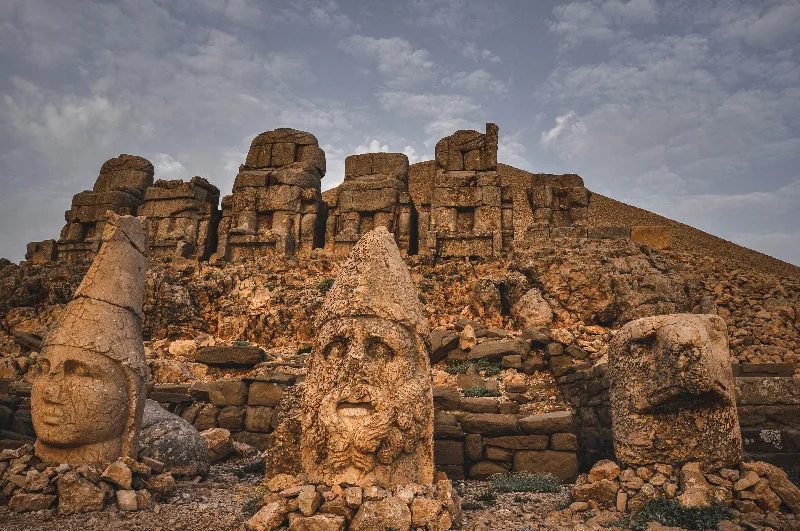
Adıyaman
Explore Adıyaman, southeastern Türkiye: history, standout sights, landscapes, local food and practical travel advice for an unforgettable journey in Türkiye.
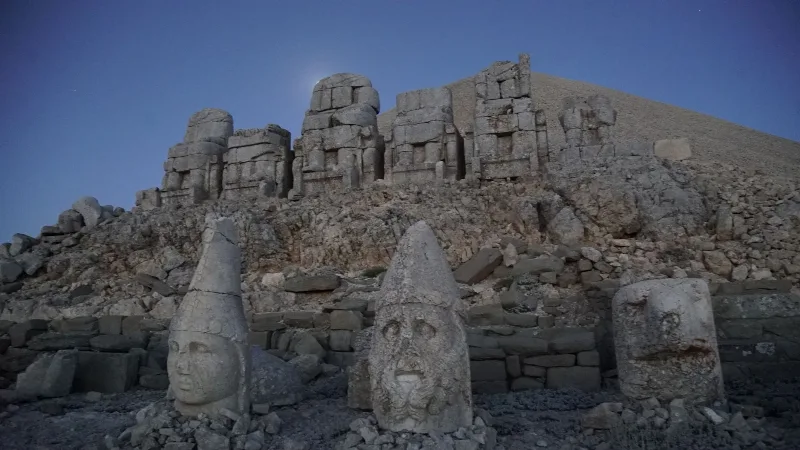
Mount Nemrut
Mount Nemrut in Adıyaman Province is the summit hierothesion of King Antiochus I of Commagene, where colossal statues of gods and a royal ruler stand on terraces above an artificial stone tumulus. The site is a UNESCO World Heritage property whose Greek inscriptions and reliefs record a Hellenistic kingdom of the first century BC.
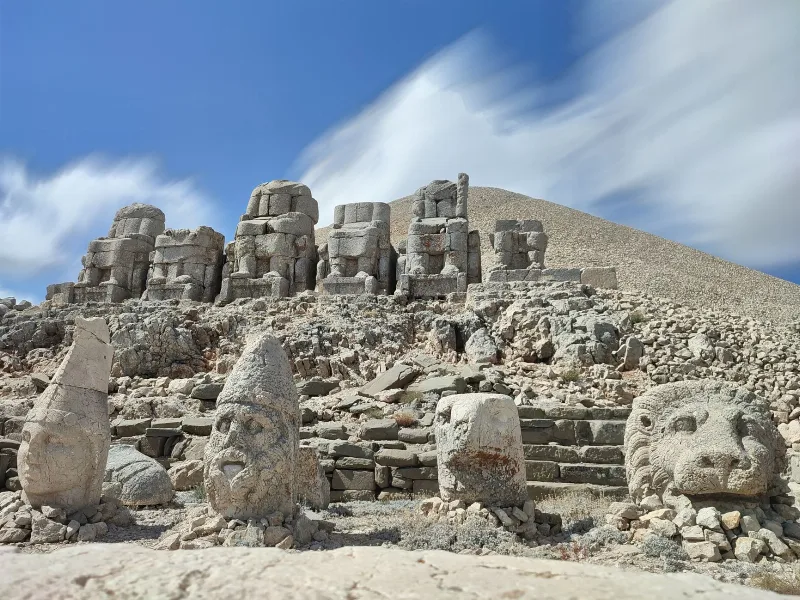
Mount Nemrut
Mount Nemrut is a dormant volcano in Bitlis Province, eastern Türkiye, featuring a large caldera with crater lakes. It lies west of Lake Van near Tatvan.
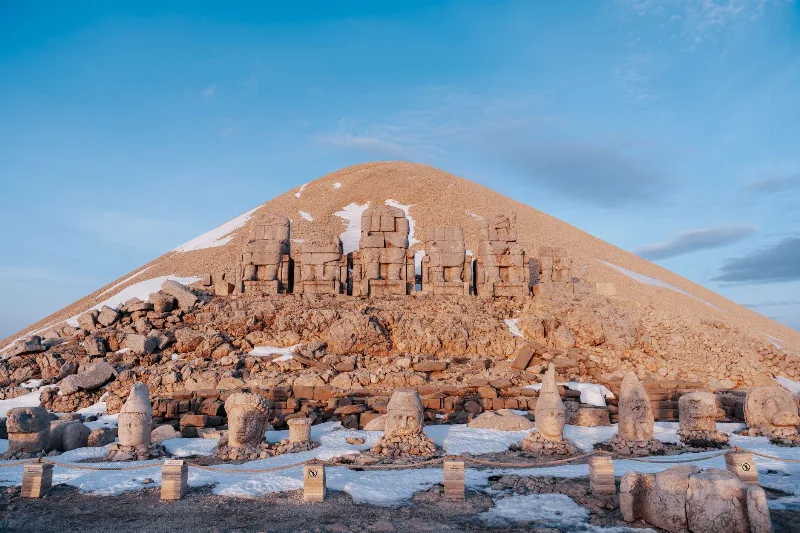
Nemrut
Mount Nemrut in Adıyaman Province is a 2,134-metre summit crowned by the colossal statues and tomb-sanctuary built by King Antiochus I of Commagene, and it has been a UNESCO World Heritage Site since 1987.
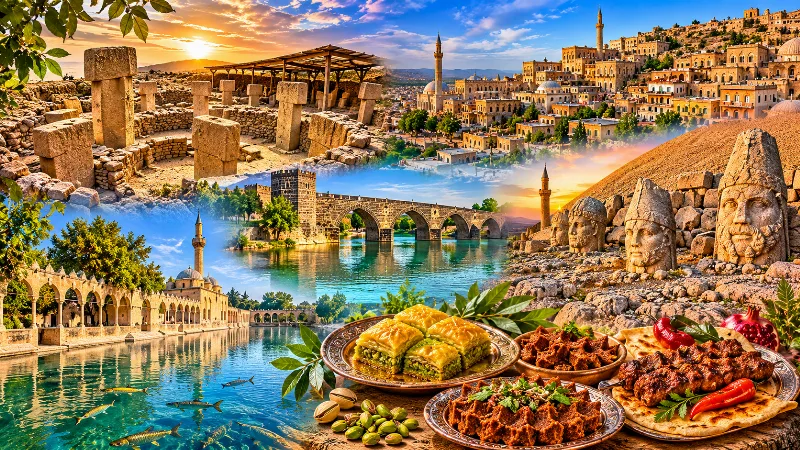
Southeastern Anatolia Region
Southeastern Anatolia is known for its ancient cities, extraordinary archaeological heritage, traditional stone architecture and rich culinary culture. From the historic streets of Mardin to the monumental landscapes of Şanlıurfa and the Euphrates River, the region reflects thousands of years of civilization.
The Fascinating History of Mount Nemrut
Mount Nemrut is renowned for its ancient statues and monumental tombs, offering a glimpse into a mysterious past.
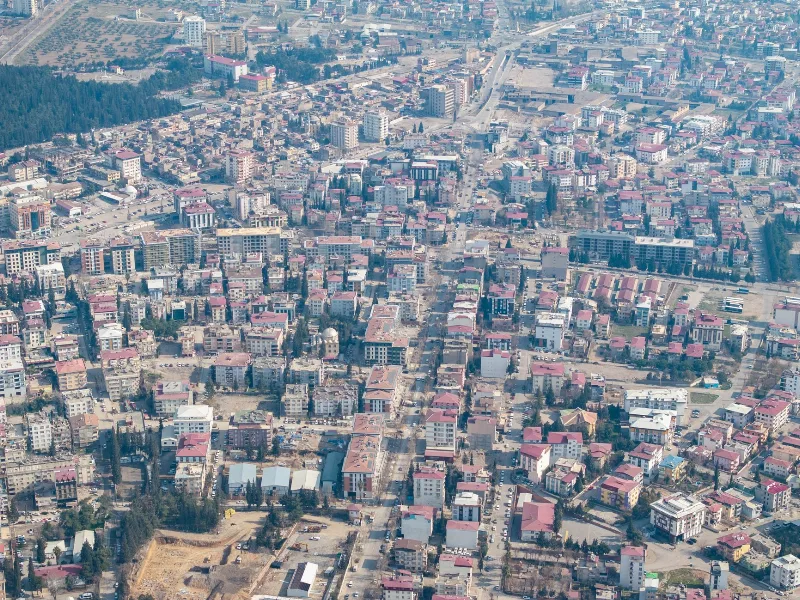
Kahramanmaraş
Kahramanmaraş is an inland city in southern Türkiye, set on a plain below the Taurus Mountains, known worldwide for its elastic salep-based dondurma and for a textile industry built on denim.
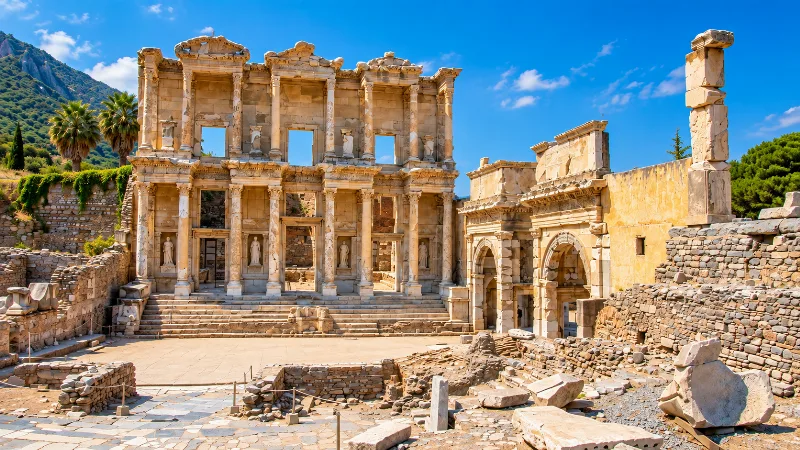
Historic Places
Ancient cities, monuments, castles and archaeological sites across Türkiye.