
The Fascinating History of Mount Nemrut
STORIES FROM TÜRKİYE
Mount Nemrut, located in southeastern Türkiye, is a treasure trove of ancient history. This monumental site is known for its colossal statues and intriguing archaeological remains. It sits atop one of the highest peaks in the Eastern Taurus mountain range, making it a breathtaking destination for history enthusiasts and travelers alike.
Historical Significance
Mount Nemrut was constructed during the reign of King Antiochus I of Commagene in the 1st century BC. It served as a royal tomb-sanctuary, designed to showcase the king's divine ancestry. The site reflects a unique fusion of Greek, Persian, and Armenian cultural elements, providing valuable insights into the region's diverse historical tapestry.
The Statues and Tombs
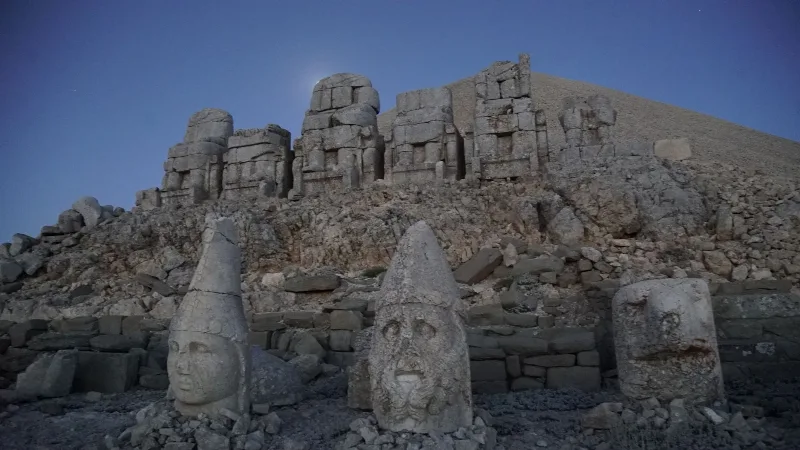
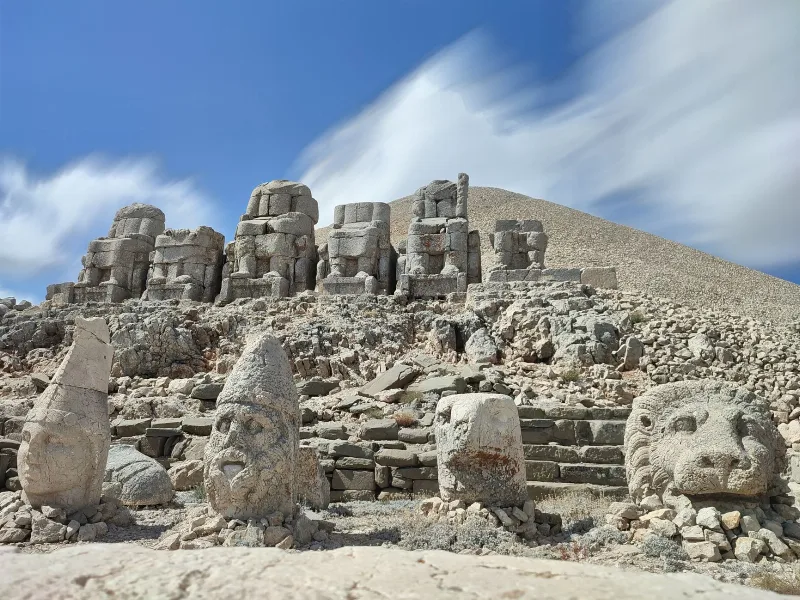
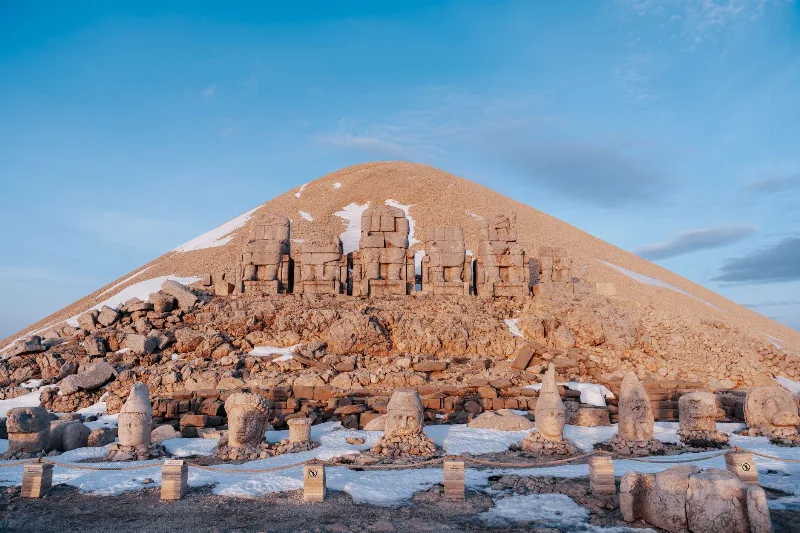
The most striking feature of Mount Nemrut is its collection of massive statues, which represent various gods, kings, and animals. These statues, some of which stand over 8 meters tall, are arranged around a large tumulus that is believed to be the burial mound of King Antiochus I. The statues' heads have fallen over time, adding to the site's enigmatic aura and leaving visitors to imagine their original grandeur.
Exploring the Site
Visitors to Mount Nemrut can explore the East and West Terraces, where the statues are located. The views from these terraces are nothing short of spectacular, offering panoramic vistas of the surrounding landscape. The site is particularly famous for its sunrises and sunsets, which cast a mystical glow over the stone figures, enhancing their ancient allure.
Preservation Efforts
Efforts to preserve Mount Nemrut's historical and cultural significance are ongoing. The site is a UNESCO World Heritage Site, highlighting its importance and the need for its protection. Conservation projects aim to stabilize and restore the statues and other features, ensuring that future generations can continue to marvel at its historical wonders.
Historic places
Explore history →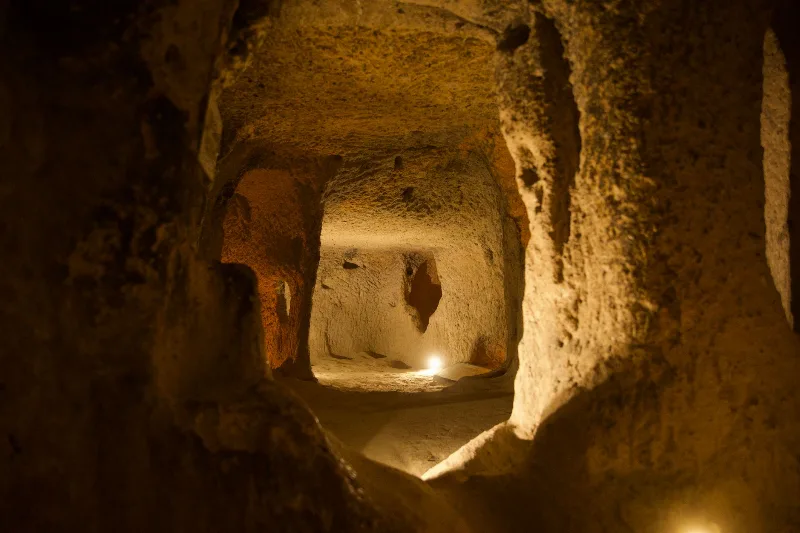
Derinkuyu Underground City
Derinkuyu Underground City is a multi-level rock-cut settlement beneath the town of Derinkuyu in Nevşehir Province, the deepest known underground city in Cappadocia and one of Anatolia's most complete examples of subterranean architecture.
Explore →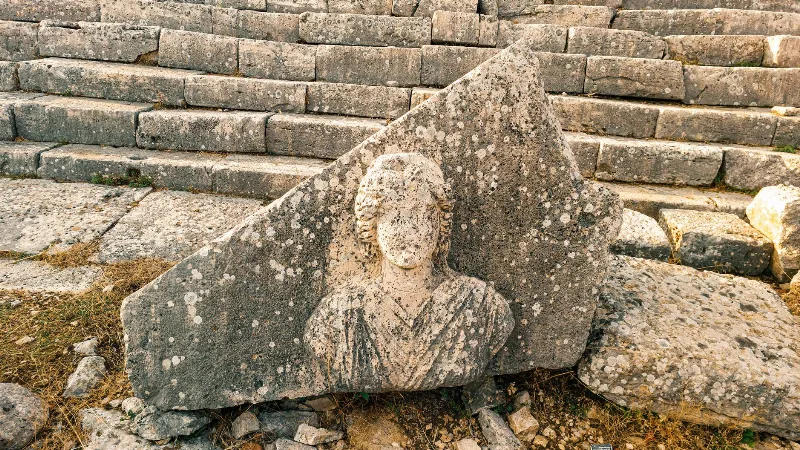
Kibyra
Kibyra is an ancient city on a plateau above Gölhisar in Burdur Province, once the leading city of the Kibyratis. Its theatre, odeon with a Medusa mosaic, and stadium survive in unusual detail.
Explore →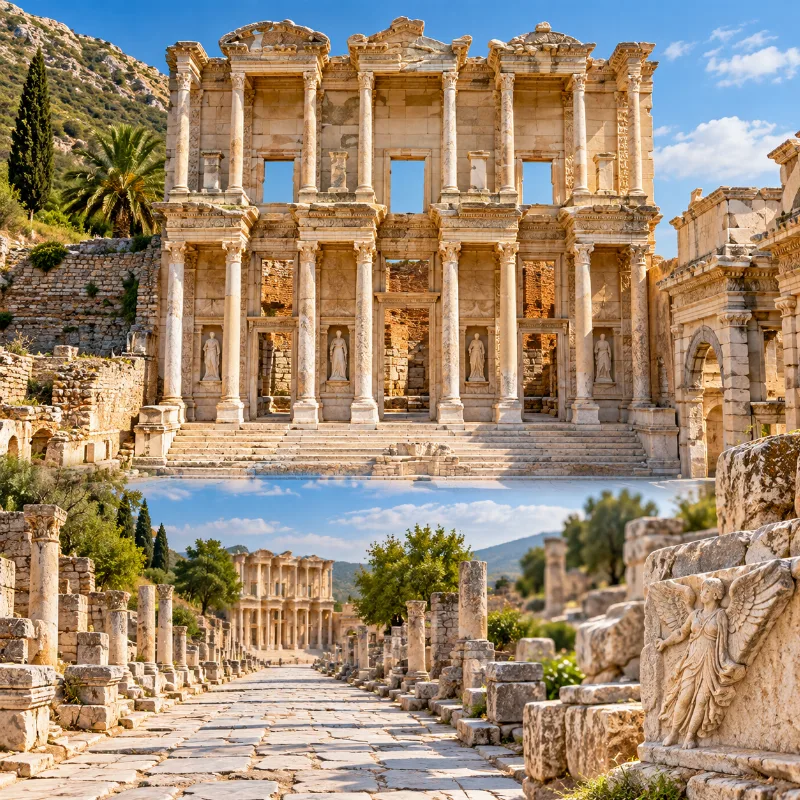
Ephesus
One of the best-preserved ancient cities in the Aegean, known for its monumental streets, library, theatre and Roman-era remains.
Explore →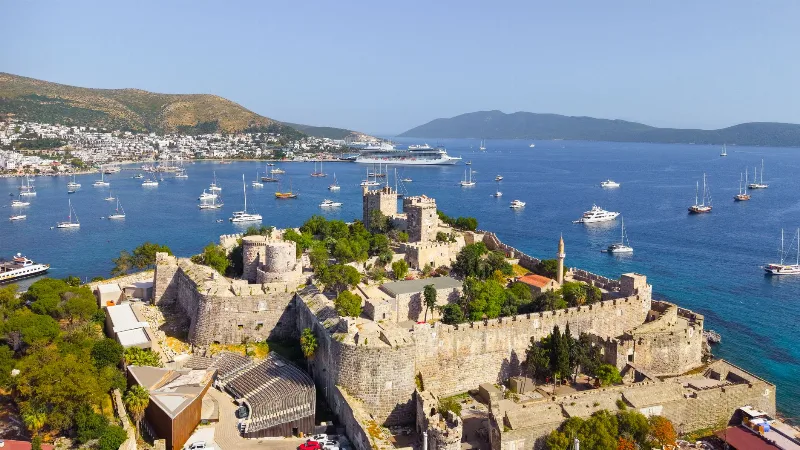
Bodrum Castle
Raised by the Knights Hospitaller above ancient Halicarnassus, Bodrum Castle is both a medieval fortress and the home of one of the world's leading museums of underwater archaeology.
Explore →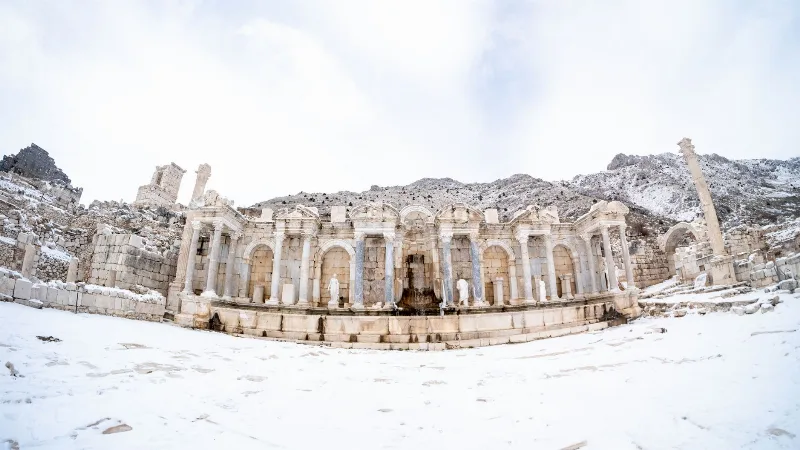
Sagalassos
Sagalassos was a major Pisidian city in the Taurus Mountains of Burdur Province, Türkiye. Its Roman theatre, bath complex and monumental fountain house make it one of the more fully understood ancient cities in the region.
Explore →Related content
Mount Nemrut
Mount Nemrut in Adıyaman Province is the summit hierothesion of King Antiochus I of Commagene, where colossal statues of gods and a royal ruler stand on terraces above an artificial stone tumulus. The site is a UNESCO World Heritage property whose Greek inscriptions and reliefs record a Hellenistic kingdom of the first century BC.
Mount Nemrut
Mount Nemrut is a dormant volcano in Bitlis Province, eastern Türkiye, featuring a large caldera with crater lakes. It lies west of Lake Van near Tatvan.
Nemrut
Mount Nemrut in Adıyaman Province is a 2,134-metre summit crowned by the colossal statues and tomb-sanctuary built by King Antiochus I of Commagene, and it has been a UNESCO World Heritage Site since 1987.
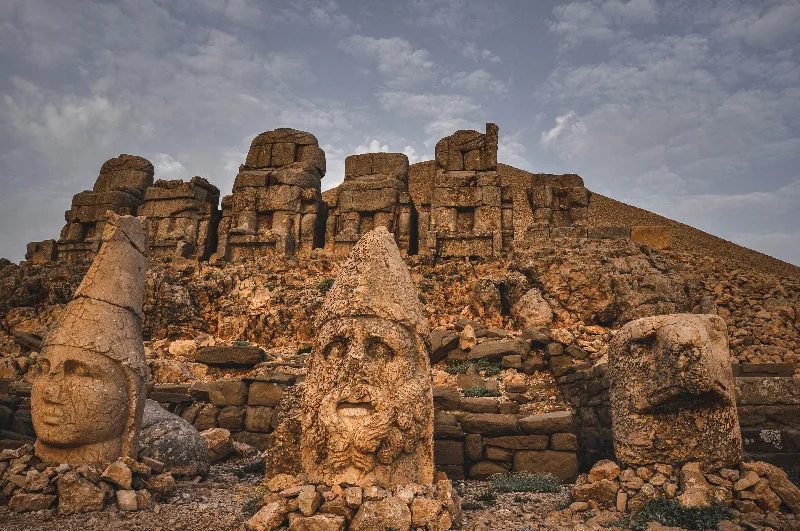
Adıyaman
Explore Adıyaman, southeastern Türkiye: history, standout sights, landscapes, local food and practical travel advice for an unforgettable journey in Türkiye.
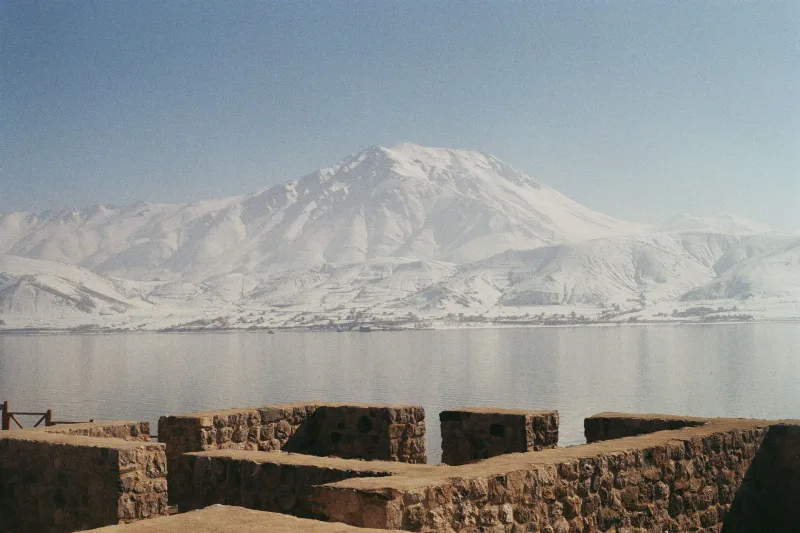
Lake Van
Lake Van is Turkey's largest lake, a vast alkaline soda lake with no outlet, set in the volcanic highlands of Eastern Anatolia at around 1,640 metres. Its unusual chemistry, depth and islands give it a character unlike any other lake in the country.
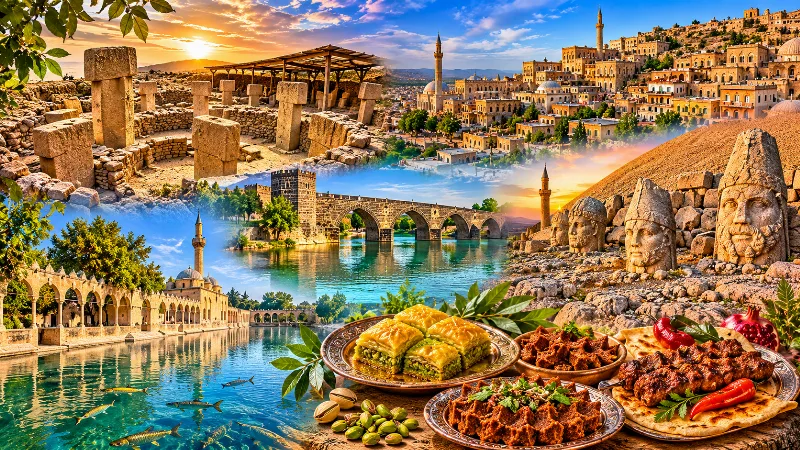
Southeastern Anatolia Region
Southeastern Anatolia is known for its ancient cities, extraordinary archaeological heritage, traditional stone architecture and rich culinary culture. From the historic streets of Mardin to the monumental landscapes of Şanlıurfa and the Euphrates River, the region reflects thousands of years of civilization.