Şırnak
Şırnak is a mountainous province in southeastern Türkiye, near the borders with Iraq and Syria. Its rugged terrain, river valleys and highland settlements distinguish it from the flatter plains elsewhere in the southeast. The provincial capital is relatively small, while the towns of Cizre and İdil contribute additional layers of local history and cultural identity.
Şırnak is a mountainous province in southeastern Türkiye, near the borders with Iraq and Syria. Its rugged terrain, river valleys and highland settlements distinguish it from the flatter plains elsewhere in the southeast. The provincial capital is relatively small, while the towns of Cizre and İdil contribute additional layers of local history and cultural identity.
Geography and Landscape
Much of Şırnak is characterised by steep mountains and elevated valleys, particularly toward the east and north. The Tigris River runs through parts of the province and shapes the landscape around Cizre. Lower districts differ substantially from the uplands in temperature and vegetation. The region's physical geography has influenced historic routes, settlements and agricultural practices across generations.
The geographical variety between Cizre and the mountainous northeast is particularly marked. A visitor exploring the province encounters different climates and settlement patterns rather than one uniform southeastern landscape.
History and Heritage
The province lies within a region of long-standing cultural exchange between Mesopotamia and the Anatolian highlands. Cizre has a historical identity connected to trade, scholarship and local dynasties. Mosques, older quarters and traditional houses reflect parts of this past. Şırnak's broader history includes multiple communities and languages, and its heritage is distributed among several urban and rural settlements.
For a fuller understanding of Şırnak, it helps to separate the provincial capital from the wider administrative area. The main urban centre contains everyday commercial and civic life, while individual districts preserve their own landmarks, settlement patterns and rural traditions. The location of a site within the province matters: a landscape, archaeological monument or coastal settlement may require travel well beyond the capital. Reading a provincial map alongside local district names makes the variety of the area clearer.
Places to Visit
Cizre is a significant historical centre with landmarks including the Red Madrasa, commonly known as Kırmızı Medrese. The district's older neighbourhoods are linked to the cultural history of the Tigris valley. Mountain landscapes around Beytüşşebap provide a very different visual setting. Because sites and settlements are separated by rugged terrain, visitors should distinguish urban heritage stops from longer rural routes.
Local Culture and Cuisine
Local culture reflects the traditions of southeastern Anatolian towns and highland communities. Agriculture and livestock raising remain important to many districts, while local cuisine features grains, meat and seasonal produce. Music, oral traditions and regional craftsmanship are part of the province's cultural heritage. Cizre and the mountainous districts have their own distinct historical and everyday characteristics.
Climate and Seasons
Şırnak Province contains pronounced climatic contrasts. Cizre and other lower areas can experience very hot summers, while the higher mountains have colder winters and snow. Spring and autumn bring changing conditions across the valleys and uplands. Travel through mountainous districts may be influenced by seasonal weather, so the conditions in the capital cannot always be applied to the whole province.
Getting There and Around
Road links connect Şırnak with nearby southeastern and eastern Anatolian provinces. Şırnak Şerafettin Elçi Airport serves the region, subject to available flights. Cizre and the provincial capital are separate urban destinations, and mountain districts can involve longer road journeys. Transport routes and local access arrangements should be checked before travelling into remote border and upland areas.
Discover Food in Türkiye
All food →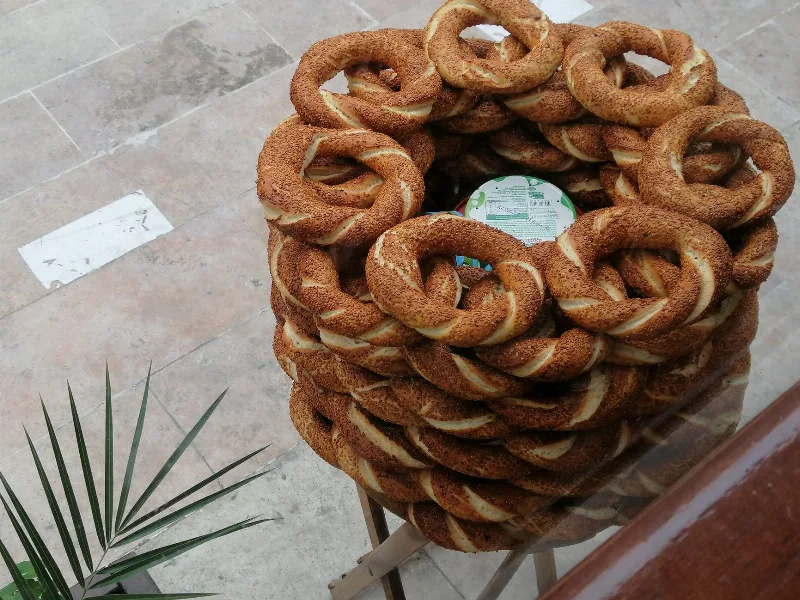
Simit
Simit is a ring-shaped Turkish bread covered in sesame seeds, strongly associated with Istanbul and sold as everyday street food. It is eaten fresh, most often with tea, and has a crisp crust around a chewy crumb.
Explore →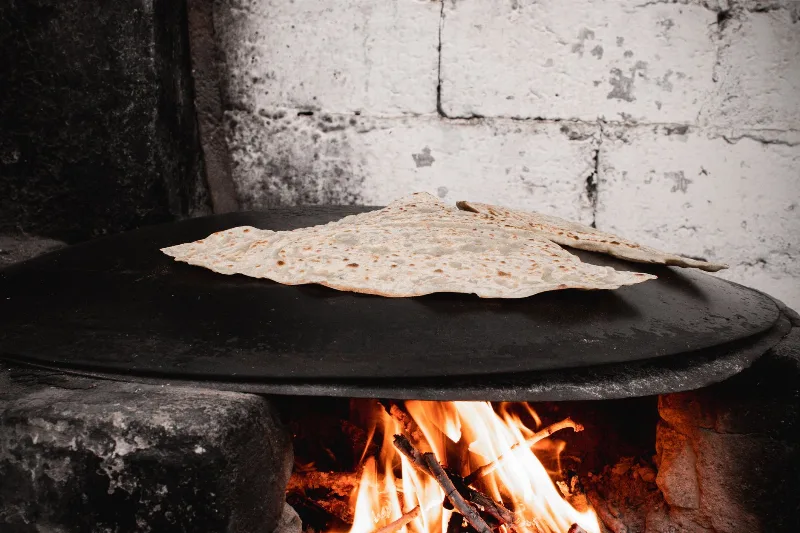
Bazlama
Bazlama is a soft, thick Turkish flatbread made from a leavened dough and cooked on a hot griddle. It is a staple of village baking across Anatolia, eaten warm with butter or used to wrap other foods.
Explore →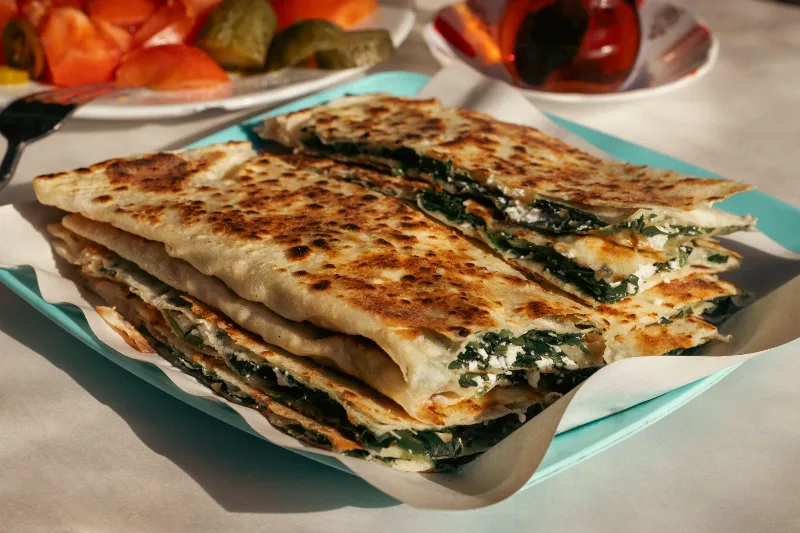
Gözleme
Gözleme is a thin, hand-rolled Anatolian flatbread folded around savory fillings such as cheese, spinach, or minced meat and cooked on a sac griddle. The article covers its regional variations, cooking method, texture, and traditional serving style.
Explore →Related content
Cizre Ulu Mosque and Silk Weaving in Şırnak
Cizre in Şırnak Province brings together a historic Ulu Mosque and a living silk-weaving tradition, revealing the architectural and craft heritage of south-eastern Türkiye.
Southeastern Anatolia Region
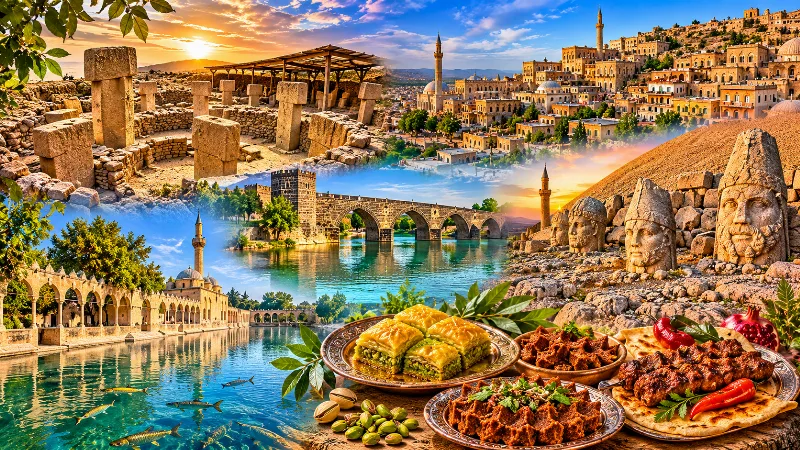
Southeastern Anatolia is known for its ancient cities, extraordinary archaeological heritage, traditional stone architecture and rich culinary culture. From the historic streets of Mardin to the monumental landscapes of Şanlıurfa and the Euphrates River, the region reflects thousands of years of civilization.
Kilis
Kilis is a small provincial capital in southern Türkiye near the Syrian border. Its compact centre, historic stone buildings and agricultural surroundings distinguish it from larger metropolitan destinations. The city stands within a landscape of olive groves and cultivated fields, and its local identity reflects centuries of cultural exchange in the northern.
Kocaeli
Kocaeli is a heavily urbanised province in northwestern Türkiye, situated east of Istanbul between the Sea of Marmara and the Black Sea. Its administrative centre is İzmit, an industrial and transport hub on the Gulf of İzmit. Beyond the urban corridor, the province includes forested hills, coastal settlements and areas used for outdoor recreation.
Kütahya
Kütahya is an inland city in western Türkiye best known for its centuries-old ceramic and tile-making tradition. The provincial capital lies among hills and agricultural valleys, away from the Aegean coastline. Historic buildings, workshops and nearby thermal areas give the province an identity that combines craftsmanship, urban heritage and the landscapes of inland western Anatolia.
Manisa
Manisa is a provincial capital in western Türkiye, just inland from the Gulf of İzmir and at the foot of Mount Spil. Known for its Ottoman associations, fertile farmland and vineyards, the province extends well beyond the city into a large part of the Aegean interior. Its historic towns and ancient sites.