
The Lycian Rock Tombs of Dalyan
STORIES FROM TÜRKİYE
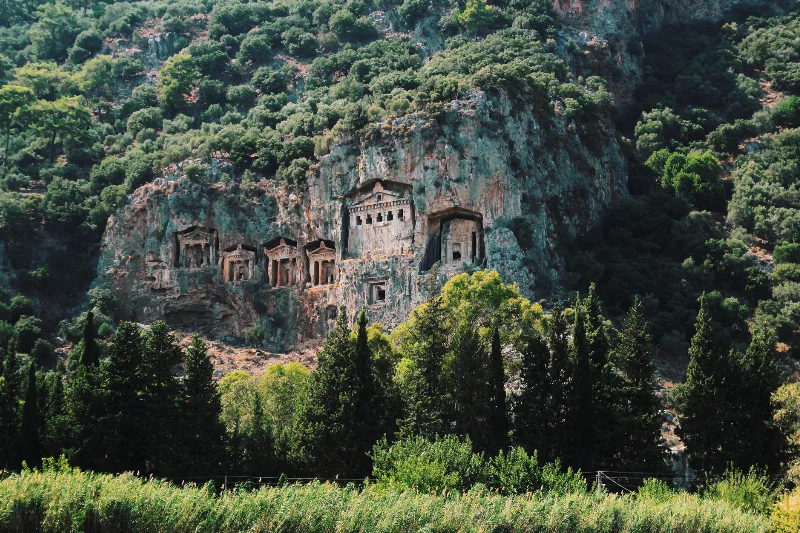
The cliffs rise steeply from the far bank of the Dalyan Çayı, and cut into their pale limestone are the façades of tombs that have watched over the valley for more than two thousand years. From the water they look like small temples suspended in the rock, complete with columns, pediments and doorways shaped by hand rather than built stone by stone. They are the defining feature of the skyline around Dalyan, and they say a great deal about the people who carved them.
Tombs Above the Dalyan River
The tombs occupy the cliff face on the eastern side of the river, looking west across the water toward the modern town. Their position was clearly deliberate. Visible from the river and from the ancient harbour below, they announced the city and its honoured dead to anyone approaching by boat.
Most are dated to the 4th century BCE, a period when the settlement beneath them was prosperous and closely connected with the wider Greek world. One façade was never completed, and that unfinished state is unusually informative. The rough surfaces and tool marks suggest that the work was carried out from the top of the cliff downwards, so that the masons could stand on the rock they had already shaped.
Kaunos, a Carian Port
The tombs belong to Kaunos, an ancient city of Caria rather than Lycia, even though the carving is often described as Lycian in style. The two regions lay close together along the same coast, and their funerary architecture shares a liking for temple-like façades placed high above a settlement.
Legend gives the city a founder of the same name, Kaunos, a son of Miletos. History is more complicated. Kaunos changed hands more than once, passing under Persian, Hellenistic, Roman and Byzantine rule, and the ruins on the plain behind the river reflect those layers. Excavations begun in the 1960s have uncovered a theatre, a stoa, baths, a fountain house and stretches of fortification wall on the acropolis. In time the harbour silted up and the city was abandoned, leaving the tombs above the river as its most enduring landmark.
Reading the Façades
Each tomb begins with a doorway, framed by pilasters or columns and topped by a triangular pediment. The effect is of a temple front reduced to its essentials, pressed into the cliff as though the building behind it had been pushed into the stone. In some cases the columns carry Ionic capitals; in others they are left plain.
Behind the door lies a single chamber, usually with a stone bench or platform along the walls where the dead were placed. Many of these chambers were opened and emptied long ago, and a few were reused in later centuries for other purposes. What survives is the architecture itself, and it is remarkably well preserved because the local limestone is soft enough to carve finely but strong enough to hold its edges.
River, Reeds and Seasonal Light
The tombs are not the only reason the Dalyan valley draws attention. The river winds through wide reed beds on its way to the sea, past the ruins of Kaunos and on toward the long sandbar at İztuzu, where loggerhead turtles come ashore to nest in summer. The channel also links to Lake Sülüngür, a brackish expanse that meets the Mediterranean through a narrow gap between the delta and the beach.
Light changes the cliff through the day. In the morning the façades are shaded and the rock reads as grey; by late afternoon they turn a warm honey colour against the darker stone around them. Spring brings wildflowers and fresh green to the delta, autumn gilds the reeds, and high summer fills the valley with heat and the constant sound of cicadas.
Rock Tombs Across the Region
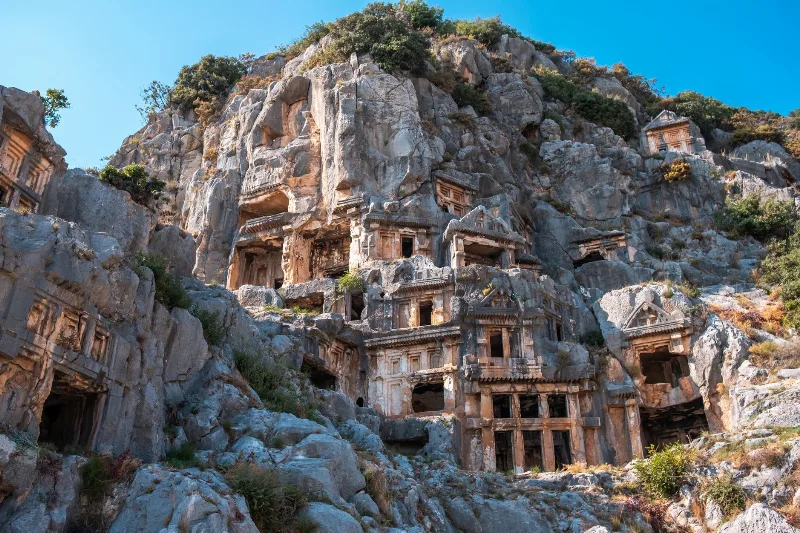
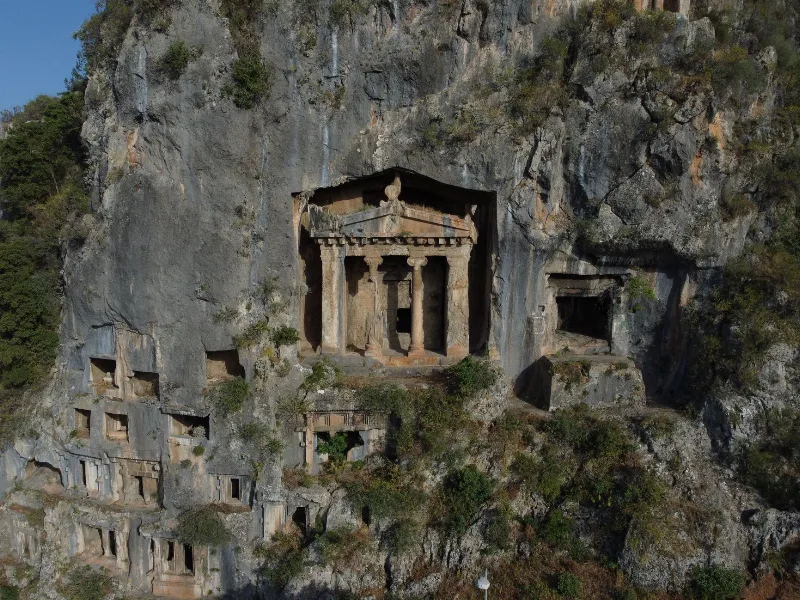
Dalyan is part of a broader tradition. Further east, the cliffs at Myra near Demre hold a dense cluster of similar tombs, and the Lycian tomb of Amyntas sits above Fethiye on the same principle of a temple façade cut into living rock. Inland, Pinara and Tlos preserve their own examples, set among hills and ancient walls.
Taken together, these sites show how consistently the peoples of southwestern Türkiye honoured their dead: with height, with visibility, and with architecture that imitated the temples of the living. The tombs above the Dalyan Çayı remain one of the clearest expressions of that idea, still facing the river as they have done for centuries.
Historic places
Explore history →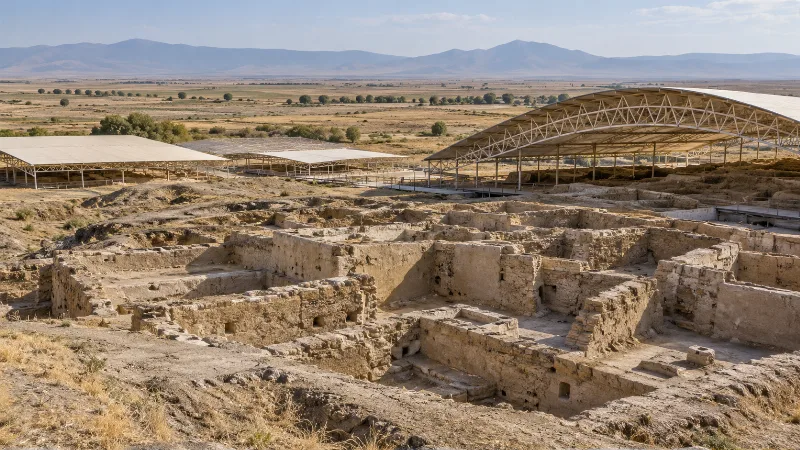
Çatalhöyük
Çatalhöyük is a Neolithic and Chalcolithic settlement mound in the Konya Plain whose tightly packed mudbrick houses, painted walls and floor burials changed how archaeologists understand early farming communities. This article explains what survives at the site, how it was excavated and what a visitor can realistically expect to see.
Explore →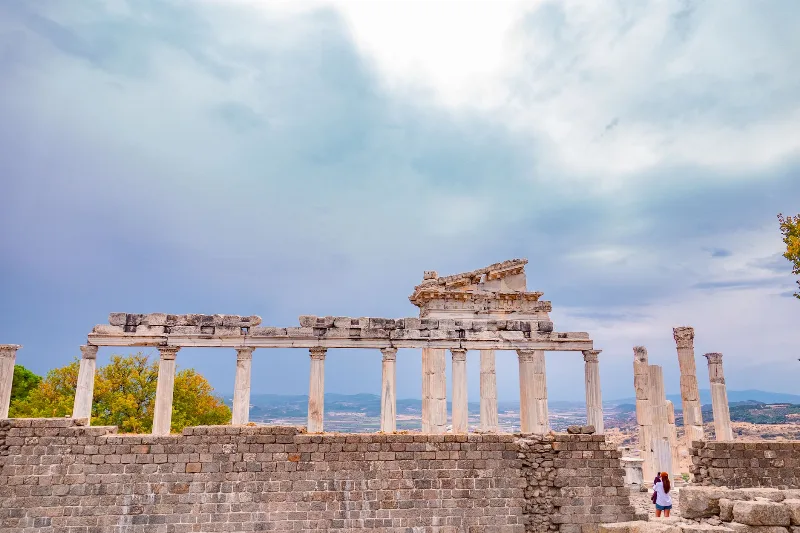
Pergamon
Pergamon was the Hellenistic capital of the Attalid dynasty in western Türkiye, built around a steep acropolis above the modern town of Bergama. Its Great Altar, theatre and Sanctuary of Asclepius make it one of the most important archaeological sites in Anatolia and a UNESCO World Heritage Site.
Explore →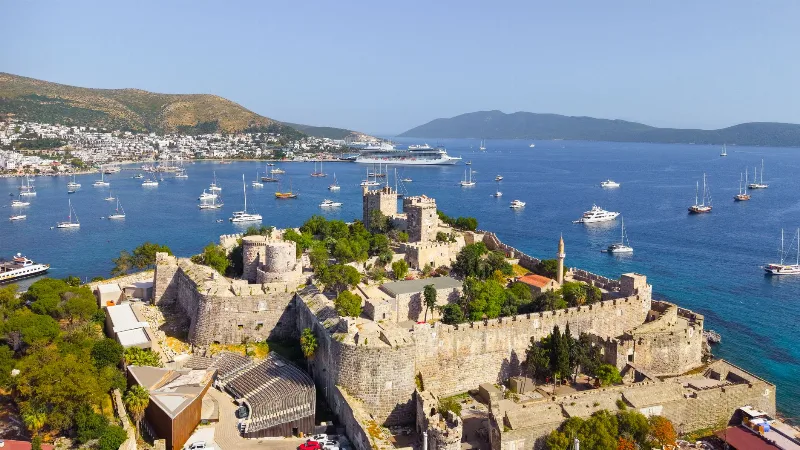
Bodrum Castle
Raised by the Knights Hospitaller above ancient Halicarnassus, Bodrum Castle is both a medieval fortress and the home of one of the world's leading museums of underwater archaeology.
Explore →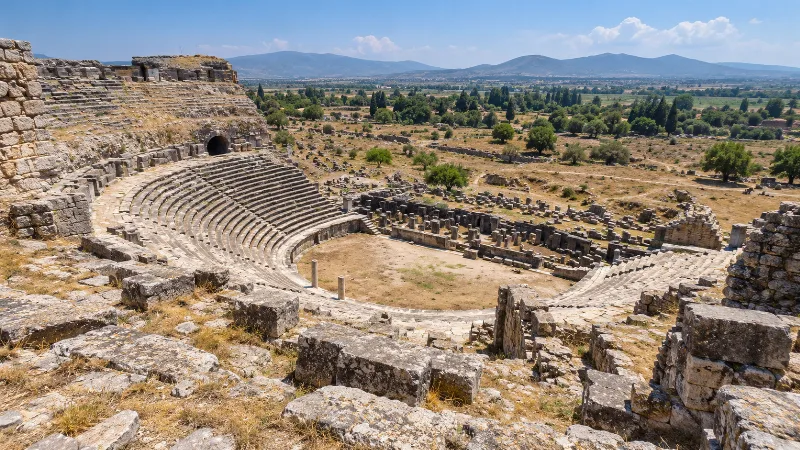
Miletus
Miletus was one of the great Ionian Greek cities of western Anatolia, a major maritime power and the birthplace of the Milesian school of philosophy. Today its extensive ruins near Balat in Aydın Province include one of Anatolia's largest ancient theatres.
Explore →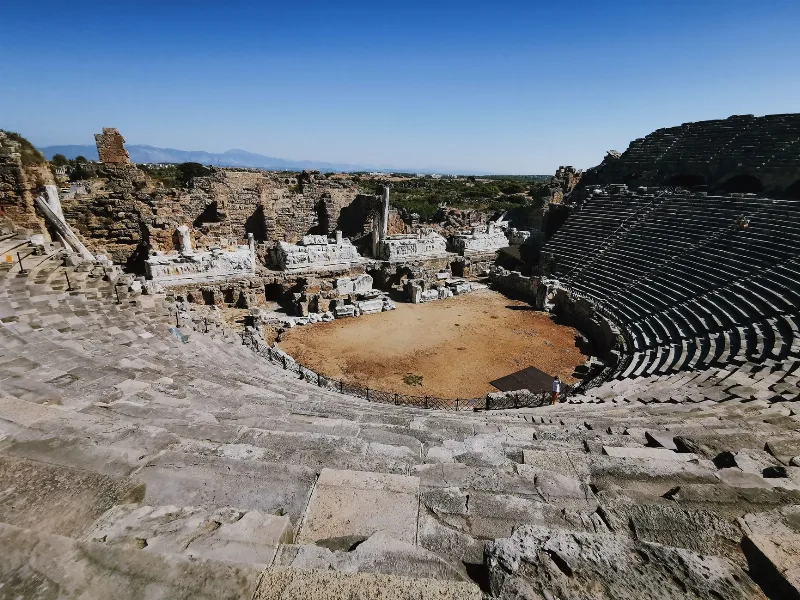
Side
Side is an ancient Pamphylian port city on a peninsula in Antalya Province, Türkiye, known for its well-preserved Roman theatre, the temples of Apollo and Athena, and a museum housed in Roman baths. It flourished under Hellenistic and Roman rule and was abandoned by the 10th century, leaving extensive ruins that visitors can explore today.
Explore →Related content
Kaunos
Kaunos is an ancient Carian city on the Dalyan River in Muğla Province, known for its temple-style rock-cut tombs and the extensive ruins of a harbour that silted up centuries ago.
Myra
Myra is an ancient Lycian city in the Demre district of Antalya, whose cliff-carved rock tombs and large Roman theatre stand within the modern town itself.
Fethiye
Fethiye is a captivating coastal town known for its stunning blue lagoon, thrilling paragliding experiences, and ancient rock tombs.
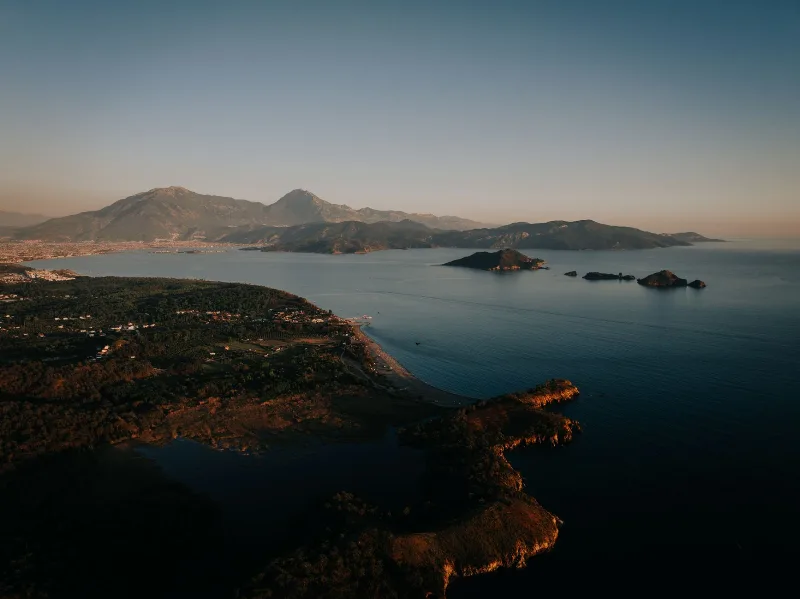
6-Day Mediterranean Coast Route: Antalya to Marmaris
A six-day linear route along Türkiye's Mediterranean coast, linking Antalya, Olympos, Demre, Kekova, Kaş, Kalkan, Patara, Fethiye and Dalyan before finishing in Marmaris. It mixes ancient cities, long beaches and small harbour towns on a continuous westward drive.
Dalyan Rock Tombs and River Reed Boats in Muğla
Dalyan in Muğla pairs ancient Lycian tombs carved into a cliff with a slow, reed-fringed delta where flat-bottomed boats still carry passengers between lake, river and sea.
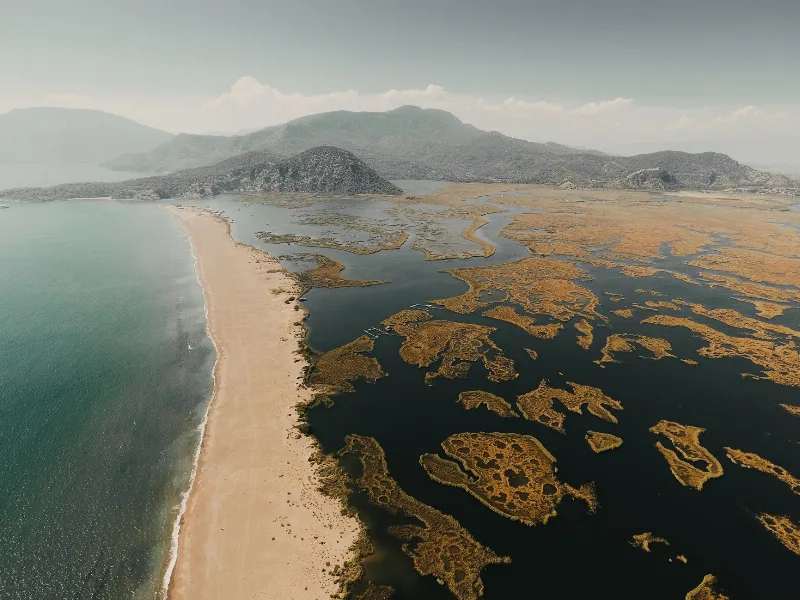
4-Day Marmaris and Dalyan Route
A four-day linear route that starts in Marmaris, crosses the Gulf of Gökova and Lake Köyceğiz, and ends around the river, rock tombs and turtle beach of Dalyan.