
Şirince
Şirince is a hillside village in İzmir's Selçuk district, known for fruit wine, surviving Greek Orthodox buildings and whitewashed houses with terracotta roofs that climb a slope above the plain.
Şirince is a hillside village in Selçuk district, İzmir Province, in western Türkiye, roughly 8 kilometres from the town of Selçuk and within short range of the ancient city of Ephesus. It is a small, compact settlement whose houses climb a slope above the plain, and it is known for local wine production, a surviving Greek Orthodox past and whitewashed houses with red-tiled roofs. Because it is built on rising ground rather than on flat farmland or a shoreline, almost every lane looks out over olive groves, vineyards and the valley below.
Where Şirince Is Located
Şirince sits in the Aegean region of Türkiye, in İzmir Province and inside Selçuk district. The village is placed on the slopes of a hill that rises above the flat agricultural land stretching toward Selçuk and the coast. The broad Küçük Menderes plain lies inland to the north-east, while the wooded ridge of Bülbül Dağı, the hill associated with the House of the Virgin Mary, stands nearby. Şirince is not a coastal settlement; it is inland and elevated, which is the main reason its climate, layout and views differ from the seaside towns further west.
A Greek Orthodox Village and the 1923 Population Exchange
For centuries Şirince was a Greek Orthodox village. Its older Turkish name, Kırkınca, is often linked to the idea of “forty”, and the settlement was known in Greek as Kirkince. In 1923 the population exchange between Greece and Turkey changed the village completely: its Greek inhabitants left, and Muslim families arriving from Greece were settled in the houses they had vacated. That single event explains much of what a visitor sees today — an Aegean hill village whose architecture, churches and street pattern belong to one community, while the present population descends largely from another.
Orthodox church buildings survive in the village, the best known of them dedicated to St. John the Baptist. Their painted interiors and stone walls are among the clearest reminders of the pre-1923 period, and an old school building also remains from the same era. These structures are not reconstructions built for visitors; they are the physical record of a community that lived here for generations before the exchange.
Traditional Architecture and Street Layout
The village is built from stone, timber and plaster. Typical houses have whitewashed walls, deep-set windows, overhanging upper floors supported on wooden brackets, and roofs covered with curved terracotta tiles. Many are two storeys tall, with the lower floor used for storage or livestock and the upper floor for living. Garden walls, stone stairs and wooden shutters are common details.
Streets in Şirince are narrow, irregular and mostly cobbled or stepped. There is no grid; lanes follow the contour of the hill, branching, bending and sometimes ending at a terrace or a house door. Vehicles cannot reach much of the village interior, which keeps the lanes quiet and walkable. Because the ground rises continuously, the settlement reads almost like a staircase of roofs when seen from below.
What You Can See on Foot
A walk through Şirince takes in the main lower square, the lanes rising behind it, the church buildings and the terraces where houses look out over the valley and the plain. Because the village is small, most of it can be covered in a couple of hours at an easy pace, although the climbs between levels are constant and the paving is uneven.
Signs of wine production are part of the everyday scene: vineyards on the surrounding slopes, cellars cut into the lower parts of houses, and small production areas attached to family properties. The village is particularly associated with fruit wines made from local produce, an activity that became a defining part of its identity after the population exchange.
Handmade textiles, olive oil and other agricultural products from the surrounding land are also part of village life. Craft and food production here are rooted in the household economy rather than in large-scale industry, and much of what happens in the village is still tied to the seasons of the land.
The Landscape Around the Village
Şirince is surrounded by olive groves and vineyards, with fig and other fruit trees closer to the houses. Higher up, the slopes give way to pine and scrub woodland. The combination of dry Aegean hills, cultivated terraces and wooded ridge lines shapes the views from the village and explains the local economy of olive oil, wine and fruit.
The soil and climate are typical of the Aegean hinterland: hot, dry summers, mild and wetter winters, and a long growing season. The elevated position means the village catches more air movement and less of the heat that settles on the plain below, and the terraced land around it has long been suited to fruit growing.
How to Reach Şirince
Şirince is reached from Selçuk. The two are connected by a road that climbs out of the town and winds up to the village, and minibus services run between them during the day. Selçuk itself is the main transport hub for the area: it has a railway station on the line linking İzmir with the interior, and it sits on the road network serving Ephesus. The nearest airport is İzmir Adnan Menderes, west of Selçuk.
Because the road up is narrow and the village lanes are steep, most visitors are dropped at the edge of the settlement and continue on foot. There is no large-scale transport infrastructure inside Şirince itself, and no circuit road through the historic core.
Best Time to Visit
Spring and autumn are the most comfortable seasons. In April, May, late September and October, temperatures are moderate and the surrounding slopes are either green or in harvest. Summer is hot and dry, and shade in the upper lanes is limited, so walking is easier early in the morning or late in the afternoon. Winter is mild by inland Turkish standards but wetter, and some days are cold enough to need a coat. The fruit and grape harvest in late summer and early autumn is when the village's agricultural character is most visible.
Practical Points Before You Go
Nearby Places in the Same Area
Şirince is close to several major sites in Selçuk district. The ancient city of Ephesus lies to the west, and Selçuk itself holds the Ephesus Museum, the Basilica of St. John and the İsa Bey Mosque. On the wooded hill of Bülbül Dağı above Ephesus stands the House of the Virgin Mary, a pilgrimage site reached by road. To the west, the coast around Pamucak and Kuşadası offers beaches and a very different landscape from the elevated, agricultural setting of Şirince.
Taken together, these places show why Şirince is often visited as part of a wider circuit around Selçuk: it is a living hill village in the middle of one of the most historically dense areas of western Türkiye.
From the land
Find All →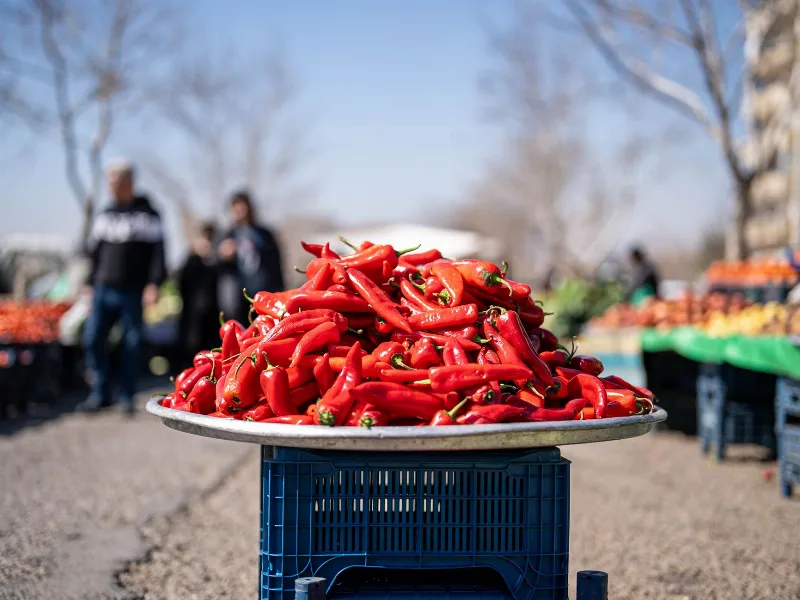
Kahramanmaraş Peppers
Kahramanmaraş peppers are the red peppers grown on the inland plains of southern Türkiye, where hot, dry summers and fertile soils give the crop its deep colour, moderate heat and smoky aroma.
Explore →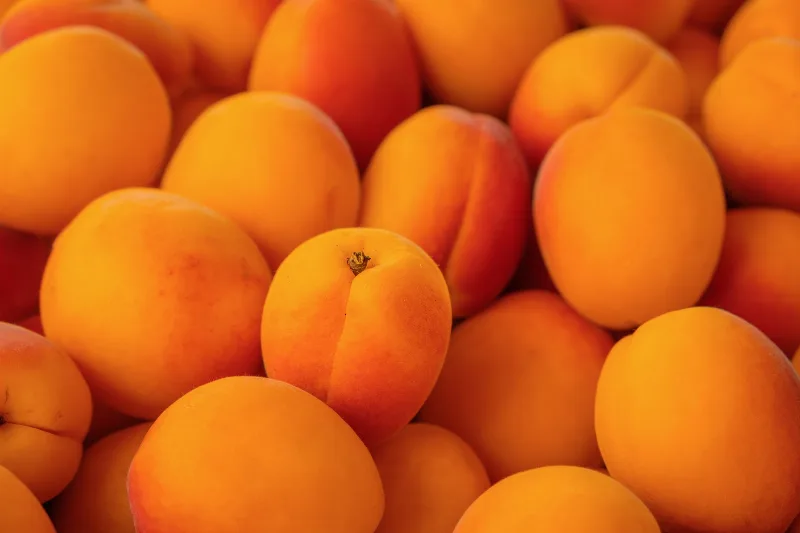
Elazığ Apricots
Elazığ apricots are a regional apricot product from eastern Türkiye, valued for their juicy, flavorful fruit. The province’s climate and fertile soils support both fresh use and traditional drying.
Explore →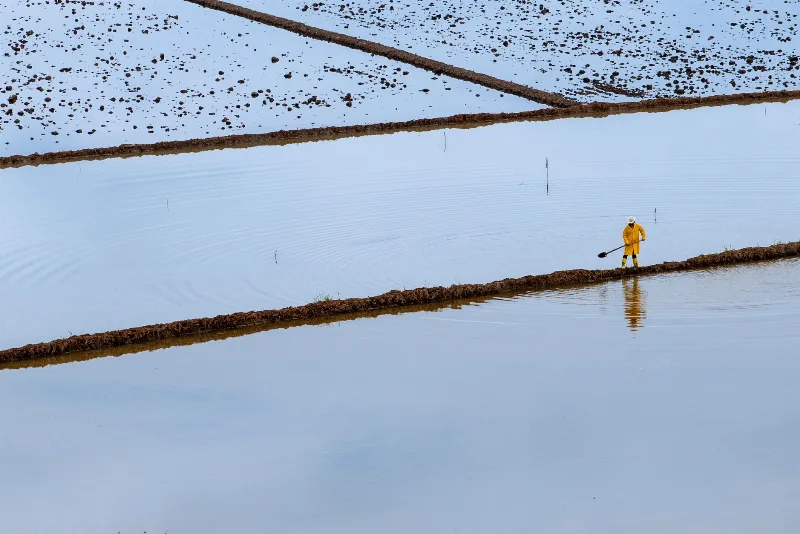
Tosya Rice
Tosya rice is a long-established rice grown in the Devrez valley around Tosya in Kastamonu province, where river irrigation, alluvial soils and a cool northern Anatolian climate shape the grain's firm texture and aroma.
Explore →Related content
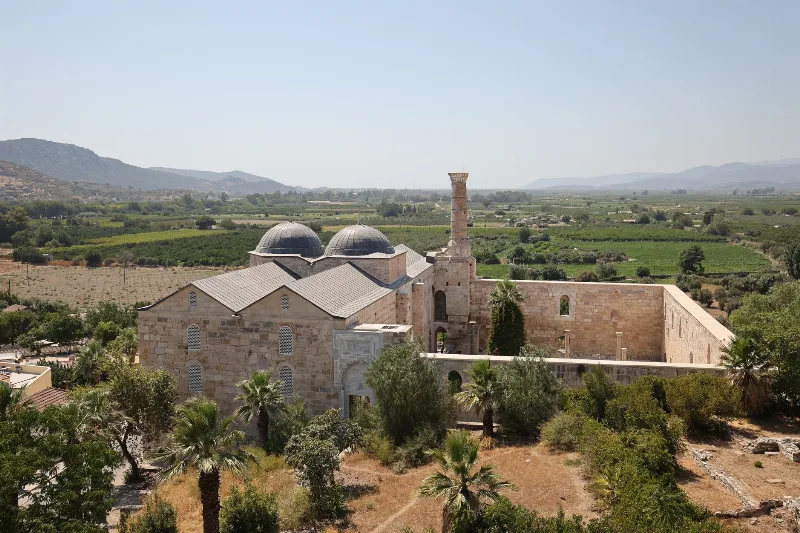
Selçuk
Selçuk is an inland district of İzmir Province in the Aegean region, set in the Küçük Menderes valley near the coast. It is best known as the modern town serving Ephesus, the House of the Virgin Mary and the Basilica of St John.
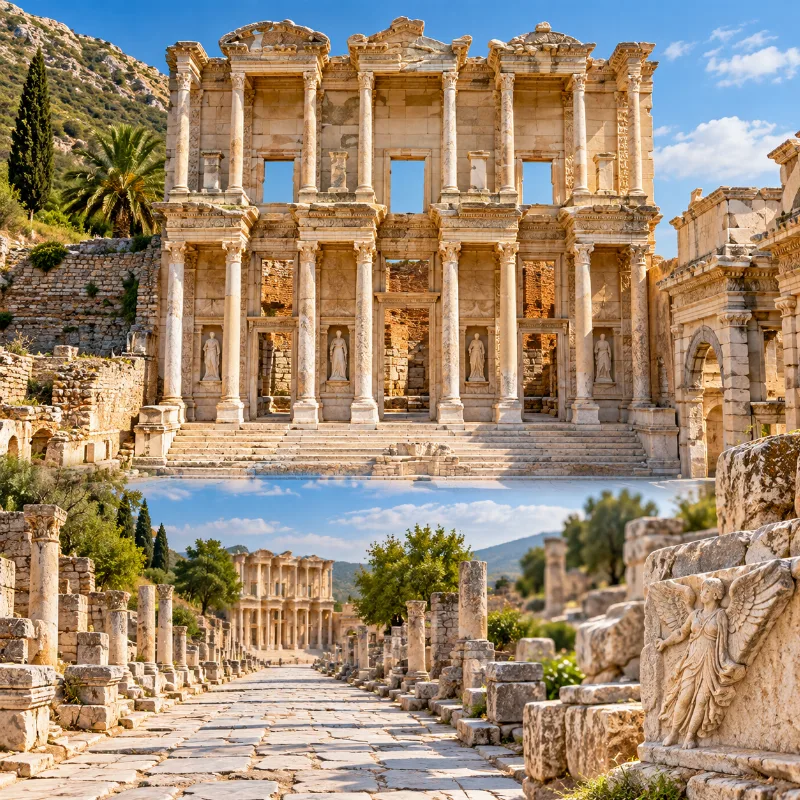
Ephesus
One of the best-preserved ancient cities in the Aegean, known for its monumental streets, library, theatre and Roman-era remains.
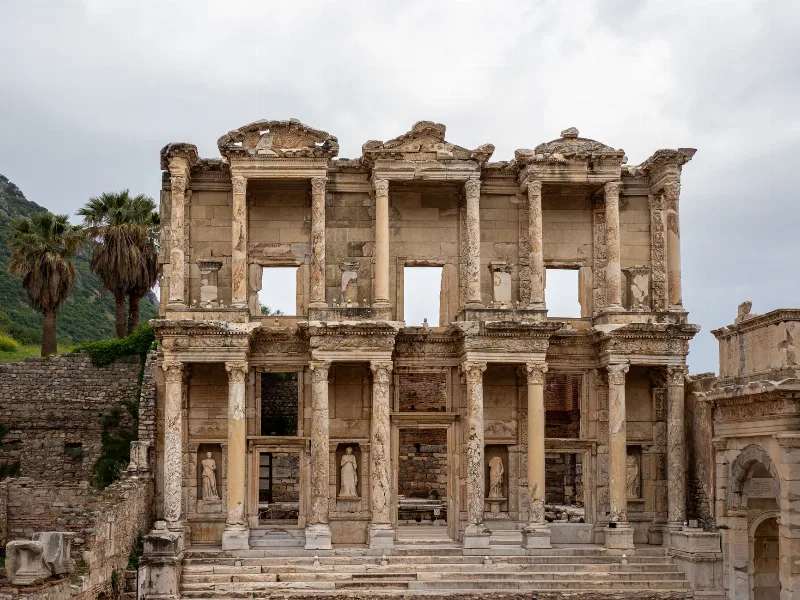
Ephesus
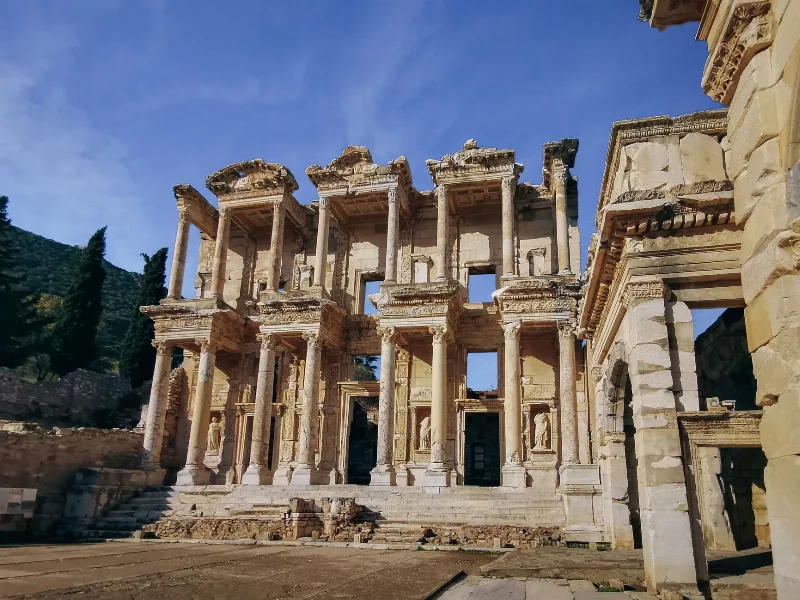
Ephesus is an ancient Greek and Roman city near Selçuk in İzmir Province, Türkiye, whose ruins include the Library of Celsus, the Great Theatre and the remains of the Temple of Artemis.
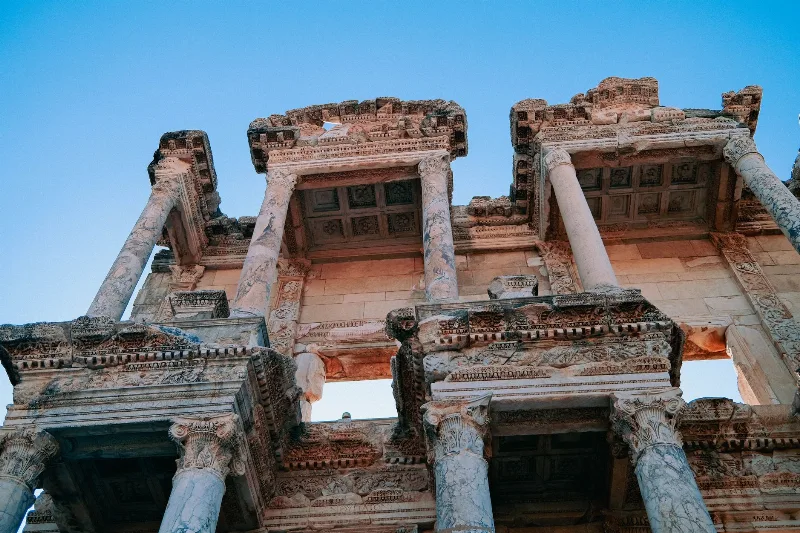
Ephesus: Gateway to Antiquity
Ephesus is a vast archaeological site on the Aegean coast of Türkiye, where marble streets, terraced houses and a hillside theatre trace the life of a major Roman city. Nearby Selçuk adds museums, a hilltop basilica and a fertile farming plain.
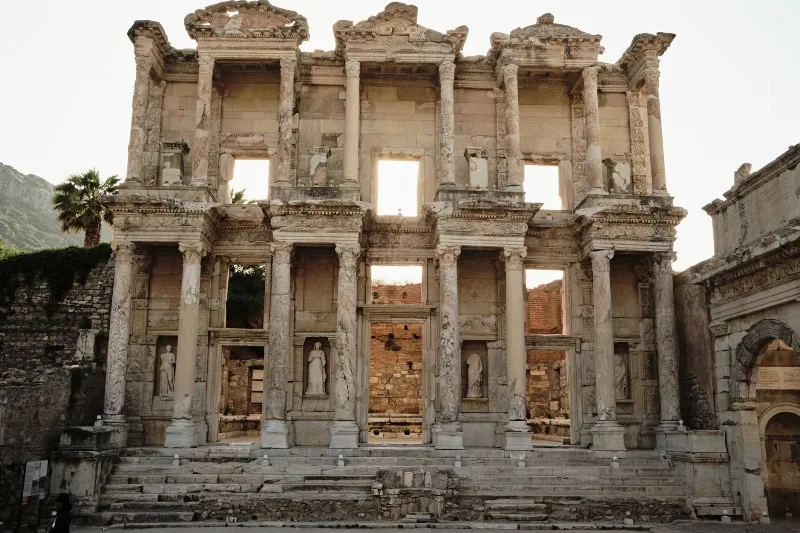
4-Day Ephesus and Pamukkale Route
A four-day west-to-east Aegean route that links the ancient city of Ephesus and the House of Virgin Mary in Selçuk with the white travertine terraces and Hierapolis ruins at Pamukkale, near Denizli.
6-Day Aegean Ancient Cities Route
A six-day linear journey from Izmir to Denizli through the great ancient cities of the Aegean, linking Ephesus, Priene, Miletus, Didyma, Lake Bafa, Pamukkale, Laodicea and Aphrodisias in one coherent corridor.