
Selçuk
Selçuk is an inland district of İzmir Province in the Aegean region, set in the Küçük Menderes valley near the coast. It is best known as the modern town serving Ephesus, the House of the Virgin Mary and the Basilica of St John.
Selçuk is a district of İzmir Province in Türkiye’s Aegean region, located inland from the Aegean coast in the lower Küçük Menderes valley. Its administrative centre is the town of Selçuk, a compact settlement that serves as the modern hub for one of the Aegean’s most important archaeological and religious landscapes. The district is primarily distinguished by its proximity to the ancient city of Ephesus, the House of the Virgin Mary and the Basilica of St John, but it is also a working agricultural and market town rather than a purpose-built resort.
Setting in the Küçük Menderes Valley
Selçuk lies where the broad lower valley of the Küçük Menderes opens towards the Aegean coastal lowlands. The town itself sits close to Ayasuluk Hill, a low rise that gives the surrounding area its distinctive profile and holds several of the district’s most visible monuments. Around the town, the land is largely flat and agricultural, with fields, orchards and scattered settlements set against low hills. The coast is not far to the west, but Selçuk has an inland character; the sea is reached through the coastal strip near Pamucak rather than forming the edge of the town.
This position between the interior plain and the coast has shaped Selçuk’s role for centuries. It sits on routes that connect İzmir with the southern Aegean and with the interior, and it is close enough to the coast to benefit from coastal traffic while retaining the atmosphere of a valley town. The surrounding landscape is Mediterranean in character, with dry summers, cultivated ground and olive trees forming a familiar part of the rural scene.
From Ayasuluk to the Modern Town
The settlement history of the area is layered rather than continuous in a single spot. Ancient Ephesus developed near the coast, while the settlement later shifted towards Ayasuluk Hill, around which the modern town grew. The hill is associated with the Basilica of St John, built over a grave identified by tradition as that of St John the Evangelist, and with Ayasuluk Castle, whose walls remain part of the town’s skyline. Below the hill, the İsa Bey Mosque, dating from the 14th century, is one of the clearest examples of Selçuk’s medieval architectural heritage.
The Temple of Artemis, once one of the most celebrated sanctuaries of the ancient world, stood in the low ground near the town. Today only a single reconstructed column and scattered remains indicate its former scale. These monuments give Selçuk an unusual concentration of historical reference points within and immediately around a modest provincial town, but they are best understood as part of a wider landscape that includes Ephesus rather than as isolated sights.
The Town Centre and Ayasuluk Hill
Selçuk’s centre is compact and low-rise, with a network of streets around the commercial core, local services and the roads leading to the main monuments. It is not a large city, and much of the town can be understood on foot, although the archaeological sites lie at some distance from the centre. Ayasuluk Hill forms the historic nucleus, with the castle, the basilica remains and views over the valley and town. The area around the hill and the İsa Bey Mosque gives the clearest sense of the old settlement, while the modern streets below are given over to everyday provincial life.
The town’s character changes with the seasons. In spring and autumn it functions as a busy base for visitors moving between the archaeological sites and the coast, while in the quieter months it reverts more clearly to a local district centre. This dual role is central to understanding Selçuk: it is both a place where people live and work and a gateway to a historic landscape of international importance.
Ephesus and the House of the Virgin Mary
Ephesus lies outside the modern town and is an archaeological site rather than a living urban settlement. Its extensive ruins, including streets, public buildings and terraced housing, reflect the scale of the ancient city that once stood near the mouth of the Küçük Menderes. For visitors based in Selçuk, Ephesus is the principal historical reference point, but detailed coverage belongs with the site itself. The same applies to the House of the Virgin Mary, located on the slopes of Bülbül Mountain and approached as a place of pilgrimage and quiet reflection rather than as part of the town’s ordinary street life.
The presence of these sites has made Selçuk a significant stop on Aegean itineraries, but the district should not be reduced to them. The town provides the practical setting from which the surrounding monuments, villages and countryside are reached.
Villages and the Surrounding Countryside
Selçuk district includes rural settlements and agricultural land that remain closely tied to the town. Şirince, a village in the hills above the valley, is known for its traditional houses and its position among olive groves and orchards. It is part of the district’s wider identity, although its village character and specific attractions are distinct from the town centre. The lower valley is used for farming, and local produce such as olives, figs and other Mediterranean crops contributes to the region’s economy and food culture.
To the west, the coastal edge near Pamucak provides access to the sea and a sandy shoreline, but this is a separate coastal experience from Selçuk itself. The district therefore combines a historic town, an archaeological landscape, hill villages and a nearby coast within a relatively small area.
Climate and Visiting Conditions
Selçuk has a Mediterranean climate, with hot, dry summers and mild, wetter winters. Spring and autumn are generally the most comfortable periods for exploring the town and the archaeological sites, when temperatures are moderate and the valley is green. Summer heat can be intense, especially in the middle of the day, while winter brings cooler and sometimes rainy weather but far fewer visitors. The district’s climate also shapes the agricultural calendar and the appearance of the surrounding countryside throughout the year.
Regional Connections
Selçuk is reached mainly by road from İzmir to the north and from the southern Aegean towns towards Aydın province. It also has rail connections on the regional line, making it accessible without a car, although local movement to the archaeological sites and villages still requires planning. Its position between İzmir and Kuşadası makes it a natural stop for travellers moving along the Aegean coast, and it relates closely to the wider Ephesus area, the coastal settlements to the west and the agricultural towns of the Küçük Menderes valley.
For readers planning a visit, Selçuk is best understood as a district with a historic town at its centre, a major archaeological landscape on its edge and a rural hinterland that extends towards the coast and hills. It is a place where the modern administration, local life and ancient heritage overlap, and that overlap is what gives the district its particular character.
Discover Food in Türkiye
All food →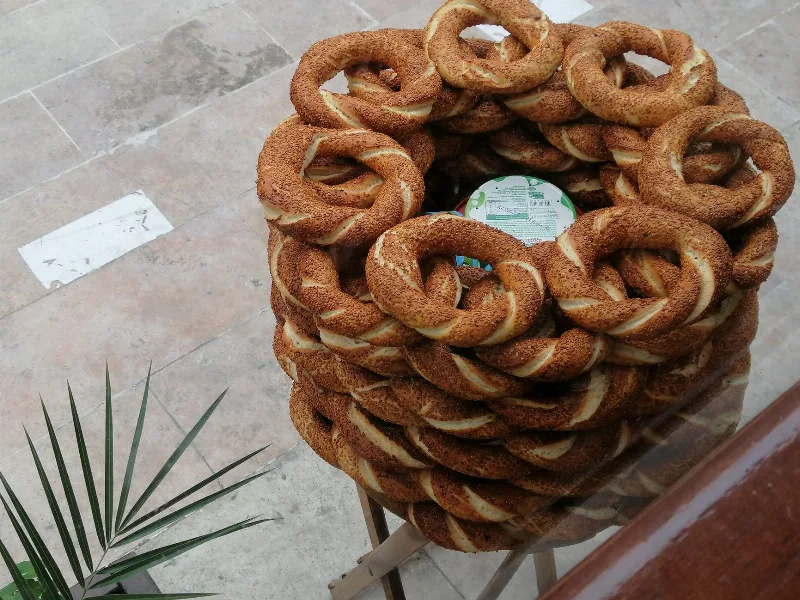
Simit
Simit is a ring-shaped Turkish bread covered in sesame seeds, strongly associated with Istanbul and sold as everyday street food. It is eaten fresh, most often with tea, and has a crisp crust around a chewy crumb.
Explore →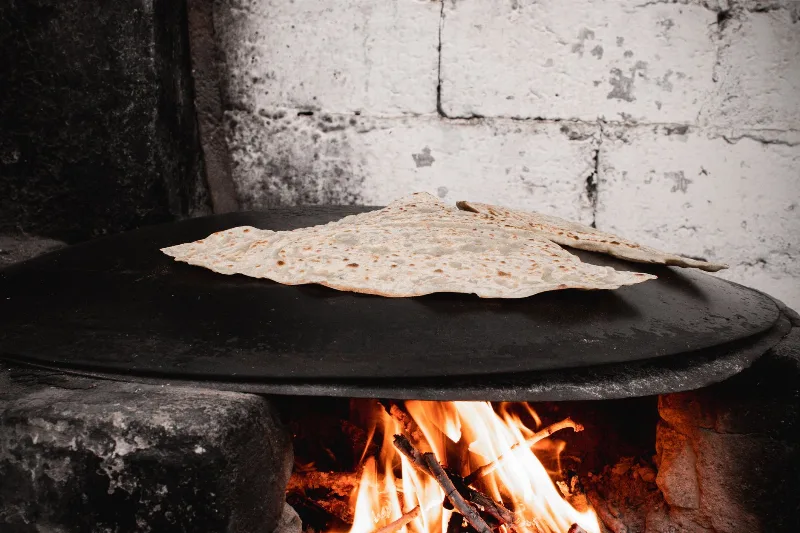
Bazlama
Bazlama is a soft, thick Turkish flatbread made from a leavened dough and cooked on a hot griddle. It is a staple of village baking across Anatolia, eaten warm with butter or used to wrap other foods.
Explore →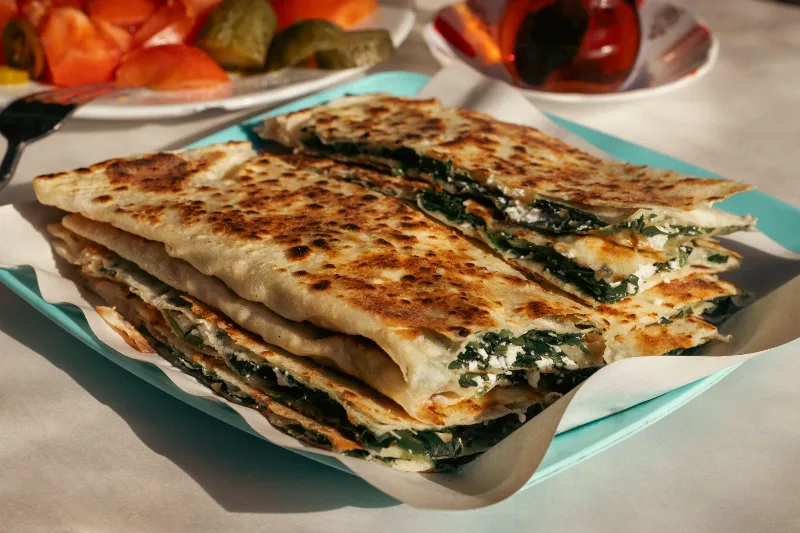
Gözleme
Gözleme is a thin, hand-rolled Anatolian flatbread folded around savory fillings such as cheese, spinach, or minced meat and cooked on a sac griddle. The article covers its regional variations, cooking method, texture, and traditional serving style.
Explore →Related content
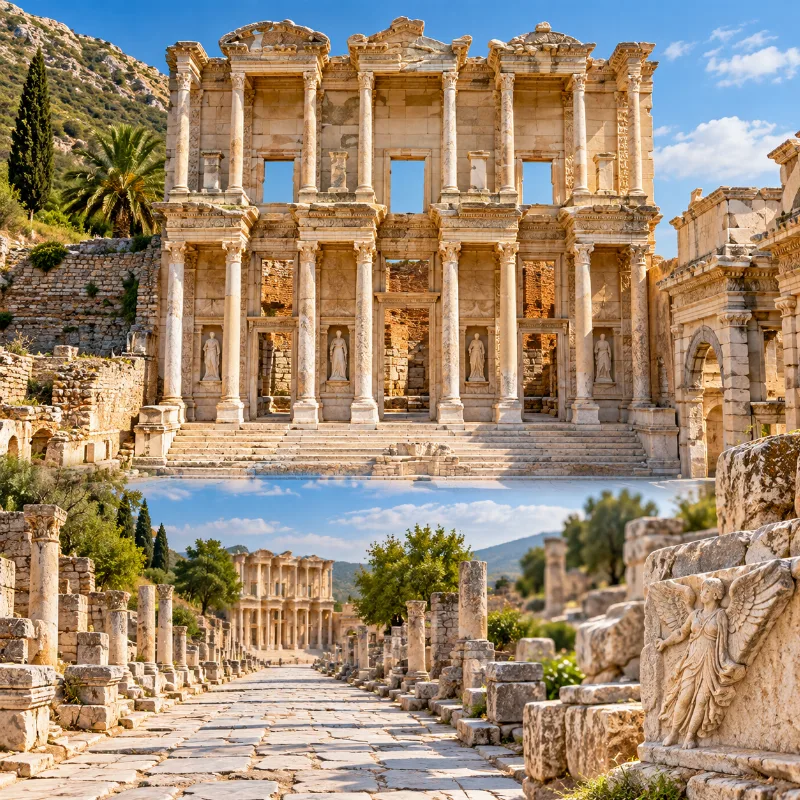
Ephesus
One of the best-preserved ancient cities in the Aegean, known for its monumental streets, library, theatre and Roman-era remains.
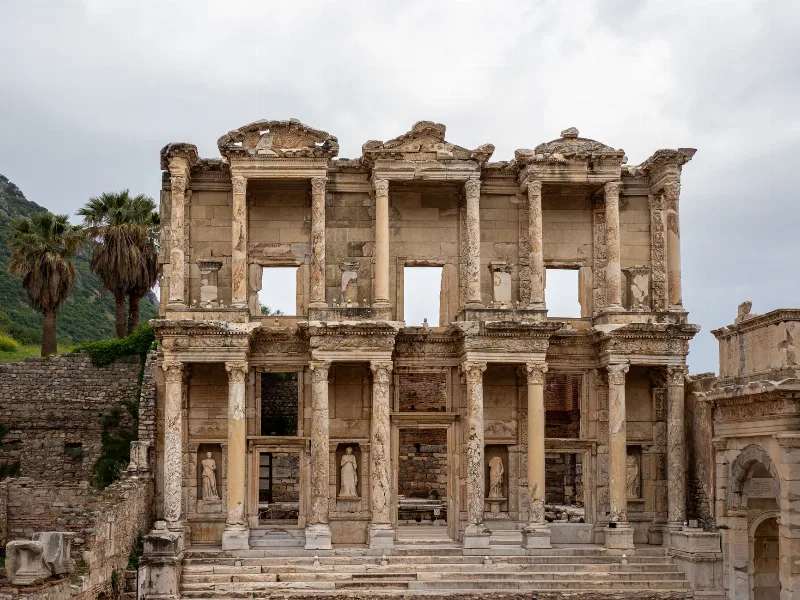
Ephesus
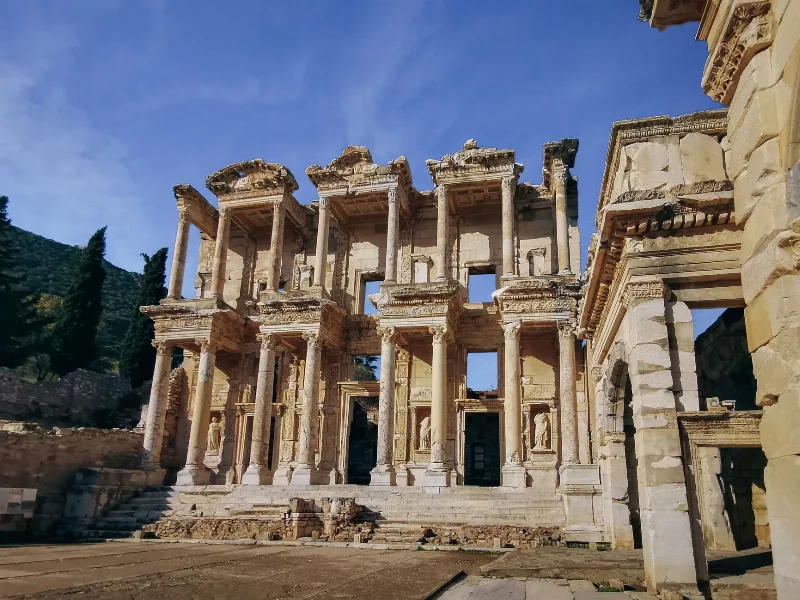
Ephesus is an ancient Greek and Roman city near Selçuk in İzmir Province, Türkiye, whose ruins include the Library of Celsus, the Great Theatre and the remains of the Temple of Artemis.
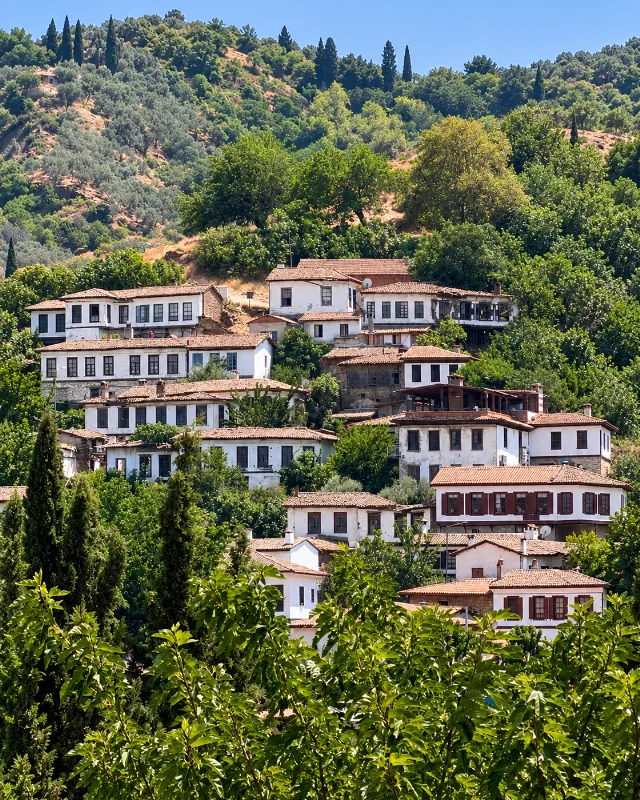
Şirince
Şirince is a hillside village in İzmir's Selçuk district, known for fruit wine, surviving Greek Orthodox buildings and whitewashed houses with terracotta roofs that climb a slope above the plain.
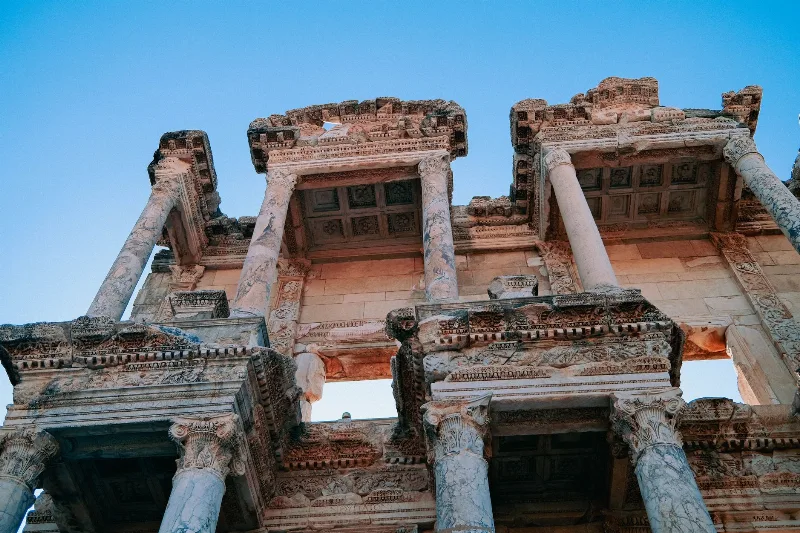
Ephesus: Gateway to Antiquity
Ephesus is a vast archaeological site on the Aegean coast of Türkiye, where marble streets, terraced houses and a hillside theatre trace the life of a major Roman city. Nearby Selçuk adds museums, a hilltop basilica and a fertile farming plain.
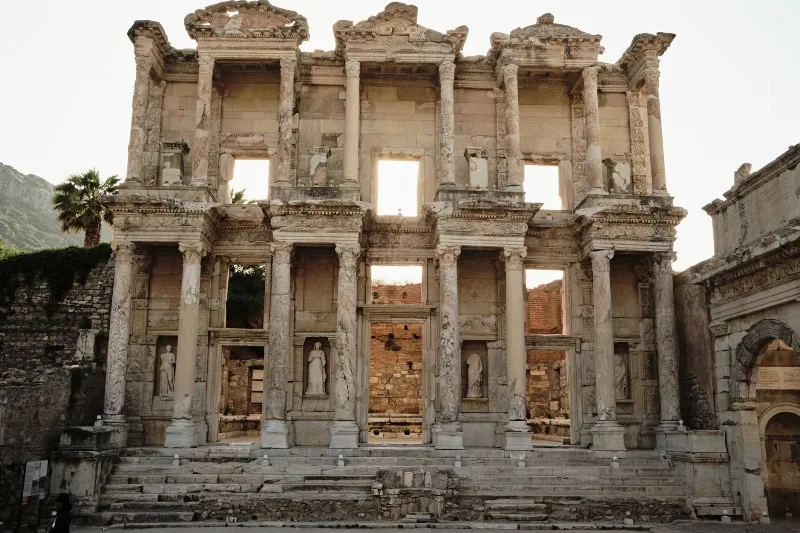
4-Day Ephesus and Pamukkale Route
A four-day west-to-east Aegean route that links the ancient city of Ephesus and the House of Virgin Mary in Selçuk with the white travertine terraces and Hierapolis ruins at Pamukkale, near Denizli.
6-Day Aegean Ancient Cities Route
A six-day linear journey from Izmir to Denizli through the great ancient cities of the Aegean, linking Ephesus, Priene, Miletus, Didyma, Lake Bafa, Pamukkale, Laodicea and Aphrodisias in one coherent corridor.