
2-Day Alaçatı and Çeşme Route
A compact two-day Aegean route that starts among the windmills and stone lanes of Alaçatı and finishes at the castle, harbour and thermal beaches of Çeşme, all on the same peninsula west of İzmir.
This two-day route begins in Alaçatı, the old stone-house town known for its windmills and cobbled lanes, and ends at Çeşme, the coastal resort at the western tip of the same peninsula. Both places lie on the Çeşme Peninsula in İzmir Province, surrounded by the Aegean on three sides, so the entire journey stays inside one fairly small area and never demands a long transfer between stops. Two days are enough to explore Alaçatı's historic core and its windy bay, then move west for Çeşme's castle, harbour and warm-water beaches. The route reads almost as a loop: the first day covers the town and the water close to it, the second follows the north coast and finishes at the peninsula's far end.
Day 1: Alaçatı and Its Bays
Start the day on foot in the centre of Alaçatı. The streets are narrow and paved with stone, lined with low houses that were carefully restored rather than rebuilt, and much of the pleasure of the morning comes simply from wandering without a fixed plan. Small squares, shopfronts set into old walls and climbing plants over doorways give the town the character that draws travellers here in the first place. As part of the Cities & Districts side of the region, Alaçatı rewards slow walking rather than a checklist of sights.
From the streets, walk up to the row of restored windmills that stands on the low ridge overlooking the town. They are the route's first real landmark and the reason Alaçatı is recognisable from a distance; the short climb also gives a clear view of how the town sits in relation to the sea. This is a good place to understand the shape of the peninsula before you start moving across it.
By early afternoon, shift your attention to the water. Alaçatı's bay is one of the region's best-known stretches for windsurfing and kiteboarding, thanks to steady summer winds and shallow water near the shore. Even if you are not here to sail, the beach and the waterfront make an easy, breezy contrast to the stone lanes of the morning. Continue a little further along the coast to the beaches and coves closest to the town, where swimming and simple shoreline walks fill the rest of the afternoon. These belong to the Beaches & Bays side of the region and are the natural resting point of the first day.
Return to Alaçatı for the evening, when the town fills again and the streets are at their liveliest. Nothing on Day 1 sits far from the centre, so the car can stay parked for most of it: the day is built around walking in the old town and short hops to the nearby shore.
Day 2: Ilıca, Şifne and Çeşme
Leave Alaçatı in the morning and follow the peninsula's north coast westward, toward Çeşme. The first stop is the wide, shallow beach at Ilıca, where warm mineral water rises into the sea close to the shore and gives the shallows a noticeably different feel from the open Aegean. Because the water stays shallow for a long way out, this is one of the peninsula's most family-friendly stretches of coast, and it makes a logical early break on the drive west.
Continue a short distance to Şifne Bay, a sheltered cove on the same northern shore, also known for its thermal waters. Ilıca and Şifne sit close together and share the same coastal character, so pairing them keeps the morning relaxed rather than rushed. Both are good examples of how the region's volcanic geology shapes its beaches, and the contrast with the wind-driven water at Alaçatı is worth noticing.
In the afternoon, carry on to Çeşme itself, at the western tip of the peninsula. The town's focal point is its castle, a historic structure beside the harbour that now also houses a museum; it anchors the Historic Places side of the route and explains why this tip of the coast has mattered for centuries. Around it, the harbour, the marina and the waterfront streets form a compact centre that is easy to cover on foot. Take time along the shoreline as the day winds down, watching the light change over the water toward the Greek islands that lie just offshore.
Çeşme is also a place where the region's produce shows up clearly. The peninsula is known for its melons and for other fruit and vegetables grown in the surrounding fields, and local markets reflect that. A brief mention of these belongs in the Regional Produce picture rather than in a food-focused section, but it is part of what makes the western end of the route feel distinct from Alaçatı.
How the Two Days Fit Together
The order matters. Day 1 keeps you in and immediately around Alaçatı, so you spend little time in the car and a lot on foot. Day 2 moves steadily west along the north coast, with Ilıca and Şifne as natural breaks before the final stop at Çeşme. Because the distances are short, the sequence never feels stretched, and the two days build a clear picture of the peninsula rather than a scattered list of stops.
- Best for: driving, with substantial walking in both towns
- Route shape: essentially a short loop across one peninsula, beginning at Alaçatı and ending at Çeşme
- Driving: modest and never demanding; a car is useful mainly for the second day
- Terrain: gentle coastal land, low hills inland, no mountain driving
When to Travel and What to Expect
Late spring and early autumn suit this route best. In high summer the peninsula is hot, busy and windy, which is ideal for windsurfing but can make midday walking in Alaçatı uncomfortable; shifting walking to the morning and evening solves most of that. Winter is quiet and mild along the coast, though some beach areas are naturally less active outside the season.
Expect a coastal peninsula rather than a mountain or inland route. The sea is always close, the roads are short, and the main change in scenery comes from moving between the sheltered bays of the south and the open northern shore. Travellers looking for a relaxed Aegean break with a clear beginning in Alaçatı and a clear ending at Çeşme will find that these two days cover the essentials without asking for long drives. Anyone wanting more depth on a single stop can turn to the dedicated destination pages, while this route explains how the places connect into one practical weekend.
Remarkable Places
See all places →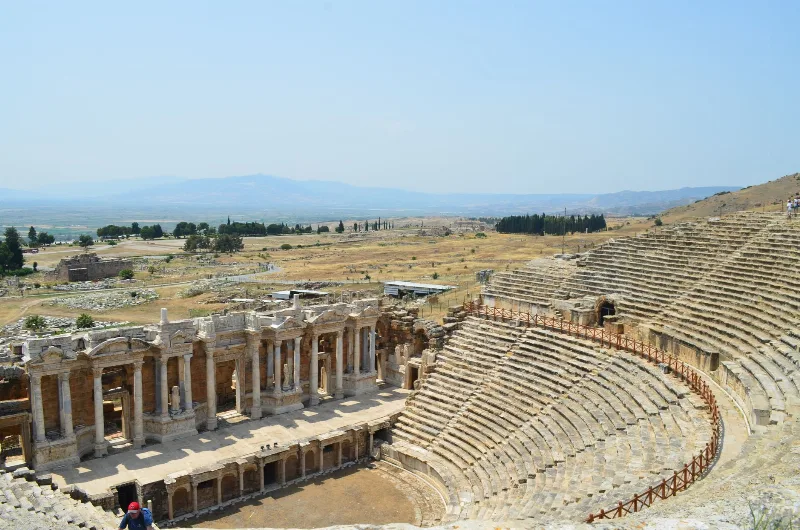
Letoon
Letoon is a Lycian sanctuary near Xanthos in Muğla Province, dedicated to Leto, Artemis and Apollo. Its three temples, theatre and trilingual inscription make it one of southwestern Turkey’s most significant archaeological sites.
Explore →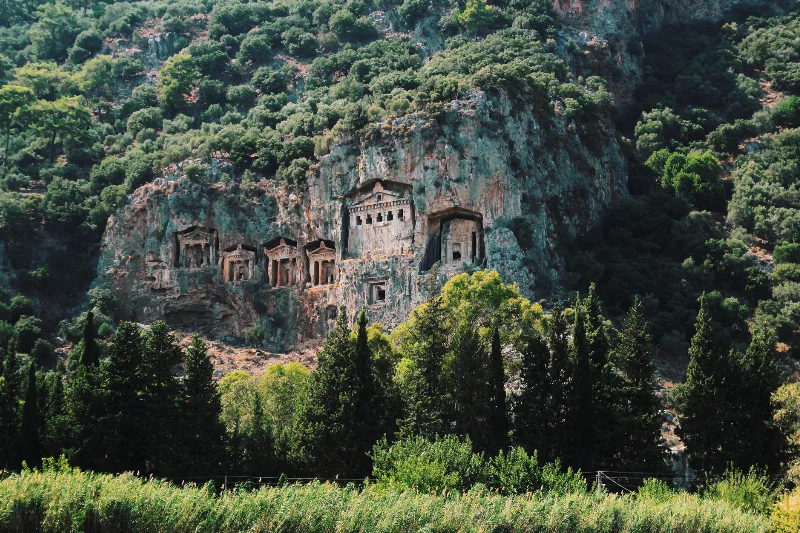
Kaunos
Kaunos is an ancient Carian city on the Dalyan River in Muğla Province, known for its temple-style rock-cut tombs and the extensive ruins of a harbour that silted up centuries ago.
Explore →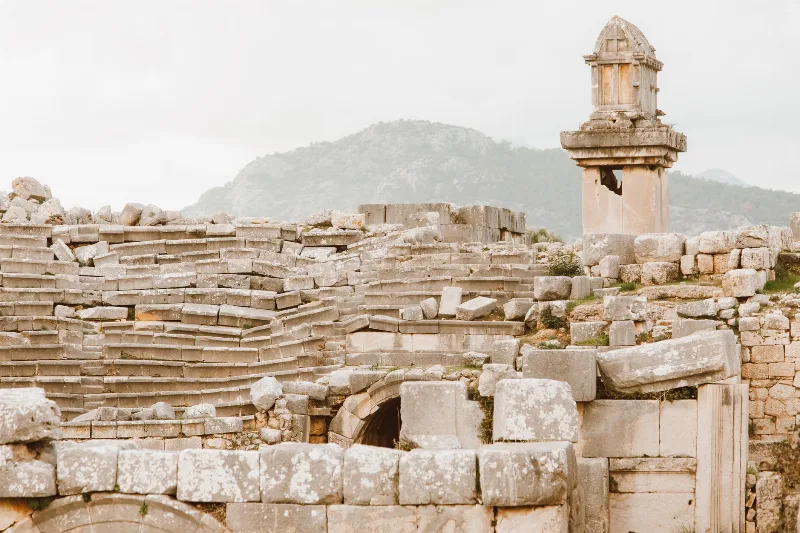
Xanthos
Xanthos is an ancient Lycian city in Antalya Province and a UNESCO World Heritage Site, known for its Lycian tombs, Roman theatre and role as a leading city of Lycia.
Explore →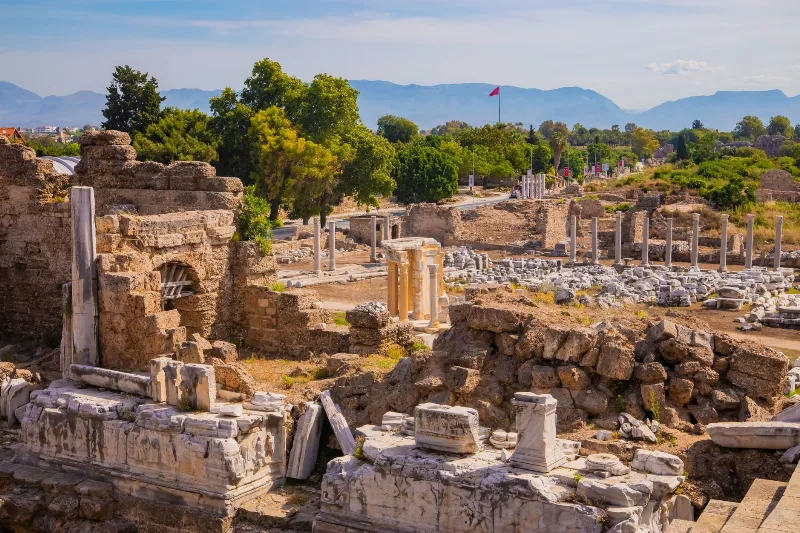
Phaselis
Phaselis is a Rhodian-founded port city on the eastern Lycian coast, where paved streets, agoras, baths and a small theatre stand among pines between three sheltered bays.
Explore →Related content
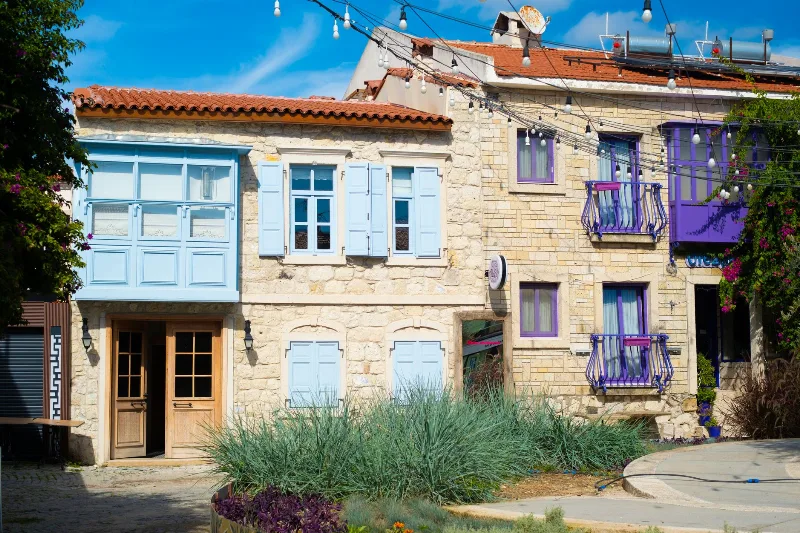
Alaçatı
Alaçatı is a small Aegean town on the Çeşme Peninsula in İzmir Province, recognised for its stone houses, hilltop windmills and the steady wind that has made its bay a centre for windsurfing.
Çeşme
A coastal district at the western tip of İzmir Province, known for its Aegean beaches, thermal springs and the stone houses and windsurfing waters of Alaçatı.
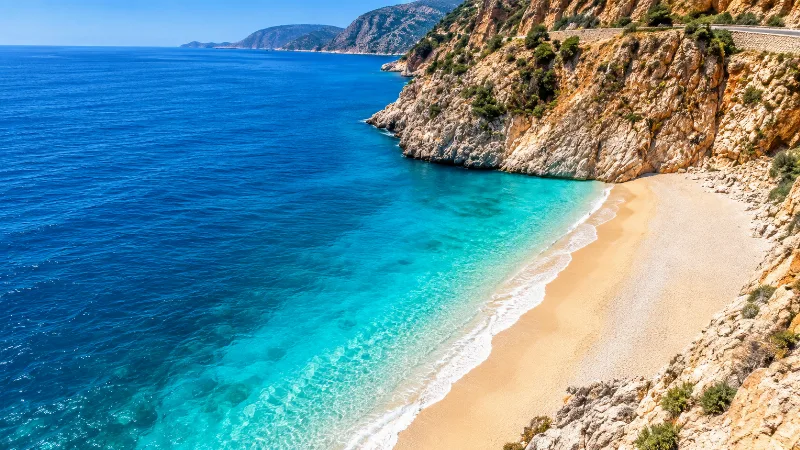
Beaches & Bays
Coasts, coves, islands and seaside places across Türkiye.
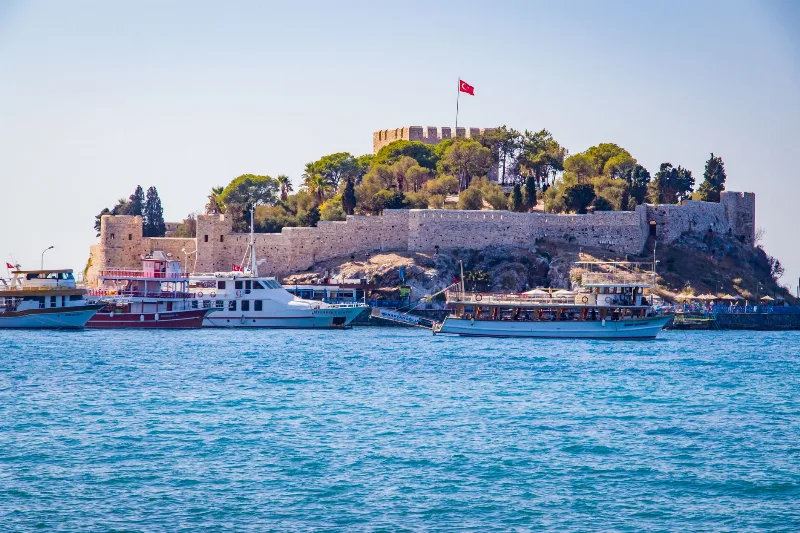
3-Day İzmir and Çeşme Route
A three-day Aegean journey from central İzmir to the Çeşme Peninsula, pairing a historic bazaar and waterfront with a castle, coastal bays, and the stone houses of Alaçatı.
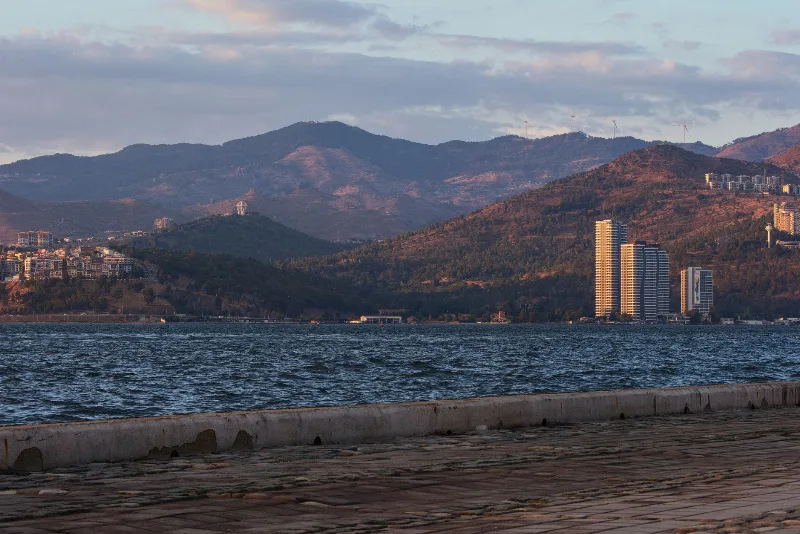
Izmir's Coastal Charm
İzmir is a western Turkish city built around a gulf of the Aegean Sea, where a long waterfront, nearby coves, ancient sites and Aegean cooking shape its coastal character.
Aegean Coast of Türkiye
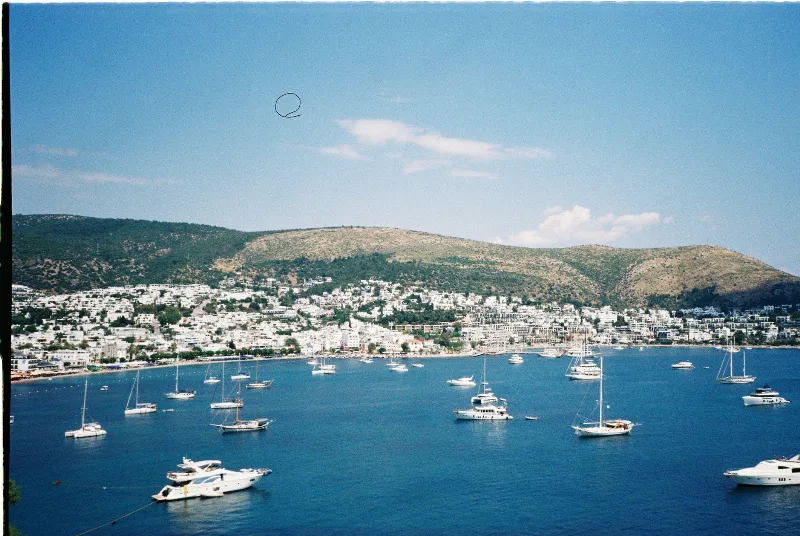
Explore the Aegean coast of Türkiye, renowned for its picturesque towns and stunning azure waters.