
Çal Grapes
Çal grapes come from an elevated plateau in Denizli Province, where stony soils, wide day–night temperature swings and a long vineyard tradition shape both table fruit and wine grapes.
Çal grapes are the grapes grown around Çal, a district of Denizli Province in western Türkiye. The district occupies an elevated plateau in the inner Aegean region, and vine growing has been part of its farming life for generations. Grapes are tied so closely to this particular place because of the meeting of a transitional climate, stony and lime-rich soils, and a rural tradition in which a vineyard is treated as a normal part of the farm holding. The grapes of Çal are used both as table fruit and as raw material for wine, and the district has lent its name to an indigenous grape variety.
Where Çal Grapes Are Grown
Çal lies in the north-eastern part of Denizli, on upland terrain that rises well above the provincial centre. The district centre sits at roughly 800 to 900 metres above sea level, and its villages are scattered across rolling plateaus, shallow valleys and gentle slopes. Vineyards are planted on these slopes and around the edges of arable fields, often in small plots rather than large single blocks, which is typical of family farming in the area.
Çal does not grow grapes in isolation. Neighbouring districts such as Çivril, Bekilli and Güney also have vineyards, so the district belongs to a wider band of Denizli where the vine is a familiar crop. This matters for the character of local agriculture: growers share knowledge, pruning methods and harvest labour across district lines, and the same stony, well-drained upland soils appear again and again across the surrounding countryside.
Why the Climate and Soil Suit the Vine
The plateau setting gives Çal a climate that is noticeably harder than the Aegean coast. Summers are hot and dry, while winters are cold enough to bring frost and, in some years, snow. The most important feature for grapes is the wide gap between daytime and night-time temperatures in late summer. Warm days allow the berries to build sugar, and cool nights slow the loss of acidity, so the fruit ripens gradually rather than all at once. This balance between sugar and freshness is valued in table grapes and in wine grapes alike.
Rainfall in this part of Denizli falls mainly in winter and spring, and summer is largely dry. That rhythm suits a deep-rooted vine, which tolerates a dry growing season far better than most field crops. The soils are typically thin, stony and calcareous, with good drainage. Vines dislike waterlogged ground, and here excess moisture drains away quickly, encouraging the roots to reach down for water instead of staying near the surface. Together, the dry summer, the cool nights and the stony ground create the conditions that shape the flavour of Çal grapes.
The Vine and the Local Varieties
Like all grapes, those of Çal come from vines of the species Vitis vinifera. The vine is a woody, climbing plant that is trained and pruned each year to keep it productive and manageable. In this inland part of Denizli, growers have traditionally kept vines low and open, without tall trellis systems, so that each plant forms a compact, bush-like shape. This kind of training helps the canopy cope with dry, sunny summers.
The variety most closely associated with the district is a dark-skinned red grape known as Çalkarası, which carries the district's name and is grown in the area for wine. Alongside it, vineyards in and around Çal also carry table grapes that are sold fresh for local and regional markets, and seedless Sultana-type vines appear in parts of the wider Denizli countryside, where raisins are an important product. The mix of wine varieties and table varieties is part of what makes the district's vineyards so varied.
The Growing Cycle in the Vineyard
The vine's year in Çal follows a clear rhythm. Pruning takes place in winter, when the plant is dormant and the grower decides how many buds to leave for the coming season. Budburst follows in spring, when the first shoots and leaves appear and the risk of late frost becomes a real concern on this cold plateau. Flowering comes in late spring, and it is the weather at that moment that largely decides the size of the crop.
Through summer the berries swell and then change colour during veraison, when red varieties shift from green to deep purple. Harvest usually begins in late summer and continues into autumn. Because the plateau is cool, picking is spread over a period rather than concentrated in a single week, which allows growers to bring in table grapes at their freshest and to leave wine grapes on the vine a little longer where they want riper fruit. Much of the picking is still done by hand, partly because the low, bushy vines are awkward for machines and partly because careful handling protects the berries.
After the Harvest: Table, Raisin, Must and Molasses
Once picked, Çal grapes follow several different paths. The best table grapes are sold fresh, either locally or in the larger markets of the region. Some of the crop is dried, since the dry, sunny late-summer weather makes drying a natural option in this part of Türkiye. Red varieties such as Çalkarası go to winemaking, where they contribute colour and fruit to local and regional wines.
Grapes also have a long household role in the region. Grape must, known as şıra, is boiled down into pekmez, a thick traditional syrup, and the fresh leaves of the vine are used for stuffing in the same way as elsewhere in Anatolia. These uses are not the main reason the crop is grown, but they show how deeply the vine is woven into the everyday food culture of the district.
Grapes in the Landscape and Economy of Çal
Vineyards give the Çal countryside much of its character. Low rows of vines break up the open plateau, mark field boundaries and fill the slopes that are too stony or too dry for other crops. The harvest season brings visible activity to the villages, with picking, transport and processing all concentrated into a few weeks of late summer and early autumn.
Denizli as a whole has a recognised wine sector, and Çal's vineyards feed into it, while the district's table grapes supply nearby towns and cities. The close link between the district and its grapes is reflected in the fact that a local variety is named after the place. For readers trying to understand what grows where in Türkiye, Çal is a clear example of how a cool, dry, stony plateau in the inner Aegean can turn a demanding crop into a defining feature of a district's identity.
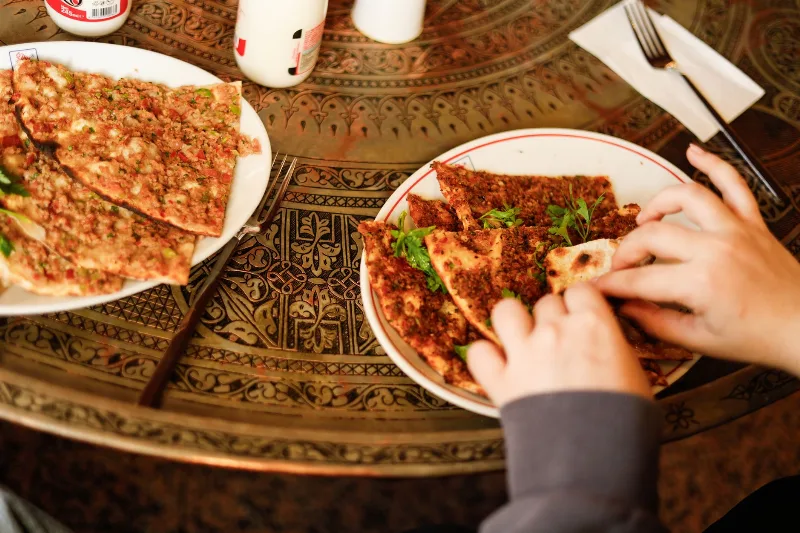
Lahmacun
Lahmacun is a paper-thin flatbread spread with a finely chopped, spiced meat topping and baked quickly at high heat. It is most closely associated with Şanlıurfa and Gaziantep, and is traditionally eaten rolled with lemon and parsley.
Explore →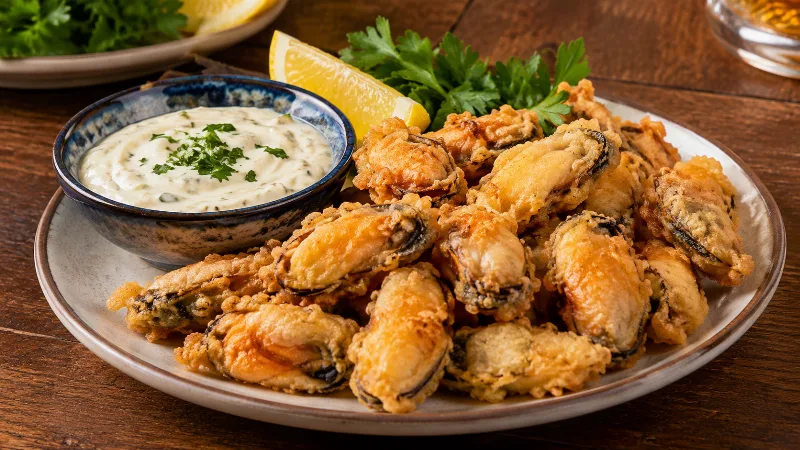
Midye Tava
Midye tava is a Turkish street food of battered, deep-fried mussels on skewers, eaten hot with tarator sauce and lemon. It is closely tied to Istanbul and the mussel-rich Marmara and Aegean coasts.
Explore →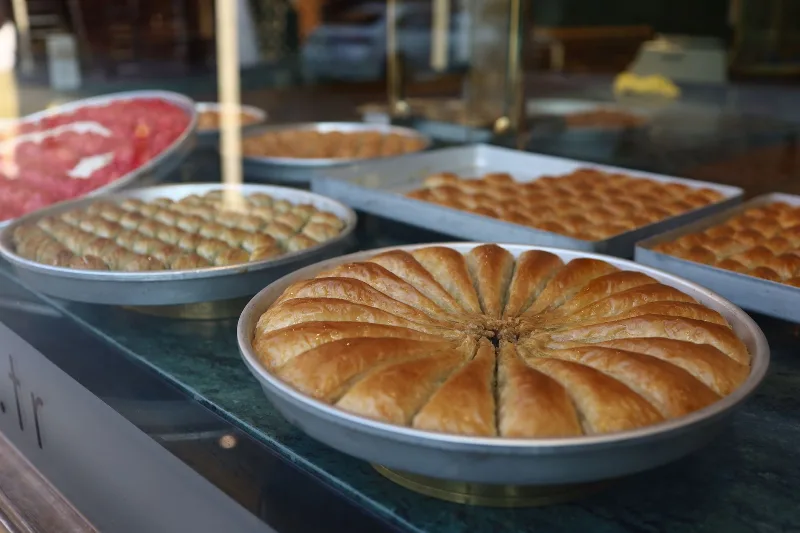
Baklava
Baklava is a traditional Turkish dessert made of layered phyllo dough, filled with nuts and sweetened with syrup. Strongly associated with Gaziantep, it is a staple of celebrations and a symbol of Turkish hospitality.
Explore →Related content
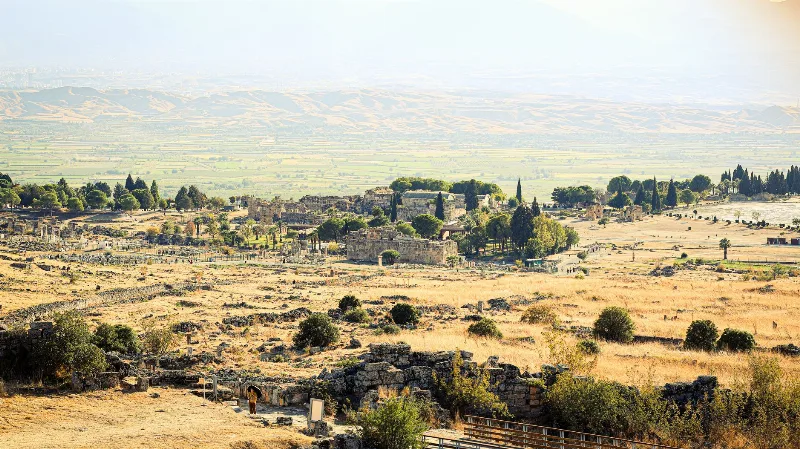
Denizli
Denizli is the inland capital of Denizli Province in Türkiye's Aegean region, known internationally for the Pamukkale travertine terraces and ancient Hierapolis, and at home as a major textile city with its own long-crowing rooster breed.
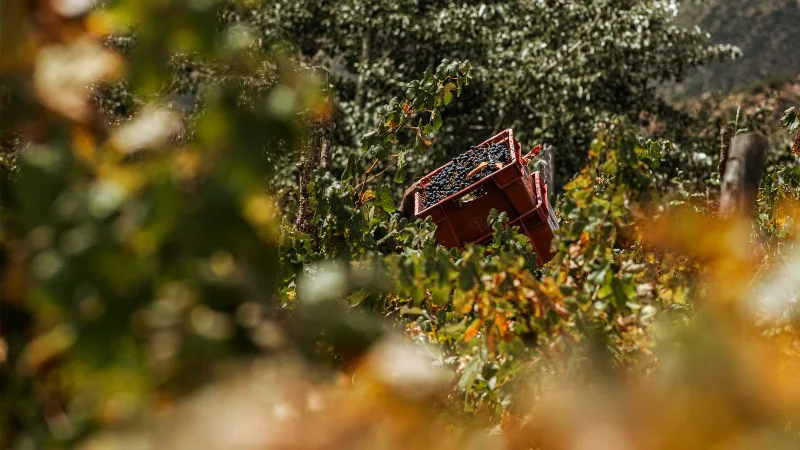
Grape Harvest in Çal, Denizli
Each year the vineyards around Çal in Denizli province ripen and are picked, usually between late August and October, with September as the busiest month. The harvest is tied to the local Çalkarası grape and to the district's long-standing wine-making tradition.
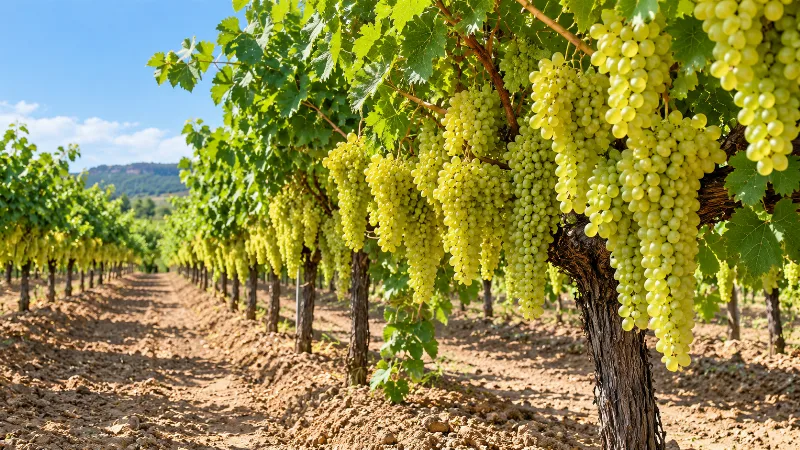
Manisa Sultaniye Grapes
Manisa Sultaniye is a seedless grape grown across the plains of Manisa province in western Türkiye, eaten fresh in late summer and sun-dried into the golden sultanas that have shaped the region's farming economy for generations.
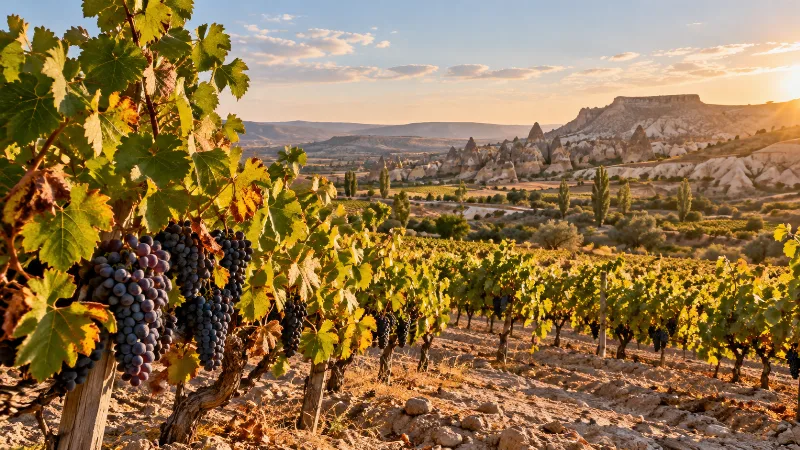
Nevşehir Grapes
Nevşehir grapes come from the volcanic plateau of Cappadocia in central Türkiye, where thin tuff soils, high elevation and dry summers support vineyards grown for wine, grape molasses and drying.
Buldan Weaving Tradition in Denizli
Buldan, a district town in Denizli Province, has built its identity around cotton cloth woven on handlooms. Its weavers still produce the soft, absorbent fabric known as Buldan bezi, much of it destined for bath towels and household linen.
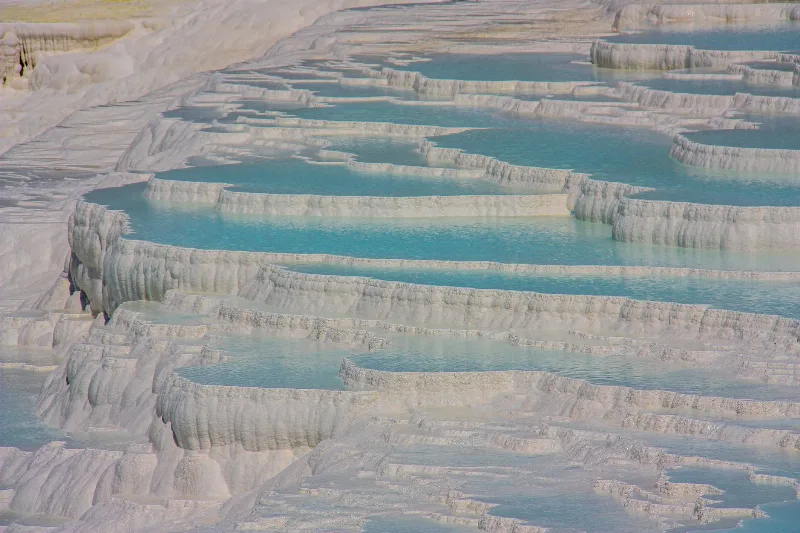
Pamukkale
Pamukkale is a white travertine formation in Denizli Province, built up over millennia by calcium-rich thermal springs that flow down the edge of a plateau beside the ancient city of Hierapolis.