
Nevşehir Grapes
Nevşehir grapes come from the volcanic plateau of Cappadocia in central Türkiye, where thin tuff soils, high elevation and dry summers support vineyards grown for wine, grape molasses and drying.
Nevşehir grapes are the grapes cultivated in and around Nevşehir province in the Cappadocia region of central Türkiye, a high inland plateau where vine growing has shaped the landscape for a very long time. The area is strongly associated with grapes because its combination of weathered volcanic soil, elevation and dry continental summers suits the vine unusually well. Fruit harvested here is used in several different ways: as white and red wine, as grape molasses known as pekmez, as sun-dried raisins, and as fresh table grapes.
Where Nevşehir Grapes Are Grown
Vineyards are scattered across the province rather than concentrated in a single flat plain. Grape growing is found around the district centres of Ürgüp, Avanos, Gülşehir, Derinkuyu, Hacıbektaş, Kozaklı and Acıgöl, often on sloping ground, in shallow valleys and along the terraces above the Kızılırmak river. Avanos and Ürgüp in particular are recognised for vineyard land, and vines are frequently planted in small parcels between the rock formations that define Cappadocia.
The province sits at the eastern edge of the wider Cappadocia viticulture area, which also extends into neighbouring parts of the region. Grapes are one of the crops that make practical sense here, because the soils and the dry climate favour vines over many other cultivated plants.
Volcanic Soils and the Cappadocian Terrain
The ground beneath these vineyards is the result of ancient volcanic activity. Ash and lava from the volcanoes of the region — Erciyes, Hasan Dağı and Göllü Dağ among them — compacted over time into soft, pale rock known as tuff, which later eroded into the cones and ravines of Cappadocia. The vineyard soils that developed on top of this material are light, stony and very well drained, with a low content of organic matter and a mineral character.
For grapevines this is useful. Vines that struggle slightly for water and nutrients tend to produce smaller berries with more concentrated juice, which is an advantage for wine. The stony surface also warms quickly during the day and releases heat at night, and the depth of the parent material allows roots to reach down for moisture during the dry summer months. Many vineyards are grown without irrigation, relying on winter snow and spring rain stored in the soil.
Climate, Elevation and the Ripening Season
Nevşehir has a continental inland climate. Winters are cold and often snowy, while summers are hot, bright and dry. Annual rainfall is low, generally below 400 millimetres, and the growing season is largely rain-free. This dryness is one reason the vineyards here suffer comparatively little from the fungal diseases that trouble vines in humid coastal regions.
Elevation matters as much as temperature. Much of the province lies at or above roughly 1,000 metres, and the vineyards sit within that range. High ground brings cool nights even after hot days, and this wide swing between daytime and night-time temperatures slows ripening and helps the grapes keep freshness and aroma alongside their sugar. The result is fruit that ripens fully but retains a lively acidity.
Emir and the Local Grape Varieties
The most distinctive grape of this region is Emir, a white variety closely identified with Cappadocia and with Nevşehir in particular. Emir vines produce compact clusters of thin-skinned, greenish-yellow berries. The wines made from them are typically pale, crisp and dry, with citrus and green-apple notes and a marked mineral quality that is often linked to the volcanic soils.
Alongside Emir, growers also tend darker local varieties used mainly for molasses, drying and everyday consumption. These red and dark-skinned grapes are often grouped under traditional local names, and they provide the deep colour and sweetness that pekmez requires. Table grapes for fresh eating are grown as well, usually in smaller quantities near towns and villages.
The Growing Cycle and the Grape Harvest
The vine year begins with bud break in spring, once the risk of hard frost has passed. Flowering follows in late spring, and the berries set and swell through the warm early summer. As summer advances the grapes change colour and soften — the stage known as veraison — before finishing their ripening in the long, sunny days of late summer.
Harvest generally falls between late August and October, depending on the variety and on what the fruit is intended for. Grapes destined for drying are often left on the vine slightly longer to build sugar, while those for fresh eating are picked earlier. Picking is still largely done by hand, with family groups and seasonal workers moving through the rows. The harvest period is one of the busiest times of the agricultural year in the province.
Wine, Molasses and Dried Raisins After Harvest
Nevşehir grapes are processed in several traditional ways. Winemaking has a long history in Cappadocia, where the soft rock made it easy to carve out presses, fermentation rooms and storage cellars. Modern wineries now work alongside that older tradition, using Emir and local red varieties to make white, red and rosé wines.
Grape molasses, or pekmez, is made by pressing the grapes, collecting the juice and boiling it down slowly until it thickens into a dark, sweet syrup. It is used as a spread, stirred into breakfasts and added as a natural sweetener. Drying is the third route: bunches or single berries are spread out to dry in the sun, producing raisins that keep well through the winter. Because these uses are so well established, a single vineyard may supply grapes for wine, for molasses and for drying at the same time.
Rock-Cut Cellars and the Vineyard Landscape
One of the most characteristic features of grape growing in this region is the way it is interwoven with the volcanic terrain. Traditional storage rooms and cellars were hollowed directly into the tuff, where the interior stays cool and at a fairly steady humidity throughout the year. This natural climate control made it possible to keep wine and other grape products stable without artificial cooling.
Vineyards themselves are often small and irregularly shaped, fitted into the pockets of land between rock cones, ravines and village edges. The result is an agricultural landscape in which vines, carved rock and open plateau sit side by side, and where the boundaries of a vineyard are sometimes defined by the geology as much as by ownership.
The Place of Grapes in Nevşehir Life
For a province with limited arable land, grape growing has long been an important part of local agriculture and rural income. It supports vine growers, wineries, and the small-scale production of molasses and raisins that has been part of household economies for generations. Grape products appear on local tables throughout the year, and the vineyards remain one of the defining features of the region's countryside alongside its better-known rock formations.
Understanding Nevşehir grapes therefore means understanding a place: a high, dry plateau built on volcanic ash, where the soil, the altitude and the long sunny ripening season come together to produce fruit that is as much a product of the landscape as it is of the vine.
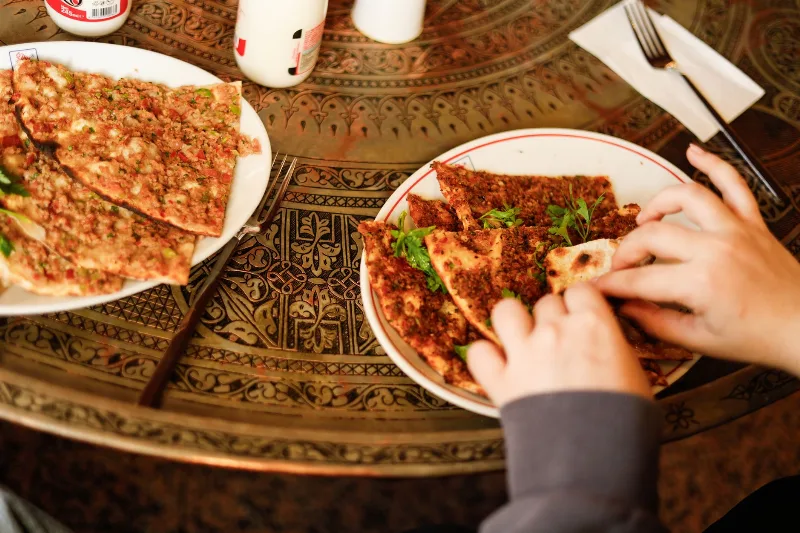
Lahmacun
Lahmacun is a paper-thin flatbread spread with a finely chopped, spiced meat topping and baked quickly at high heat. It is most closely associated with Şanlıurfa and Gaziantep, and is traditionally eaten rolled with lemon and parsley.
Explore →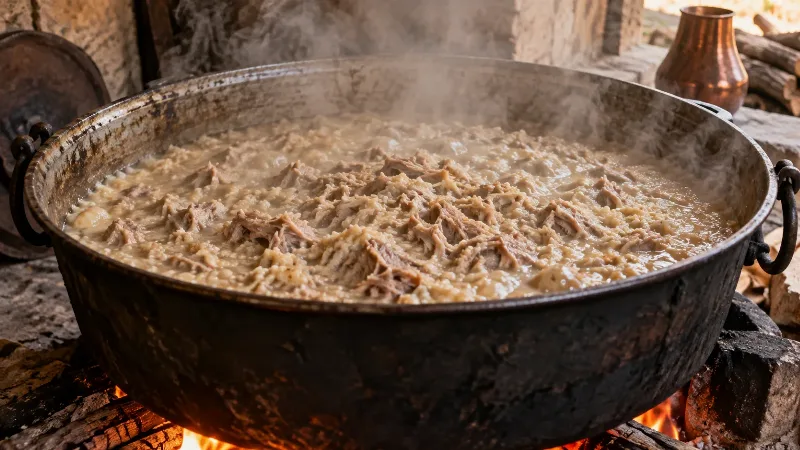
Keşkek
Keşkek is a traditional Anatolian dish made by cooking hulled whole wheat together with meat and pounding the softened mixture into a thick, dense mass. It is best known as a communal celebration food, especially at weddings.
Explore →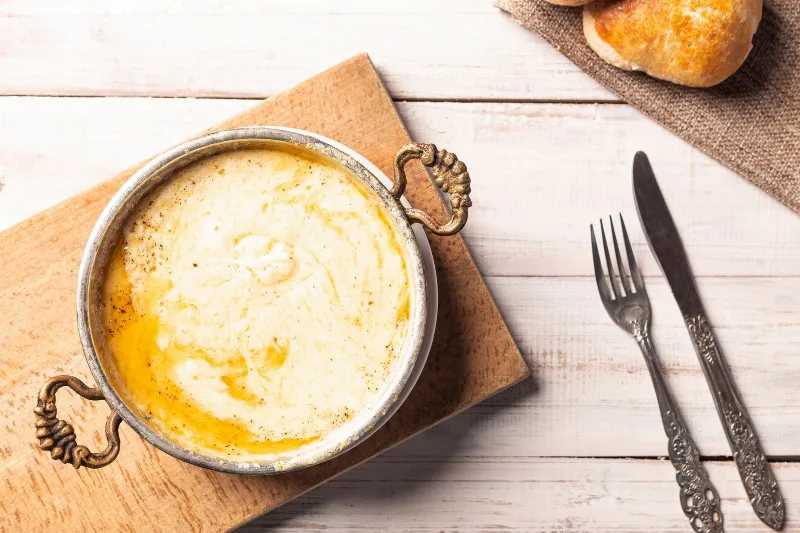
Kuymak
A soft, stretchy cornmeal dish cooked with butter and cheese, kuymak — also known as mıhlama — is a Black Sea breakfast staple served hot from the pan and eaten with bread.
Explore →Related content
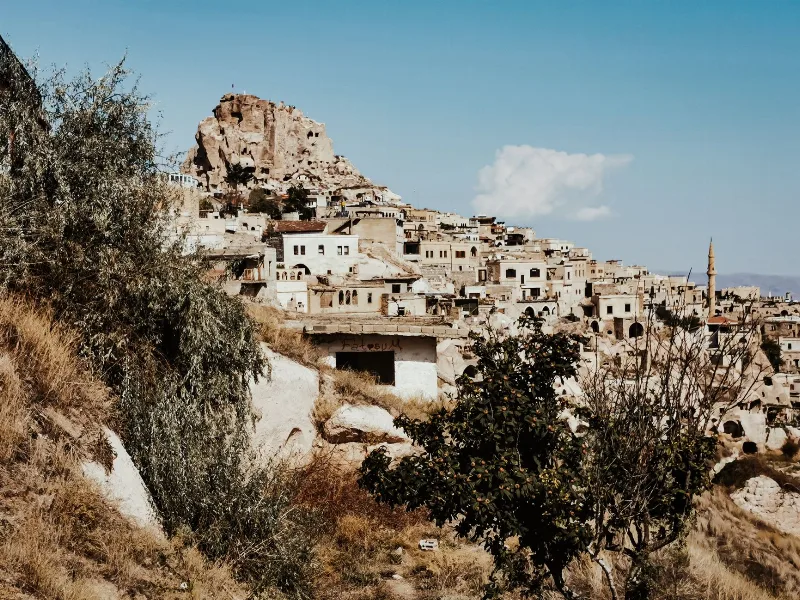
Nevşehir
Nevşehir is a provincial capital in Central Anatolia and the main urban base for the rock landscapes, underground settlements and balloon flights of the Cappadocia region.
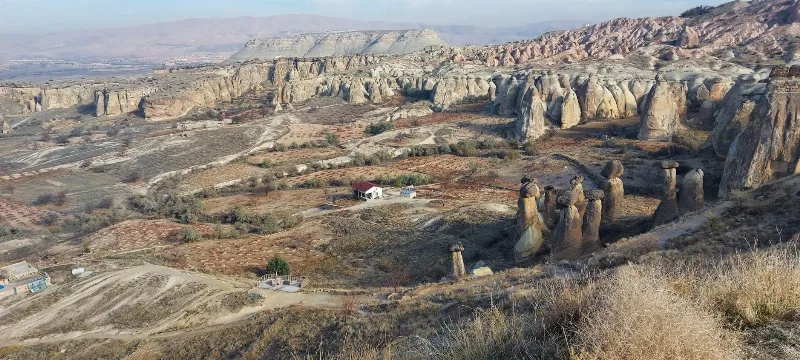
Cappadocia
Cappadocia is a region of Central Anatolia in Turkey defined by eroded volcanic tuff, rock-cut Byzantine churches and multi-level underground cities. This guide explains how the landscape formed, what the main valleys and sites actually contain, and what to know before visiting.
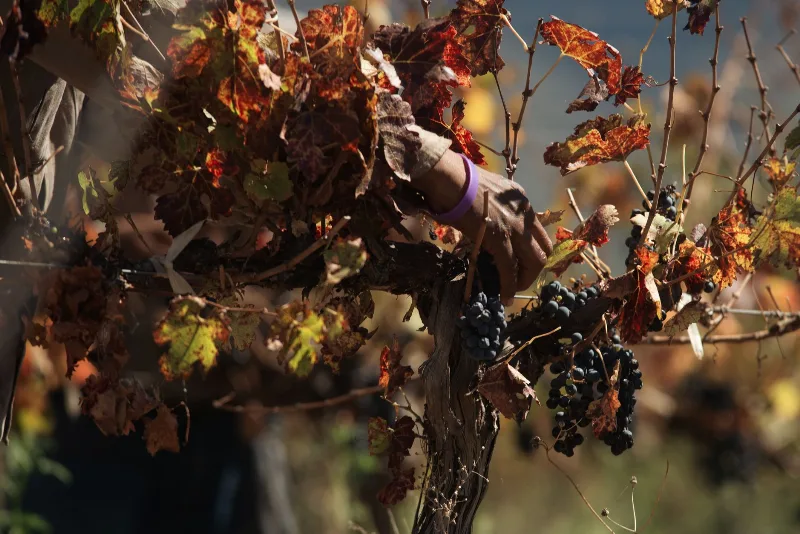
Grape Harvest in Nevşehir
Each autumn the volcanic slopes around Nevşehir turn to grape picking, when families gather fruit for wine and molasses across the Cappadocia vineyards.
Mustafapaşa Village Greek Architecture in Nevşehir
Mustafapaşa, once known as Sinasos, is a Cappadocian village near Ürgüp where carved stone mansions and old Greek churches record a layered and unusually cosmopolitan past.
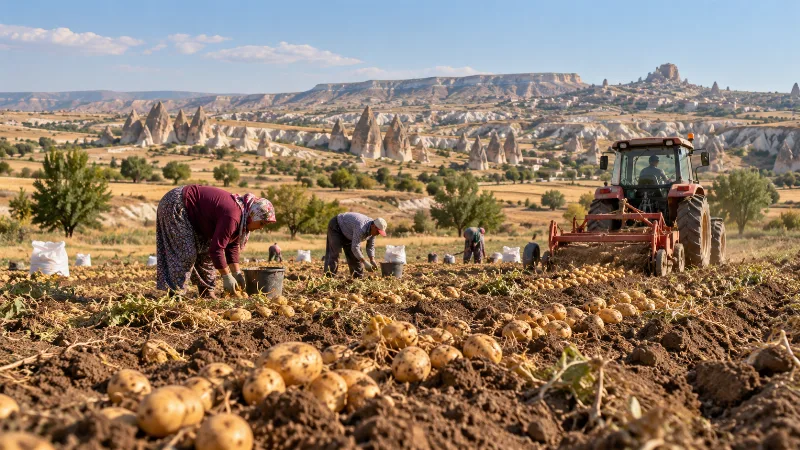
Nevşehir Potatoes
Nevşehir potatoes are grown on the volcanic plateau of Cappadocia in central Türkiye, where tuff-derived soils, cold winters and warm dry summers shape a crop that is harvested in late summer and kept in the region's cool rock-cut storage chambers.
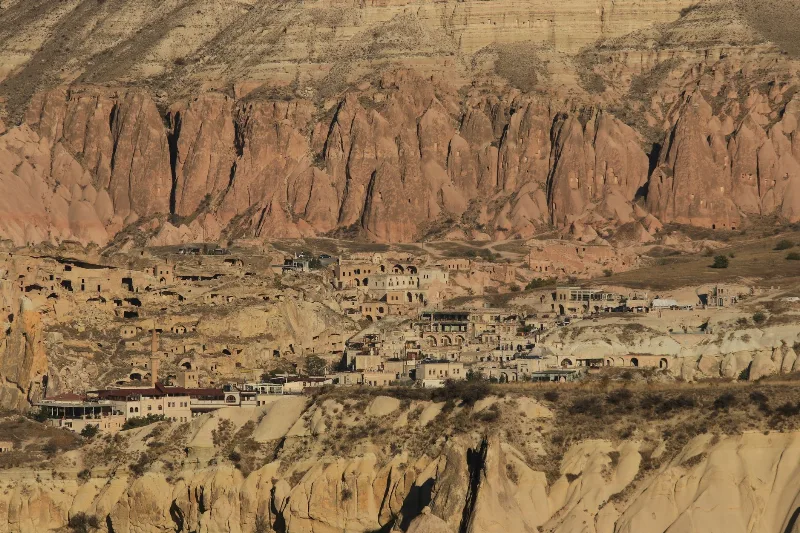
İbrahimpaşa
İbrahimpaşa is a farming village in Nevşehir Province, Cappadocia, known for a rock-cut underground city and traditional cave dwellings. It offers a quieter, far less developed look at Cappadocian village life near Ürgüp.