
Mount Süphan
Mount Süphan (Süphan Dağı) is a dormant stratovolcano in Bitlis Province, eastern Türkiye, and the second-highest peak in the country at 4,058 metres, rising above the northern shore of Lake Van.
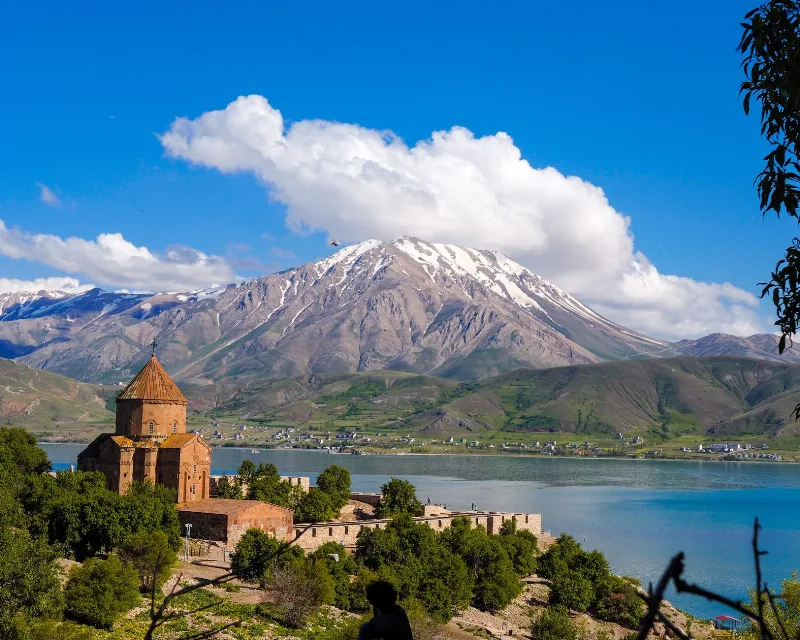
Mount Süphan (Süphan Dağı) is a dormant stratovolcano in Bitlis Province in eastern Türkiye and the second-highest peak in the country, with a summit elevation of 4,058 metres. It stands on the high plateau just above the northern shore of Lake Van, in the area of the Adilcevaz and Ahlat districts, and its broad conical profile is visible across a wide stretch of the surrounding landscape and from parts of the lake itself.
Where the Mountain Stands
Süphan rises as a free-standing cone rather than as part of a long ridge, which is one reason it reads so clearly on the horizon between the Bitlis highlands and the Lake Van basin. The mountain belongs to the group of volcanoes that surround Lake Van, a cluster that also includes Nemrut Dağı near Tatvan. Its slopes descend toward the lake's northern shoreline and toward the plains and smaller settlements that lie between the mountain and the water.
Volcanic Form and Geology
Süphan is a stratovolcano, built up over a long period by successive eruptions of lava and loose volcanic material. This layered construction gives it the characteristic shape of a volcano: gentler, spreading lower flanks that steepen noticeably toward the top. Much of the surface is dark volcanic rock, ash and scree, and the upper mountain is largely bare. Eastern Anatolia is one of the most volcanically shaped regions of Türkiye, and Süphan is one of its largest and highest examples, second in height only to Mount Ararat.
The Summit Zone: Snow, Ice and Meltwater
One of the features that sets Süphan apart from many Turkish mountains is the presence of permanent snow and small ice masses near the summit. Because of the altitude, patches of snow and ice survive through the summer in shaded and sheltered parts of the upper cone, and the mountain is often described as having a small glacier. Meltwater from these snowfields and ice feeds streams that run down the flanks and ultimately drain toward the Lake Van basin. The snowline shifts considerably through the year, dropping far down the slopes in winter and retreating to the highest ground in late summer.
Vegetation and Habitats
The mountain is not forested. Below the highest ground, the landscape is dominated by steppe and dry meadow vegetation typical of eastern Anatolia, with grasses and low cushion plants adapted to cold winters, strong winds and a short growing season. As altitude increases, plant cover becomes progressively thinner and more patchy, until the upper slopes are essentially rock, scree and seasonal snow. Süphan is not known as a wildlife-watching destination; its interest lies mainly in its geology, its scale and its high-altitude environment rather than in dense or unusual animal populations.
How the Landscape Changes Through the Year
Winter brings heavy snowfall and low temperatures, and the mountain can appear almost entirely white, with access on the approaches made difficult by snow and ice. In spring, melting snow swells the streams on the flanks and the lower ground begins to green up, while the upper mountain still holds deep snow. Summer is the period when the lower and middle slopes are driest and most open, yet snow and ice remain on the summit zone and in shaded gullies. Autumn usually brings the first fresh snow back to the high ground and a return to colder, windier conditions. In practice, the mountain's appearance changes more dramatically than that of lower, less elevated landscapes nearby.
Reaching and Exploring the Area
The mountain is generally approached from the north and west, via the Adilcevaz and Ahlat areas on the shore of Lake Van, from which routes lead up toward the base of the cone. Süphan is a serious high-altitude objective rather than a casual walk: the upper mountain involves steep ground, loose scree and, depending on the season, snow and ice that require proper equipment and experience. There is no developed visitor infrastructure on the mountain itself, and facilities should not be expected. Visitors who simply want to see the volcano can do so from the surrounding plateau and from points along the lake's northern shore, where the cone forms a dominant feature of the view.
Practical Conditions to Know Before Visiting
At 4,058 metres, altitude is the single most important practical factor. Weather on the upper mountain can change quickly, and wind and cold are common even when conditions are mild at lower elevations. Because there is no commercial infrastructure, anyone going onto the mountain should be self-sufficient and prepared for the conditions of the season. Summer is generally the most realistic window for reaching the higher ground; winter and early spring are considerably harder.
Related Natural Places Nearby
Süphan's setting is defined largely by its relationship with Lake Van, the largest lake in Türkiye, whose northern shoreline lies close to the mountain. The broader area also contains other volcanic landforms, most notably Nemrut Dağı near Tatvan, as well as the high plateaus and steppe country of Bitlis Province. Together these features make the Lake Van region one of the most clearly volcanic landscapes in the country, with Süphan as its second-highest and most prominent peak.
Beaches & bays
See the coast →
Related content
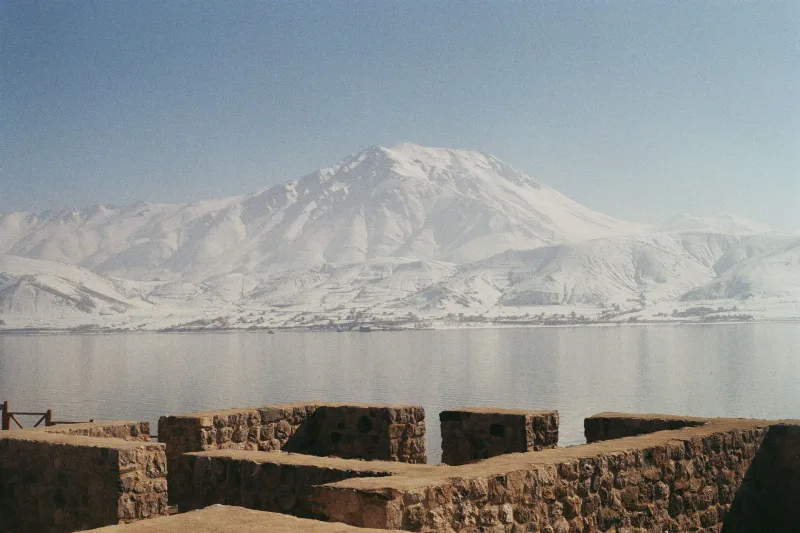
Lake Van
Lake Van is Turkey's largest lake, a vast alkaline soda lake with no outlet, set in the volcanic highlands of Eastern Anatolia at around 1,640 metres. Its unusual chemistry, depth and islands give it a character unlike any other lake in the country.
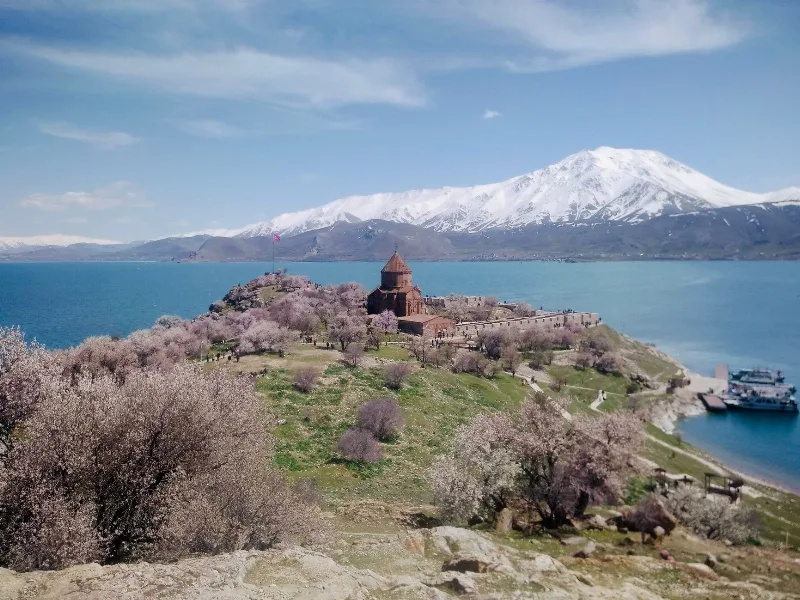
Lake Van
Lake Van is Turkey's largest lake and the world's largest soda lake, located in Eastern Anatolia. It is known for Akdamar Island and its 10th-century Armenian Church of the Holy Cross.
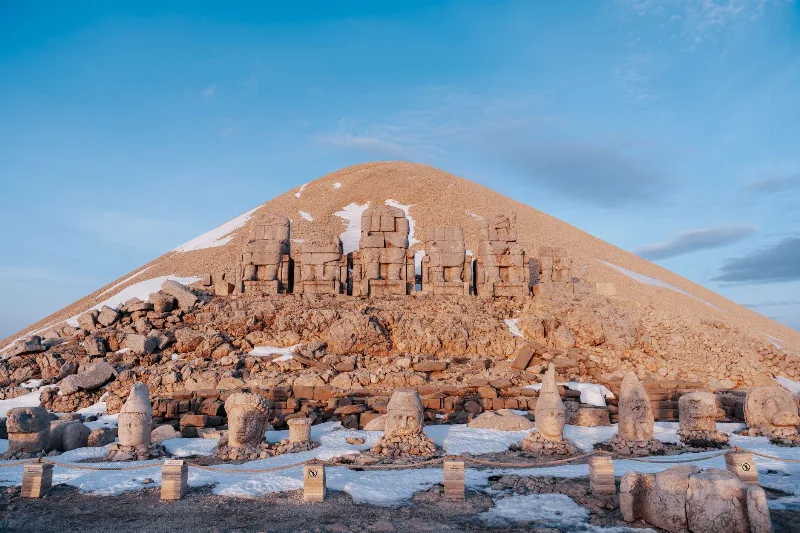
Nemrut
Mount Nemrut in Adıyaman Province is a 2,134-metre summit crowned by the colossal statues and tomb-sanctuary built by King Antiochus I of Commagene, and it has been a UNESCO World Heritage Site since 1987.
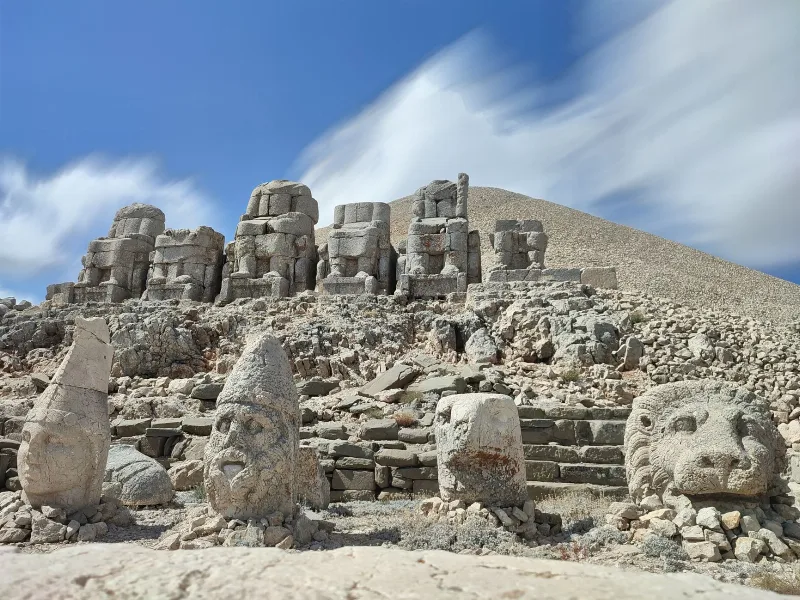
Mount Nemrut
Mount Nemrut is a dormant volcano in Bitlis Province, eastern Türkiye, featuring a large caldera with crater lakes. It lies west of Lake Van near Tatvan.
Lakes and Natural Beauty in Türkiye
A journey through the lakes of Türkiye, from the wide soda waters of Lake Van to forest pools in Bolu, salt flats on the Central Anatolian plateau and reed beds full of birds.
The Ancient Fortresses of the Van Lake Region
The high shores of Lake Van in eastern Türkiye are lined with fortresses built by the Urartians and later rulers, each one placed to guard water, trade routes and fertile plains.