Erzincan
Erzincan is a province in eastern Türkiye, set within a broad valley framed by mountain ranges. The modern city is a regional centre along an important east-west corridor, while the province includes the historic town of Kemaliye, rugged gorges and agricultural land along the upper Euphrates system. Its character reflects both highland geography.
Erzincan is a province in eastern Türkiye, set within a broad valley framed by mountain ranges. The modern city is a regional centre along an important east-west corridor, while the province includes the historic town of Kemaliye, rugged gorges and agricultural land along the upper Euphrates system. Its character reflects both highland geography and long-established routes across Anatolia.
Geography and Landscape
The Erzincan Plain stretches between surrounding mountains, producing a marked contrast between cultivated valley floors and steep upland terrain. The upper Euphrates and its tributaries pass through the region. Farther south and southwest, deep valleys and rocky gorges create dramatic scenery around Kemaliye. Elevation changes produce different vegetation and local conditions across the province. The fertile valley provides a relatively open setting for the capital, whereas the Kemaliye area is characterised by steep slopes and narrow river corridors. These are sharply contrasting parts of the same province.
History and Heritage
Erzincan has experienced successive historical periods, including ancient Anatolian states, medieval principalities and Ottoman administration. Earthquakes have repeatedly shaped the city's development and the appearance of its modern centre. Kemaliye, historically also known as Eğin, retains a distinctive architectural and cultural heritage. Older roads and settlements reveal the province's role as a crossing point between central and eastern Anatolia. Kemaliye’s timber-and-stone houses reflect adaptation to a hillside setting. Their form, together with historic neighbourhood streets, gives the town a distinctive architectural character.
The names of individual districts matter when describing Erzincan: the provincial capital is only one part of a larger administrative area. Natural landmarks and historic settlements may lie well beyond the main urban centre, so the province is best understood as a collection of connected but distinct local landscapes. This distinction is useful when interpreting maps and comparing neighbouring destinations.
Places to Visit
Kemaliye is known for its historic houses, stone streets and nearby Dark Canyon, a steep gorge in the Euphrates landscape. Girlevik Waterfall is another notable natural destination within the province. The Erzincan Plain and surrounding mountains provide broad views, while district towns offer smaller-scale encounters with regional history. Attractions are spread across very different elevations and landscapes.
Local Culture and Cuisine
Erzincan is associated with the traditional craft of copperworking and with tulum cheese, an established regional product. Food culture reflects pastoral activity, local agriculture and mountain livelihoods. Kemaliye has distinctive domestic architecture and community traditions. Across the province, markets and neighbourhood life continue alongside a modern transport and administrative role.
Climate and Seasons
Continental conditions dominate, with cold winters and relatively warm summers in the valley. Snow and lower temperatures persist longer in mountainous areas. Spring often brings rapid seasonal change to agricultural land, while summer is more suitable for accessing many higher rural routes. Autumn brings cooler nights and changing vegetation. Weather at a gorge or mountain pass may differ sharply from conditions in the city.
Getting There and Around
Erzincan is linked by road, rail and air to other parts of Türkiye, although individual services should be checked for current availability. The provincial capital lies on a major east-west transport route. Kemaliye and Dark Canyon are much farther from the city and require a separate road journey through mountainous terrain. It is useful to distinguish the central plain from the province's remote southern valleys.
Discover Food in Türkiye
All food →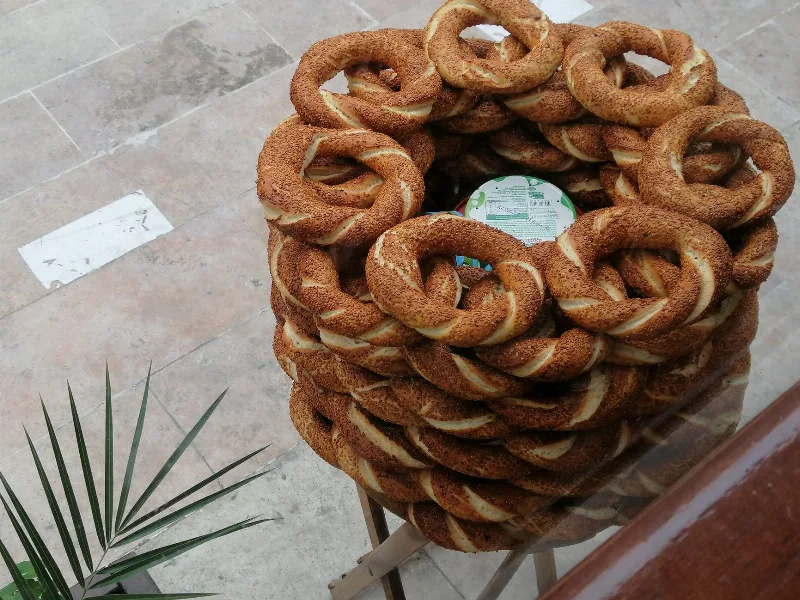
Simit
Simit is a ring-shaped Turkish bread covered in sesame seeds, strongly associated with Istanbul and sold as everyday street food. It is eaten fresh, most often with tea, and has a crisp crust around a chewy crumb.
Explore →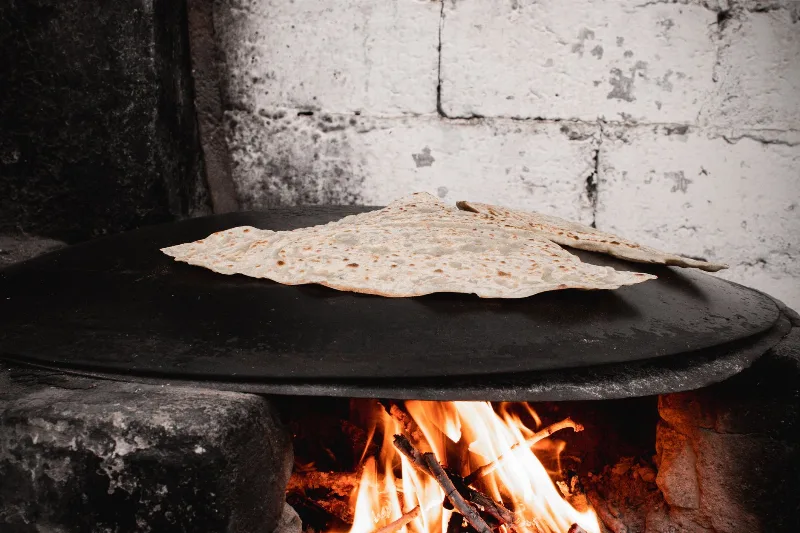
Bazlama
Bazlama is a soft, thick Turkish flatbread made from a leavened dough and cooked on a hot griddle. It is a staple of village baking across Anatolia, eaten warm with butter or used to wrap other foods.
Explore →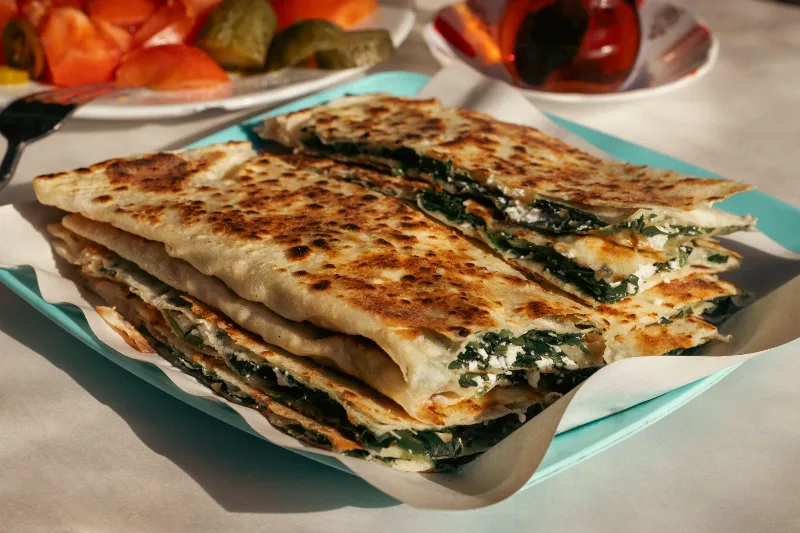
Gözleme
Gözleme is a thin, hand-rolled Anatolian flatbread folded around savory fillings such as cheese, spinach, or minced meat and cooked on a sac griddle. The article covers its regional variations, cooking method, texture, and traditional serving style.
Explore →Related content
Tunceli
Tunceli is a mountainous province in eastern Türkiye, known for deep valleys, rivers and the Munzur Mountains. Its small provincial capital stands near the confluence of waterways, while much of the surrounding area remains sparsely settled. The province is particularly associated with outdoor landscapes, distinctive local traditions and the rugged geography of eastern Anatolia.
Gümüşhane
Gümüşhane is a mountainous inland province in the eastern Black Sea region, historically associated with silver mining and trans-Anatolian mountain routes. Unlike nearby coastal cities, its provincial centre lies among steep valleys away from the sea. Historic settlements, caves, forested highlands and rocky slopes combine to create a landscape shaped by elevation and.
Sivas
Sivas is a large inland province in central-eastern Türkiye, with a high-altitude capital known for Seljuk monuments and its place in modern Turkish history. Broad plains, mountains and historic towns extend across one of the country's largest provincial areas. The city is a major regional centre, while the wider province contains important.
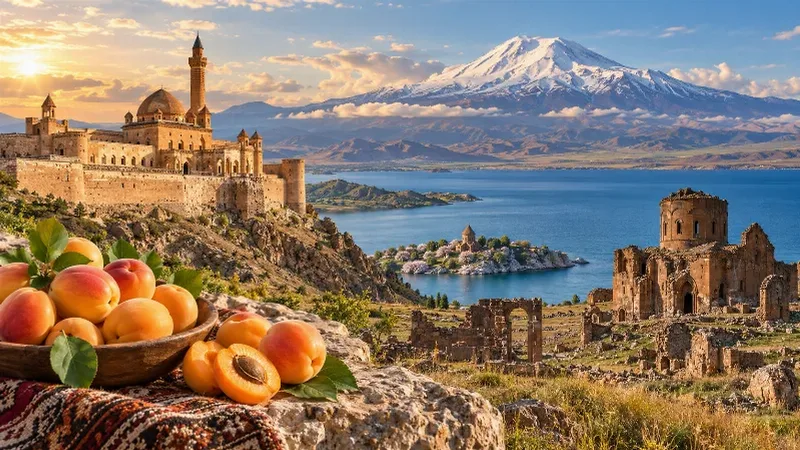
Eastern Anatolia Region
Eastern Anatolia is a region of majestic mountains, vast highlands, beautiful lakes and ancient cultural heritage. Home to Mount Ararat, Lake Van and historic settlements, it offers some of Türkiye's most dramatic natural landscapes alongside distinctive architecture, local traditions and regional cuisine.
Erzurum
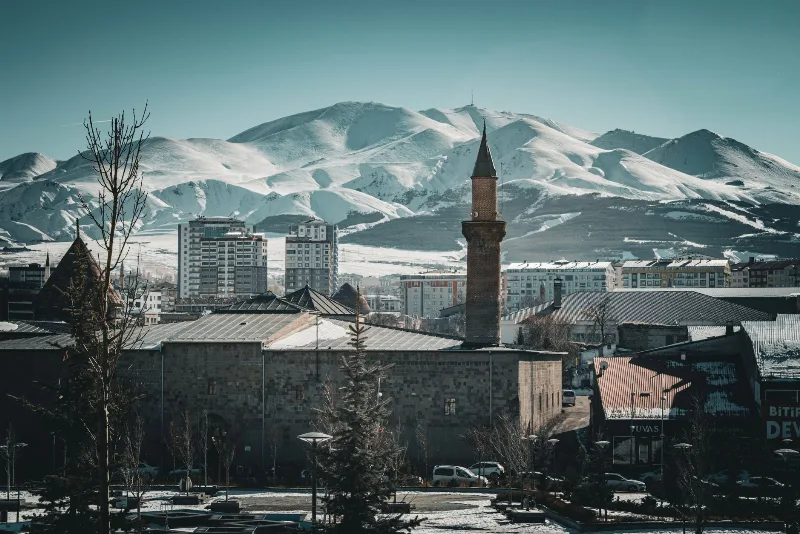
Erzurum is a high-plateau city in eastern Türkiye and the capital of its province, set at roughly 1,900 metres among mountains. It is known for severe winters, the long ski season on Palandöken and a historic centre of Seljuk and Ottoman monuments.
Kilis
Kilis is a small provincial capital in southern Türkiye near the Syrian border. Its compact centre, historic stone buildings and agricultural surroundings distinguish it from larger metropolitan destinations. The city stands within a landscape of olive groves and cultivated fields, and its local identity reflects centuries of cultural exchange in the northern.