
The Shadow Play of Karagöz and Hacivat
STORIES FROM TÜRKİYE
For centuries, a screen of thinly stretched hide, lit from behind by one small lamp, has been enough to bring two quarrelsome companions to life. Karagöz and Hacivat stand at the centre of the Turkish shadow play, known as gölge oyunu, a form of puppetry that combines comedy, music and sharp observation of everyday life. Watching it, an audience sees silhouettes move across a glowing rectangle while a single performer supplies every voice from behind the cloth.
Origins and the Legend of Şeyh Küşteri
The roots of shadow puppetry are debated. Some accounts connect it to traditions that travelled from Central Asia, while others point to wider Middle Eastern and Mediterranean practices that used light and cut-out figures to tell stories. What is certain is that the Karagöz form took on a distinct character in the Ottoman world and became closely tied to urban life in cities such as Bursa and Istanbul.
A much-loved legend gives the tradition a founding figure named Şeyh Küşteri, described in folk memory as a holy man whose antics with two friends were later recreated as puppets on a screen. Puppeteers have long honoured this story, and the screen itself is sometimes called Küşteri perdesi in reference to it. The tale is told as a legend rather than a documented fact, and that ambiguity is part of its charm.
In 2009, the Karagöz shadow play was inscribed on UNESCO's Representative List of the Intangible Cultural Heritage of Humanity, a recognition of the skill and knowledge that performers pass from one generation to the next.
Two Characters, One Endless Argument
Karagöz is the unlettered man of the street: blunt, quick-tempered, funny and often hungry. He speaks plainly and reacts to the world with immediate emotion. Hacivat is his opposite, a polished and educated figure who talks in poetry, borrows words from other languages and tries to keep the conversation respectable.
The comedy grows from the gap between them. Hacivat opens with a graceful phrase, Karagöz misunderstands it deliberately, and the exchange collapses into an argument that usually ends with Hacivat complaining and Karagöz storming off. Around this pair, a puppeteer arranges a whole cast of stock figures, each with a recognisable accent, costume and manner: the dandy Çelebi, the rough Tuzsuz Deli Bekir, the flirtatious Zenne, the small and cheeky Beberuhi, and characters drawn from different regions of the empire.
Behind the Screen: The Art of the Puppeteer
The figures themselves, called tasvir, are traditionally cut from camel or ox hide. The hide is treated, flattened and shaped into intricate outlines, then coloured with dyes so that the translucent material glows when the light passes through it. Rods attached to the lower edge let the puppeteer tilt and move each figure against the screen.
The performer, known as a hayali, stands behind the screen with the light source behind him and manipulates the puppets while voicing all the characters. He may be joined by an assistant who plays a tambourine, sings and keeps the rhythm, allowing the main performer to concentrate on dialogue and movement.
Timing is everything. A well-worked silhouette can suggest a dance, a fight, a boat ride or a tumbler's trick, and the audience follows the story through gesture as much as through words.
Music, Structure and Story
A traditional performance unfolds in several stages. It begins with a short prologue in which Hacivat sings and calls for his companion, followed by a comic dialogue that has little to do with the plot. The main section then presents a story with musical interludes, and the evening closes with a brief, calm farewell.
Music is woven through the whole piece, drawing on Turkish classical modes and folk melodies. Songs are matched to characters and moods, and the tambourine sets a steady pulse beneath the spoken lines. Because a single performer carries the tale for a long time, the shifts between song, speech and silence give the evening its shape.
Ramazan Nights and Everyday Celebrations
Shadow theatre has long been associated with Ramazan, when performances filled the hours after the evening meal in coffeehouses and courtyards. The screen became a gathering point for neighbours, and the satirical edge of the plays suited the relaxed mood of those nights.
The same entertainment appeared at weddings, circumcision feasts and public celebrations. Stories could gently tease local officials or comment on daily worries, which is one reason the tradition stayed popular across very different audiences. Over time, puppeteers also adapted older plots, adding new characters and fresh jokes to keep the form alive.
Karagöz in the Present Day
Today the shadow play is kept going by dedicated puppeteers, cultural centres and university programmes that teach the craft of cutting figures and voicing characters. Museums and heritage collections in Türkiye preserve historical tasvir sets, showing how styles of drawing and colour varied between workshops.
Festivals in cities such as Bursa, where the tradition has deep roots, bring together performers and audiences each year. Some artists experiment with new materials, lighting and scripts while keeping the familiar screen and rods, and others perform for children in schools, introducing Karagöz and Hacivat to a new generation.
The result is a tradition that still feels immediate. Behind the glowing cloth, two silhouettes argue as they always have, turning a simple trick of light into an evening of laughter and music.
Historic places
Explore history →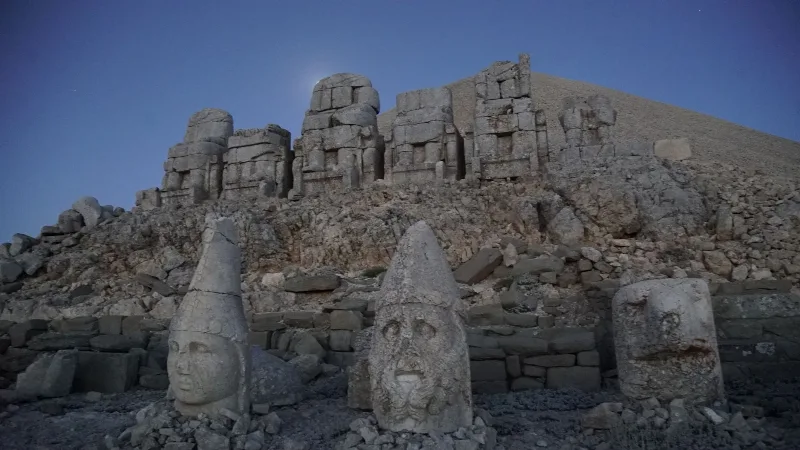
Mount Nemrut
Mount Nemrut in Adıyaman Province is the summit hierothesion of King Antiochus I of Commagene, where colossal statues of gods and a royal ruler stand on terraces above an artificial stone tumulus. The site is a UNESCO World Heritage property whose Greek inscriptions and reliefs record a Hellenistic kingdom of the first century BC.
Explore →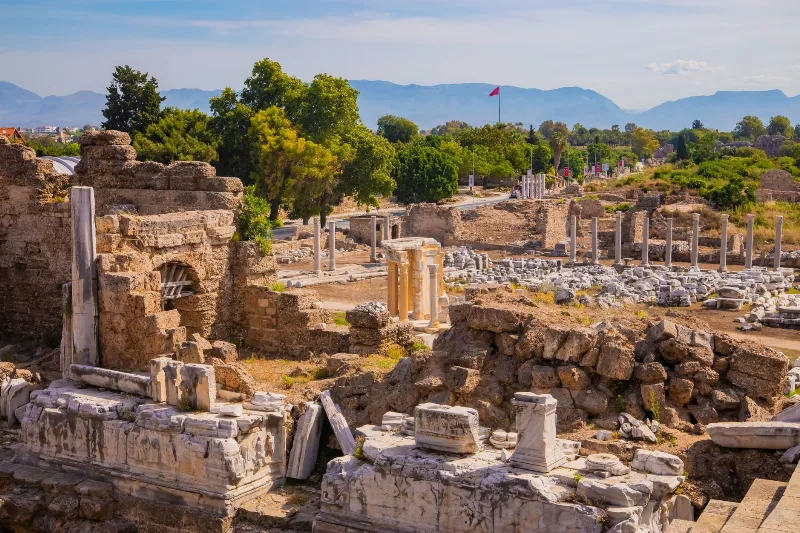
Anemurium
Anemurium is an ancient city on a windswept promontory at Cape Anamur, the southernmost point of Anatolia, in Mersin Province. Its Roman and Byzantine ruins — theatre, baths, walls and a vast necropolis — make it one of the most substantial archaeological sites on Turkey's Mediterranean coast.
Explore →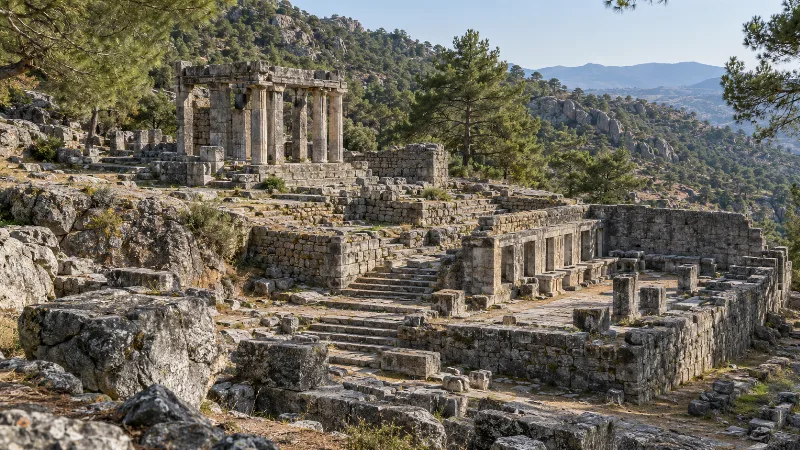
Labranda: The Ancient Carian Sanctuary of Zeus Labraundos
Labranda is an ancient Carian sanctuary of Zeus Labraundos in the hills north-east of Milas, Muğla Province, whose temples, banqueting halls and processional way were largely built in the 4th century BC under the Hekatomnid dynasty.
Explore →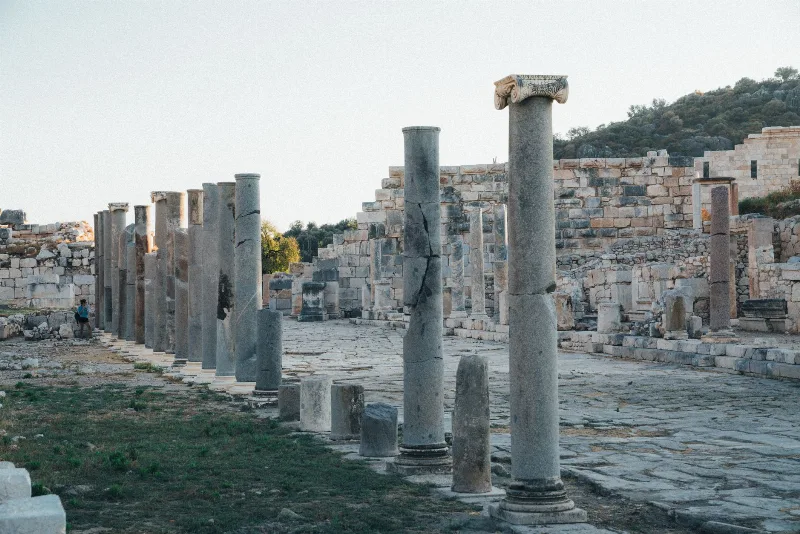
Patara
Patara is an ancient Lycian city in Antalya Province, Türkiye, that served as the meeting place of the Lycian League and preserves a Roman theatre, triumphal arch, bath complexes and an assembly hall beside a long sandy beach.
Explore →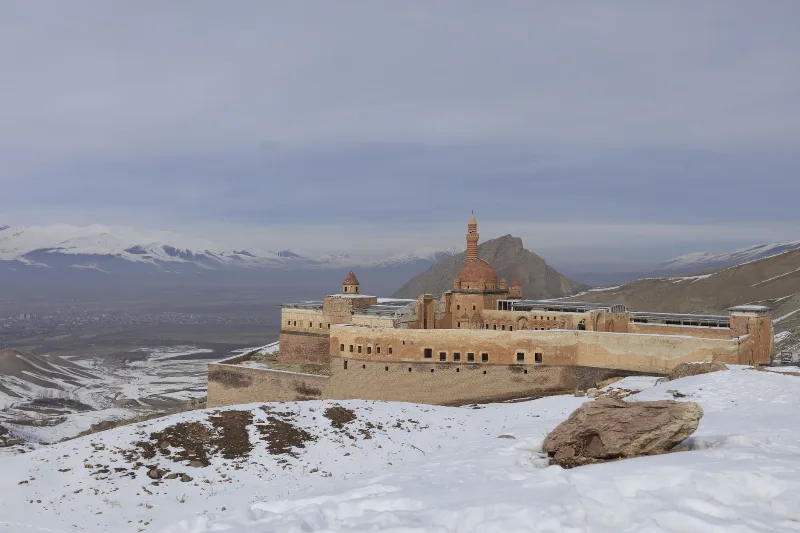
Ishak Pasha Palace
Ishak Pasha Palace is a late Ottoman palace complex in Doğubayazıt, Ağrı Province, eastern Turkey. Built between the late 17th and late 18th centuries, it is known for its stone architecture, which combines Ottoman, Seljuk, and Persian elements.
Explore →Related content
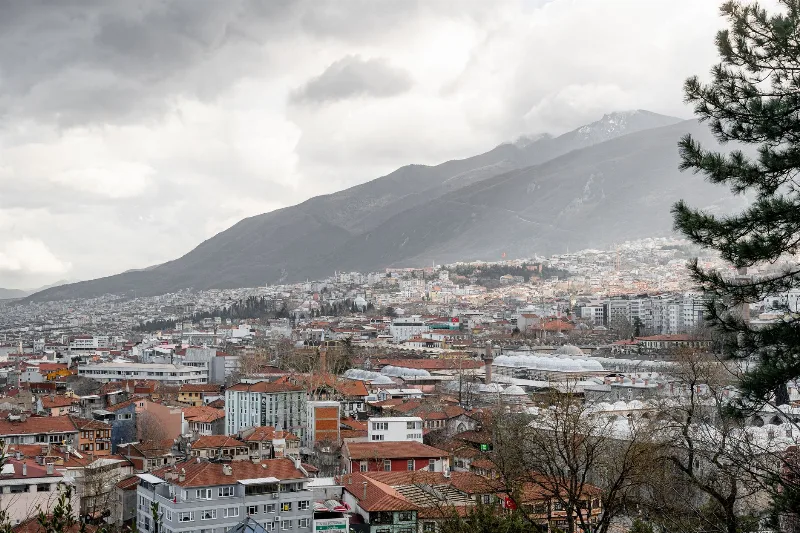
Bursa
Bursa is a major metropolitan city in northwestern Türkiye and the first great capital of the Ottoman Empire, known for its silk heritage, thermal springs and the mountain of Uludağ rising directly behind it.
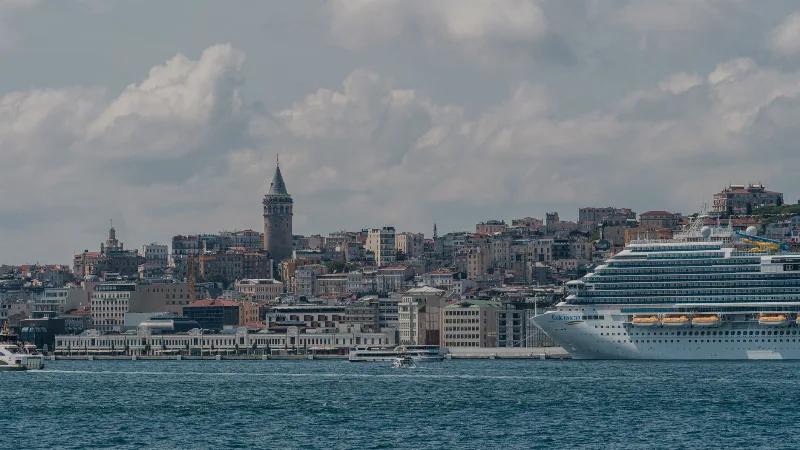
Istanbul
Istanbul is Türkiye's largest city and the country's only metropolis that spans two continents, divided by the Bosphorus strait into a European and an Asian half. Its long run as an imperial capital left a historic core of palaces, mosques and bazaars that still shapes the city's identity.
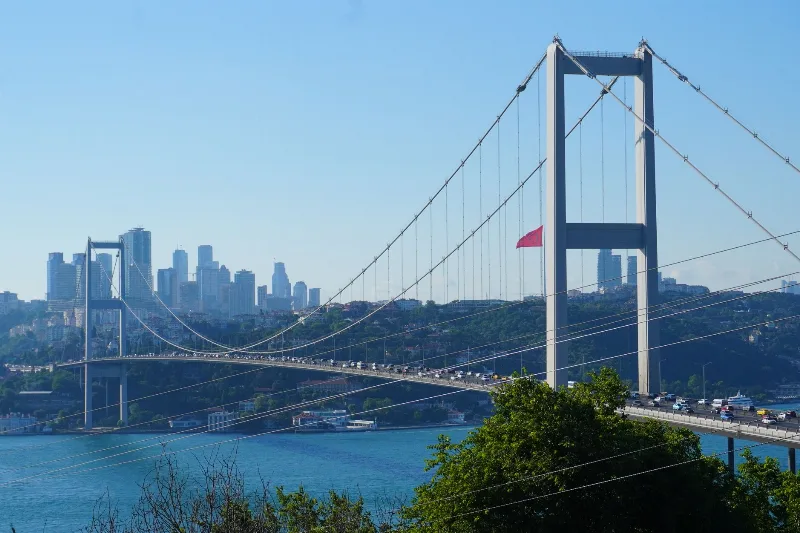
3-Day Istanbul to Bursa Route
Explore the first Ottoman capital on a three-day route from Istanbul to Bursa, combining historic city sites, the mountain landscapes of Uludağ, and the preserved village of Cumalıkızık.
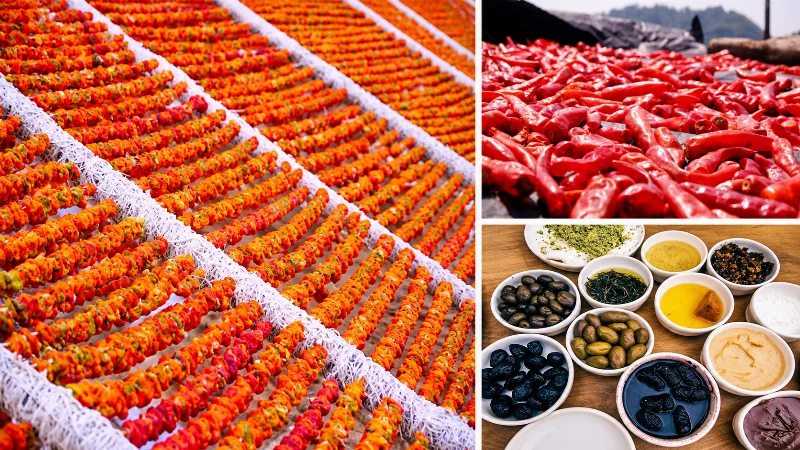
Why Turkish Food Changes from Region to Region
Climate, geography, agriculture and local history shape the ingredients, cooking methods and everyday dishes found across Türkiye. Türkiye’s cuisine is often described as a single national tradition, but food changes considerably from one region to another. Coastal climate, mountain geography, agricultural production, local history and available ingredients all influence what is cooked and how meals are prepared. A dish common on the Black Sea coast may be uncommon in southeastern Türkiye, while ingredients associated with the Aegean can play a much smaller role in the interior. These regional differences form one of the main characteristics of Turkish food culture.
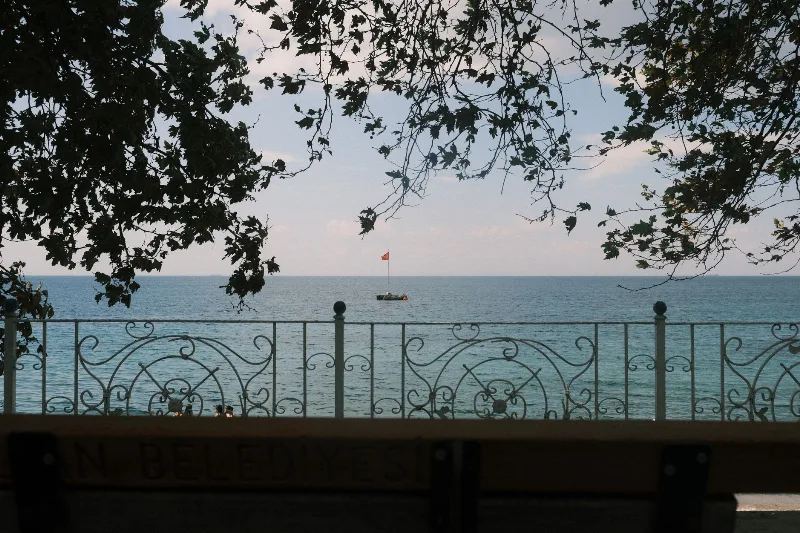
4-Day Marmara Sea Route
A four-day loop around the Sea of Marmara that starts in Istanbul, crosses to Yalova, travels inland to Bursa and finishes among the ruins of Troy and the memorials of the Gallipoli peninsula. The itinerary is built around short, logical daily drives rather than long transfers.
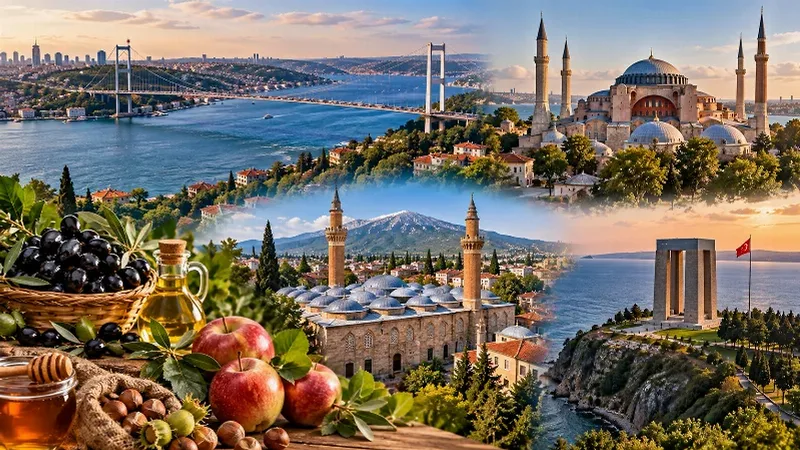
Marmara Region
The Marmara Region connects Europe and Asia, bringing together historic cities, beautiful coastlines, green landscapes and a rich cultural heritage. From Istanbul's iconic skyline to the peaceful shores of the Marmara Sea, the region offers a remarkable variety of places to discover.