
The Lush Olive Groves of Aegean Türkiye
STORIES FROM TÜRKİYE
The Aegean coast of Türkiye is a landscape written in silver and green. From the Gulf of Edremit in the north to the coves of Muğla in the south, olive groves cover hillsides, terraces and valleys, shaping both the scenery and the daily life of the region. Olives and olive oil have been part of Aegean agriculture here for thousands of years, and they remain at the heart of local identity, cooking and the rhythm of the seasons.
A Landscape Shaped by Olive Trees
The Aegean climate suits olives well: mild, wet winters, long dry summers, abundant sunshine and soils that are often stony and rich in limestone. These conditions encourage the trees to produce fruit with concentrated flavour rather than to grow quickly.
Groves are rarely planted on flat ground. Instead, they follow the contours of hills, forming terraces held by dry-stone walls that also protect the soil from erosion. In spring, wildflowers and herbs grow between the trees; in summer, the silver underside of the olive leaf reflects the light and gives whole hillsides a pale, shimmering tone.
Mount Kazdağı, known in legend as Mount Ida, rises above the Gulf of Edremit and brings cooler air and altitude. Farther south, the Gulf of Gökova, the Datça Peninsula and the hills behind Bodrum offer a drier, more rugged version of the same landscape, where groves meet the sea.
Where the Groves Grow
Ayvalık and the surrounding archipelago are among the most recognisable olive areas in Türkiye. Groves here grow close to the shore, often mixed with pine forest, and the trees benefit from sea breezes and mild winters. Nearby Küçükkuyu, Altınoluk and Burhaniye continue the belt of olive cultivation along the northern Aegean coast.
In the south, Milas, Bodrum, Datça and the plains around Söke and Aydın are known for their own olive traditions. On the İzmir side, Urla, Çeşme and Karaburun combine vineyards with olive groves, while the Karaburun Peninsula and the area around the ancient city of Klazomenai show how long the connection between this coast and the olive has lasted.
Islands such as Cunda (Alibey Adası) and Bozcaada also take part in this culture, though Bozcaada is equally associated with vineyards. Gökçeada, further north, adds its own quieter, wind-swept groves to the picture.
Olive Varieties and the Harvest
The Ayvalık olive, also known as the Edremit olive, is a leading variety of the northern Aegean. It has a high oil content and gives a golden-green oil with a rounded, slightly peppery flavour. In the south, the Memecik variety dominates, producing a more aromatic, fruity oil that is used both for eating and for pressing.
Other local names appear across the region, including Erkence, a variety linked to the Karaburun Peninsula and known for a natural way of ripening on the tree. Each variety reflects its soil and climate, and growers often speak of groves much as vintners speak of vineyards.
The harvest usually begins in autumn and can continue into the winter months, depending on altitude and weather. Early harvest olives are picked while still firm and green to produce a more intense oil, while later harvests give softer, milder results. Nets are spread beneath the trees, and the fruit is gathered by hand or with small rakes before being taken to presses, often soon after picking.
Cold pressing, in which the paste is processed without added heat, is a long-standing method in the region. Modern mills and older stone presses can sometimes be found in the same area, linking present-day production with older techniques.
Olive Oil in Aegean Cooking
In the Aegean, olive oil is not only a dressing but a basic cooking medium. Breakfast often includes olives, white cheese, tomatoes, herbs and bread, with olive oil served alongside. The tradition of kahvaltı, a generous spread of small dishes, is closely tied to local produce.
Vegetable dishes cooked in olive oil, known collectively as zeytinyağlı, are central to Aegean tables. Artichokes, green beans, stuffed vine leaves and countless combinations of seasonal vegetables and wild herbs are prepared this way and eaten warm or at room temperature. Wild greens gathered in spring, such as radika and other local herbs, are also common.
Olives themselves appear in many forms: green, black, cracked, brined and dried, sometimes preserved with lemon, herbs or a little olive oil. Olive paste, known as zeytin ezmesi, is another everyday favourite. In Ayvalık, olive oil also has a role beyond the kitchen, where it has long been used to make soap.
Ancient Roots and Living Traditions
Olive cultivation in western Anatolia reaches back to antiquity. At Klazomenai near Urla, archaeologists uncovered an olive oil workshop dating to the sixth century BCE, showing that pressing oil was already an organised activity on this coast more than two thousand years ago. Ancient sites such as Priene, Miletos and Didyma sit in landscapes where olives still grow today.
The olive branch has long symbolised peace and continuity, and the tree itself is often treated as a long-term investment, planted for future generations. Across the Aegean, harvest season brings families and neighbours together, and many villages mark the period with local festivals, markets and shared meals.
Today the groves of Aegean Türkiye remain a working agricultural landscape as well as a scenic one. They support rural economies, shape regional cooking and give travellers a way to understand the coast through its trees, its seasons and its traditions.
Historic places
Explore history →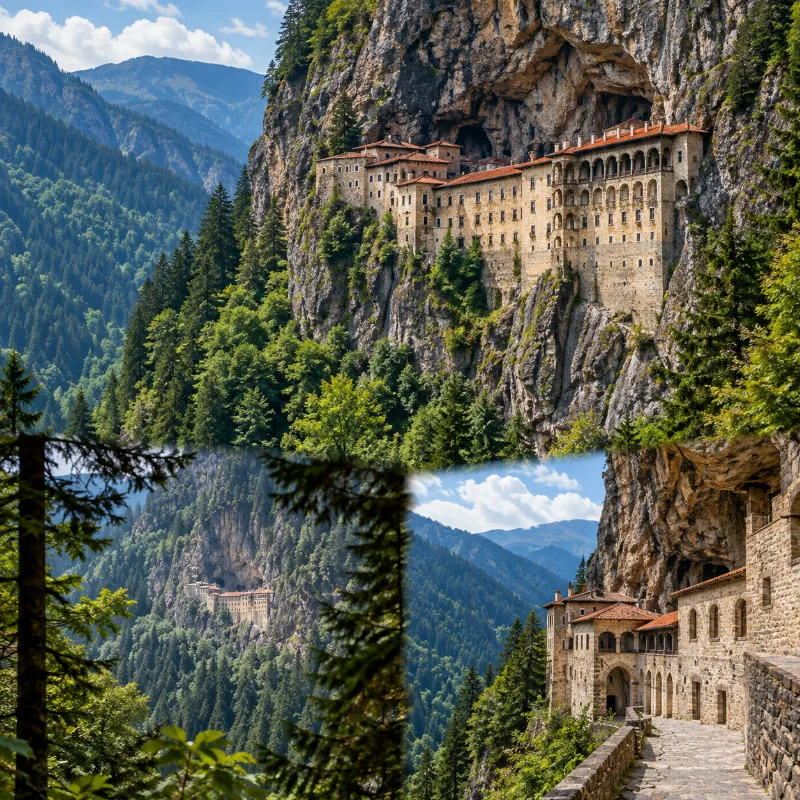
Sümela Monastery
A historic monastery built against a steep cliff in the forested mountains of Trabzon Province.
Explore →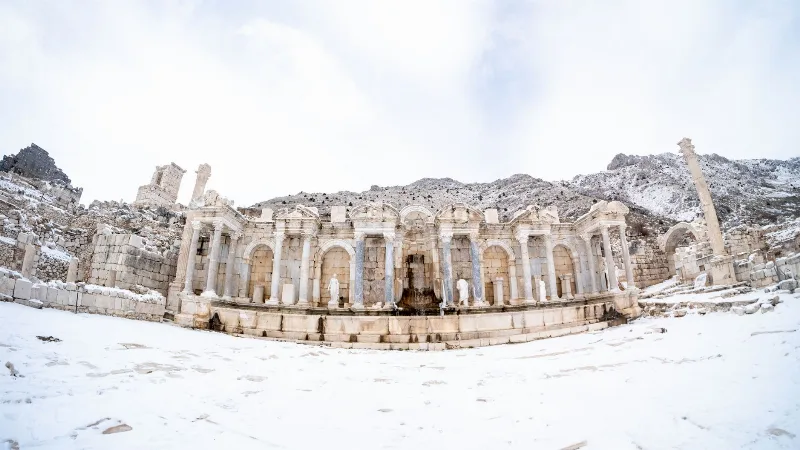
Sagalassos
Sagalassos was a major Pisidian city in the Taurus Mountains of Burdur Province, Türkiye. Its Roman theatre, bath complex and monumental fountain house make it one of the more fully understood ancient cities in the region.
Explore →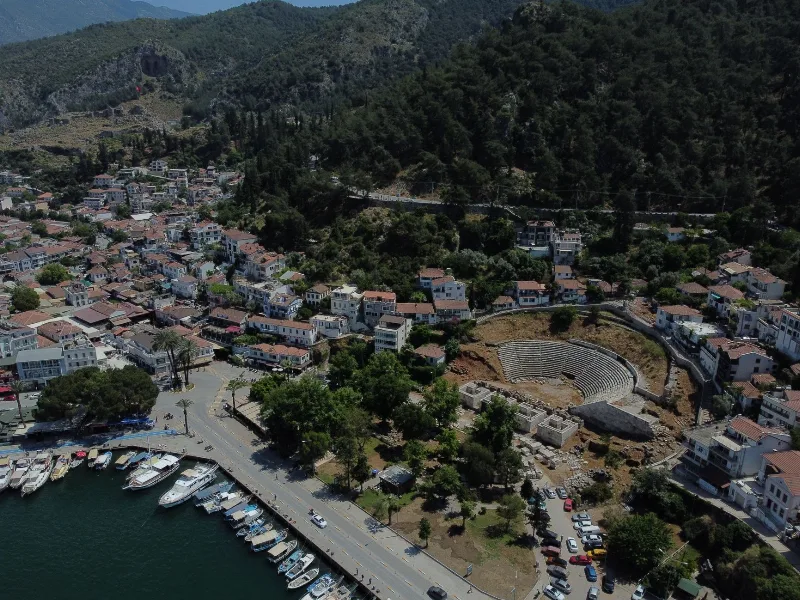
Phaselis
Phaselis is an ancient Greek and Roman harbour city on a low peninsula near Kemer in Antalya Province, known for its three harbours, a long paved main street and a triple-arched gate built in honour of the emperor Hadrian.
Explore →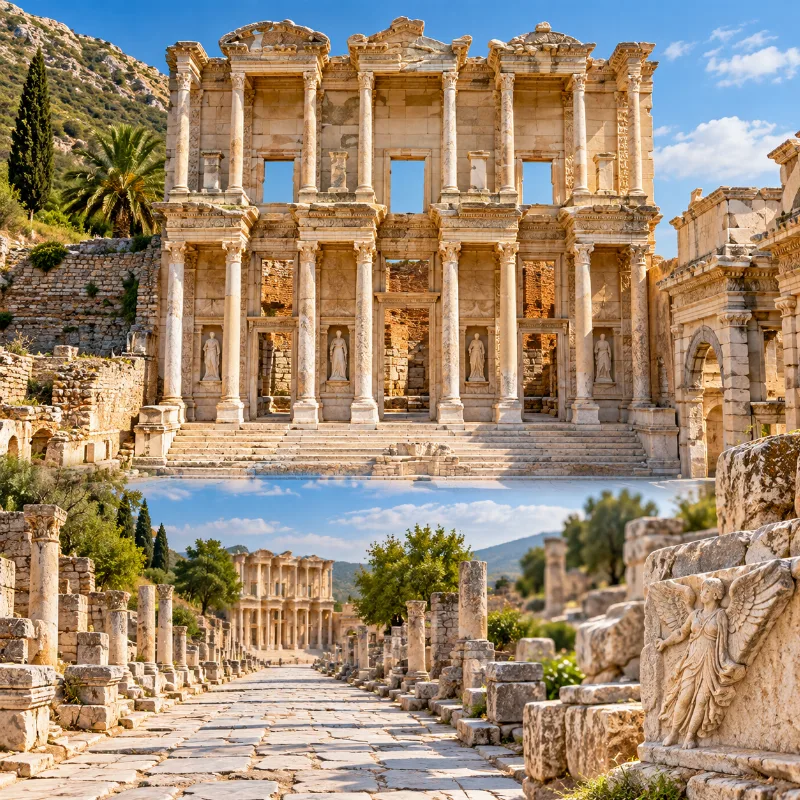
Ephesus
One of the best-preserved ancient cities in the Aegean, known for its monumental streets, library, theatre and Roman-era remains.
Explore →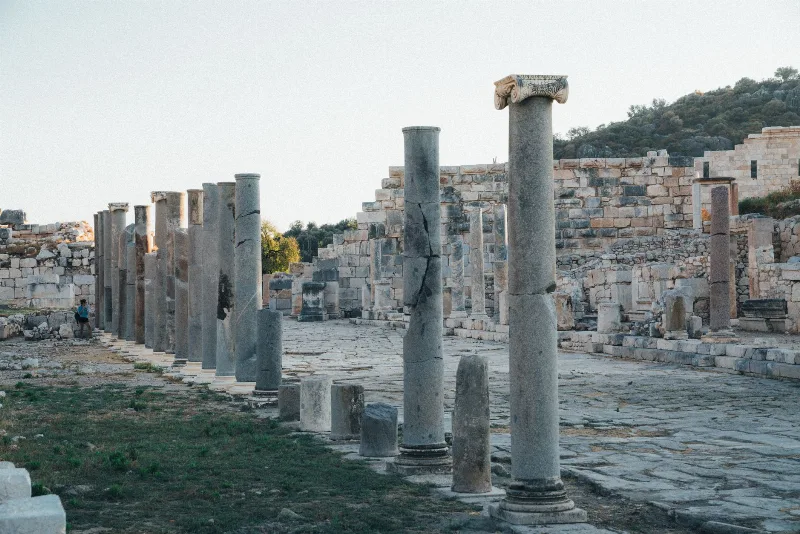
Patara
Patara is an ancient Lycian city in Antalya Province, Türkiye, that served as the meeting place of the Lycian League and preserves a Roman theatre, triumphal arch, bath complexes and an assembly hall beside a long sandy beach.
Explore →Related content
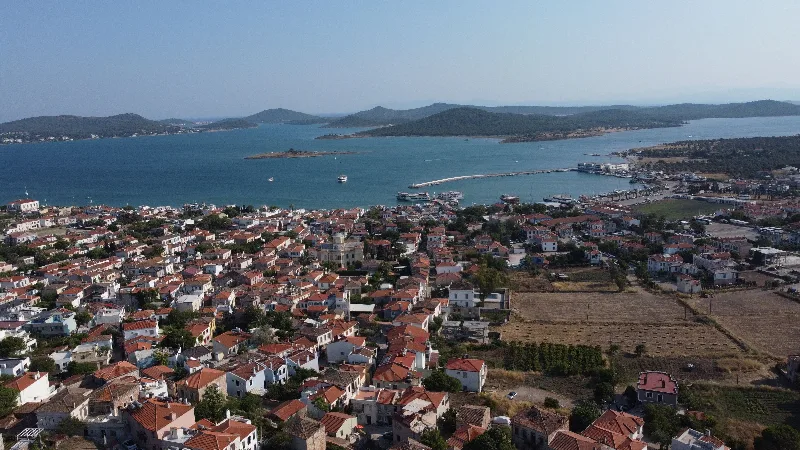
Ayvalık
Ayvalık is a coastal district of Balıkesir Province in western Türkiye, known for its olive oil, its Greek-influenced old town and the offshore island of Cunda.
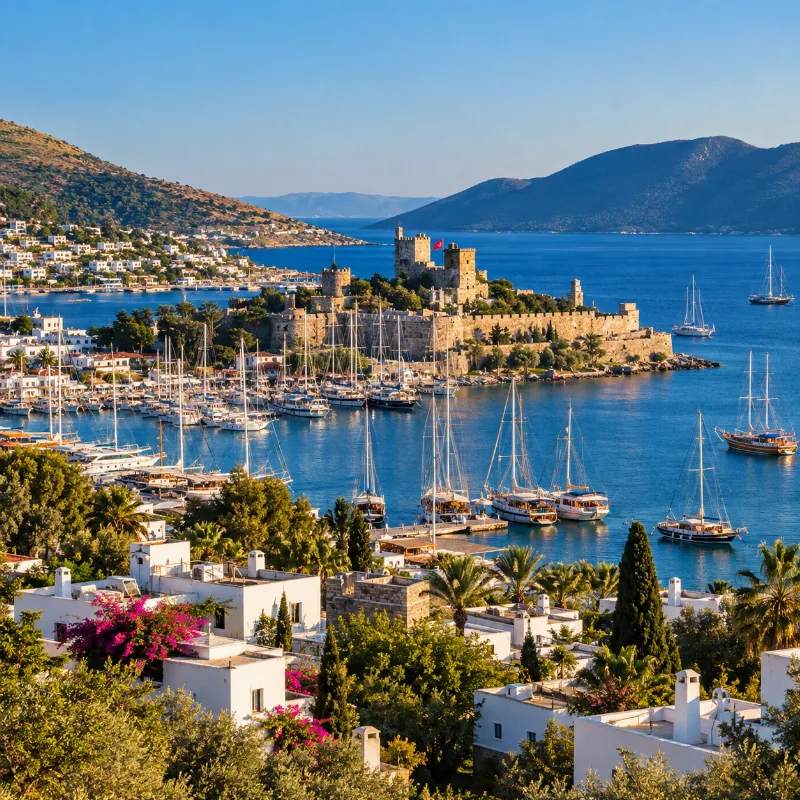
Bodrum
Bodrum is a coastal district of Muğla Province known for its whitewashed architecture, castle, Aegean coastline, bays and ancient Halicarnassus heritage.
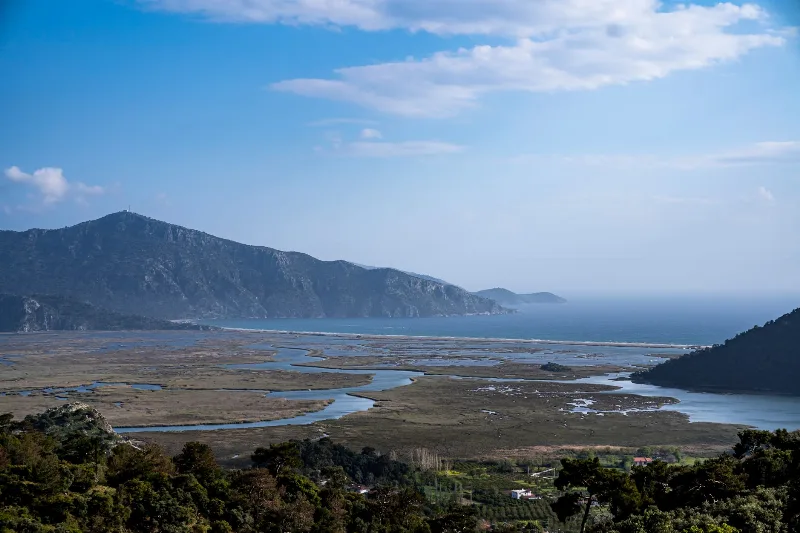
Muğla
Muğla is a captivating province in southwestern Türkiye, renowned for its stunning Aegean coastline and rich cultural heritage.
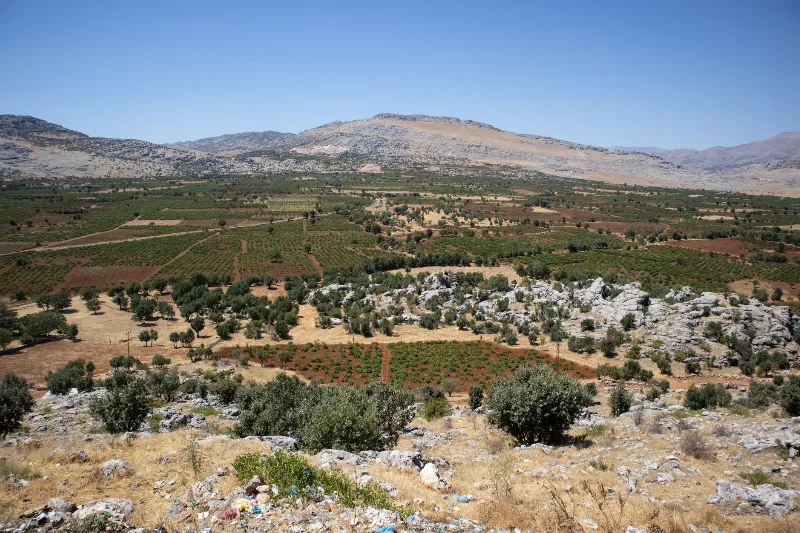
Milas Olive Oil
Milas olive oil is pressed from olives grown in and around the Milas district of Muğla province, where a Mediterranean climate, stony hillsides and the Memecik olive give the oil its fruity, peppery character.
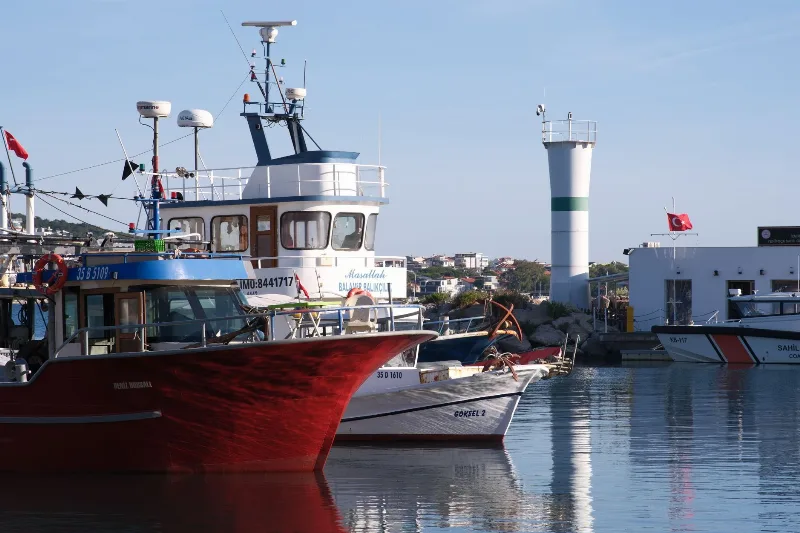
The Traditional Fishing Villages of the Aegean
The Aegean coast of Türkiye is lined with small fishing villages where wooden boats, olive groves and seafood shape a quiet maritime way of life.
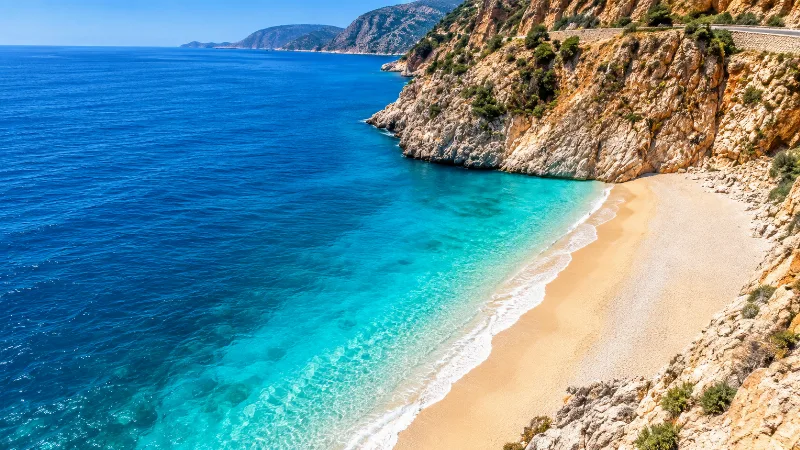
Beaches & Bays
Coasts, coves, islands and seaside places across Türkiye.