
Safranbolu
Safranbolu is a UNESCO-listed Ottoman town in Karabük Province, built around a ravine bazaar and known for hundreds of timber-framed houses, historic bathhouses and the saffron that gave the town its name.
Safranbolu is a historic town in Karabük Province, in the Black Sea region of Türkiye, set in a valley roughly ten kilometres from the city of Karabük. It was inscribed on the UNESCO World Heritage List in 1994 as a surviving Ottoman town, and what sets it apart is the scale of what has been kept rather than any single building: several hundred timber-framed Ottoman houses still line cobbled streets, together with the bazaar, bathhouses, mosques and caravanserai that served them. The town's name is also tied to saffron, which was grown in its villages and is still cultivated on a small scale.
How Safranbolu is laid out
Safranbolu is not one uniform settlement. It is a group of quarters with different origins, standing at different heights above the valley floor, and understanding this makes a visit much easier to plan. The old bazaar, known locally as Çarşı, fills the bottom of a shallow ravine where the ground is level for only short stretches and the streets are narrow and stone-paved. This is the densest part of the town and the area most visitors walk first.
Across the valley and on the slopes above it lies Kıranköy, the quarter that historically developed as the commercial and residential area of the town's non-Muslim population. Its buildings are notably different from the rest of Safranbolu: stone masonry rather than timber frame, with a more regular street pattern and taller facades. Higher still sits Bağlar, whose name refers to vineyards. It developed as a summer quarter of garden plots and houses on the plateau, slightly cooler and more open than the ravine, and it remains a residential district of the town today. A few kilometres outside the centre, the village of Yörük is administratively part of the Safranbolu district and preserves its own cluster of traditional houses in a rural setting.
The Ottoman house as the main subject
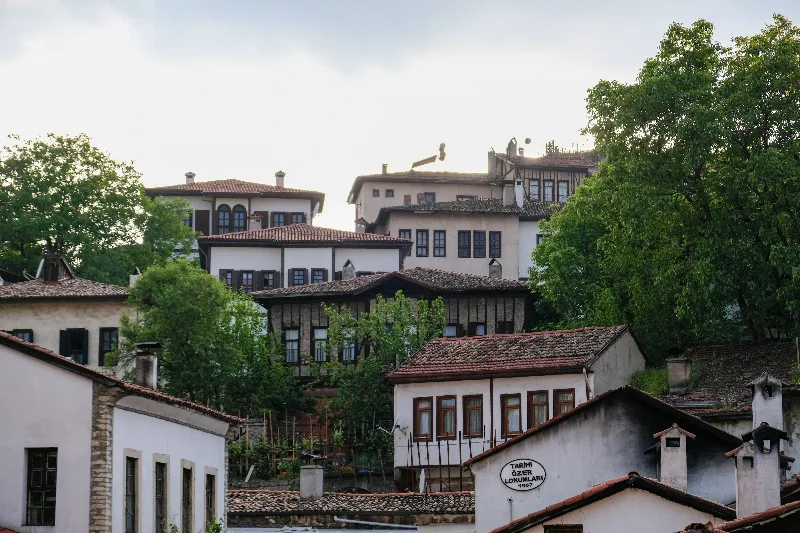
The characteristic Safranbolu house is built in two distinct parts. The ground floor is usually stone or rough masonry, used for storage, animals or a workshop, and it sits directly on the slope. Above it, the living floors are timber-framed, with the spaces between the beams filled with mud brick and finished in white plaster. The upper floors project out over the street in a bay, supported on wooden brackets, so that the house gains space without taking up more ground. This projection, the cumba, is the feature that gives the streets their shape: houses lean towards each other, and the street becomes a corridor of overhanging rooms.
The number of floors, the amount of projection and the detailing of the wooden frame vary from house to house, and this variation is what makes a walk through the old quarter interesting rather than repetitive. Roofs are covered in the local curved clay tiles, and the houses are oriented so that living rooms face the sun and the view.
What a house looks like inside
Inside, the layout centres on a hall, often called the hayat or sofa, which runs across the width of the house and gives access to the rooms. The hall is the circulation space and the summer living space; much of the daily life of the household happened there. Rooms open off it, each with built-in seating along the walls, wooden ceilings with carved details, cupboards set into the walls and plastered fireplaces. Several houses in Safranbolu are open to visitors as house museums, including the Kaymakamlar Evi, which shows the arrangement of rooms, kitchen and storage in a well-documented example. The town's city history museum, housed in an old government building, sets the architecture in a wider chronological context.
The bazaar: caravanserai, baths and mosques
The lower town around the bazaar holds most of the town's public buildings. The Cinci Han is a seventeenth-century caravanserai of stone, built around a courtyard, with a two-storey arcade and a heavy arched entrance; it is the clearest surviving sign of Safranbolu's role on a trade route. Nearby stands the Cinci Hamam, a bathhouse of the same period with a sequence of domed rooms. The Köprülü Mehmet Paşa Mosque and the later İzzet Mehmet Paşa Mosque anchor the bazaar streets, and the older mosques of the town are small, low and close to the level of the street rather than raised on platforms.
Above the town, Hıdırlık Hill is the traditional viewpoint. It is reached on foot up a steep path and holds an old cemetery among trees; from the top the whole arrangement of the settlement becomes visible at once — the ravine with the bazaar at its floor, the slopes with their white houses and brown roofs, and the wooded ridges beyond.
Saffron and the crafts behind the name
Saffron, the dried stigmas of the crocus, was historically one of the crops of the villages around Safranbolu, harvested in autumn by hand in small quantities, and it is the origin of the town's name. Cultivation declined sharply in the twentieth century and has been revived only on a small scale, so saffron is part of the town's identity rather than a large local industry. Alongside it, the bazaar has long supported crafts that depend on the building trades and on rural custom: leather shoemaking, particularly the pointed yemeni shoe, copper beating, blacksmithing and the making of sweet confectionery. Some workshops in the old bazaar still operate in the same small premises, which lets you see the trades rather than only their products.
Walking the town: terrain and conditions
Safranbolu is built on slopes, and the old quarters are steep. The streets are cobbled and uneven, often stepped, and in places narrow enough that two people pass with difficulty. Rain makes the polished stone slippery. Comfortable shoes matter more here than in most Turkish towns, and anyone with limited mobility should plan to see the bazaar area, which is the flattest part, and to use the road network to reach the upper quarters rather than attempting the stepped paths.
- The bazaar streets are level enough for an unhurried walk.
- The climb from the bazaar up towards Hıdırlık and the upper residential quarters is continuous and fairly steep.
- Kıranköy is largely on a gradient but has wider, more regular streets than the old quarter.
- Distances within the old town are short; the difficulty is the change in level, not the distance.
Getting to Safranbolu
There is no airport in Safranbolu itself, so arrivals are by road. Long-distance buses serve Karabük, and from the Karabük terminal local minibuses run the short distance to Safranbolu throughout the day. By car, the town sits on the route between Ankara and the Black Sea coast, roughly 230 kilometres from Ankara and around 400 kilometres from Istanbul, and drivers usually approach from the Karabük direction. Once in the town, the old quarter and the bazaar are best covered on foot, with the car left at the edge of the historic area.
When to visit
Safranbolu lies inland from the coast, so its climate is more continental than the Black Sea shore: summers are warm and dry, winters are cold and can bring snow, and spring and autumn are mild with rain. The two most comfortable periods for walking are late spring, from April into June, and early autumn, from September into October. Snow does not stop the town functioning, but it does make the stepped streets harder to negotiate. Autumn is also when the saffron harvest and the associated work in the villages take place.
Practical points before you go
Allow at least a full day for Safranbolu if you want to see the bazaar, one or two house interiors and the viewpoint without rushing; two days lets you add the surrounding villages and a longer walk. The town is small enough that a fixed itinerary is unnecessary, but the geography means you should decide whether you are working downhill or uphill before setting out. Cash is useful in the bazaar, though cards are widely accepted. Photography inside house museums is often restricted, and the old cemetery on Hıdırlık should be treated as a place of burial rather than a sight.
Places near Safranbolu
Several genuinely related places can be combined with a visit. The Mencilis cave, close to Bulak village a few kilometres from the centre, is a karst cave open to visitors and gives a sense of the geology beneath this limestone landscape. Karabük itself is the nearest city and the practical transport hub. North of Karabük, the Black Sea harbour town of Amasra offers a completely different setting of coastline, small bays and a fortified headland. To the south and west, the forested Yenice district of Karabük Province is known for its dense woodland and river valleys, while the rural districts of Eflani and Ovacık show the countryside that supplied the town's timber, grain and saffron.
From the land
Find All →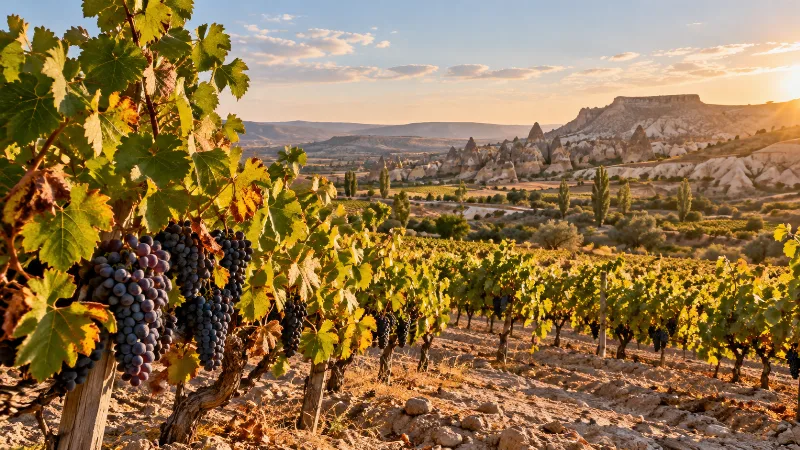
Nevşehir Grapes
Nevşehir grapes come from the volcanic plateau of Cappadocia in central Türkiye, where thin tuff soils, high elevation and dry summers support vineyards grown for wine, grape molasses and drying.
Explore →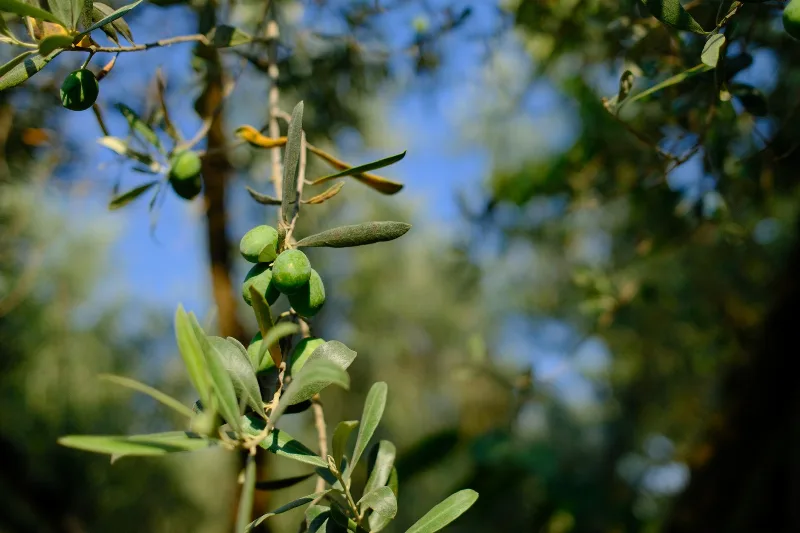
Ayvalık Olives
Ayvalık olives are the fruit of a named olive cultivar grown around Ayvalık on Türkiye's northern Aegean coast, valued both for pressing and for curing as table olives. The stony, sloping groves of the Edremit Gulf in Balıkesir province give the variety its strong regional identity.
Explore →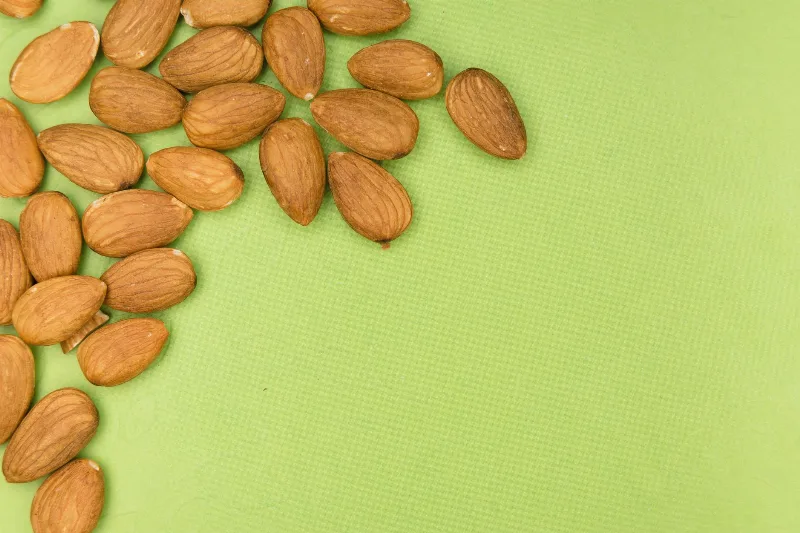
Datça Almonds
Datça almonds are the almonds grown on the Datça peninsula in Muğla province, southwestern Türkiye, where mild Mediterranean winters, sea air and rocky, well-drained slopes have shaped a local almond-growing tradition centred on sweet, firm kernels.
Explore →Related content
Karabük
Karabük is an inland city in Türkiye's western Black Sea region, built around the country's first integrated iron and steel works. It also serves as the practical base for reaching the UNESCO-listed historic town of Safranbolu just to its north.
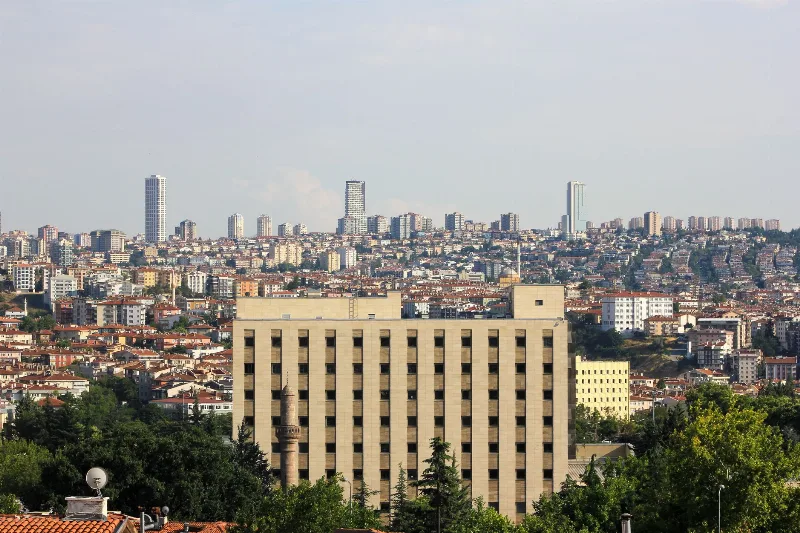
Ankara
Ankara is the capital of Türkiye and the country's second-largest city, set on the high plateau of Central Anatolia and defined by its republican institutions, its long pre-Ottoman history and the mausoleum of Mustafa Kemal Atatürk.
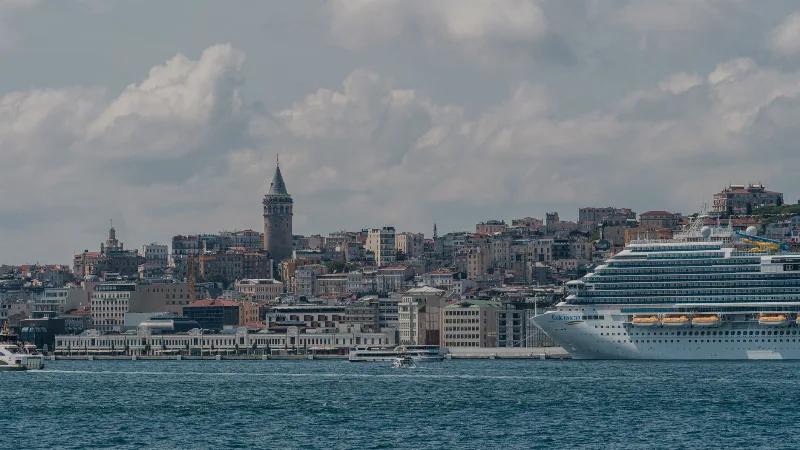
Istanbul
Istanbul is Türkiye's largest city and the country's only metropolis that spans two continents, divided by the Bosphorus strait into a European and an Asian half. Its long run as an imperial capital left a historic core of palaces, mosques and bazaars that still shapes the city's identity.
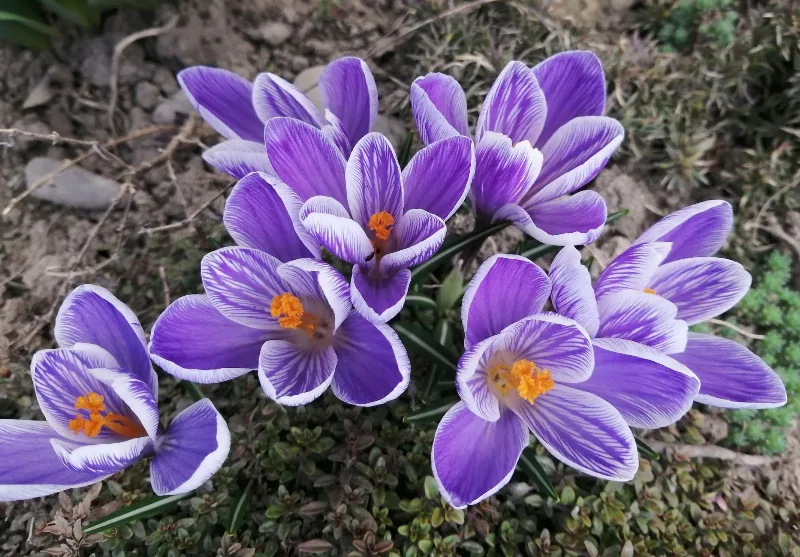
Saffron Harvest in Safranbolu, Karabük
Each October the fields around Safranbolu, Karabük, briefly turn violet as saffron crocus comes into flower, and the delicate blooms are hand-picked at dawn for the red stigmas that become the world's most expensive spice.
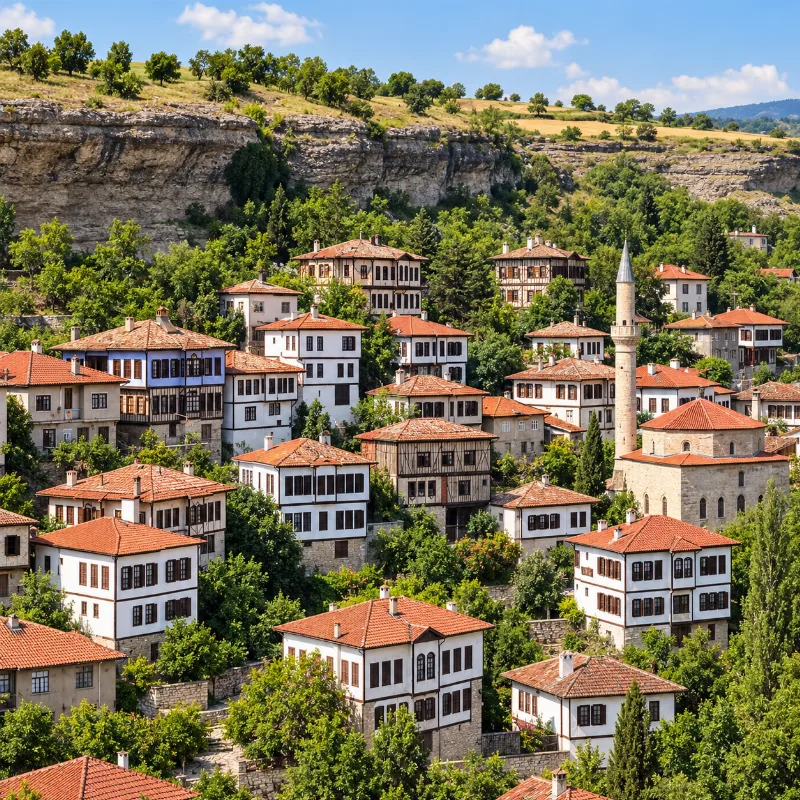
Safranbolu
Safranbolu is a historic district of Karabük Province known for its preserved Ottoman houses, cobbled streets, traditional bazaars and distinctive urban heritage.
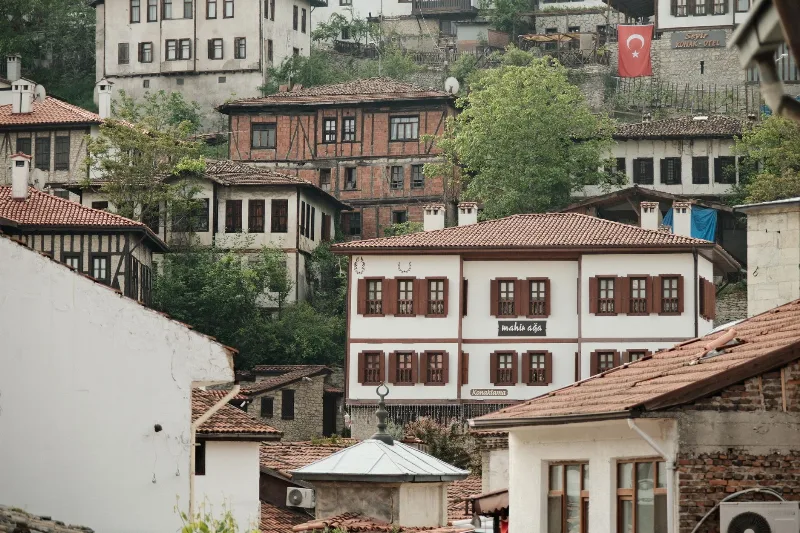
Safranbolu's Ottoman Heritage
Safranbolu in Türkiye preserves centuries of Ottoman town life in its timber houses, cobbled lanes and historic bazaar. Its old quarters form part of the UNESCO World Heritage List.