
Karabük
Karabük is an inland city in Türkiye's western Black Sea region, built around the country's first integrated iron and steel works. It also serves as the practical base for reaching the UNESCO-listed historic town of Safranbolu just to its north.
Karabük is a city in the western part of the Black Sea region of Türkiye and the administrative centre of Karabük Province. It is an inland settlement whose identity was shaped almost entirely by heavy industry: it grew around Türkiye's first integrated iron and steel plant, established here in the late 1930s. What most distinguishes Karabük from the historic towns around it is precisely this modern, working character. At the same time, the city acts as the natural gateway to Safranbolu, the preserved Ottoman town a short distance to the north, which brings a steady flow of visitors through the area.
Where Karabük Sits
Karabük Province occupies the western Black Sea region, inland from the coast. It borders Zonguldak and Bartın to the north and west, Kastamonu to the east, Çankırı to the south, and Bolu to the southwest. The province is mountainous and forested, and the city of Karabük itself lies in a narrow valley within the Filyos river basin, surrounded by wooded hills that close off long views in most directions. This valley setting explains much about the city's shape: it spreads along the floor of the valley rather than across a broad plain, and the built-up area is wrapped tightly by slopes. Karabük is the province's central district, and the other districts — Safranbolu, Yenice, Eskipazar, Ovacık and Eflani — are spread across the surrounding highlands and valleys.
A City Built by Steel
Before the twentieth century, Karabük was a small settlement in a rural district. Its transformation came with the decision to build an integrated iron and steel factory here in the 1930s, which made Karabük one of the earliest centres of heavy industry in the young Republic of Türkiye. The plant drew workers and their families into the valley, and the town grew quickly into a company-shaped city. Karabük was administratively attached to Zonguldak for decades before becoming a provincial capital in 1995, when Karabük Province was created. That industrial origin still defines the skyline, the working rhythm of the city and its self-image. Steel production, and the Kardemir works in particular, remains central to the local economy and to how the city is understood across the country.
Urban Character
Karabük is not a tourist town in the usual sense. Its streets are functional and modern, its central districts organised around commerce, administration and the needs of an industrial workforce. Visitors looking for restored Ottoman houses or cobbled squares will find them in neighbouring Safranbolu rather than in Karabük itself. What Karabük offers instead is an honest picture of an Anatolian industrial city: busy during working hours, quiet in the evening, and closely tied to the factory that created it. The city is compact enough to move through easily, with the valley floor concentrating most of its activity.
Safranbolu and the Role of a Gateway
The relationship between Karabük and Safranbolu is one of the defining facts of the province. Safranbolu is a separate district, but it lies so close to Karabük that the two function almost as a pair: the industrial city and the historic town, side by side. Safranbolu's old town, with its timber-framed Ottoman houses, narrow lanes and preserved commercial quarter, is inscribed on the UNESCO World Heritage list, and its reputation draws visitors from far beyond the region. Karabük is where many of them arrive, stay, or pass through. Because Safranbolu has its own detailed coverage elsewhere, it is enough here to note that the two places should be understood together when planning a visit — the modern city provides the practical base, the historic town provides the cultural attraction.
Forests, Valleys and the Natural Setting
The surrounding landscape is heavily wooded, and the province's green interior is one of its quieter assets. The Yenice district, in the west of the province, is known for dense forests and notable plant diversity, and it gives the region a wilder, more remote character than the valley around Karabük suggests. Heading south and east, the terrain opens toward the highlands of the interior, while to the north the land falls toward the Black Sea coast and the neighbouring provinces of Bartın and Zonguldak. The district of Eskipazar, further inland, is associated with the ancient site of Hadrianopolis, which adds an archaeological dimension to an area better known for industry and forest.
Climate and the Best Time to Visit
Karabük experiences a Black Sea climate, but because it lies inland and within a valley, it is more continental than the coast: summers are warm, and winters are cold, often with snow and fog gathering in the valley. Spring and autumn are generally the most comfortable seasons for exploring both the city and the surrounding countryside, when temperatures are moderate and the wooded hills are at their most attractive. Summer is suitable for the higher ground and forest areas, while winter can make travel in the surrounding districts more difficult.
Regional Connections
Karabük sits within easy reach of several contrasting destinations. To the northwest lie the coal country and coast around Zonguldak; to the north, Bartın and its own historic and coastal attractions; to the east, the road continues toward Kastamonu. Because the province lies between the coast and the Anatolian interior, it works well as a stop on a wider route through the western Black Sea region rather than as an isolated destination. Visitors interested in the area will find that Karabük, Safranbolu and the forested districts of Yenice and Eskipazar together form a compact and varied region, one where industrial history, Ottoman heritage and woodland scenery sit unusually close together.
Discover Food in Türkiye
All food →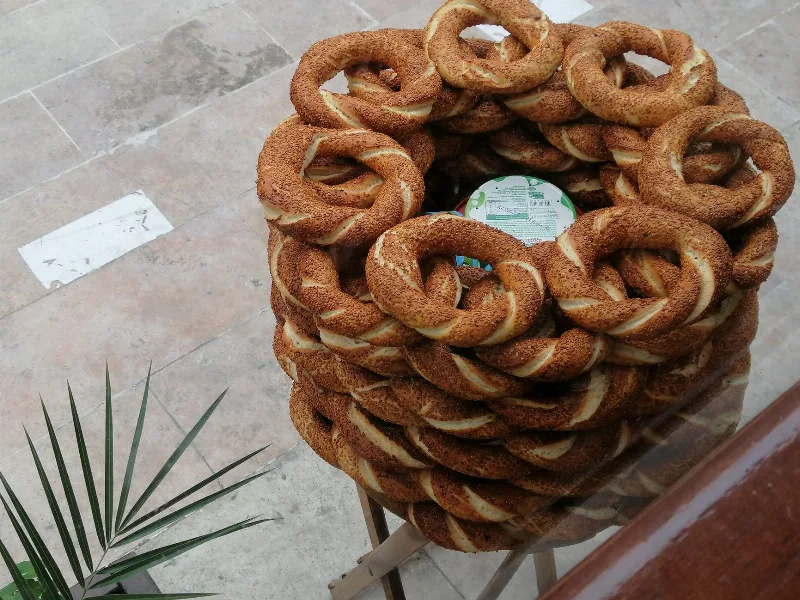
Simit
Simit is a ring-shaped Turkish bread covered in sesame seeds, strongly associated with Istanbul and sold as everyday street food. It is eaten fresh, most often with tea, and has a crisp crust around a chewy crumb.
Explore →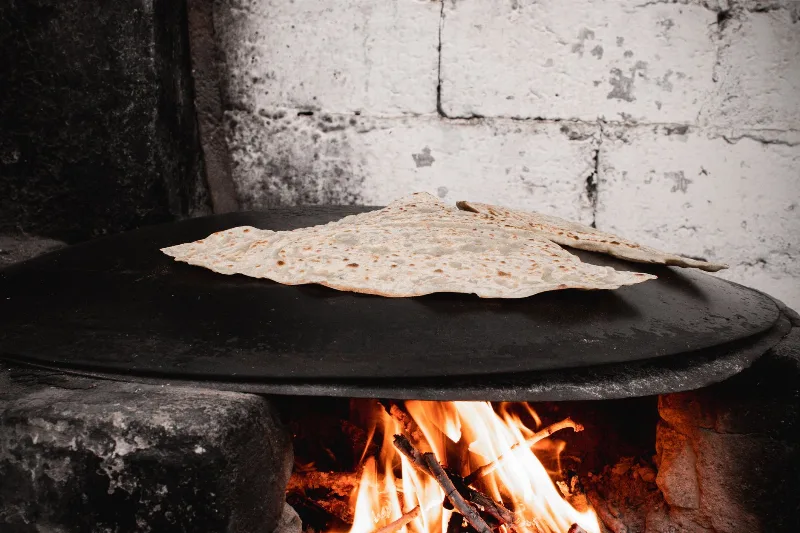
Bazlama
Bazlama is a soft, thick Turkish flatbread made from a leavened dough and cooked on a hot griddle. It is a staple of village baking across Anatolia, eaten warm with butter or used to wrap other foods.
Explore →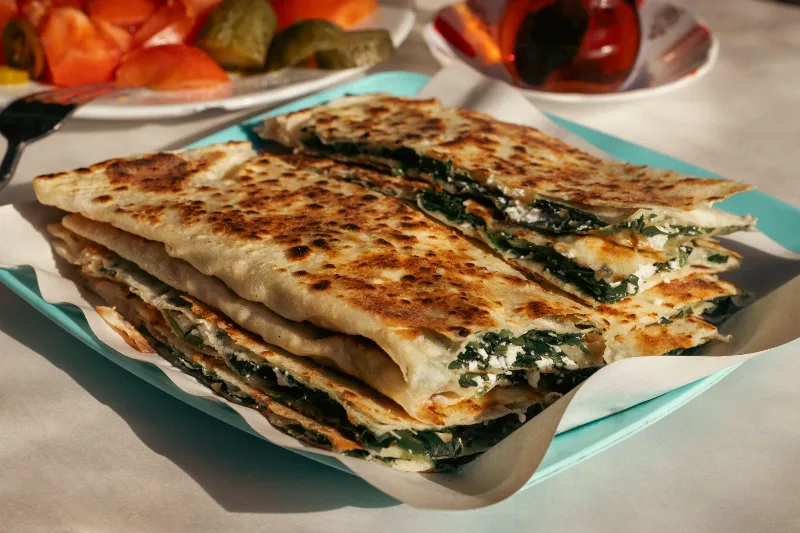
Gözleme
Gözleme is a thin, hand-rolled Anatolian flatbread folded around savory fillings such as cheese, spinach, or minced meat and cooked on a sac griddle. The article covers its regional variations, cooking method, texture, and traditional serving style.
Explore →Related content
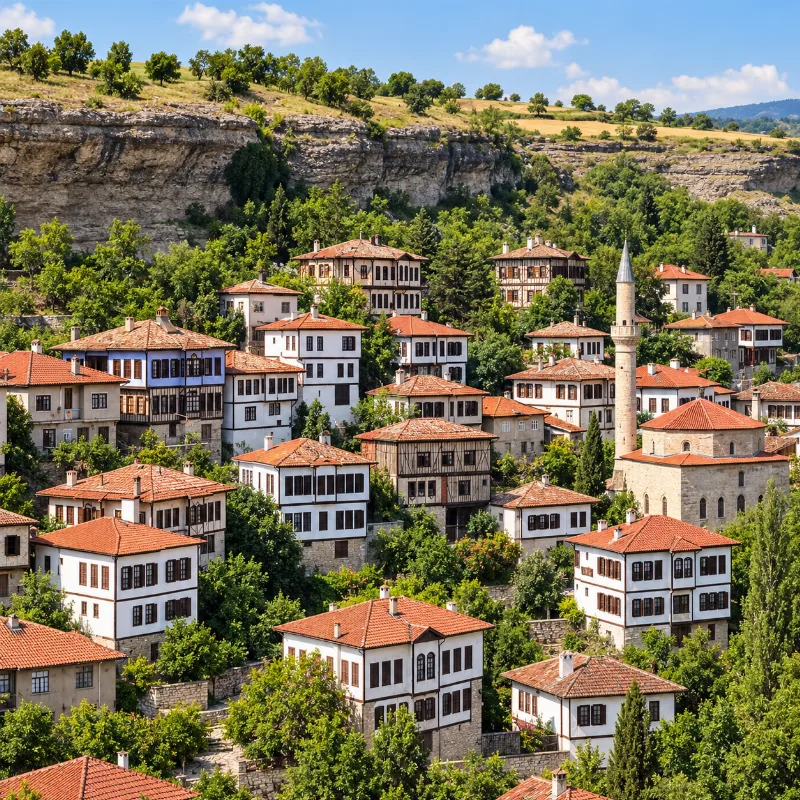
Safranbolu
Safranbolu is a historic district of Karabük Province known for its preserved Ottoman houses, cobbled streets, traditional bazaars and distinctive urban heritage.
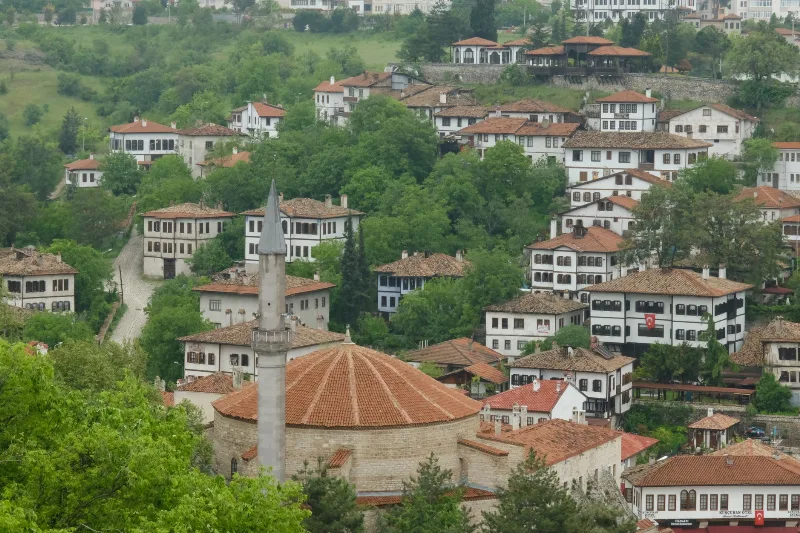
Safranbolu
Safranbolu is a UNESCO-listed Ottoman town in Karabük Province, built around a ravine bazaar and known for hundreds of timber-framed houses, historic bathhouses and the saffron that gave the town its name.
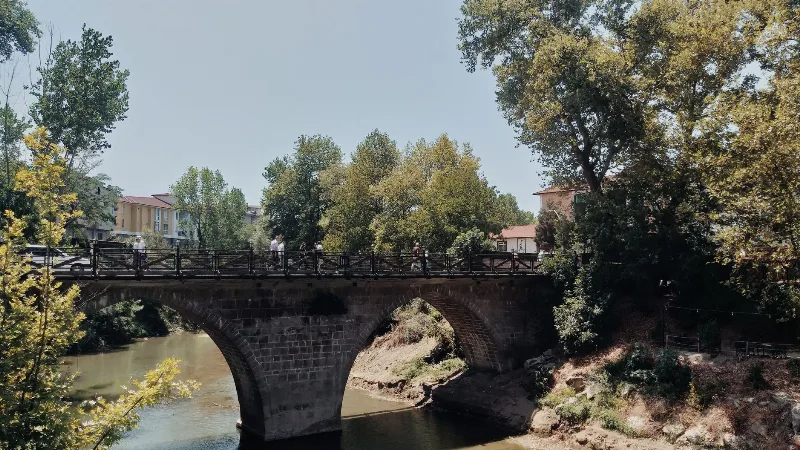
Bartın
Bartın is a city in Türkiye's Western Black Sea region, built along the navigable Bartın River and known for its traditional wooden houses and the coastal town of Amasra within the same province.
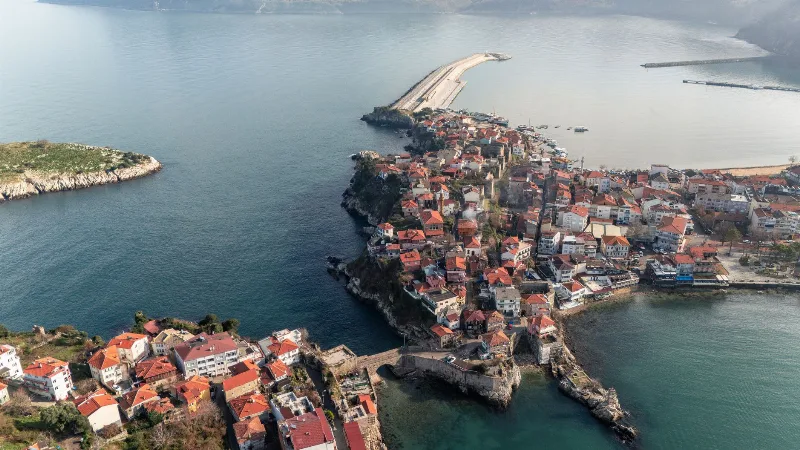
4-Day Western Black Sea Route
A four-day driving route through Türkiye's Western Black Sea region, linking the historic town of Safranbolu with the coastal town of Amasra and the inland city of Kastamonu.
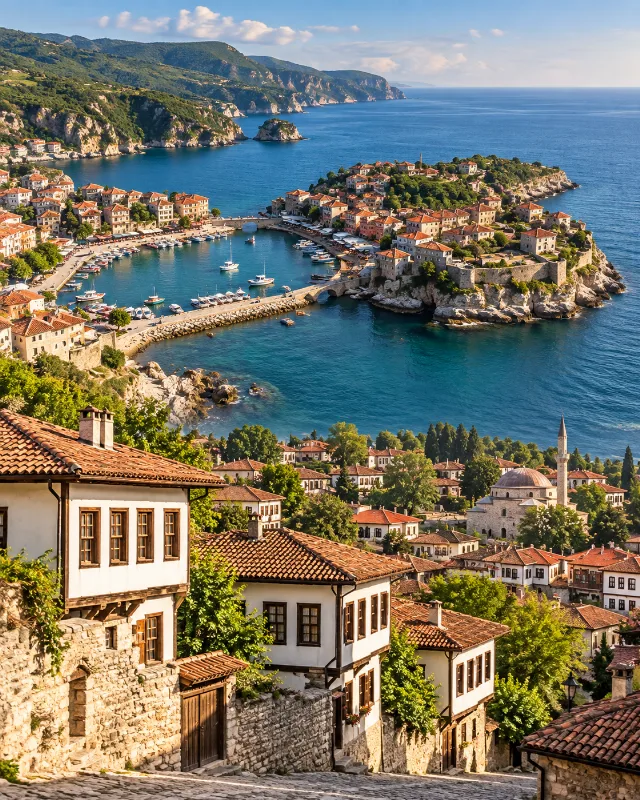
2-Day Safranbolu and Amasra Route
A two-day route combining Safranbolu’s Ottoman streets and traditional houses with the Black Sea scenery and historic harbour town of Amasra.
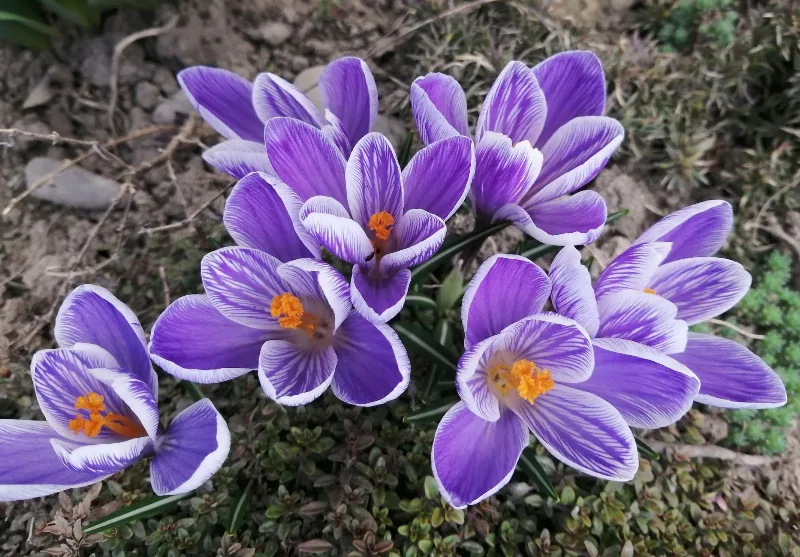
Saffron Harvest in Safranbolu, Karabük
Each October the fields around Safranbolu, Karabük, briefly turn violet as saffron crocus comes into flower, and the delicate blooms are hand-picked at dawn for the red stigmas that become the world's most expensive spice.