
Safranbolu's Ottoman Heritage
Safranbolu in Türkiye preserves centuries of Ottoman town life in its timber houses, cobbled lanes and historic bazaar. Its old quarters form part of the UNESCO World Heritage List.
Safranbolu is a historic town in the Karabük province of Türkiye's Black Sea region, where an unusually complete group of Ottoman-era buildings has survived into the present. Its old quarters joined the UNESCO World Heritage List in 1994, recognised as a settlement that prospered as a trading stop between Istanbul and the Black Sea ports and whose merchants left behind stone, timber and plaster houses that still define its streets.
A Living Record of Ottoman Town Planning
Safranbolu grew along a valley floor and onto the hillside above it, and this geography produced two distinctive districts. The lower town, known as Çukur, holds the bazaar and the busiest historic streets, while the upper district of Bağlar spreads out among gardens and vineyards, where wealthier families once built summer houses. Narrow lanes, cobbled surfaces and stepped passages link the two, giving the town a compact and walkable character. Ottoman civic life remains visible in the layout, with mosques, fountains, hamams and a covered market standing within a few minutes of one another, much as they did for centuries.
Inside the Traditional Safranbolu Houses
The town's signature architecture is the Safranbolu house: two or three storeys above a stone base, framed with timber using a local technique called çantı, then finished with whitewashed walls and dark wooden trim. Upper floors often project over the street on supporting beams, forming the overhanging bays known as cumba. Interiors are arranged around comfort and privacy. Many houses separate a guest area, the selamlık, from the family area, the haremlik, and include a large central room with built-in wooden seating, cupboards and shelving. Courtyards and gardens, called hayat, connect the buildings to everyday life.
Streets, Mosques and the Historic Bazaar
A walk through the old town passes mosques such as the seventeenth-century Köprülü Mehmet Paşa Mosque and the eighteenth-century İzzet Mehmet Paşa Mosque, along with fountains and small squares shaded by old trees. In the commercial heart of Çukur, craft rows once grouped by trade still carry their old names, including the Yemeniciler Arastası for shoemakers and the Demirciler Arastası for blacksmiths. An Ottoman caravanserai, a public fountain and a clock tower complete the historic centre, and the buildings are understood most clearly by moving between them on foot.
Local Flavours and Traditions
Saffron, the spice that gave the town its name, was once cultivated in the surrounding fields and still appears in local sweets. The kitchen of Safranbolu leans on slow cooking and simple ingredients: kuru bamya çorbası, a soup made with dried okra, peruhi, a local pasta dish, and stuffed vine leaves and peppers prepared for family gatherings. Sweets include safranlı lokum and walnut-based confections. Craft traditions such as metalwork, shoe-making and weaving continue in small workshops, and a long-running film and culture festival each September keeps the town's artisan heritage in view.
Beyond the Town: Canyons, Caves and Aqueducts
The countryside around Safranbolu adds a second layer to the experience. The Tokatlı Canyon offers a short walking route beside a stream, while Bulak Mencilis Cave opens into a cool underground passage that ranks among the country's larger cave systems. To the north, the İncekaya Aqueduct from the late eighteenth century spans a wooded valley, and the viewpoints on Hıdırlık Hill look out over the rooftops of the old town and the hills beyond.
Experiencing Safranbolu Through the Seasons
Spring brings blossom to the gardens of Bağlar and fresh green to the valleys. Summer is warm and dry, with long evenings around the bazaar quarter, while autumn colours the surrounding forests in copper and gold. Winter is cold, and snow on the old roofs gives the town a quiet, still atmosphere. Because the historic centre is small enough to explore on foot, each season offers a different reading of the same streets and houses.
Related content
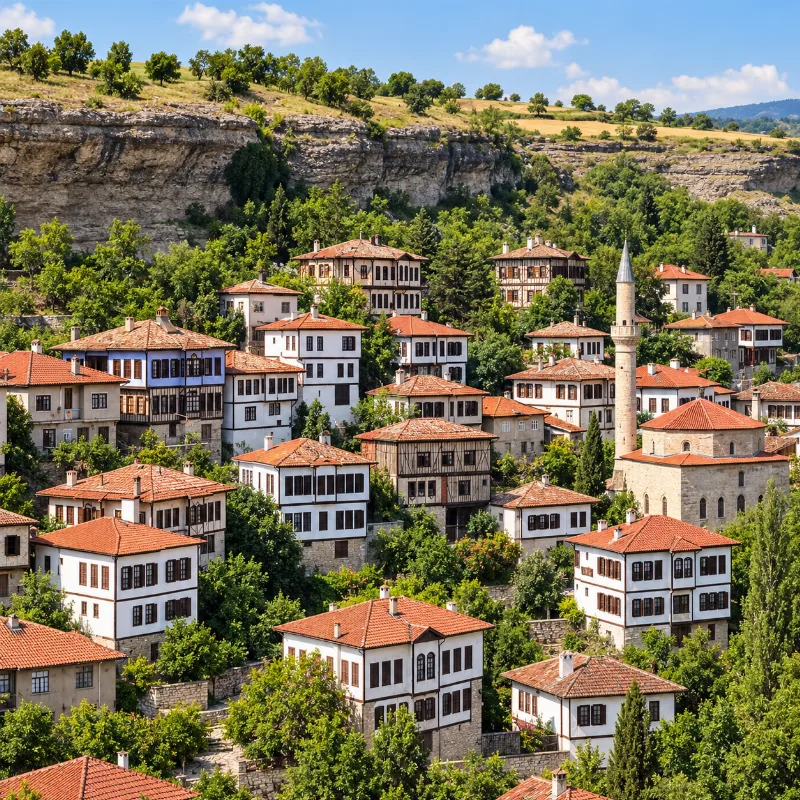
Safranbolu
Safranbolu is a historic district of Karabük Province known for its preserved Ottoman houses, cobbled streets, traditional bazaars and distinctive urban heritage.
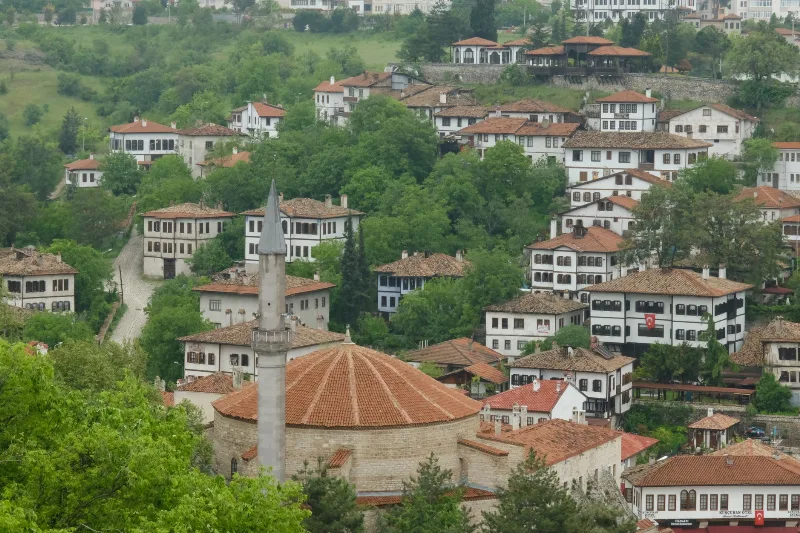
Safranbolu
Safranbolu is a UNESCO-listed Ottoman town in Karabük Province, built around a ravine bazaar and known for hundreds of timber-framed houses, historic bathhouses and the saffron that gave the town its name.
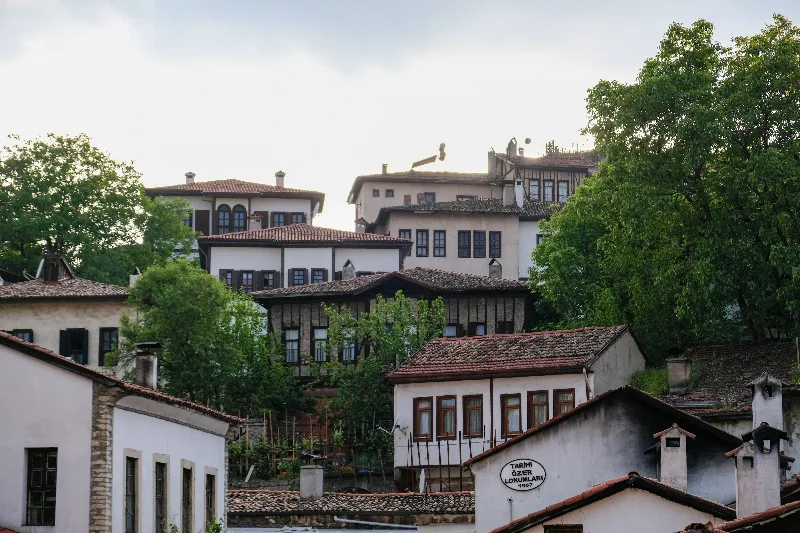
Karabük
Karabük is an inland city in Türkiye's western Black Sea region, built around the country's first integrated iron and steel works. It also serves as the practical base for reaching the UNESCO-listed historic town of Safranbolu just to its north.
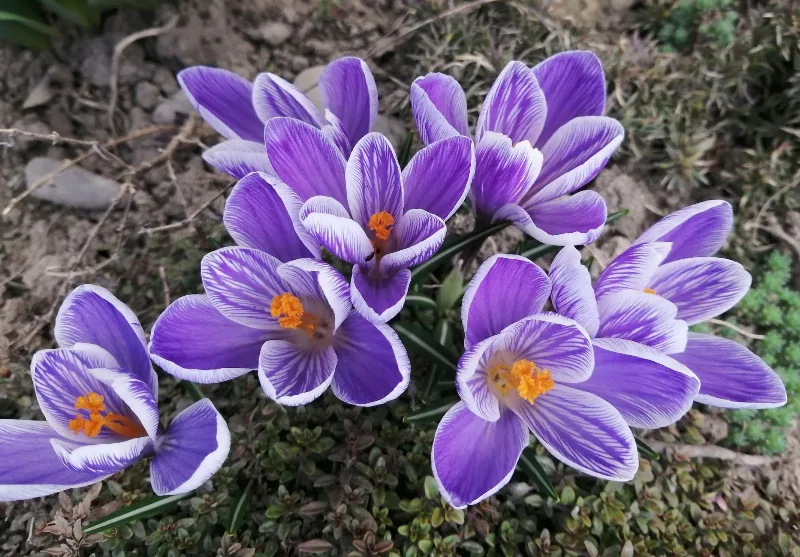
Saffron Harvest in Safranbolu, Karabük
Each October the fields around Safranbolu, Karabük, briefly turn violet as saffron crocus comes into flower, and the delicate blooms are hand-picked at dawn for the red stigmas that become the world's most expensive spice.
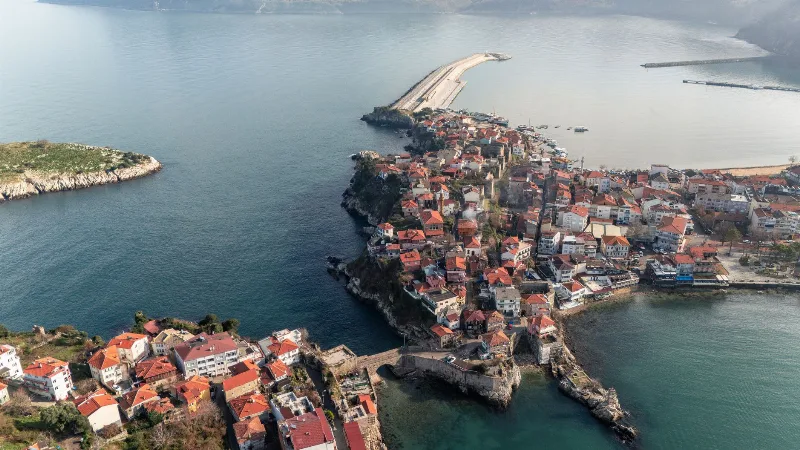
4-Day Western Black Sea Route
A four-day driving route through Türkiye's Western Black Sea region, linking the historic town of Safranbolu with the coastal town of Amasra and the inland city of Kastamonu.
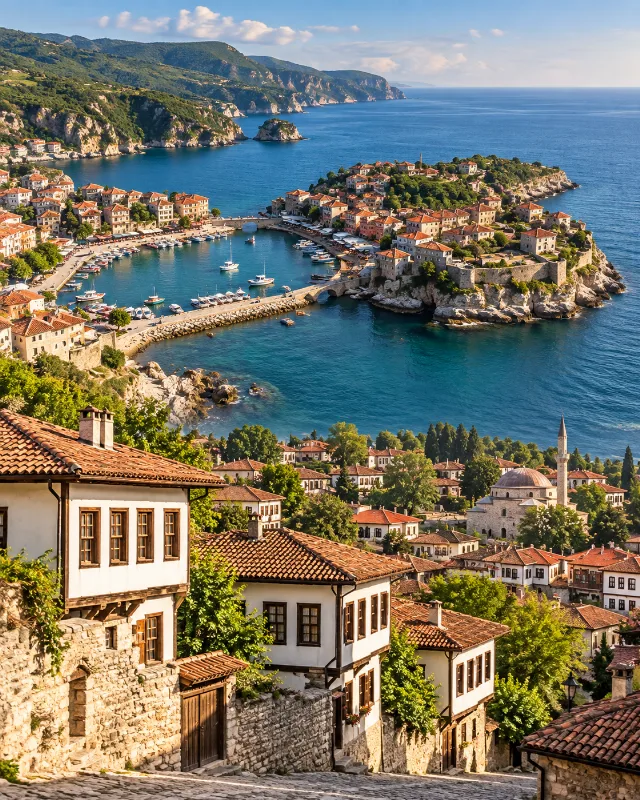
2-Day Safranbolu and Amasra Route
A two-day route combining Safranbolu’s Ottoman streets and traditional houses with the Black Sea scenery and historic harbour town of Amasra.
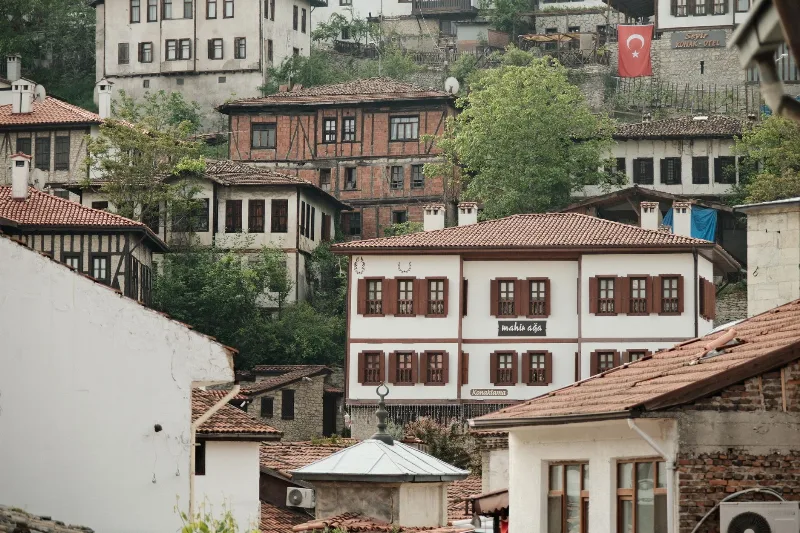
Discovering the Historic Charm of Safranbolu
Explore the enchanting streets of Safranbolu, known for its Ottoman-era architecture and preserved historical atmosphere.
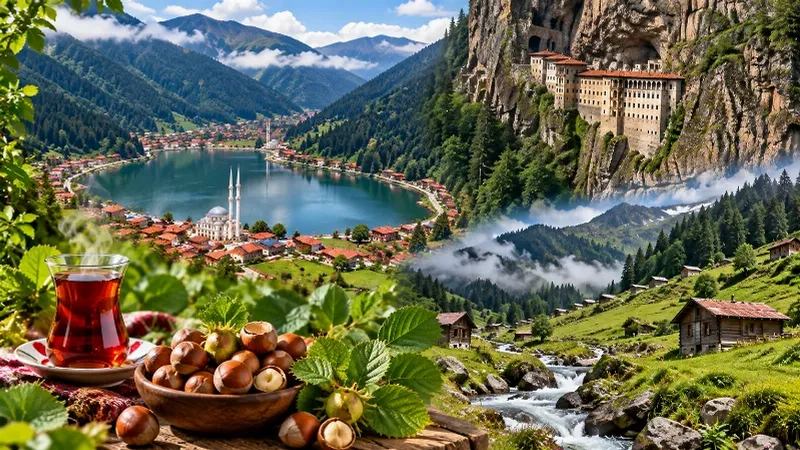
Black Sea Region
The Black Sea Region of Türkiye is known for its lush green mountains, misty highlands, dense forests and traditional villages. Stretching along the country's northern coast, the region combines spectacular natural scenery with historic towns, tea-growing landscapes and distinctive local traditions.