
5-Day Bodrum Peninsula Route
A five-day circular drive around the Bodrum Peninsula that links the historic core of Bodrum with the southern shore village of Gümüşlük, the western town of Turgutreis and the northern villages of Yalıkavak, Göltürkbükü and Torba.
This five-day route covers the Bodrum Peninsula on Türkiye's Aegean coast, beginning and ending in Bodrum town. It is a circular journey rather than a linear one, and it works best with a car, because local transport connects the main towns but not the small coves and back roads in between. Over the five days the route moves from Bodrum's historic core along the southern shore to Gümüşlük, curves around the western tip to Turgutreis, then follows the northern coast through Yalıkavak, Göltürkbükü and Torba before returning to Bodrum. The character of the trip is mixed: ancient ruins and a castle at the start, quiet fishing villages and swimming bays in the middle, and a gentler northern shoreline at the end.
Day 1: Bodrum Town and the Ancient City of Halicarnassus
The route begins in Bodrum itself, and the first day is entirely walkable. Bodrum Castle, built by the Knights of St John on a rocky headland between two bays, now houses a museum, and the harbour below it is the natural starting point for orientation. From there the old town streets lead inland to the site of the Mausoleum at Halicarnassus, one of the Seven Wonders of the ancient world and the origin of the word mausoleum. The remains are modest but the setting explains how the ancient city was laid out, and it pairs well with the Myndos Gate on the western edge of town, part of the same wall circuit. Further along the same side sits the ancient theatre, cut into the hillside with a view over the town.
Nothing on this day requires driving, which makes it a sensible first stop after arriving. It also establishes the historic layer that the rest of the peninsula sits on top of, since most of the villages visited later grew up over older settlements.
Day 2: The Southern Shore to Gümüşlük
The second day heads west out of Bodrum along the southern coast. The road passes Bitez, whose bay is one of the calmest on this side of the peninsula, then continues through Ortakent and Yahşi, where the shoreline is backed by mandarin gardens and low summer houses. Further west the road reaches Akyarlar and Karaincir, two neighbouring bays with clear water and a more open, wind-exposed feel, before turning north towards Gümüşlük.
Gümüşlük is the highlight of the day. The village is built over the ruins of ancient Myndos, and parts of the old harbour walls and foundations are visible in and around the water. A causeway leads out to Tavşan Adası, the small island opposite the village, and the shallow channel between them is one of the most recognisable views on the peninsula. The village has narrow streets, small gardens and a relaxed evening atmosphere. Because the whole day follows one coastal road in a single direction, the sequence of stops is straightforward and does not require backtracking.
Day 3: Gümüşlük to Turgutreis
The third day begins with a slower morning in Gümüşlük, when the water is calm and the archaeological remains around the village are easier to make out. From here the road turns north and follows the western edge of the peninsula towards Turgutreis, passing small coves and bays that face the open Aegean rather than the sheltered inner coast.
Turgutreis sits at the western end of the peninsula and is the second-largest settlement on the route. Its long waterfront faces the sunset, and the town is a useful base for the western tip, with beaches in and around it and a distinctly different, breezier character from the sheltered southern villages. The afternoon can be spent exploring the shoreline on foot or simply continuing along the coast in short stages. This is a shorter driving day than the previous one, which balances the route well.
Day 4: The Northern Coast to Yalıkavak
From Turgutreis the route turns east and follows the northern side of the peninsula to Yalıkavak. This stretch is noticeably different in character: the coast becomes more indented, the landscape softer, and the villages more connected to one another.
Yalıkavak is known for its windmills, which stand on the hill above the town and are among the most photographed structures on the peninsula. Below them, the older part of the village keeps its narrow streets, while the harbour area is the busiest part of the northern coast. The surrounding hillsides are planted with mandarins and olives, and this is the best place on the route to notice the peninsula's farming side, which belongs alongside its beaches in any understanding of the region. Yalıkavak is a logical place to stay the night, because the next day continues east along the same shoreline.
Day 5: Göltürkbükü, Torba and Return to Bodrum
The final day completes the circle. Heading east from Yalıkavak, the road reaches Göltürkbükü, made up of two adjoining villages on a wide, sheltered bay, and then continues to Gündoğan and Torba. Each of these sits on the northern shore within easy reach of Bodrum, and each has its own small harbour and swimming areas. Torba is the last stop before the road climbs briefly and drops back into Bodrum.
Ending in Bodrum rather than somewhere further afield makes the route practical: it closes the loop, returns travellers to the town where they started, and leaves the final afternoon free for anything missed on the first day. Anyone continuing by sea can check the ferry connections from Bodrum harbour, which are seasonal and change from year to year.
Route Character, Season and Practical Notes
The Bodrum Peninsula is compact, but the roads are winding and the distances between villages are longer in practice than they look on a map. Expect a moderate amount of driving each day, with the longest stretches on the southern shore and the shortest between the northern villages. Most of the route stays close to sea level, so there are no serious mountain sections, but some village roads are narrow.
Spring and early autumn are the most comfortable seasons for this itinerary, with warm water and manageable traffic. High summer is hot and the coastal villages become very busy, while winter is quiet, with some coastal places operating on a reduced, seasonal basis. The route can be done by public transport between the main towns, but the smaller stops on the southern and western shores are far easier to reach by car.
Readers planning the trip can treat each stop as its own subject for deeper reading: Bodrum as a city and district, the castle and the Mausoleum as historic places, the bays along the southern shore for swimming, Gümüşlük and the northern villages as villages and small towns, and the mandarin and olive groves as part of the peninsula's regional produce.
Remarkable Places
See all places →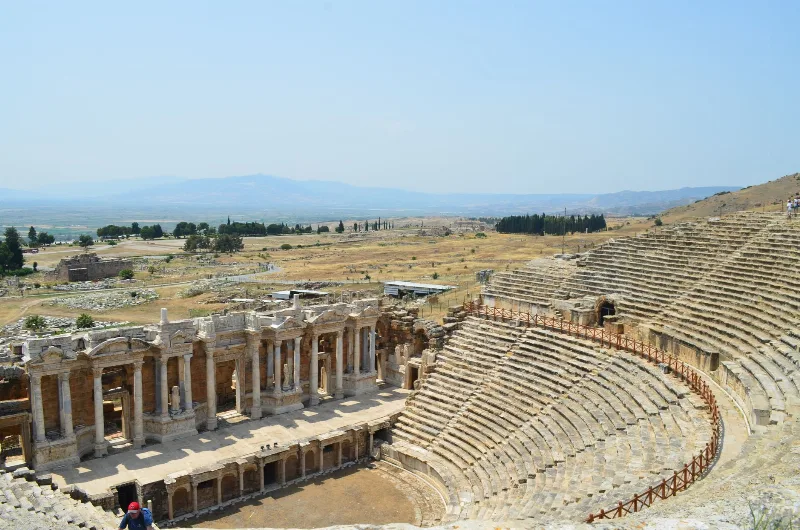
Letoon
Letoon is a Lycian sanctuary near Xanthos in Muğla Province, dedicated to Leto, Artemis and Apollo. Its three temples, theatre and trilingual inscription make it one of southwestern Turkey’s most significant archaeological sites.
Explore →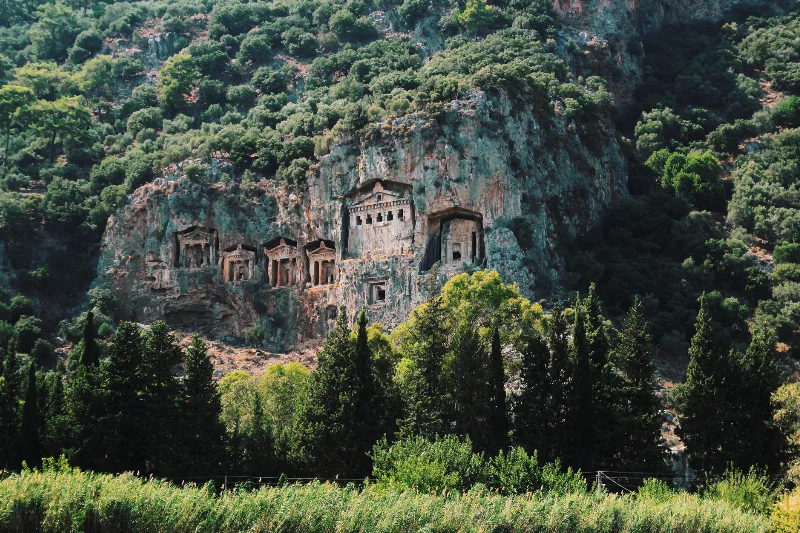
Kaunos
Kaunos is an ancient Carian city on the Dalyan River in Muğla Province, known for its temple-style rock-cut tombs and the extensive ruins of a harbour that silted up centuries ago.
Explore →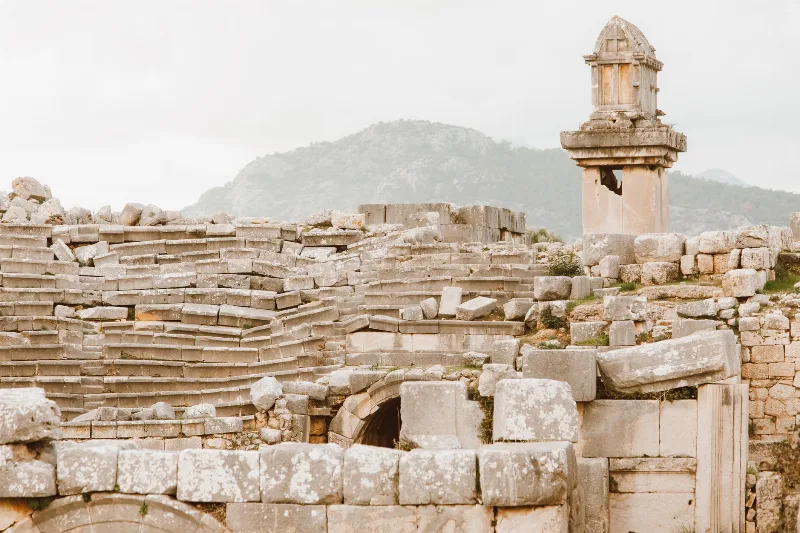
Xanthos
Xanthos is an ancient Lycian city in Antalya Province and a UNESCO World Heritage Site, known for its Lycian tombs, Roman theatre and role as a leading city of Lycia.
Explore →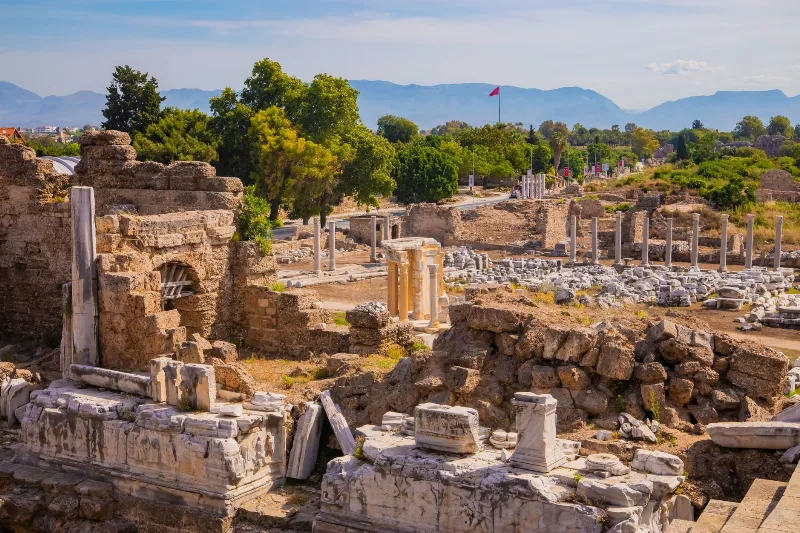
Phaselis
Phaselis is a Rhodian-founded port city on the eastern Lycian coast, where paved streets, agoras, baths and a small theatre stand among pines between three sheltered bays.
Explore →Related content
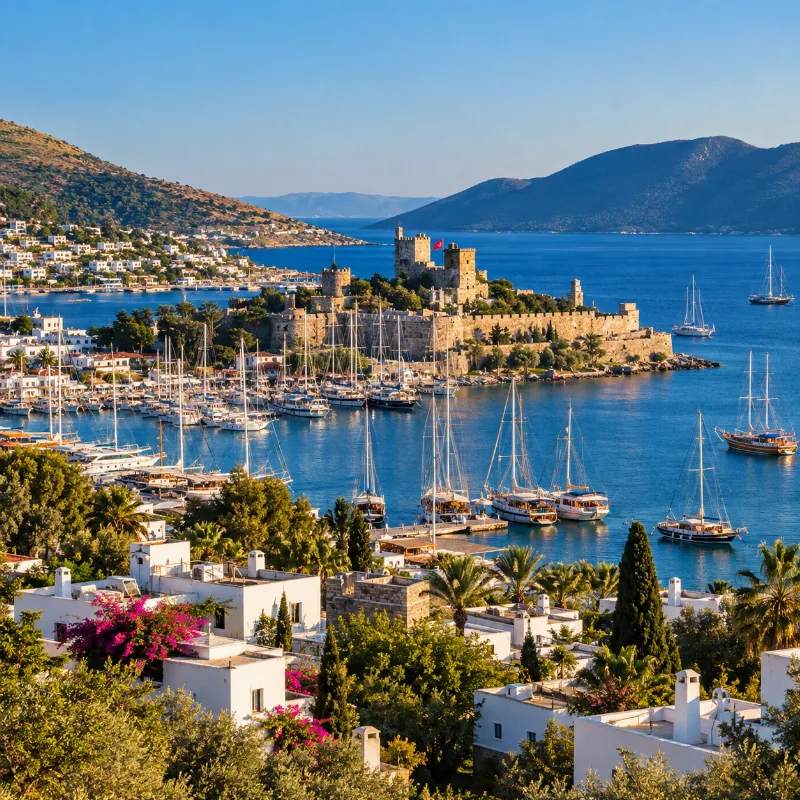
Bodrum
Bodrum is a coastal district of Muğla Province known for its whitewashed architecture, castle, Aegean coastline, bays and ancient Halicarnassus heritage.
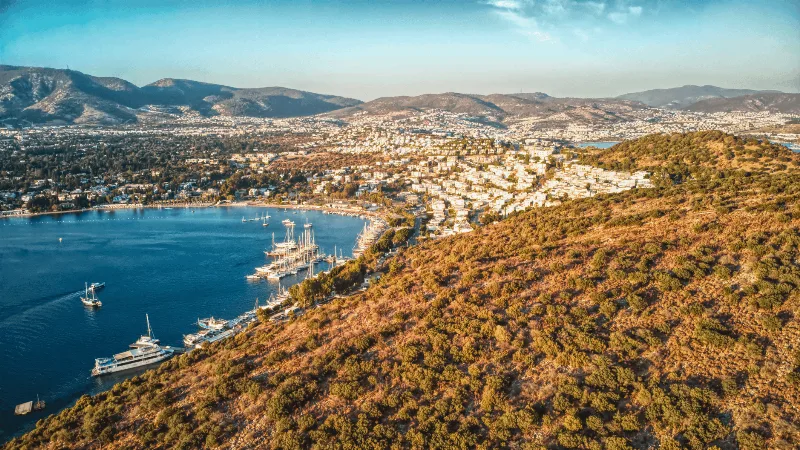
Gümüşlük
Gümüşlük is a sheltered Aegean inlet on the western side of the Bodrum Peninsula, where a shallow bay, a narrow sand spit and a small offshore island shape a distinctive shoreline.
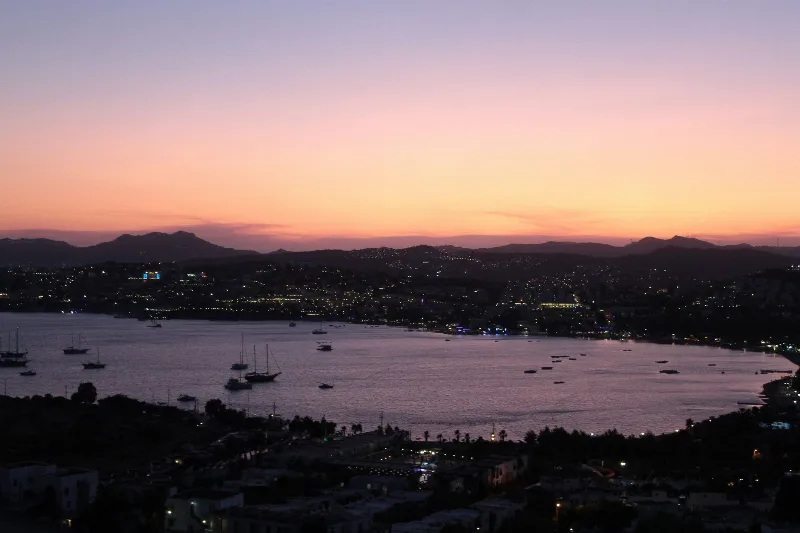
Gümüşlük
Gümüşlük is a former fishing village on the western tip of the Bodrum peninsula in Muğla, Türkiye, built over the ancient city of Myndos and known for its sunset views across the bay and its seafood culture.
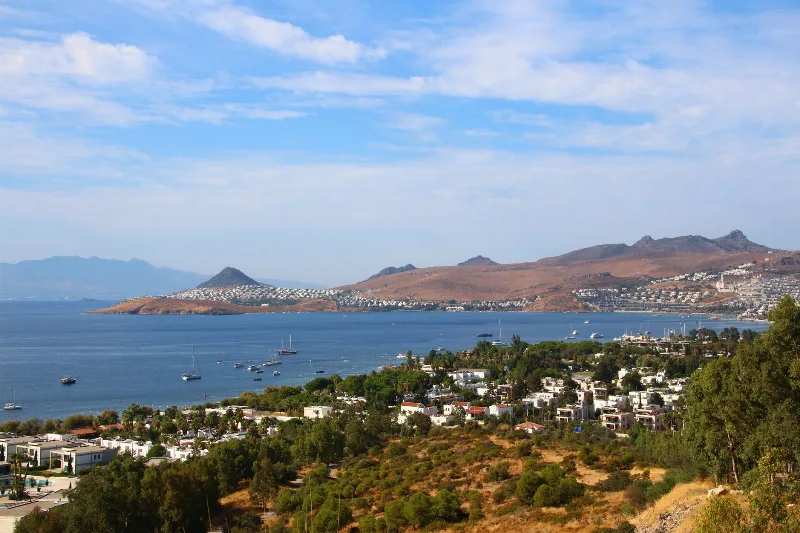
Sailing Adventures in Bodrum
Bodrum's peninsula on the Aegean coast of Türkiye offers sheltered bays, steady summer winds and a coastline shaped by ancient ruins and a long boatbuilding tradition.
Yalıkavak
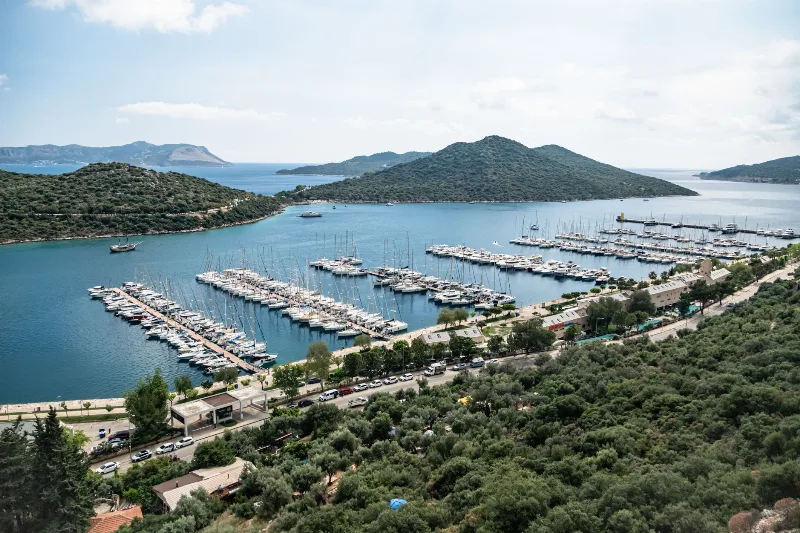
Yalıkavak is a coastal neighbourhood of Bodrum district in Muğla Province, on the northern shore of the Bodrum Peninsula. It is known for its large marina, a group of old stone windmills on the ridge above the bay, and a town centre that still carries traces of its fishing-village past.
Bodrum Peninsula in Türkiye
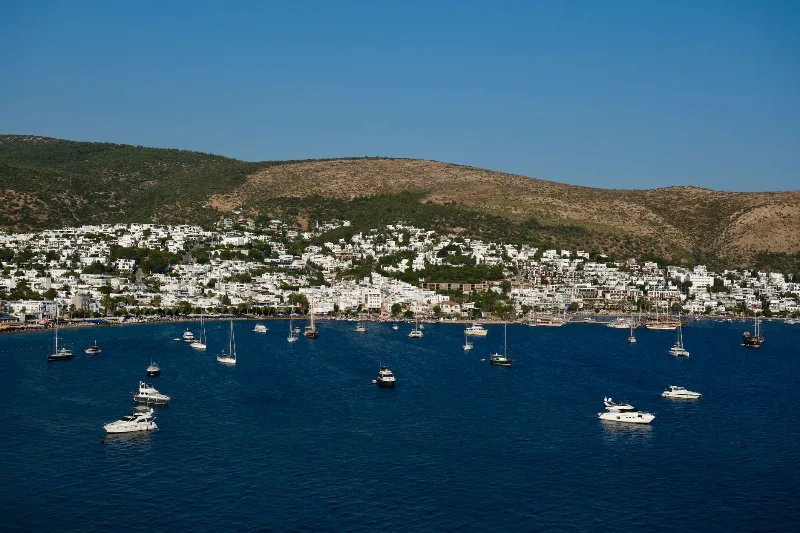
Explore the Bodrum Peninsula, a sought-after holiday spot in Türkiye known for its stunning beaches and lively nightlife.