
Gaziantep Copper Craft and Pistachio Baklava
In Gaziantep, hammered copper and pistachio baklava sit side by side as living crafts. The city's bazaar workshops and pastry kitchens show how two very different traditions have survived into the present.
Gaziantep, one of the oldest continuously inhabited cities in southeastern Türkiye, is associated with two crafts that sit at opposite ends of the artisan's world: hammered copper and layered pistachio baklava. One is worked from metal and fire in the vaulted lanes of the old bazaar; the other is stretched, buttered and baked in the city's pastry kitchens. Together they describe a place where handwork still has a place in daily life rather than only in museums.
Lying where the Anatolian plateau eases into the Mesopotamian plain, Gaziantep has long been a meeting point for traders, farmers and craftsmen. Its table is recognised internationally, and in 2015 the city joined the UNESCO Creative Cities Network in the field of gastronomy. Copper working is the older of the two stories, and it continues to shape the soundscape of the historic centre.
A City Where Metal Meets Sugar
The two traditions do not exist in isolation. Baklava is often carried to the table on a broad copper tray, and copper vessels have long been part of the same hospitality that surrounds the sweet pastry. A tray of baklava offered to guests, a coffee pot warmed over coals, a covered dish brought out for a family gathering: these objects belong to the same culture of generous hosting.
Inside the Copper Bazaar
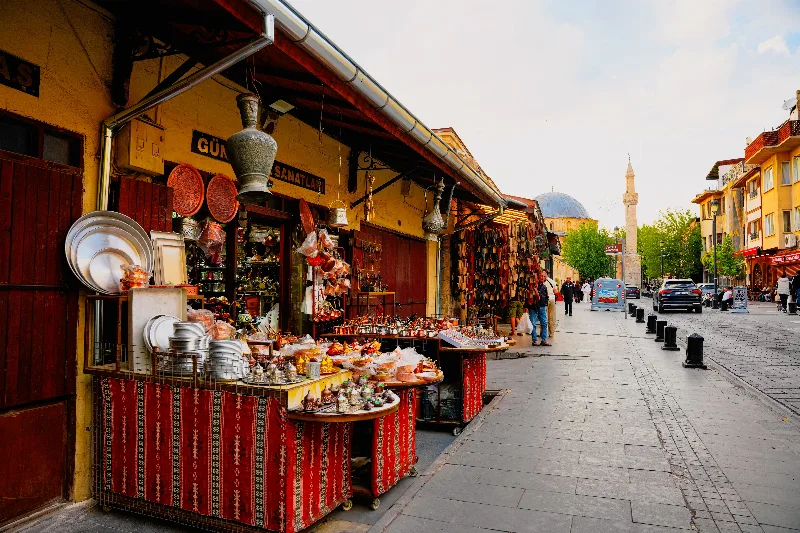
The heart of the trade is Bakırcılar Çarşısı, the coppersmiths' market, a short walk from Gaziantep Castle. Narrow passages are lined with workshops where the rhythmic tapping of hammers carries into the street. Finished pieces hang in rows: trays, basins, jugs, coffee pots, deep cauldrons, bowls and decorative panels, many of them polished to a warm reddish glow.
Hammers, Heat and Tin
Copper is soft enough to be shaped by hand but must be worked with patience. A flat sheet is heated to soften it, then raised over an anvil with hammers of increasing fineness until a bowl or a pot emerges. Decoration is added with chisels, often in repeating floral or geometric patterns. The final stage is tinning: molten tin is spread across the inner surface so the vessel can safely hold food. Each object therefore passes through several pairs of hands, and most workshops still divide the labour between a master, a finisher and one or two apprentices.
The Antep Pistachio
Baklava depends on a nut grown in the fields around the city. The Antep pistachio is a small, thin-shelled variety with a kernel of unusually deep green, a consequence of the hot, dry summers and chalky soils of the region. Trees are harvested in late summer, usually by hand, and bear heavily in alternate years. Growers have tended orchards here for centuries, and the nut appears in savoury dishes, stuffings and confectionery as well as in pastry.
Building Layers of Baklava
Making Gaziantep baklava is a specialised craft in its own right. Wheat flour, water and a little salt are worked into a soft dough, divided into small pieces and rolled out until the sheets are thin enough to read through. Traditionally around forty layers are stacked in a large tray, each brushed with clarified butter, with finely ground pistachio spread through the middle. The tray is baked until evenly golden, then soaked in a light sugar syrup and left to rest so the pastry absorbs the sweetness without losing its crispness. It is cut into diamonds while still warm.
Recognition and Regional Pride
The skill of the baklava masters, known locally as ustas, has been formally recognised. Antep baklavası was granted protected geographical indication status by the European Union in 2013, an acknowledgement of both the recipe and the technique tied to the city. For many families, the pastry is inseparable from weddings, religious festivals and the arrival of guests, and apprenticeships in the larger kitchens can last for years.
Two Crafts, One Identity
Copper and pistachio may seem unrelated, but both depend on repetition, patience and the passing of knowledge from one generation to the next. As stainless steel replaced copper in many kitchens, local workshops turned increasingly towards decorative and hospitality pieces, while pastry kitchens kept their methods largely intact. Visitors walking between the bazaar and the city's confectioners can see both trades at work within a few streets of each other, an everyday reminder of how Gaziantep continues to make things by hand.
Related content
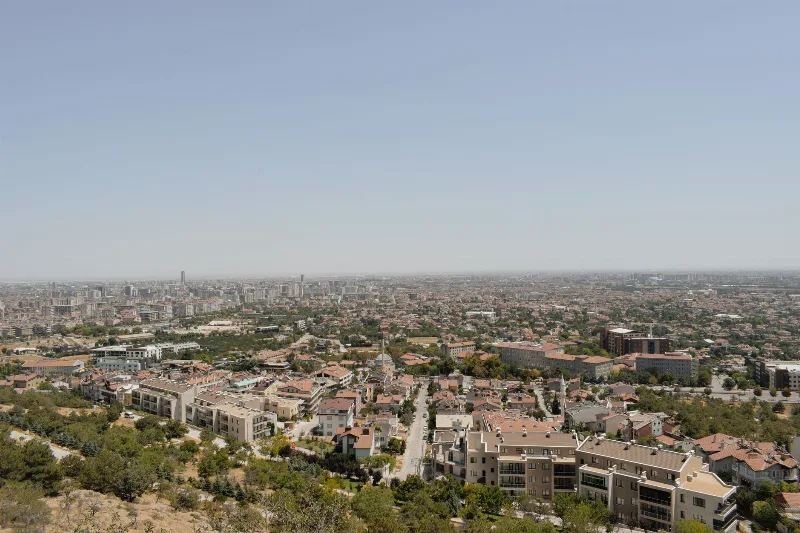
Gaziantep
Gaziantep is a major city in southeastern Türkiye and the administrative centre of its province, widely recognised as the country's gastronomic capital and known for its citadel, bazaars and the Zeugma Mosaic Museum.
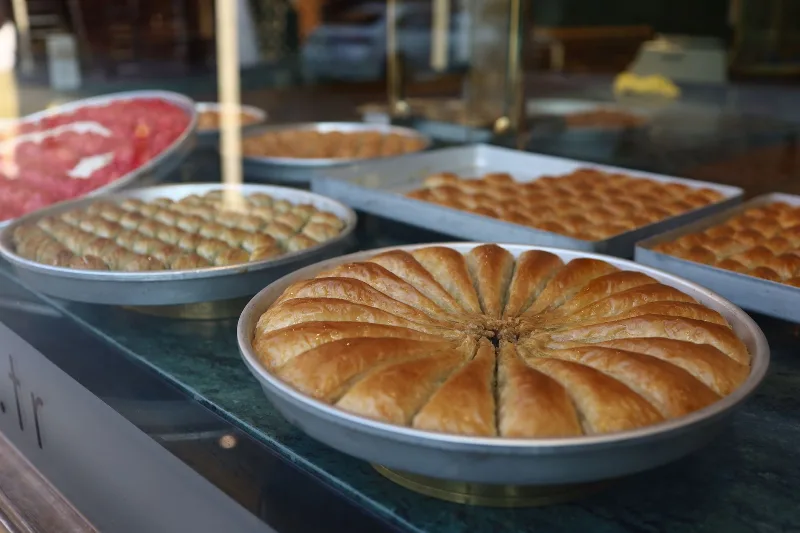
Baklava
Baklava is a traditional Turkish dessert made of layered phyllo dough, filled with nuts and sweetened with syrup. Strongly associated with Gaziantep, it is a staple of celebrations and a symbol of Turkish hospitality.
1-Day Gaziantep Route
A compact one-day route through central Gaziantep, moving from the Zeugma Mosaic Museum to the castle hill, the historic hans and bazaars, and a baklava finish in the old centre.
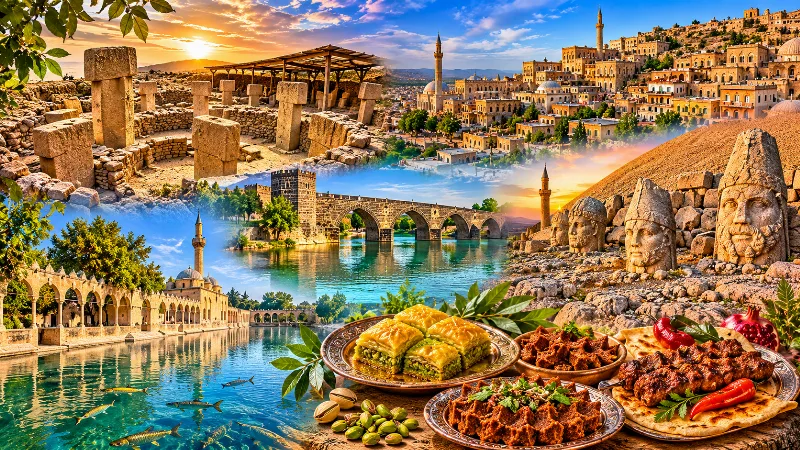
Southeastern Anatolia Region
Southeastern Anatolia is known for its ancient cities, extraordinary archaeological heritage, traditional stone architecture and rich culinary culture. From the historic streets of Mardin to the monumental landscapes of Şanlıurfa and the Euphrates River, the region reflects thousands of years of civilization.
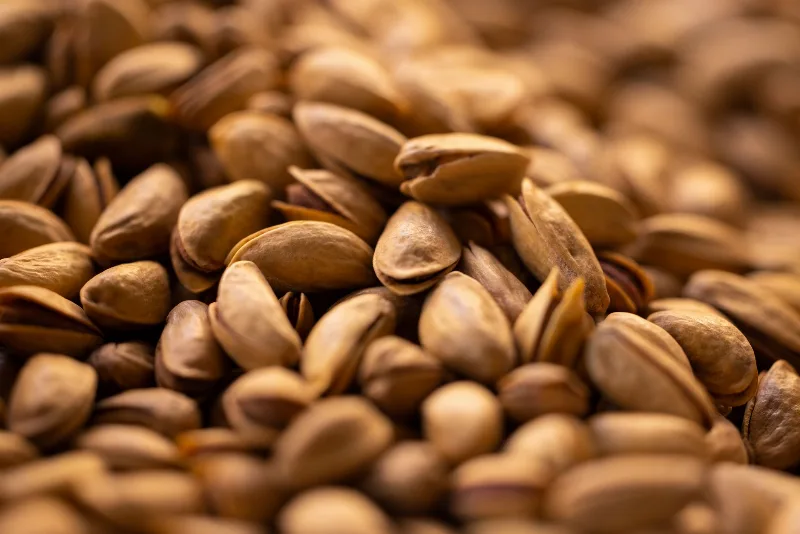
Antep Pistachios
Antep pistachios are the pistachios of Gaziantep and its surrounding plateau in southeastern Türkiye, a nut shaped by hot, dry summers and stony, limestone-rich ground.
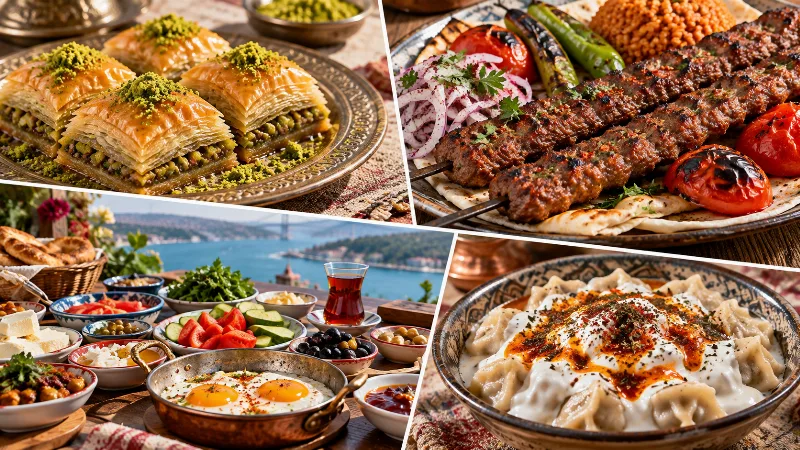
Food
Regional dishes, desserts, local ingredients and culinary traditions across Türkiye.
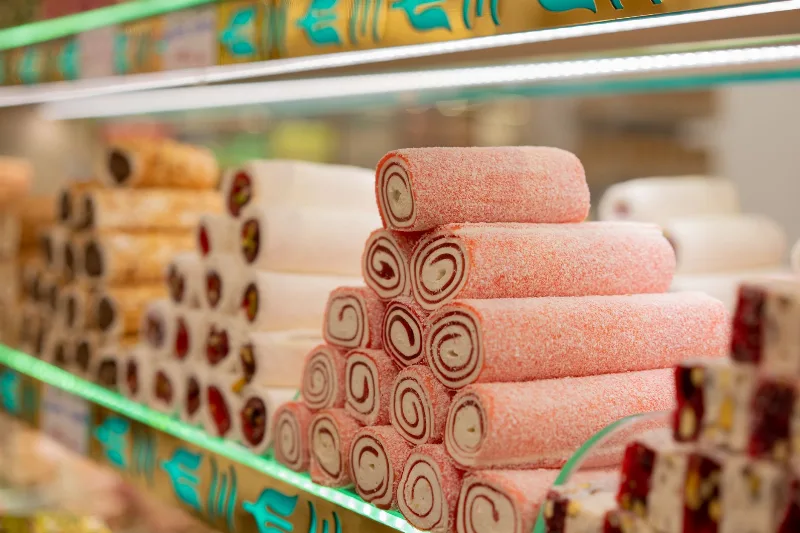
Turkish Delight and Sweets
Turkish delight sits at the heart of a layered confectionery culture that runs from Ottoman court kitchens to family tables across Türkiye. The sweets range from chewy lokum and syrup-soaked pastries to milk puddings and sesame helva.
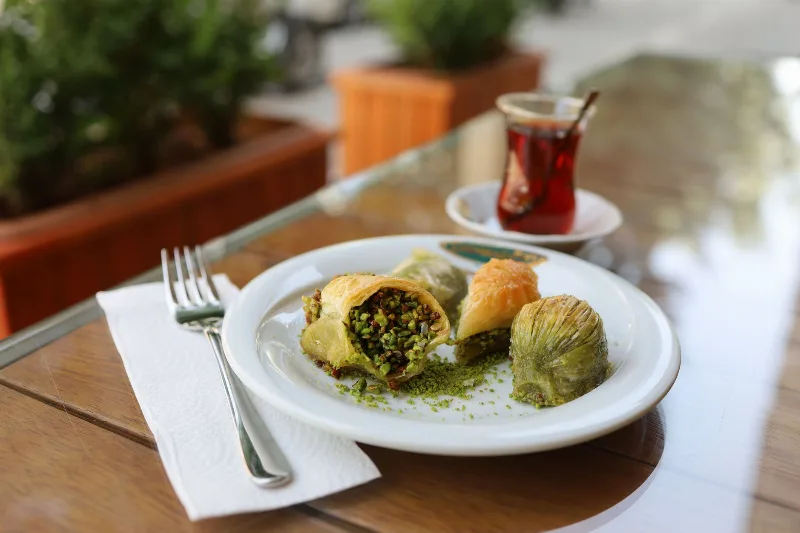
Culinary Delights of Gaziantep
Gaziantep in southeastern Türkiye is known for a regional cuisine built on pistachios, pepper paste, bulgur and slow-cooked dishes that reflect centuries of trade and local tradition.