Amasya
Amasya is a river city in the interior of Türkiye's Black Sea region, where Pontic rock tombs, Ottoman riverside mansions and apple orchards sit along the narrow valley of the Yeşilırmak.
Amasya lies in a deep, narrow valley in the interior of Türkiye's Black Sea region, where the Yeşilırmak River curves between rocky slopes. Although it belongs to the Black Sea region administratively, its climate and atmosphere feel far more inland than coastal: summers are hot and dry, winters are cold, and the hills around the city are covered with orchards and dry scrub rather than the dense, damp forests of the coast. What sets Amasya apart is the way its history is stacked vertically above the water — ancient tombs cut into the cliffs, a fortress on the crag, and a long row of Ottoman houses lined up along the riverbank.
How the Yeşilırmak Shapes the City
The Yeşilırmak — literally the "green river" — is the spine of Amasya. It runs through the valley floor and divides the settlement into two sides, linked by several bridges. In spring, fed by snowmelt from the surrounding mountains, it swells and moves quickly; by late summer it narrows and slows. Riverside promenades, tea gardens and shaded walkways follow the banks, and much of daily life in the warmer months happens within sight and sound of the water. Because the valley is tight, the city stretches lengthwise rather than spreading outward, which keeps the centre compact and walkable.
The Rock Tombs of the Pontic Kings
Amasya's most recognisable feature is the group of monumental tombs carved directly into the limestone cliffs of Mount Harşena, on the northern side of the valley, high above the rooftops. These rock-cut chambers date to the Hellenistic period and are associated with the kings of Pontus, the kingdom that once ruled this part of Anatolia. The tombs were cut into the vertical rock face, with stairways and platforms leading up to them, and they are illuminated at night, so the cliff glows above the city after dark. Below them, smaller rock-cut tombs and chambers are scattered across the same slope, showing how long the site was used.
Ottoman Mansions Along the Yalıboyu
The neighbourhood known as Yalıboyu — the "riverside" — preserves one of the most complete stretches of traditional Ottoman domestic architecture in Anatolia. These houses are typically two or three storeys, built with timber frames, plastered walls and wide overhanging bay windows that project toward the river, catching light and breeze. Many have been restored, and a few now serve as small museums or cultural spaces; the Hazeranlar Mansion is the best-known example of the style. Walking along this line of houses, with the cliffs rising behind and the river in front, is the image most visitors carry away from Amasya.
The Castle, the Princes and a Layered Past
Above the tombs, Harşena Castle crowns the rock and has been fortified and rebuilt by successive powers — Pontic, Roman, Byzantine, Seljuk and Ottoman. The city below has an unusually deep history: it was a notable centre in the Pontic kingdom and later a favoured Ottoman princely seat, where several şehzades governed as a form of training before taking the throne. That status left behind a group of religious and charitable complexes, including the late fifteenth-century mosque and külliye of Sultan Bayezid II, with its mosque, madrasa and soup kitchen arranged around the valley. On the northern slope, a rock-cut water channel linked to the legend of Ferhat and Şirin still runs along the hillside, a reminder of how carefully water was managed in a dry inland valley.
Orchards, Hills and the Surrounding Countryside
Outside the built-up centre, Amasya province opens into fertile valleys and rolling hills planted with apple, cherry and other fruit trees, along with vineyards on the lower slopes. The terrain is mountainous and, in places, rugged, with gorges and narrow passes cut by streams feeding the Yeşilırmak. Further out, near the town of Taşova, the small forest-fringed Lake Borabay offers a quiet green setting that contrasts sharply with the dry, rocky look of the valley around the city. Higher up, the Pontic ranges form a backdrop that is snow-dusted in winter and hazy with heat in midsummer.
Local Food and Produce
Amasya is closely identified with its apples, which carry a protected geographical indication and are eaten fresh, dried and pressed into juice, as well as with cherries from the surrounding orchards. The local table is typical of inland Anatolia: hearty dishes such as keşkek made with wheat and meat, stuffed vegetables, layered pastries, and simple desserts including flour halva and fruit preserves. Molasses and dried fruit appear often, reflecting the region's orchard economy rather than a coastal, seafood-based cuisine.
When to Visit
Spring and autumn are the most comfortable seasons. From roughly April to early June the valley is green, the river is full and the weather is mild, while September and October bring the apple harvest, warm days and clear light on the cliffs. High summer can be genuinely hot and dry in the confined valley, and winter is cold, sometimes snowy, though the tombs and castle lit against a winter sky have their own appeal. Mornings and evenings are the best hours for walking the riverside and climbing toward the rock tombs.
Nearby Places Worth Knowing
Within the province, Merzifon is the main transport hub and the site of the regional airport, while Suluova, Taşova and Gümüşhacıköy are smaller towns set among farmland and hills. Beyond Amasya, the Black Sea coast around Samsun is roughly a two-hour drive north and offers a completely different, humid and green landscape. To the east, Tokat is another historic inland city with its own old quarters; to the west, Çorum province holds major ancient Hittite sites; and to the south, Yozgat opens onto the drier central Anatolian plateau. Amasya works well as a base for a few days, combining a compact historic centre with easy access to the wider valleys and mountains of the region.
Discover Food in Türkiye
All food →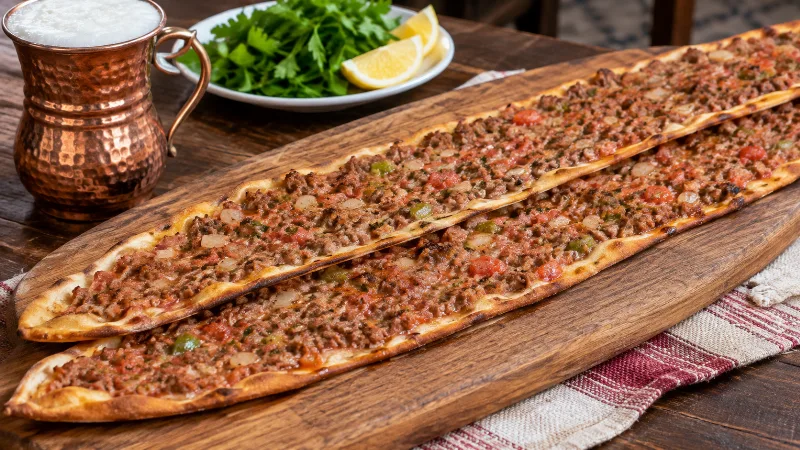
Etli Ekmek
Konya etli ekmek is a long, very thin flatbread topped with finely minced meat, onion and vegetables, then baked quickly in a high-heat oven.
Explore →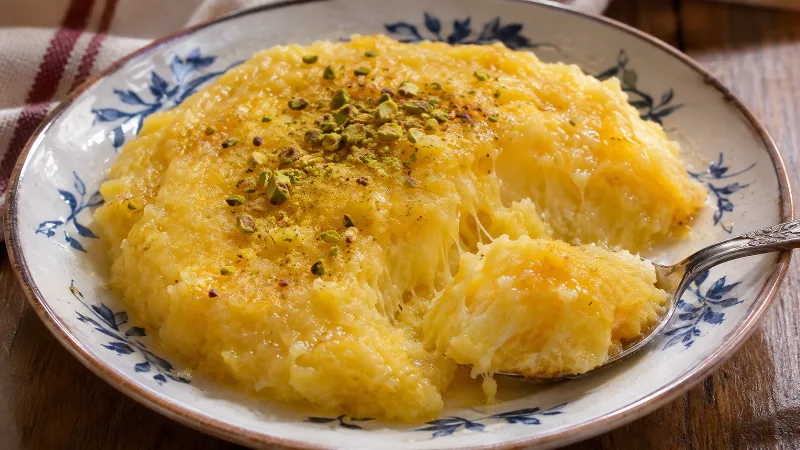
Höşmerim
Höşmerim is a traditional cheese-based sweet associated especially with Balıkesir, made by cooking fresh cheese with semolina and sugar into a soft dessert.
Explore →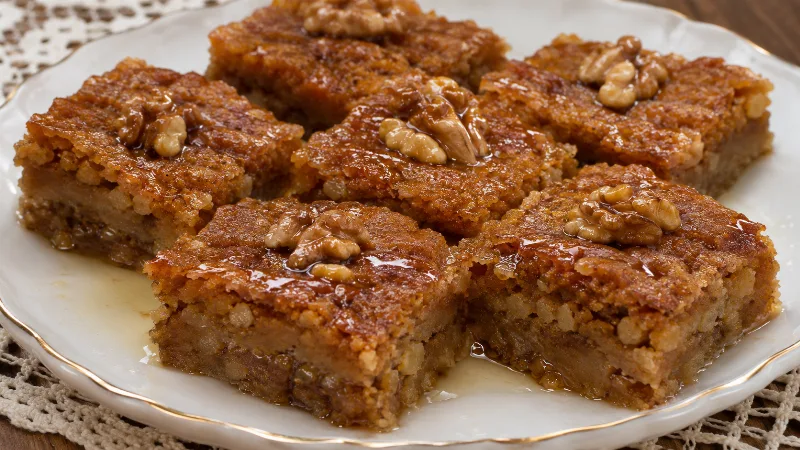
Nevzine Tatlısı
Nevzine is a traditional Kayseri dessert made with a tahini-rich dough, walnuts and a syrup commonly prepared with grape molasses.
Explore →Related content
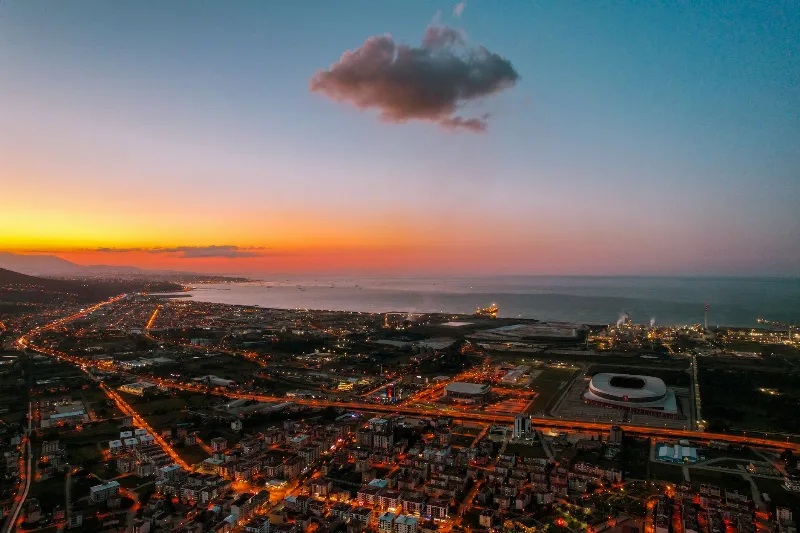
Samsun
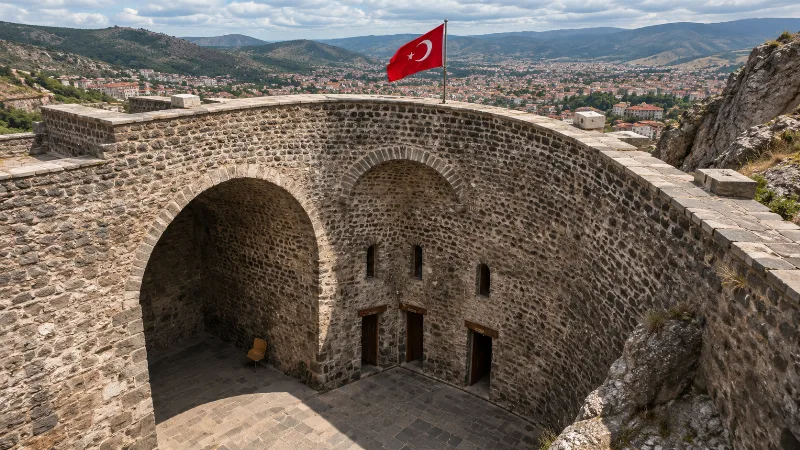
Samsun is a large Black Sea port city in northern Türkiye and the historic starting point of the Turkish War of Independence in 1919. It is a major metropolitan centre set between wide river deltas, coastal plains and the mountains of the Black Sea hinterland.
Tokat
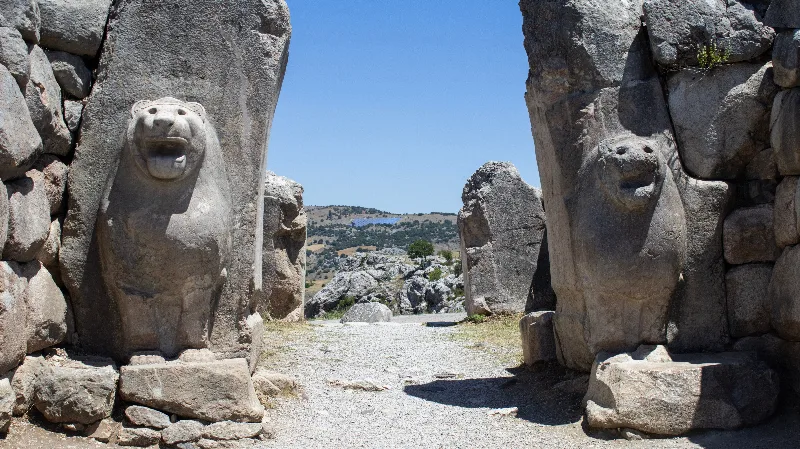
Tokat is a historic inland city in north-central Türkiye, occupying a valley between wooded mountains and agricultural plains. Its provincial capital is known for traditional houses, monuments and long-standing trading traditions. The wider province contains older towns, river landscapes and significant archaeological sites, linking the inland Black Sea region with central Anatolia.
Çorum
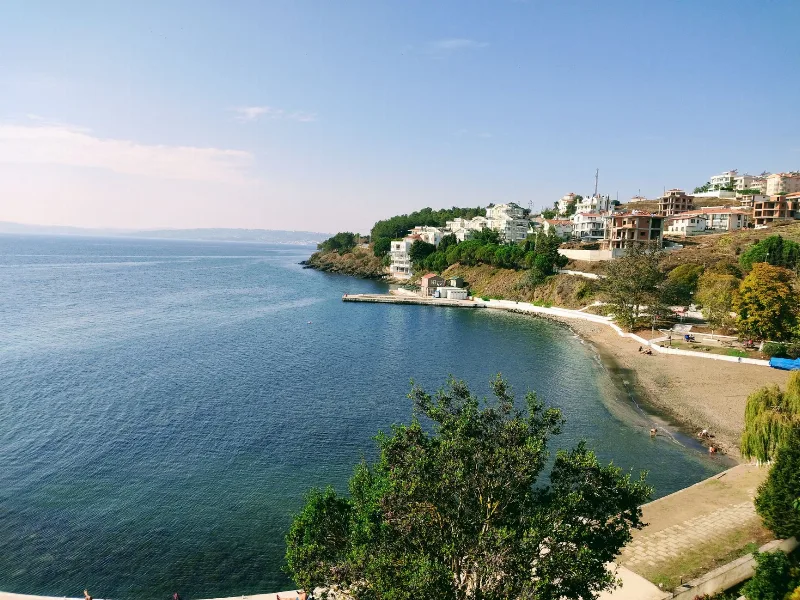
Çorum is an inland province of north-central Türkiye, recognised for its Hittite archaeological heritage and its long association with roasted chickpeas. The provincial capital is a commercial and administrative centre, while major ancient sites lie in the surrounding countryside. Çorum connects the historical landscapes of central Anatolia with the inland approaches to the.
5-Day Black Sea Coast Route
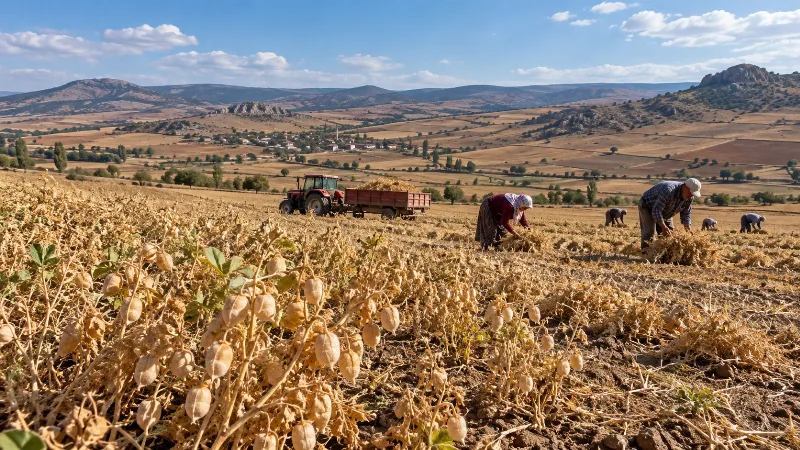
A five-day linear journey along Türkiye's central and eastern Black Sea coast, from Sinop to Trabzon, with an inland detour to Amasya and stops in Ordu and Giresun along the way.
Çorum Chickpeas
Çorum chickpeas are the chickpeas grown across the dry inland plateaus of Çorum province in northern Türkiye, where a transitional continental climate suits the crop and where the same local harvest feeds the region's well-known leblebi tradition.
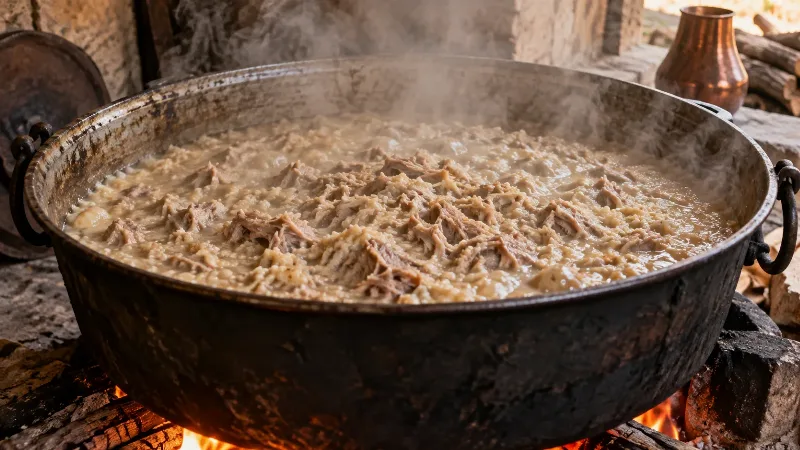
Keşkek
Keşkek is a traditional Anatolian dish made by cooking hulled whole wheat together with meat and pounding the softened mixture into a thick, dense mass. It is best known as a communal celebration food, especially at weddings.