Çorum
Çorum is an inland province of north-central Türkiye, recognised for its Hittite archaeological heritage and its long association with roasted chickpeas. The provincial capital is a commercial and administrative centre, while major ancient sites lie in the surrounding countryside. Çorum connects the historical landscapes of central Anatolia with the inland approaches to the.
Çorum is an inland province of north-central Türkiye, recognised for its Hittite archaeological heritage and its long association with roasted chickpeas. The provincial capital is a commercial and administrative centre, while major ancient sites lie in the surrounding countryside. Çorum connects the historical landscapes of central Anatolia with the inland approaches to the Black Sea region.
Geography and Landscape
The province contains broad agricultural areas, valleys and uplands between the Black Sea mountains and the central plateau. Crops are cultivated around settlements and along accessible river systems. The terrain is less coastal and generally drier than towns on the northern shoreline. Hills and open fields surrounding archaeological sites help visitors understand the geographical setting of ancient Anatolian settlements. The ancient landscape is not only a collection of excavated buildings: the position of roads, gates, sanctuaries and surrounding hills helps reconstruct how the Hittite capital operated.
History and Heritage
Çorum is particularly important for the Hittite period. Hattusa, the ancient Hittite capital near Boğazkale, is a UNESCO World Heritage Site and one of the defining archaeological locations of Anatolia. The nearby Yazılıkaya rock sanctuary contains carved reliefs associated with Hittite religious traditions. Alacahöyük provides further evidence of prehistoric and Bronze Age cultures in the region. Archaeological remains are located across different districts and periods, so visiting more than one site reveals a broader sequence of human settlement. The modern province also remains a working agricultural landscape.
The names of individual districts matter when describing Çorum: the provincial capital is only one part of a larger administrative area. Natural landmarks and historic settlements may lie well beyond the main urban centre, so the province is best understood as a collection of connected but distinct local landscapes. This distinction is useful when interpreting maps and comparing neighbouring destinations.
Places to Visit
Hattusa is the leading historical attraction, with city walls, monumental gates and remains spread over an extensive landscape. Yazılıkaya and Alacahöyük complement a visit by revealing different aspects of ancient religious and urban life. Çorum Museum presents archaeological material from the province. Within the modern capital, town streets, mosques and markets show the continuing life of the regional centre.
Local Culture and Cuisine
Roasted chickpeas, known as leblebi, are closely identified with Çorum and sold in several varieties. Traditional meals also reflect the region's grain production, meat dishes and seasonal produce. Archaeological heritage has become an important element of cultural identity, while daily commerce and agriculture remain central to the province. Local markets offer a view of living traditions outside the museum setting.
Climate and Seasons
Çorum has a largely continental climate with warm summers and cold winters. Spring brings greenery to agricultural landscapes and archaeological surroundings, while summer is often relatively dry. Autumn is a notable period of seasonal transition, and frost or snow may occur in winter. The open settings of ancient ruins can feel different from sheltered urban streets in both hot and cold weather.
Getting There and Around
Road routes connect Çorum with Ankara, Samsun and Amasya. Most major archaeological sites are outside the provincial capital, especially around Boğazkale and Alaca, so visiting them generally requires onward road travel. The distances between Hattusa, Alacahöyük and central Çorum make it useful to consider them as separate stops rather than a single city-centre walking route.
Discover Food in Türkiye
All food →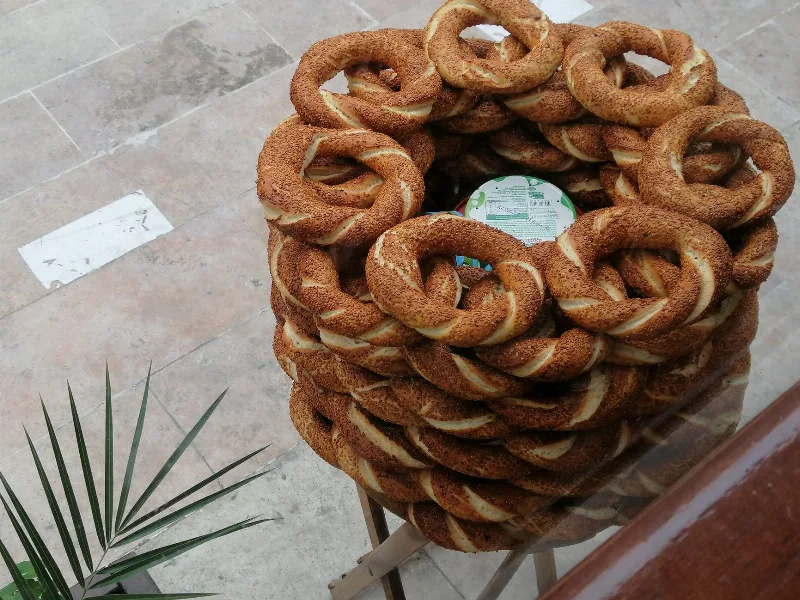
Simit
Simit is a ring-shaped Turkish bread covered in sesame seeds, strongly associated with Istanbul and sold as everyday street food. It is eaten fresh, most often with tea, and has a crisp crust around a chewy crumb.
Explore →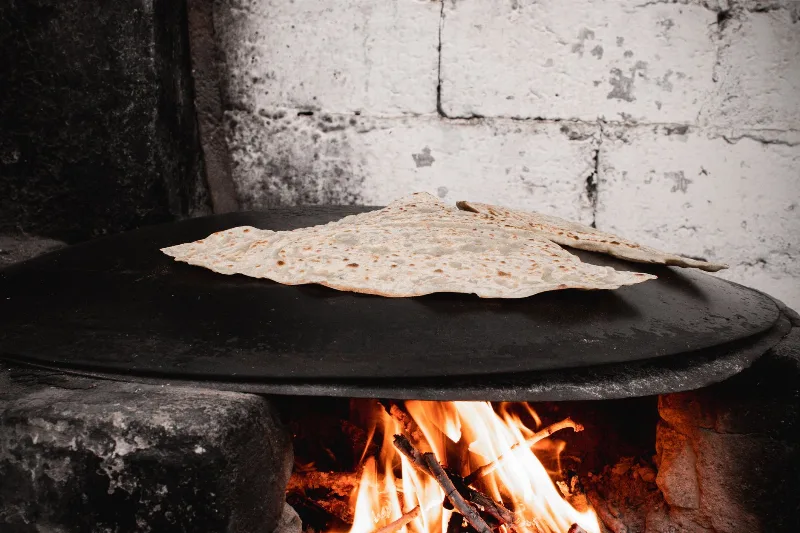
Bazlama
Bazlama is a soft, thick Turkish flatbread made from a leavened dough and cooked on a hot griddle. It is a staple of village baking across Anatolia, eaten warm with butter or used to wrap other foods.
Explore →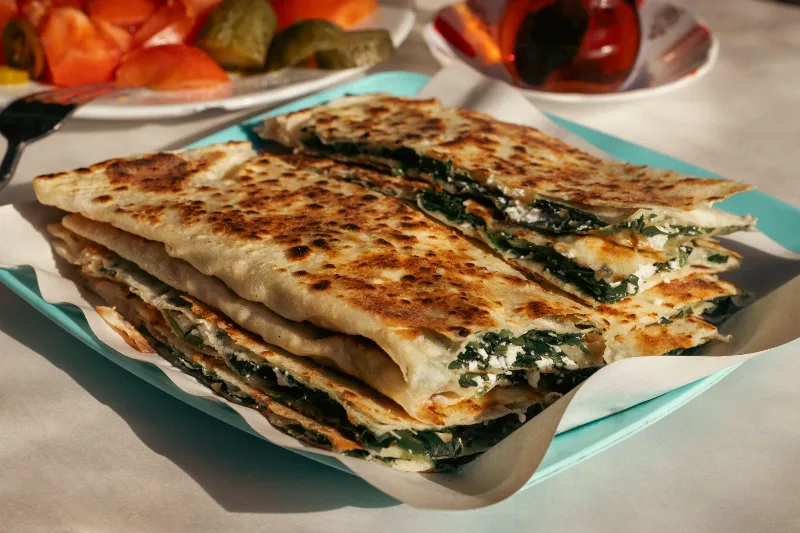
Gözleme
Gözleme is a thin, hand-rolled Anatolian flatbread folded around savory fillings such as cheese, spinach, or minced meat and cooked on a sac griddle. The article covers its regional variations, cooking method, texture, and traditional serving style.
Explore →Related content
Hattusa
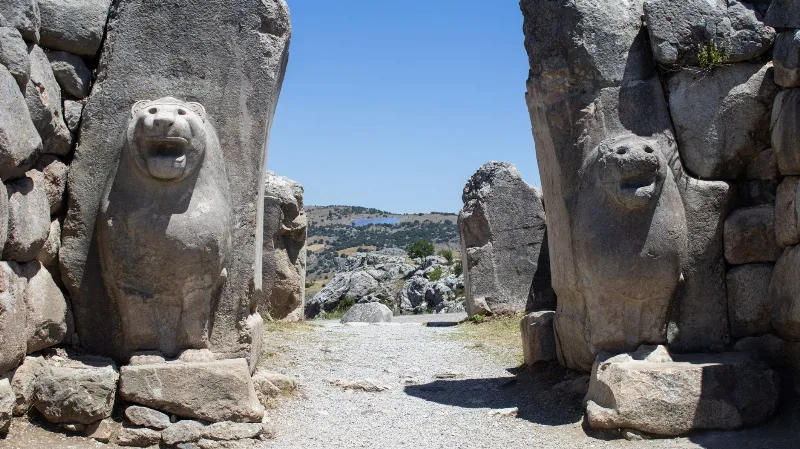
Hattusa was the capital of the Hittite Empire, located near Boğazkale in Çorum Province. Its surviving walls, gates, temples and cuneiform archives make it one of the most important Bronze Age archaeological sites in Anatolia.
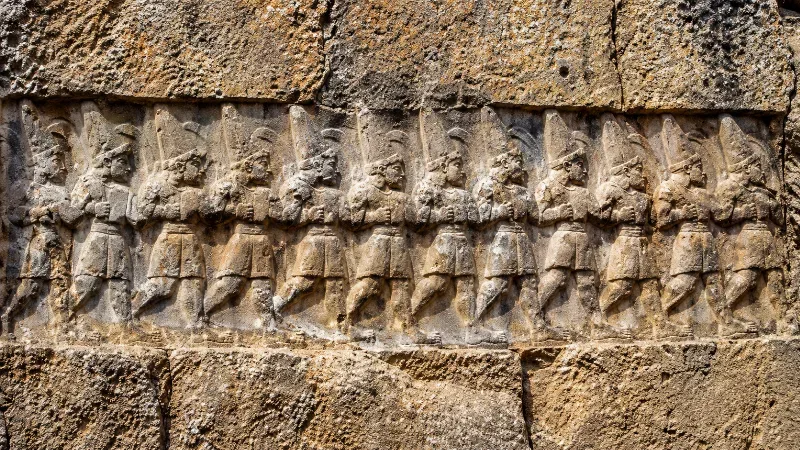
Yazılıkaya
Yazılıkaya is an open-air Hittite rock sanctuary cut into limestone near the ancient capital of Hattusa, decorated with reliefs of gods and kings and now part of a UNESCO World Heritage Site.
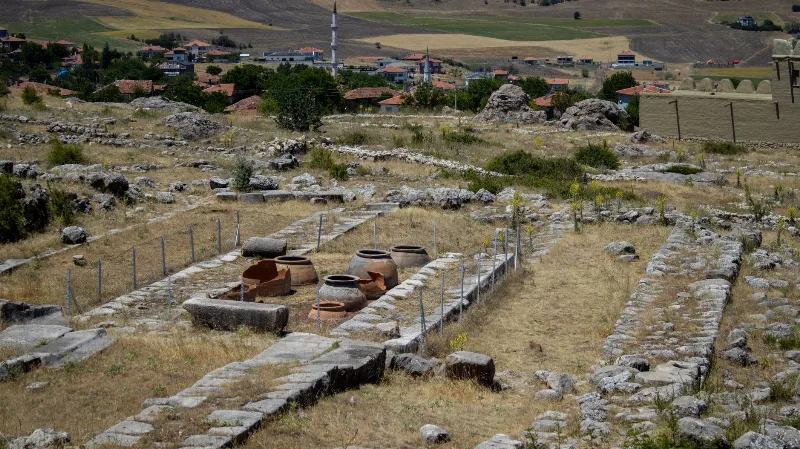
Alacahöyük
In Çorum Province, Alacahöyük preserves a long settlement sequence, elite Early Bronze Age burials and a monumental Hittite gate with carved reliefs.
The Ancient Hittite Capital of Hattusa
Hattusa, the Hittite capital in Çorum, preserves monumental gates, temples and royal buildings from one of the ancient Near East's great powers.
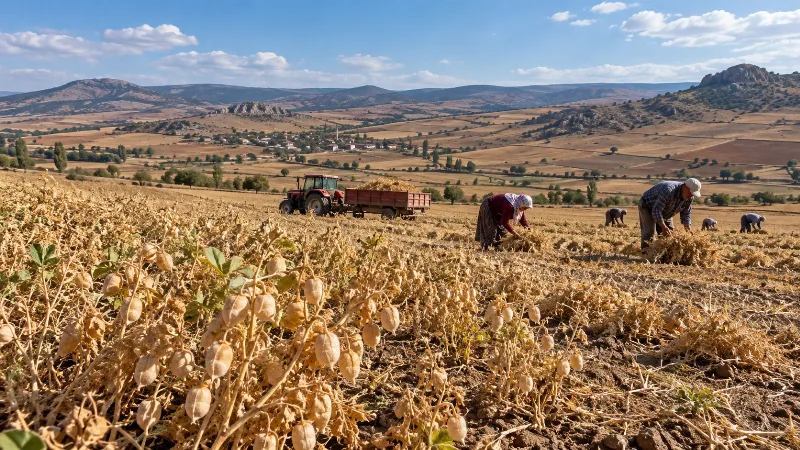
Çorum Chickpeas
Çorum chickpeas are the chickpeas grown across the dry inland plateaus of Çorum province in northern Türkiye, where a transitional continental climate suits the crop and where the same local harvest feeds the region's well-known leblebi tradition.
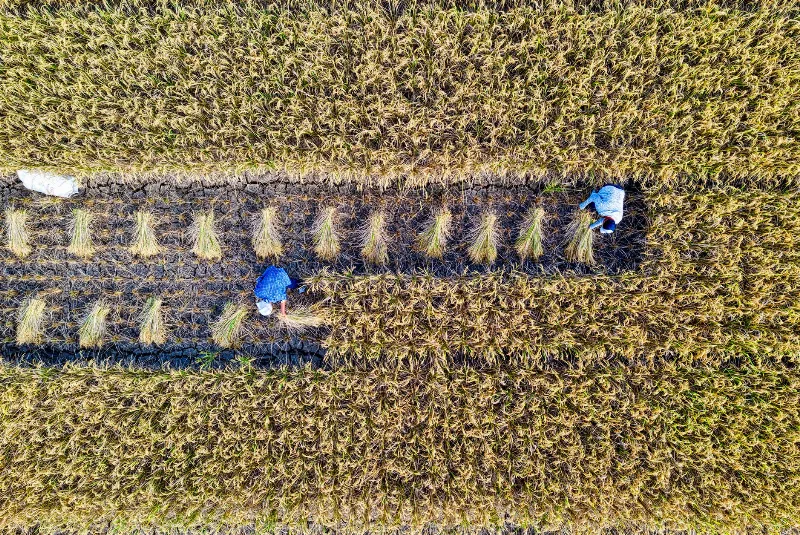
Rice Harvest in Osmancık, Çorum
Each September the rice paddies around Osmancık in Çorum Province turn golden and are harvested, a seasonal transformation tied to the Kızılırmak valley's climate and irrigation.