
Van
In Türkiye's far east, Van pairs a vast soda lake with a tenth-century island church and a local white cat known for its mismatched eyes. The city itself is a highland base of Urartian ruins, hard winters and an unusually generous breakfast table.
Van lies in the far east of Türkiye, about 1,700 metres above sea level, on the eastern shore of the lake that carries its name. The city looks out over a wide basin of steppe and stony ground, with mountain ranges on every side and the Iranian border less than a hundred kilometres away. Winters are long and cold, summers dry and bright, and the light in this thin highland air is unusually clear. The name covers both a province and its capital, and the two are difficult to separate in practice: the lake, the island and the cat that made the place famous all sit inside the provincial boundary.
A Lake With No Outlet to the Sea
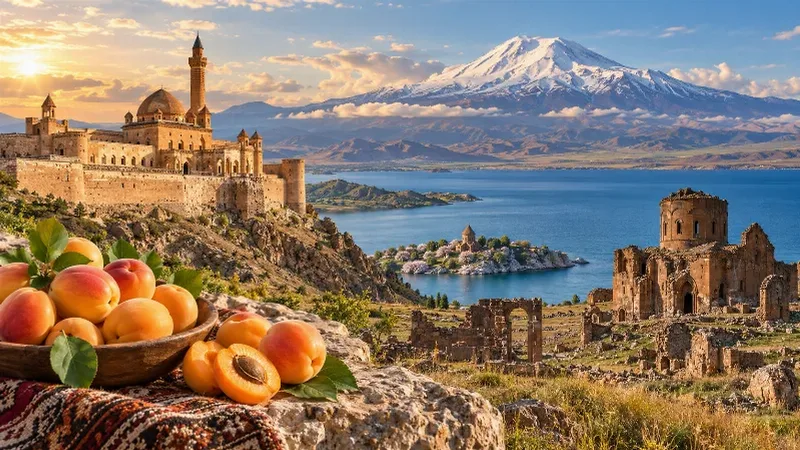
Lake Van is the largest lake in the country, spreading over roughly 3,700 square kilometres at the bottom of a closed basin. It has no outlet, so water leaves only by evaporation, and dissolved minerals have concentrated over a very long time. The result is a lake that is alkaline and lightly saline — closer to soda than to sea water. Few organisms tolerate it. The pearl mullet, a small endemic fish known locally as inci kefalı, is the only fish in the lake, and each spring it swims up the feeding streams to spawn in fresh water. That migration is watched from bridges and riverbanks, and it shapes the fishing calendar for the whole basin.
Because nothing drains away, the water level has risen and fallen many times. Older shorelines and drowned building remains have been recorded at several points around the edge, while in other periods low ground and roads have been swallowed. In a few shallows, researchers have documented microbialites — layered carbonate mounds built by micro-organisms — which give parts of the lake bed an odd, pillow-like texture.
Akdamar Island and Its Carved Church
The lake's best-known sight is a small island reached by boat from the shore near Gevaş, on the south-eastern side. Akdamar holds the Church of the Holy Cross, built between 915 and 921 for King Gagik I Artsruni, with the monk Manuel as its architect. The outside walls are covered in relief carving: biblical scenes, figures, animals and vines, with faded frescoes surviving inside. After restoration in the 2000s the church stands as a monument rather than a working place of worship, on a terraced island of almond trees with a wide view back to the mainland. The crossing takes around twenty minutes, and boats run from the Gevaş side during the season.
The Rock of Van and the Abandoned Old City
Above the modern streets, a limestone ridge about a kilometre and a half long rises straight out of the plain. This is Van Castle, an Urartian fortress first built in the ninth century BC under King Sarduri I, then enlarged by later rulers. Rock-cut tombs of Urartian kings are set into the cliff, and cuneiform inscriptions include a long trilingual text of the Achaemenid king Xerxes. Below the ridge lie the remains of the old city of Van, with Ottoman-era streets, mosques and walls that were destroyed in the First World War and then abandoned. The ruins are still empty, a short walk from the busy modern centre, and they give the place an unusual double character: a working city on one side, a silent one on the other.
The Van Cat
Van's second emblem is an animal. The Van cat is a long-haired, mostly white breed kept around the lake for centuries and best known for its eyes: many individuals have one blue and one amber, a form of heterochromia. Local tradition insists that these cats enjoy water and will paddle in the shallows, and the breed is often called the Turkish Van abroad. A breeding and research centre at the city's university keeps and studies the cats, which remain a matter of local pride. They should not be confused with other Turkish cats, although white cats with mismatched eyes turn up in several parts of the country.
Breakfast, Herbed Cheese and Lake Fish
Van is famous across Türkiye for its breakfast. A Van kahvaltısı arrives as a table crowded with small dishes: herbed cheese made with wild herbs, honey and clotted cream, olives, walnuts, jams, eggs cooked with flour and butter, roasted flour, bread from a tandır oven and continuous glasses of tea. Later in the day the local kitchen leans on yoghurt and grains — keledoş, ayran aşı and other sour, yoghurt-based dishes, with dried yoghurt used as a seasoning. Pearl mullet appears grilled or fried when fishing is allowed; the catch is restricted during the spawning run, so it is a seasonal pleasure rather than a year-round staple.
Seasons and When to Go
The climate is continental and highland. Winters are cold, often well below freezing, with snow in the city and heavy snow on the surrounding mountains; the open lake water rarely freezes because of its mineral content, though bays and shallow edges can ice over during severe spells. Spring arrives late, and May and June are the greenest weeks, with the fish migration in the streams and changeable but mild weather. Summer is dry and warm, with daytime temperatures in the high twenties and cool evenings. September and October are settled, clear and comfortable, and the autumn light across the water and mountains is a reason to travel in itself. Mid-winter visits are possible, but snow can close the mountain roads.
Around the Shore and Beyond
- Tatvan — on the western shore in Bitlis province, linked to Van by a ferry across the lake and used as a base for the volcanic massif of Nemrut Dağı and its crater lake.
- Ahlat — further west on the same shore, known for a Seljuk-era cemetery of tall, carved tombstones.
- Süphan Dağı — a volcano of over 4,000 metres north of the lake, visible from much of the basin.
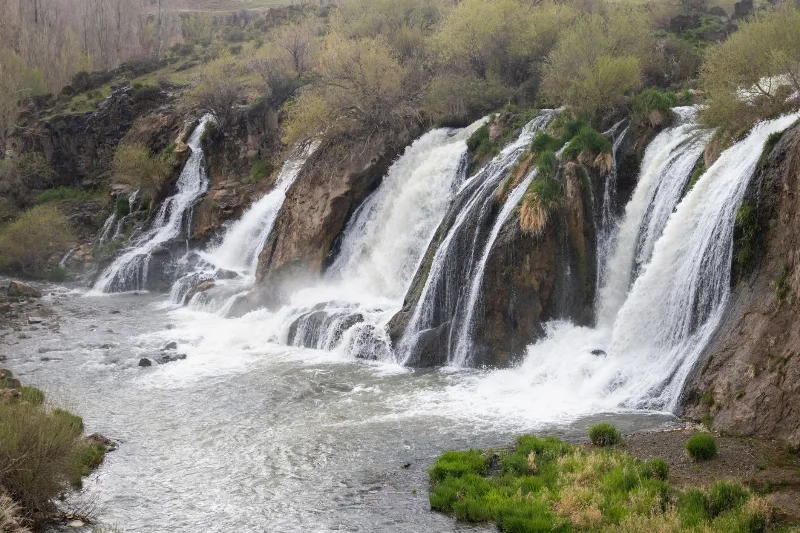
- Muradiye — a district north-east of the lake where the Bendimahi river drops over a series of waterfalls.
- Hoşap — a castle of the 1600s standing on a rock above a valley in Gürpınar district.
- Çavuştepe — an Urartian fortress and settlement site near Gürpınar.
- Gevaş — the south-eastern shore, with the Halime Hatun tomb and the boat landing for Akdamar.
- Erciş — the northern shore town, close to the streams where the pearl mullet runs each spring.
Further out, Doğubayazıt and the İshak Paşa palace in Ağrı province lie to the north-east, with Ağrı Dağı on the way; to the south the roads climb towards Hakkari and the mountains along the Iraqi border. The Kapıköy crossing, south-east of the city, leads into Iran.
Crossing the Lake and Moving On
Van has an airport with domestic flights and is reached by long-distance road from almost every direction. A ferry connects the city with Tatvan on the opposite shore, and the road around the lake passes Ahlat, Nemrut Dağı and the western bays. Most of the places described here — the island, the castle, the old city, the waterfalls — sit within an hour or two of the centre by road, which makes the city a practical base rather than simply a stopping point on the way east.
Discover Food in Türkiye
All food →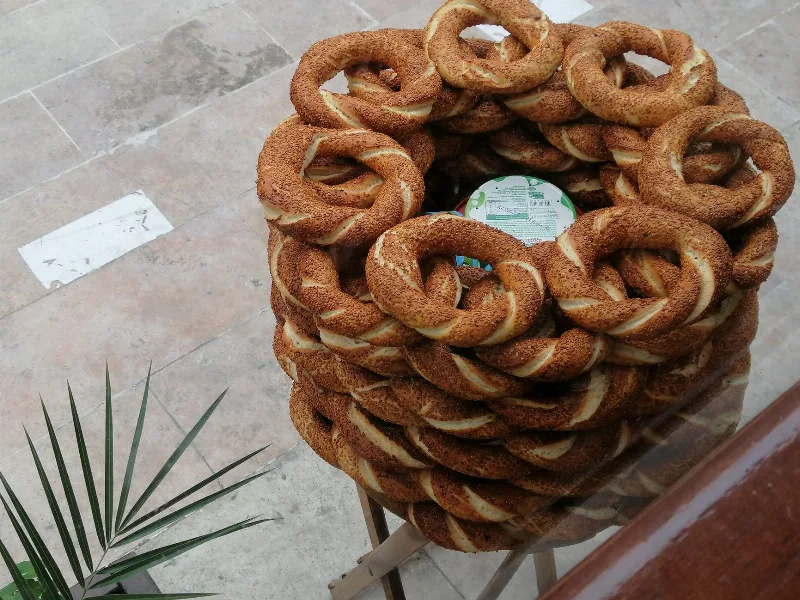
Simit
Simit is a ring-shaped Turkish bread covered in sesame seeds, strongly associated with Istanbul and sold as everyday street food. It is eaten fresh, most often with tea, and has a crisp crust around a chewy crumb.
Explore →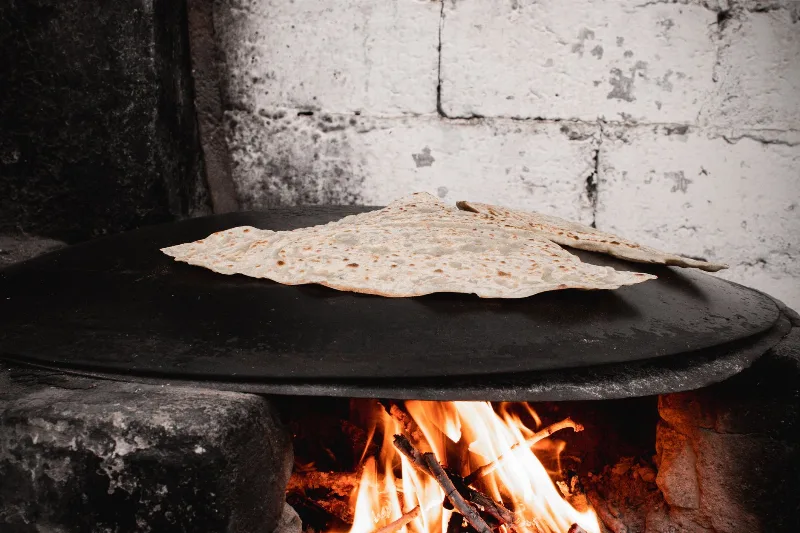
Bazlama
Bazlama is a soft, thick Turkish flatbread made from a leavened dough and cooked on a hot griddle. It is a staple of village baking across Anatolia, eaten warm with butter or used to wrap other foods.
Explore →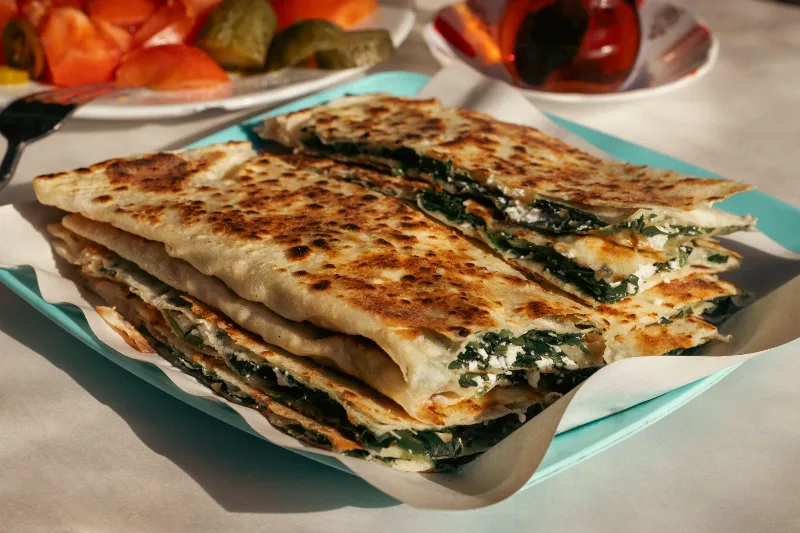
Gözleme
Gözleme is a thin, hand-rolled Anatolian flatbread folded around savory fillings such as cheese, spinach, or minced meat and cooked on a sac griddle. The article covers its regional variations, cooking method, texture, and traditional serving style.
Explore →Related content
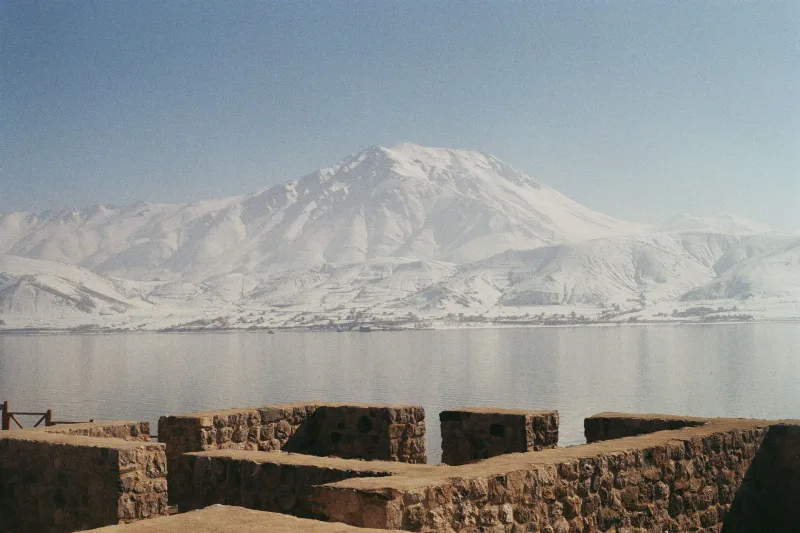
Lake Van
Lake Van is Turkey's largest lake, a vast alkaline soda lake with no outlet, set in the volcanic highlands of Eastern Anatolia at around 1,640 metres. Its unusual chemistry, depth and islands give it a character unlike any other lake in the country.
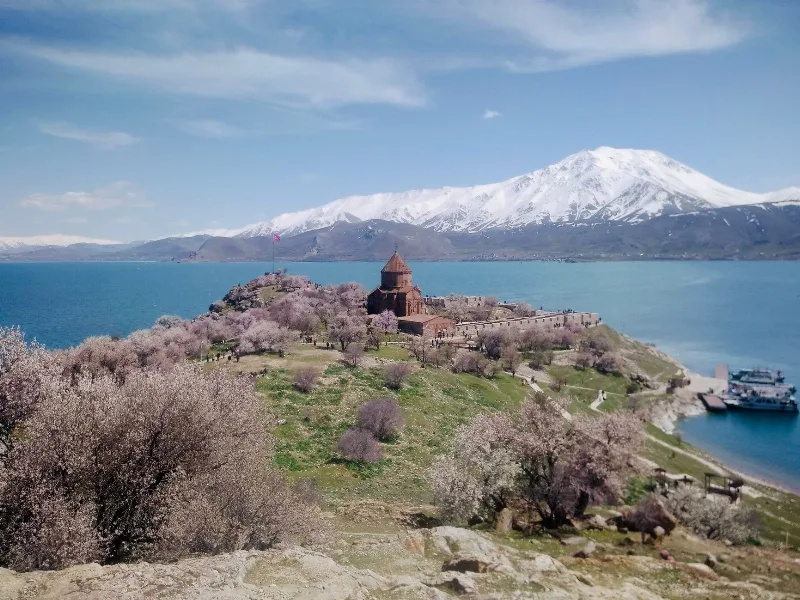
Lake Van
Lake Van is Turkey's largest lake and the world's largest soda lake, located in Eastern Anatolia. It is known for Akdamar Island and its 10th-century Armenian Church of the Holy Cross.
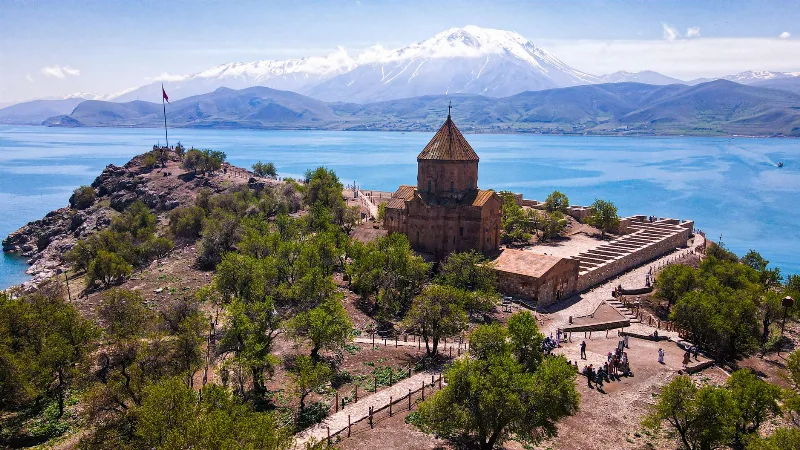
Akdamar Island
Akdamar Island is the largest island in Lake Van, eastern Turkey, and holds the 10th-century Armenian Cathedral of the Holy Cross, whose outer walls are covered in carved biblical reliefs. It is reached by boat from a pier near Gevaş and is usually visited as a day trip from Van.
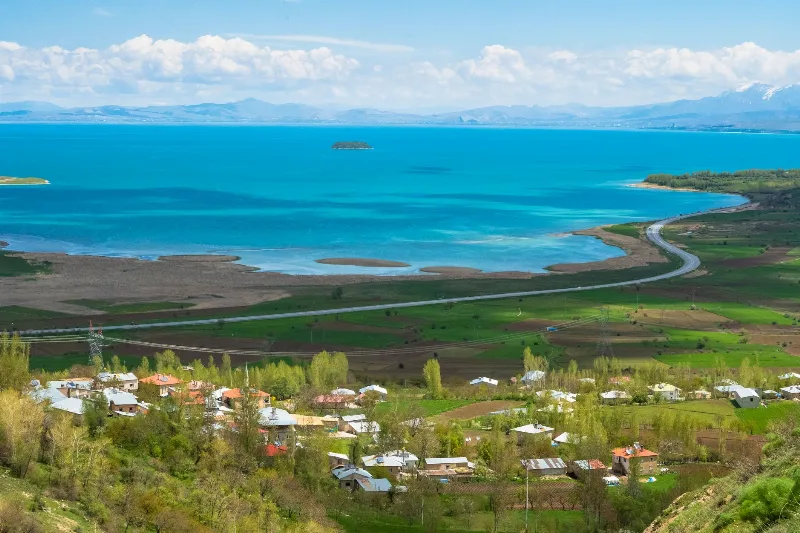
Lake Van and Surrounding Nature
Discover the tranquil beauty of Lake Van, Türkiye's largest lake, and its picturesque surroundings in eastern Türkiye.
Van's Spring Festival
Spring in Van brings Nevruz and Hıdırellez celebrations, blooming landscapes around Lake Van, and fresh local foods. Discover how eastern Türkiye welcomes the season with culture, nature, and community traditions.
Eastern Anatolia Region
Eastern Anatolia is a region of majestic mountains, vast highlands, beautiful lakes and ancient cultural heritage. Home to Mount Ararat, Lake Van and historic settlements, it offers some of Türkiye's most dramatic natural landscapes alongside distinctive architecture, local traditions and regional cuisine.