
Akdamar Island
Akdamar Island is the largest island in Lake Van, eastern Turkey, and holds the 10th-century Armenian Cathedral of the Holy Cross, whose outer walls are covered in carved biblical reliefs. It is reached by boat from a pier near Gevaş and is usually visited as a day trip from Van.
Akdamar Island is a small rocky island in Lake Van, in Van Province in eastern Turkey, and it is the largest island in the lake. Its importance rests on a single surviving building: the Cathedral of the Holy Cross, an Armenian church completed in the 10th century whose outer walls are covered with carved stone reliefs, making it one of the most distinctive monuments of medieval Armenian architecture. Boats reach the island from a pier on the lake's southern shore near Gevaş, and most visitors travel there from Van city, roughly 40 kilometres to the east.
Where Akdamar Island sits in Lake Van
Lake Van is the largest lake in Turkey and a soda lake, with water that is saline and alkaline rather than fresh. The island lies close to the southern shore, and the land behind it rises quickly towards the mountains around Gevaş, including the prominent peak of Artos Dağı. The island itself covers roughly 0.7 square kilometres. It is not flat: a rocky mass rises from the water and levels off into terraces and small plateaus, with grass, scrub and scattered trees on the slopes. There are no villages or permanent residents; the island is given over entirely to the monument and its immediate surroundings.
The surface of the lake stands at around 1,640 metres above sea level, so the air is noticeably thinner and cooler than the altitude figures of many other Turkish destinations might suggest. The lake moderates temperatures but also produces sudden wind and haze, and the colour of the water shifts from deep blue to a pale, milky tone depending on light and mineral content.
The Cathedral of the Holy Cross: construction and design
The church was commissioned by King Gagik I Artsruni, ruler of the Kingdom of Vaspurakan, and built between 915 and 921 by the architect Manuel. It is a centralised, domed church planned on a four-lobed, or tetraconch, scheme: a square core with four deep apses radiating outwards and a dome above the centre. This compact, sharply modelled form is widely regarded as one of the high points of Armenian church architecture. From the 12th century the church served as the cathedral of the Armenian Catholicosate of Aghtamar, an independent patriarchal see based on the island.
The carved reliefs on the outer walls
What sets the church apart is its exterior sculpture. Rather than leaving the masonry plain, the builders covered the facades with a programme of reliefs in bands and panels. These include scenes that are usually identified as Adam and Eve, Jonah being swallowed by the sea creature, David and Goliath, Daniel in the lions' den, Samson and the lion, and Abraham and Isaac. A well-known panel shows a crowned king, understood to be Gagik, presenting a model of the church.
Between and around the narrative scenes are animals and plants: lions, goats, sheep, birds, hunting episodes, vine scrolls and geometric borders. Not every figure has a settled interpretation, and scholarly readings of some panels differ, but the overall effect is a dense, almost pictorial skin of stone that is unusual for a building of this date.
Frescoes inside the church
The interior was also painted. Sections of fresco survive on the walls and in the dome, generally identified as depicting Christ, the Virgin, apostles and other figures, along with a portrait associated with King Gagik. Much of the painting has been lost or damaged through weathering and long periods when the building stood open and unused. What remains is partial, so the interior reads differently from the exterior: quiet, bare stone in places, with painted passages appearing suddenly on specific surfaces.
Monastery, abandonment and restoration
A monastic complex grew up around the church, and over the centuries the island supported buildings beyond the cathedral itself, including structures associated with the catholicosate and the community that lived there. Most of these are now ruins, visible as foundations, wall stubs and traces of rooms scattered across the terraces. The see declined through the 19th century as the region's Armenian population was reduced, and the island was abandoned in the early 20th century.
The church stood exposed for decades. Between 2005 and 2007 it was restored by the Turkish state and reopened as a monument and museum. Since 2010 an annual religious ceremony has been permitted at the site. Visitors should understand that they are seeing a restored historic building functioning as a museum, not an active parish church with regular services.
What you actually see on the island
- The restored church itself, with its rebuilt dome and the full circuit of exterior reliefs, best examined by walking slowly around the building.
- The carvings at eye level, where details of faces, animals and vine ornament are clearly legible; higher panels are easier to read from a short distance.
- Ruined monastery walls and foundations on the terraces above and around the church.
- Wide views across Lake Van towards the southern shore and the mountains near Gevaş.
- Stone paths, steps and the small landing jetty where boats tie up.
Getting there and practical visiting notes
Access is by boat only. The departure point is a pier on the southern shore, reached by road from Van along the D300 towards Gevaş. The crossing takes roughly twenty to thirty minutes in calm conditions. Boats do not run to a fixed schedule; departures depend on demand and on the weather, and sailings can be suspended when the lake is rough. In quiet periods you may have to wait for a boat to fill before it leaves.
On the island the ground is uneven. The route from the jetty up to the church involves a stepped, stony path, so sturdy footwear is more useful than sandals, and wheelchair access is not available. There is very little shade, and facilities are minimal, so it makes sense to carry water and sun protection. Photography of the exterior is straightforward; visitors should treat the interior of a historic church with the usual restraint. Expect to spend a couple of hours on the island including the walk around the church.
Seasons, weather and the best time to visit
Spring, from April to June, and early autumn, in September and October, are generally the most comfortable periods. Summer days in July and August can be hot and glaring on a largely bare island, and winter brings cold, wind and snow on the surrounding mountains. In very cold winters parts of the lake near the shore can freeze and crossings may be disrupted, so a visit between late autumn and early spring should be planned with some flexibility. Mornings tend to be calmer on the water than afternoons, when wind often picks up.
Related places in the same part of Van
A trip to Akdamar is easily combined with other sites in the area. Van city has the rock of Van Castle, the Urartian fortress of Tuşpa, rock-cut tombs and the Van Museum, which holds material from the wider region. East of Van, Hoşap Castle stands above its village in Gürpınar district, and the Urartian fortress of Çavuştepe lies further south near Gürpınar. To the north, the Muradiye waterfalls and the surrounding countryside make a separate excursion. The town of Gevaş itself, on the road to the boat pier, contains a Seljuk-era tomb. Across the lake, on the western shore in Bitlis Province, the Seljuk cemeteries and tombs of Ahlat belong to the same broader historical landscape.
Related content
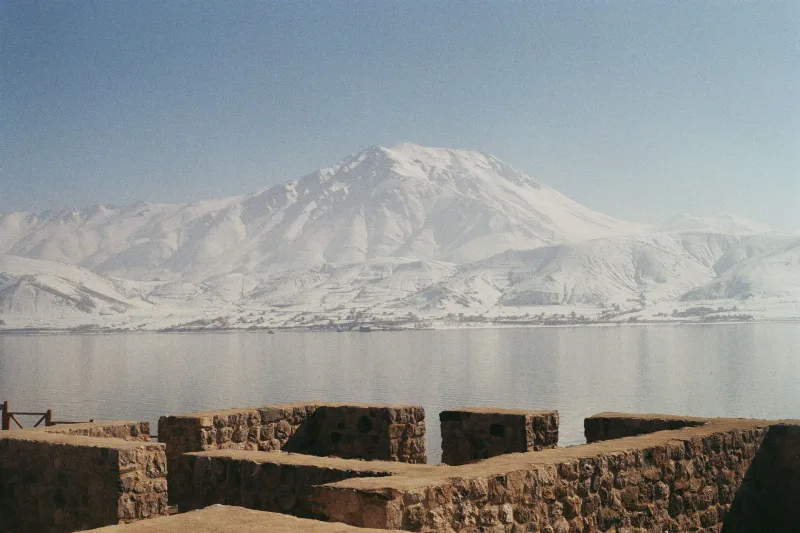
Lake Van
Lake Van is Turkey's largest lake, a vast alkaline soda lake with no outlet, set in the volcanic highlands of Eastern Anatolia at around 1,640 metres. Its unusual chemistry, depth and islands give it a character unlike any other lake in the country.
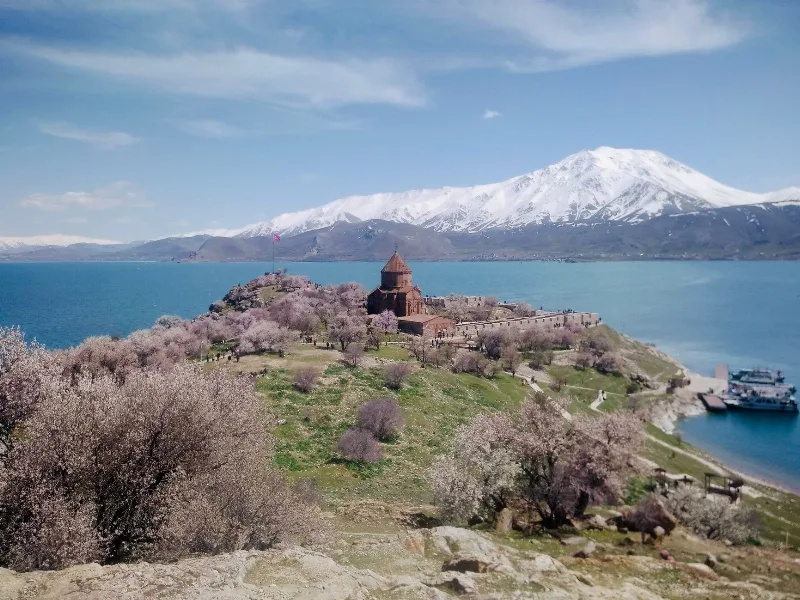
Lake Van
Lake Van is Turkey's largest lake and the world's largest soda lake, located in Eastern Anatolia. It is known for Akdamar Island and its 10th-century Armenian Church of the Holy Cross.
Van's Spring Festival
Spring in Van brings Nevruz and Hıdırellez celebrations, blooming landscapes around Lake Van, and fresh local foods. Discover how eastern Türkiye welcomes the season with culture, nature, and community traditions.
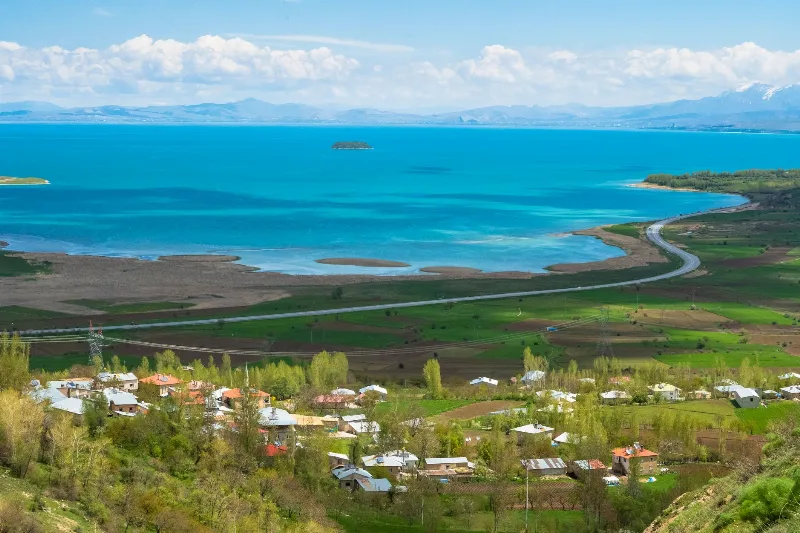
Lake Van and Surrounding Nature
Discover the tranquil beauty of Lake Van, Türkiye's largest lake, and its picturesque surroundings in eastern Türkiye.
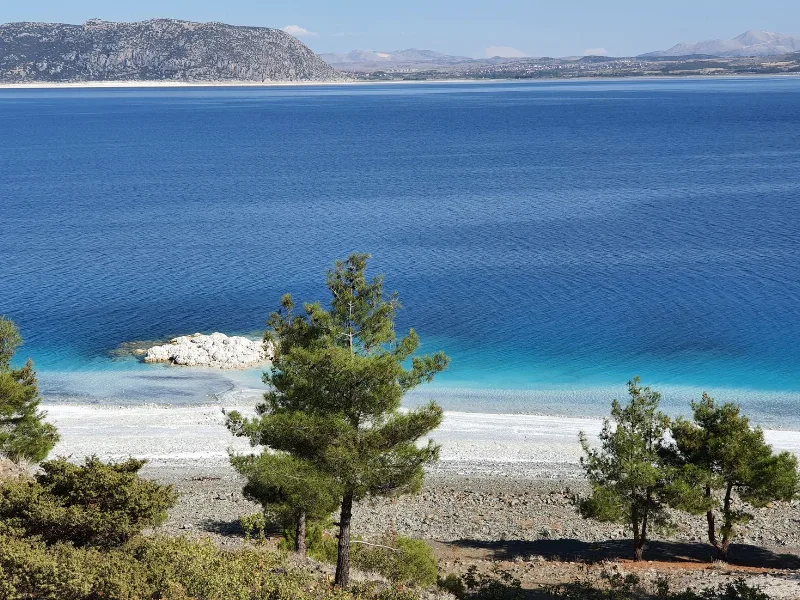
The Serene Lakes of Türkiye
Türkiye’s lakes range from vast soda lakes to salt flats and freshwater basins, each offering calm landscapes and rich wildlife. This page introduces notable lakes across different regions and their seasonal character.
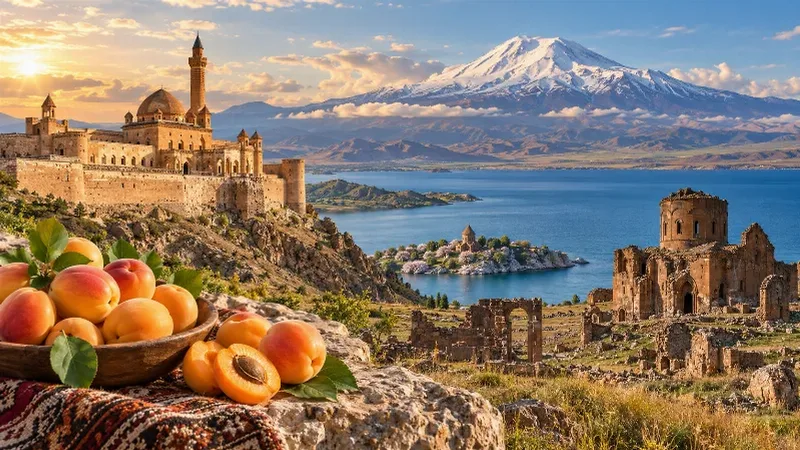
Eastern Anatolia Region
Eastern Anatolia is a region of majestic mountains, vast highlands, beautiful lakes and ancient cultural heritage. Home to Mount Ararat, Lake Van and historic settlements, it offers some of Türkiye's most dramatic natural landscapes alongside distinctive architecture, local traditions and regional cuisine.