
The Significance of the Sümela Monastery in Trabzon
STORIES FROM TÜRKİYE
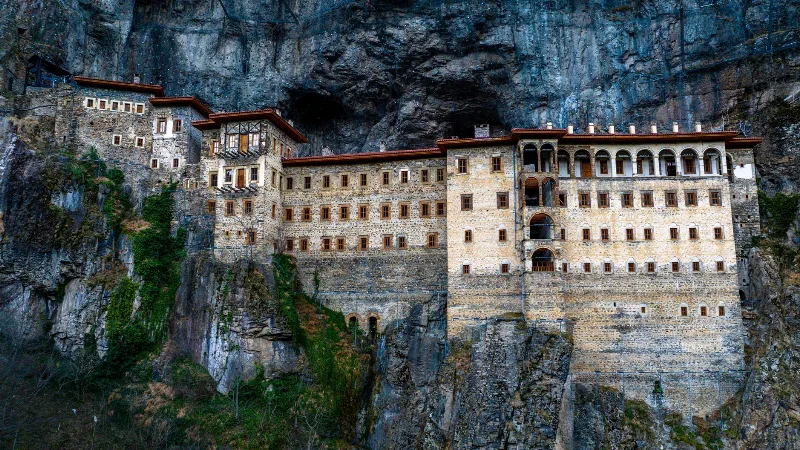
High on the slopes of the Altındere Valley in Trabzon province, a long façade of stone walls and wooden balconies clings to a near-vertical cliff. This is Sümela Monastery, one of the most recognisable religious monuments in Türkiye and a defining landmark of the eastern Black Sea region. Its position, roughly 1,200 metres above sea level and far above the valley floor, has shaped both its history and its atmosphere.
A Monastery Built into the Cliff
Sümela sits in the Maçka district of Trabzon, inside Altındere Valley National Park. The complex spreads along a narrow ledge in the rock, so that its buildings seem to grow out of the mountain rather than rest upon it. From below, the stacked rooms and the pale wall facing the valley form a striking profile against dark forest.
Inside, the site includes a rock-cut church, several small chapels, monastic cells, a kitchen, a cistern, storerooms and a library. A long aqueduct once carried water along the cliff face, and a steep stone staircase links the monastery to the valley floor. The church interior is decorated with frescoes, some of them well preserved, showing scenes and figures central to Orthodox tradition.
Legend and Early Origins
Tradition connects the foundation of Sümela to two monks, Barnabas and Sophronios, who are said to have arrived in the area in the late fourth century. According to the story, they discovered an icon of the Virgin Mary in a cave on the cliff and built a small chapel around it. That modest beginning is generally accepted as the origin of the larger complex that developed over the following centuries.
The name is usually explained through the Greek phrase Panagia tou Melas, meaning the All-Holy Virgin of the Black Mountain, a reference to the dark, forested slopes surrounding the site. The monastery's treasured icon, attributed by tradition to Luke the Evangelist, made the place a destination for pilgrims across the Byzantine world.
Faith, Privilege and Continuity
During the Byzantine period, Sümela received support from emperors and grew into an important religious and cultural centre. Its remote position on a cliff also offered a degree of protection, and the community gradually accumulated land, dependencies and influence in the surrounding valleys.
After the region came under Ottoman rule, the monastery continued to function. Ottoman sultans issued decrees confirming its rights and properties, and the community maintained its library, scriptorium and school. This continuity over many centuries is part of what makes the site significant: it reflects the layered religious history of the Black Sea highlands.
Monastic life at Sümela ended in 1923, when the population exchange between Greece and Türkiye brought the resident community to a close. The buildings were left empty and, over the decades that followed, suffered from weathering, vandalism and the difficult conditions of the cliff setting.
Restoration and Renewed Interest
Concerns about falling rock led to a closure of the site in 2015, followed by an extensive restoration programme. Sections of the monastery were reopened to visitors in stages, with full access restored by 2021. Work focused on stabilising the rock, repairing paths and protecting the frescoes and masonry.
Since 2010, permission has been granted for an annual Orthodox liturgy at the monastery on 15 August, the feast of the Dormition of the Virgin. The ceremony draws visitors from Türkiye and abroad and underlines the site's continuing role as a place of religious meaning, not only a historic monument.
The Valley and the Villages Below
Altındere Valley National Park protects a dense landscape of pine, fir and spruce, crossed by streams and small waterfalls. Walking routes lead from the valley floor up towards the monastery, and the surrounding forest changes character with the seasons, from deep summer green to autumn gold and winter snow.
The nearby town of Maçka serves as the gateway to the valley, while villages such as Hamsiköy are known for their high pastures, cool air and traditional rice pudding. Trabzon's regional cooking reflects the Black Sea climate: cornmeal dishes such as kuymak, freshwater and sea fish including hamsi, and the herb-rich vegetable plates typical of the region.
Sümela is closely tied to this wider landscape of forest, mountain and village life. A visit is as much about the valley and its communities as it is about the cliffside buildings, and the two together explain why the monastery has remained such a meaningful symbol for Trabzon and for Türkiye's Black Sea coast.
Historic places
Explore history →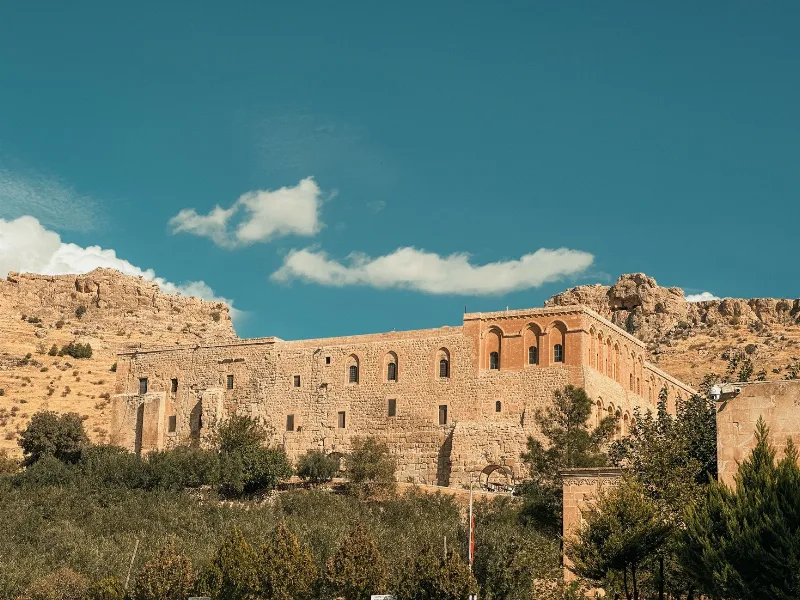
Alahan Monastery
Alahan Monastery is a 5th-century early Christian complex in the Taurus Mountains of Mersin Province, Türkiye, whose basilicas, baptistery, colonnade and rock-cut tombs preserve the plan of a late antique monastery.
Explore →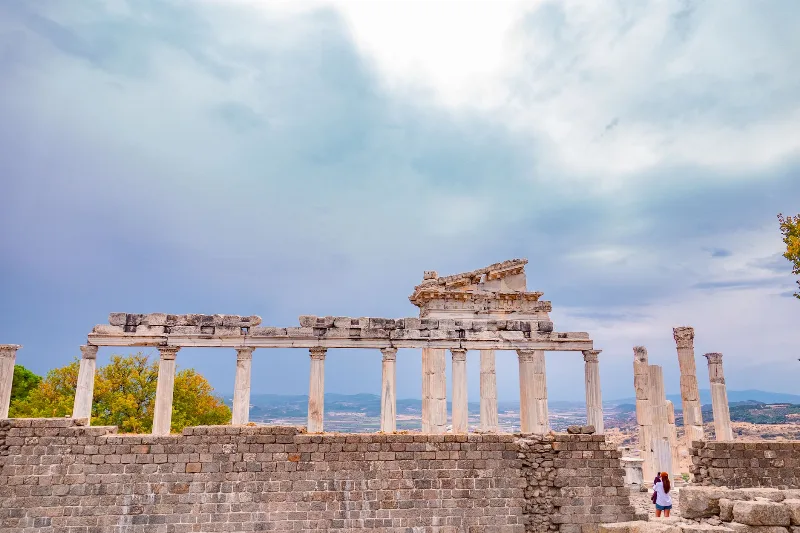
Pergamon
Pergamon was the Hellenistic capital of the Attalid dynasty in western Türkiye, built around a steep acropolis above the modern town of Bergama. Its Great Altar, theatre and Sanctuary of Asclepius make it one of the most important archaeological sites in Anatolia and a UNESCO World Heritage Site.
Explore →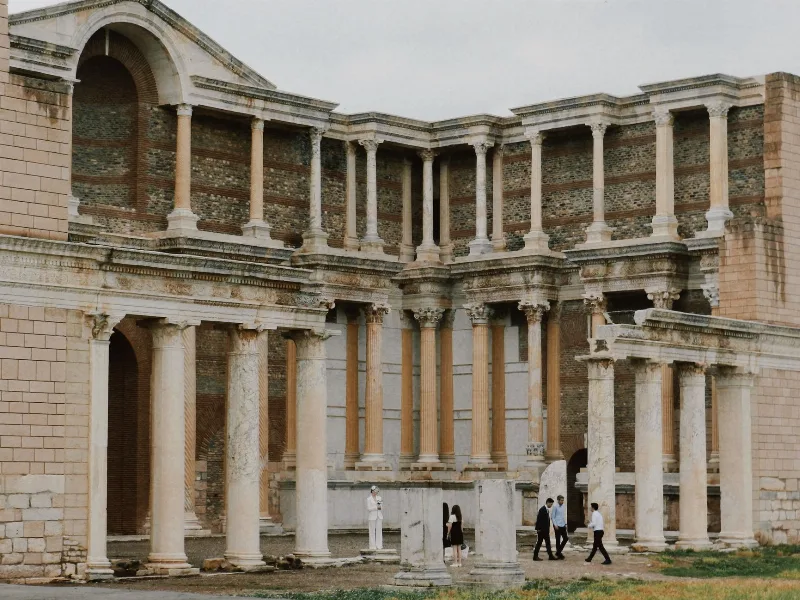
Sardis
Sardis was the Iron Age capital of the Lydian Kingdom in western Anatolia and later a major Roman and Byzantine city. Its surviving monuments include the Temple of Artemis, a vast bath-gymnasium complex and one of the largest ancient synagogues ever found.
Explore →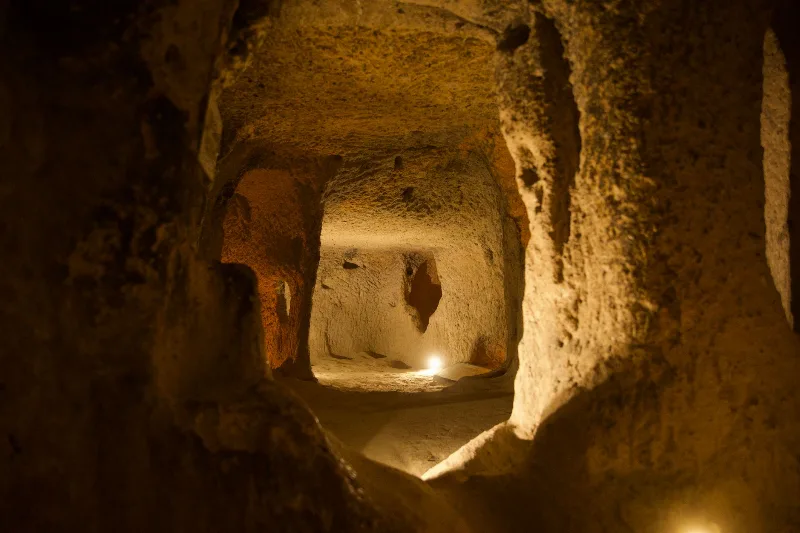
Derinkuyu Underground City
Derinkuyu Underground City is a multi-level rock-cut settlement beneath the town of Derinkuyu in Nevşehir Province, the deepest known underground city in Cappadocia and one of Anatolia's most complete examples of subterranean architecture.
Explore →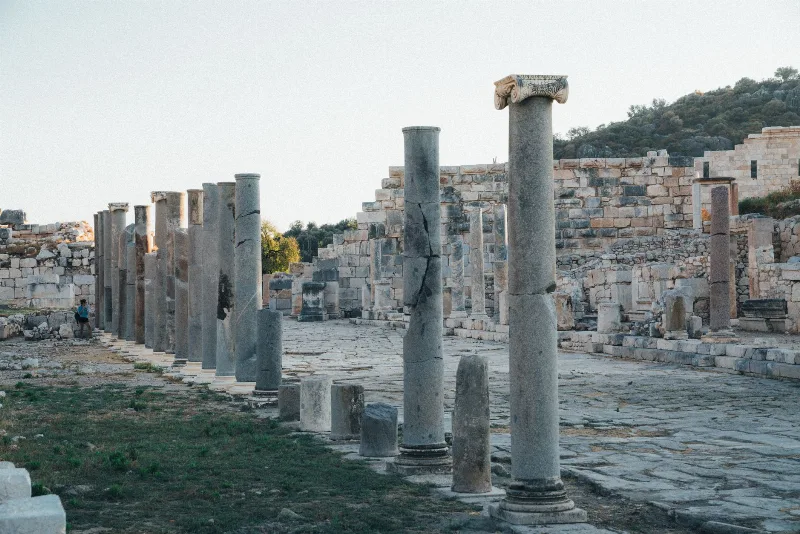
Patara
Patara is an ancient Lycian city in Antalya Province, Türkiye, that served as the meeting place of the Lycian League and preserves a Roman theatre, triumphal arch, bath complexes and an assembly hall beside a long sandy beach.
Explore →Related content
Sümela Monastery
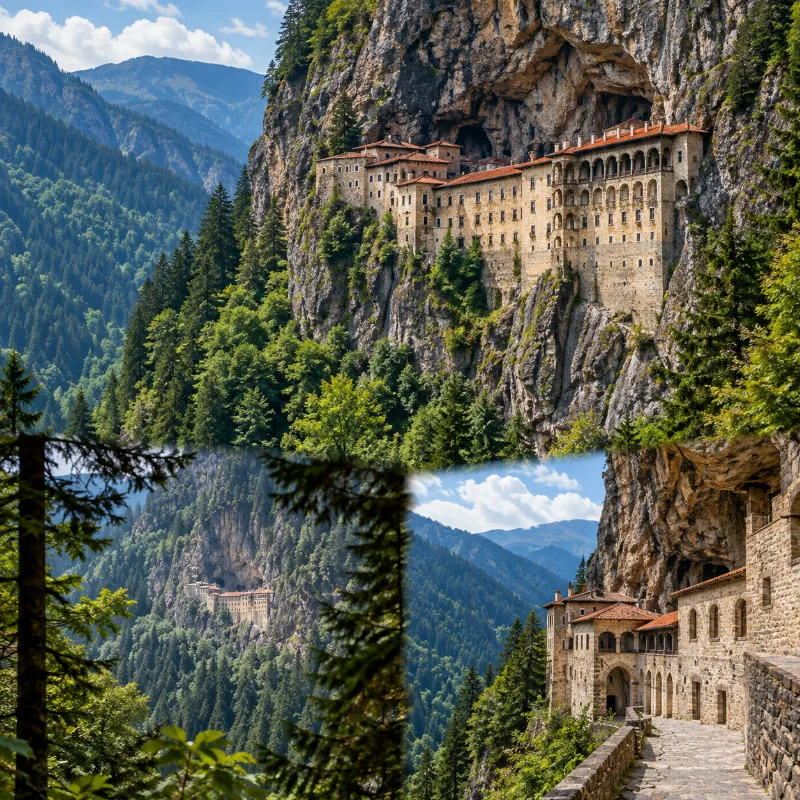
A historic monastery built against a steep cliff in the forested mountains of Trabzon Province.
Sümela Monastery
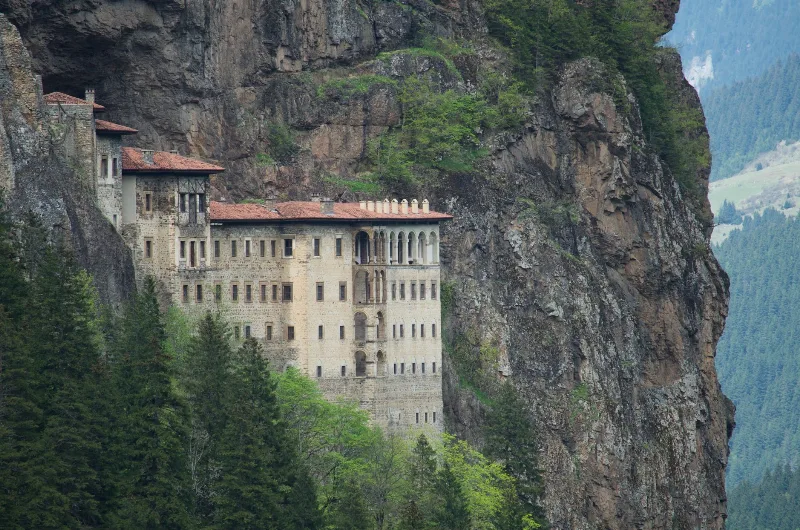
Sümela Monastery is a Greek Orthodox complex cut into a vertical rock face in the Pontic Mountains of Trabzon Province, Türkiye. Its clifftop setting, 4th-century origins and painted rock church make it one of the most distinctive religious monuments in the Black Sea region.
Trabzon
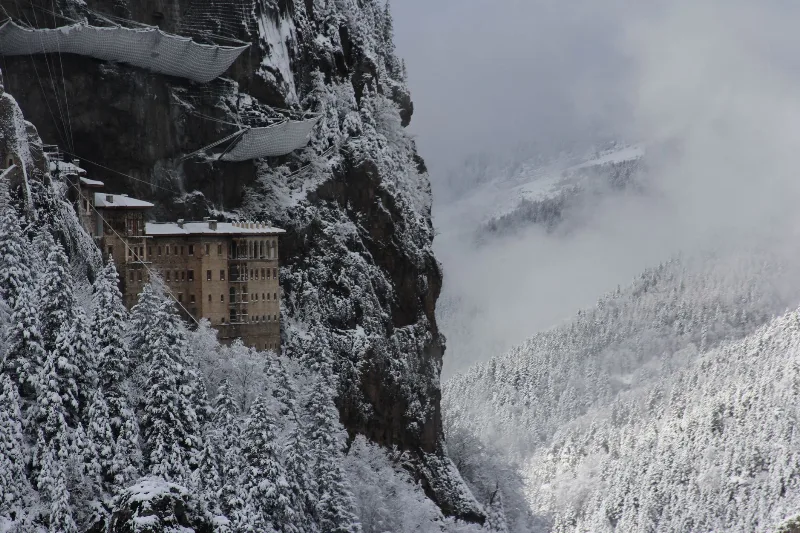
Trabzon is a rain-washed port city on Türkiye's eastern Black Sea coast, framed by the cliffside Sumela Monastery and slopes of tea. Byzantine and Ottoman layers sit close to highland valleys just inland.
Sumela Monastery in Türkiye
Discover the breathtaking Sumela Monastery, a historic Christian heritage site nestled in Türkiye's mountains.
3-Day Trabzon and Uzungöl Route
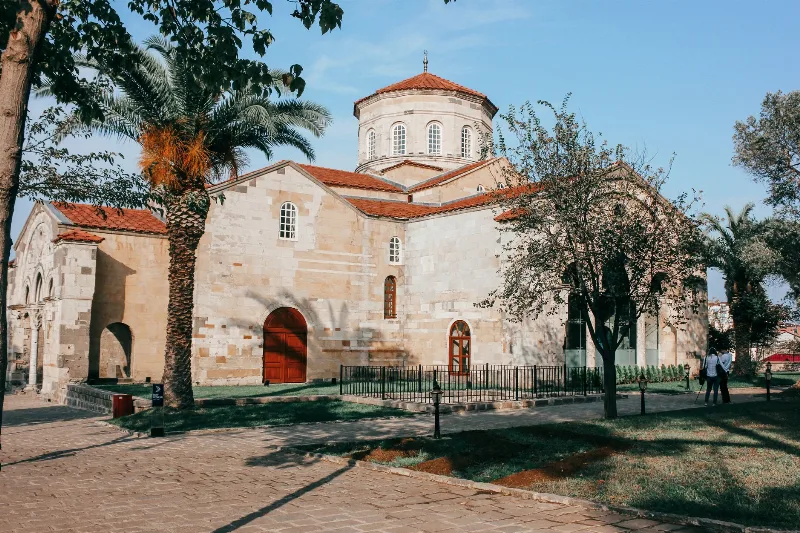
This 3-day route in Türkiye's Eastern Black Sea region starts and ends in Trabzon, visiting Hagia Sophia, Sümela Monastery, and Uzungöl Lake. It blends city sightseeing, mountain driving, and lakeside relaxation.
Sumela Monastery's Cliffside Beauty
Carved into a vertical rock face above the Altındere Valley in Trabzon Province, Sumela Monastery blends Byzantine-era architecture with the forests of the Pontic Mountains.