
Sumela Monastery's Cliffside Beauty
Carved into a vertical rock face above the Altındere Valley in Trabzon Province, Sumela Monastery blends Byzantine-era architecture with the forests of the Pontic Mountains.
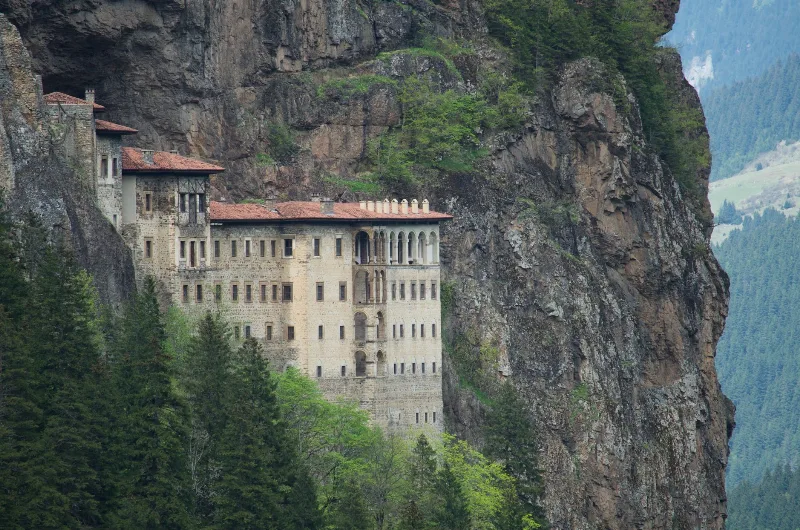
Sumela Monastery is a historic Greek Orthodox complex carved into a vertical rock face high above the Altındere Valley in Trabzon Province, northeastern Türkiye. Perched among dense forests of the Pontic Mountains, its stone walls, arched terraces and painted chapel appear to grow directly out of the cliff. The site is one of the most distinctive historic places in the Black Sea region, combining religious architecture of the Byzantine and later periods with a mountain landscape that changes character with every season.
Where the Monastery Stands
Sumela lies in the Maçka district, roughly 50 kilometres south of the city of Trabzon and inside the boundaries of Altındere Valley National Park. The monastery occupies a natural hollow in the rock at about 1,200 metres above sea level, with the valley floor several hundred metres below. A long, steep path and a restored stone stairway climb through woodland to the main courtyard, where a small spring and a cluster of buildings are arranged along the cliff. Below, the Altındere stream runs through a corridor of beech, pine and hornbeam trees that hides the monastery from view until the final stretch of the climb.
A Foundation in Late Antiquity
Tradition attributes the monastery's foundation to two monks from Athens, Barnabas and Sophronios, who are said to have established it in the late fourth century during the reign of Theodosius I. Written records are thinner than the legends, but a monastic community certainly existed here in the Byzantine period and grew considerably in the Komnenos era. In the fourteenth century, Alexios III of Trebizond supported building work and granted privileges that helped the monastery become a wealthy and influential centre. Further structures, including a library, a small chapel and water channels, were added in the eighteenth and nineteenth centuries.
Rock-Cut Church and Frescoes
The heart of the complex is the rock church, partly carved into the cliff and partly built out from it. Its exterior wall carries layers of frescoes showing scenes from the lives of Christ and the Virgin Mary, alongside portraits of saints and emperors. Inside, the curved rock ceiling is covered with further paintings, and the contrast between those painted surfaces and the bare stone of the surrounding cliff is striking. A dark tunnel and stairway lead to a smaller chapel above, positioned close to the cliff edge and open to the valley air. The monastery's name is linked to the Panagia, the Virgin of Sumela, whose icon was long venerated at the site.
The Altındere Valley Landscape
The national park around the monastery protects one of the most humid and greenest landscapes in Türkiye. Fog often hangs in the valley in the morning, softening the forest and the rock face; in clear weather the view extends along wooded ridges towards higher peaks. The stream, small waterfalls and mixed woodland support a range of birds and mammals, and the park is known for its rich plant cover. Wild flowers appear along the path in spring, while autumn brings copper and gold tones to the beech canopy.
Black Sea Culture in the Surrounding Villages
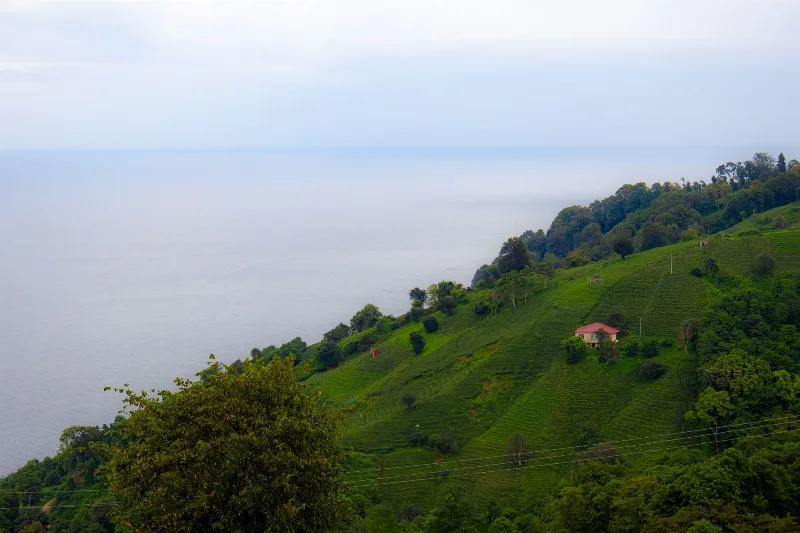
The villages of the Maçka valley reflect Black Sea traditions that have shaped the region for centuries. Tea gardens and hazelnut orchards cover many of the slopes, and small upland farms keep bees for the dark, aromatic honey of the Pontic highlands. Local cooking features mıhlama, a melted cheese and cornmeal dish, along with hamsi from the Black Sea coast and hearty soups built on beans and greens. Wooden village houses with wide, sheltering roofs can still be seen along the roads leading up towards the monastery.
Seasonal Character of the Site
Spring and early summer bring fresh green growth and strong running water, while July and August are the driest months and offer the clearest views across the valley. Autumn is quieter and more colourful, and winter snow occasionally closes the upper path for short periods. In every season, the building rewards a slow look at the frescoes, the masonry and the careful way the monastery responds to the shape of the cliff above it.
Related content
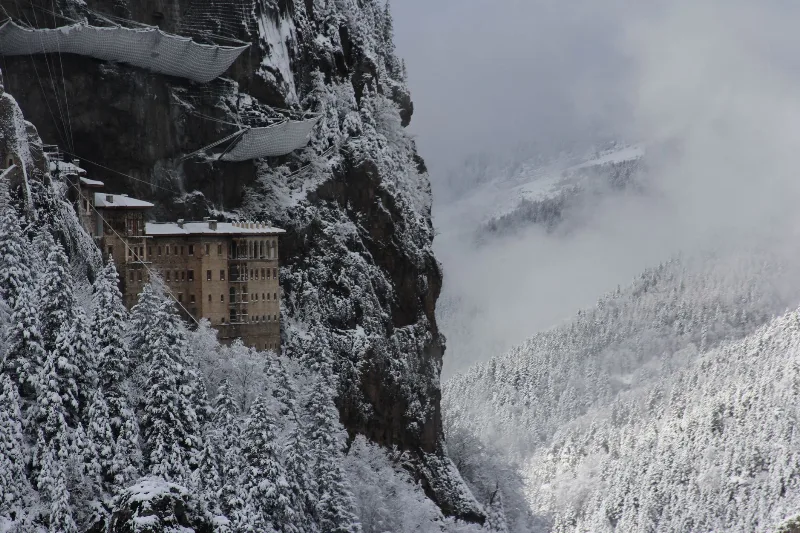
Trabzon
Trabzon is a rain-washed port city on Türkiye's eastern Black Sea coast, framed by the cliffside Sumela Monastery and slopes of tea. Byzantine and Ottoman layers sit close to highland valleys just inland.
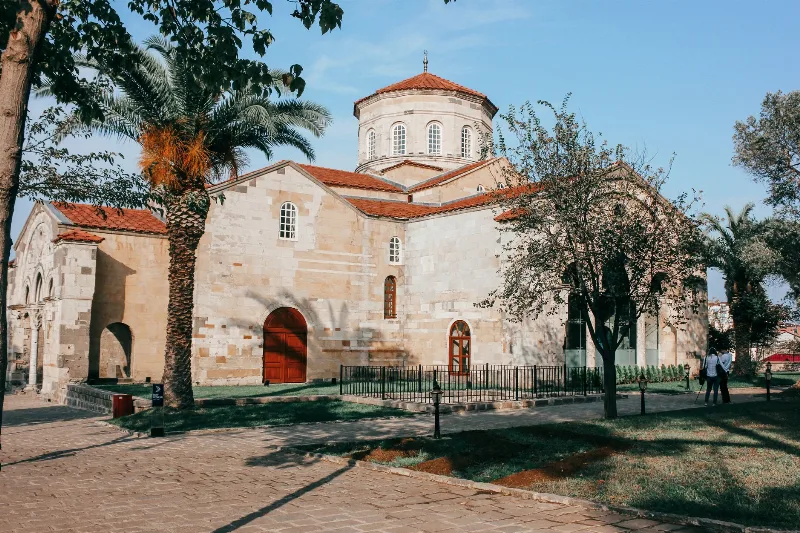
3-Day Trabzon and Uzungöl Route
This 3-day route in Türkiye's Eastern Black Sea region starts and ends in Trabzon, visiting Hagia Sophia, Sümela Monastery, and Uzungöl Lake. It blends city sightseeing, mountain driving, and lakeside relaxation.
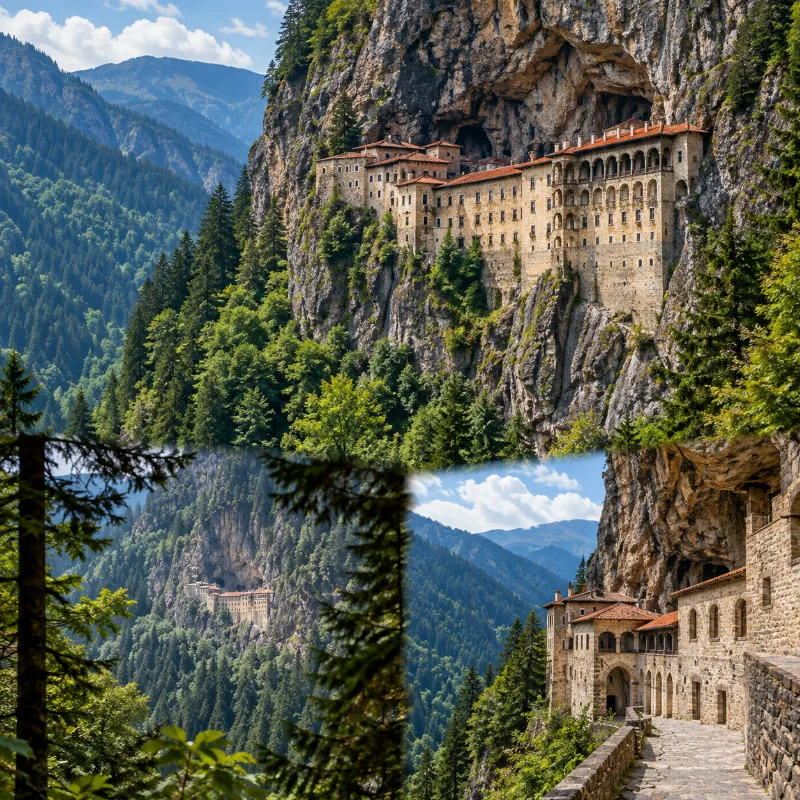
Sümela Monastery
A historic monastery built against a steep cliff in the forested mountains of Trabzon Province.
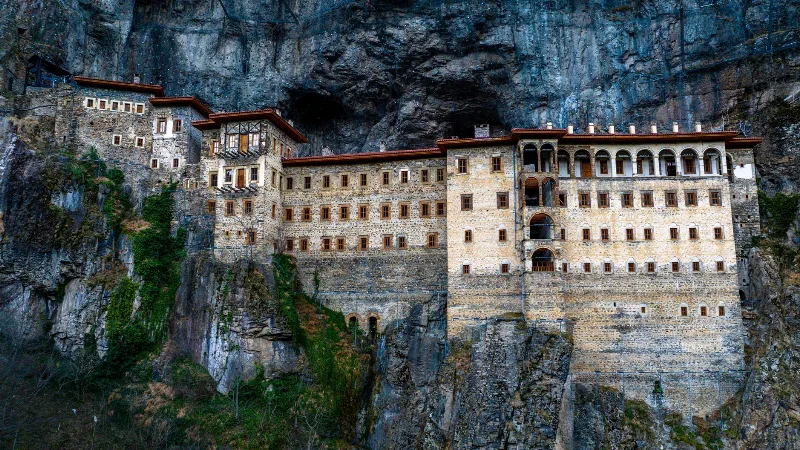
The Significance of the Sümela Monastery in Trabzon
Perched on a cliff above the Altındere Valley, Sümela Monastery blends Byzantine heritage, rock-cut architecture and the green landscapes of Trabzon's Black Sea countryside.
Sumela Monastery in Türkiye
Discover the breathtaking Sumela Monastery, a historic Christian heritage site nestled in Türkiye's mountains.
Sümela Monastery
Sümela Monastery is a Greek Orthodox complex cut into a vertical rock face in the Pontic Mountains of Trabzon Province, Türkiye. Its clifftop setting, 4th-century origins and painted rock church make it one of the most distinctive religious monuments in the Black Sea region.
Black Sea Region of Türkiye
Discover the lush landscapes and unique culture of Türkiye's Black Sea region, known for its vibrant nature and rich traditions.
7-Day Eastern Black Sea Highlands Route: Trabzon to Artvin
A seven-day driving route through the Eastern Black Sea highlands, from Trabzon and Sumela to Uzungöl, Ayder, the Kaçkar Mountains and the forests of Şavşat, ending at Artvin.