
The Ihlara Valley and Its Rock-Cut Churches in Cappadocia
STORIES FROM TÜRKİYE
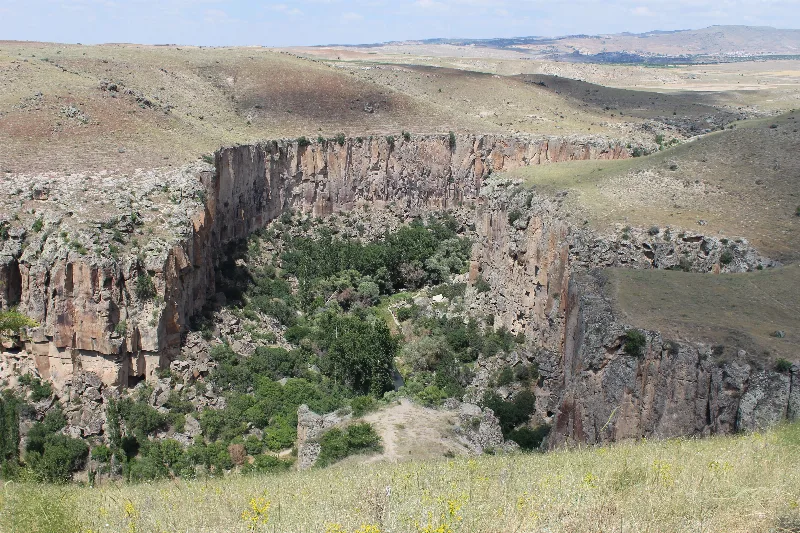
The Ihlara Valley cuts through the Cappadocia region of central Türkiye, offering a green and sheltered contrast to the surrounding volcanic plateaus. Formed by the Melendiz River, the canyon stretches roughly 14 kilometres between the villages of Ihlara and Selime. Its walls rise in places to about 100 metres, and the valley floor supports trees, gardens and a steady flow of water. This combination of geology, history and quiet scenery has made the valley a distinctive part of Cappadocia’s landscape.
A Canyon Shaped by the Melendiz
The Melendiz River has carved the Ihlara Valley over thousands of years, exposing layers of tuff and basalt. The result is a deep, winding gorge with steep cliffs and a mild microclimate at the bottom. Poplar, willow and pistachio trees grow along the riverbanks, while the rock walls show signs of erosion and ancient human use. The valley is often divided into sections such as Ihlara, Belisırma and Yaprakhisar, each with its own character.
Unlike the more open landscapes of Cappadocia, the Ihlara Valley feels enclosed and verdant. The sound of water and birds replaces the wind that sweeps across the plateau. This environment has supported agriculture and settlement for centuries. Local people still cultivate small plots near the river, growing fruit and vegetables in the rich soil.
Rock-Cut Churches and Byzantine Frescoes
The valley is known for its historic rock-cut churches, many of which date from the Byzantine period. Around a hundred churches and chapels are scattered along the canyon walls, though only a few are easily accessible. Among the most recognised are Ağaçaltı Kilise, Pürenli Seki Kilise, Kokar Kilise and Direkli Kilise. Their interiors contain frescoes that depict scenes from the Bible and the lives of saints.
These paintings show the artistic traditions of Byzantine Cappadocia, with vivid colours and expressive figures. Some frescoes are well preserved, while others have faded with time. The churches were carved directly into the soft volcanic rock, often with simple plans and small windows. They served both as places of worship and as refuges for early Christian communities.
Walking Through the Valley
A walking path follows the Melendiz River through the Ihlara Valley, linking the main entrances and the villages along the route. The trail is mostly flat and shaded, making it a comfortable way to experience the landscape. Along the way, visitors can see rock-cut dwellings, storage rooms and pigeon houses carved into the cliffs. Steps and bridges help connect the different parts of the valley.
The walk offers changing views of the canyon, from narrow passages to wider sections where the sun reaches the river. In spring, wildflowers and blossoming trees add colour to the green surroundings. The path also passes near Belisırma, a village known for its riverside setting and traditional agriculture.
Villages and Local Life
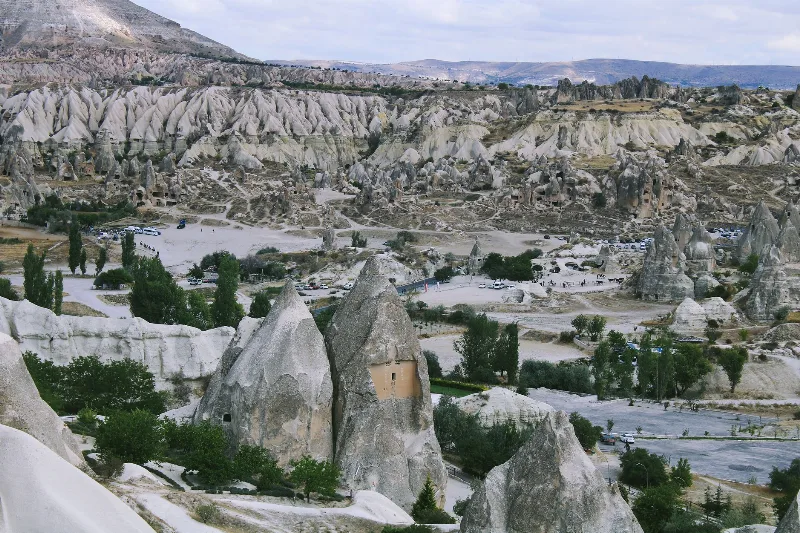
Several villages sit near the Ihlara Valley, including Ihlara, Belisırma, Yaprakhisar and Selime. These settlements have long been connected to the valley’s resources, using the river for irrigation and the rock for shelter. Yaprakhisar is known for its cone-shaped rock formations, which resemble the fairy chimneys of other parts of Cappadocia. Selime features a large rock-cut complex that includes a monastery and a cathedral-like hall.
Local traditions in the area reflect a mix of farming and hospitality. Residents grow grapes, apricots and other fruits, and keep small herds of livestock. The valley’s peaceful atmosphere and historic sites attract travellers who want to understand the region beyond its famous hot-air balloons. Seasonal changes bring different rhythms to village life, from spring planting to autumn harvest.
Nature and Seasonal Experience
The Ihlara Valley is home to a variety of plants and animals. Birds such as eagles, falcons and songbirds nest in the cliffs, while lizards and insects thrive in the warm rock. The river supports fish and amphibians, and the surrounding trees provide shade and habitat.
Spring and autumn are especially pleasant for walking, with moderate temperatures and clear light. Summer can be hot, but the valley floor remains cooler than the plateau. Winter brings snow and a quieter atmosphere, though some paths may be slippery.
Historic places
Explore history →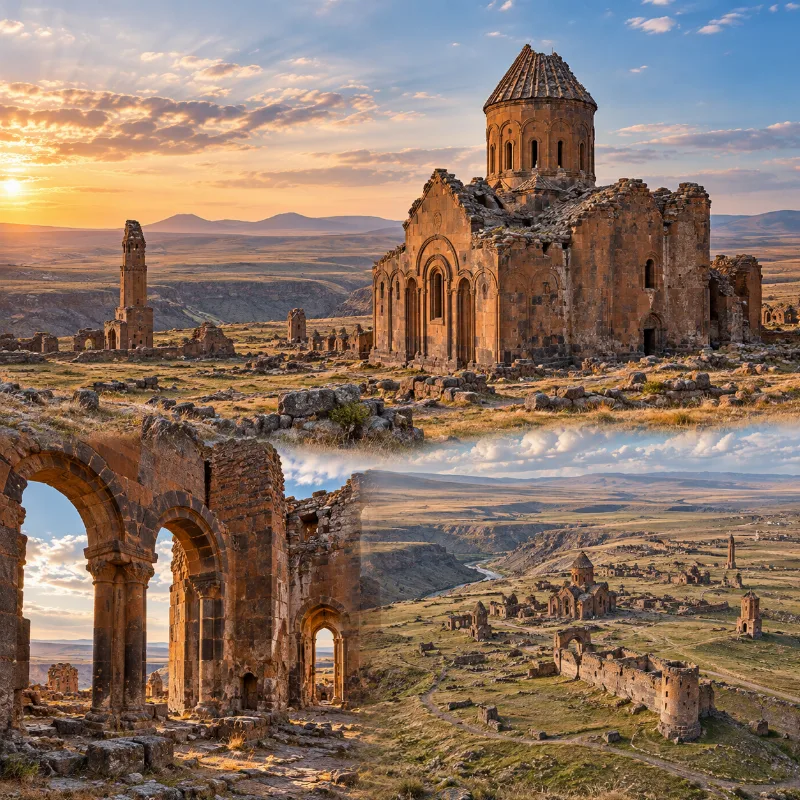
Ancient City of Ani
A medieval archaeological city near the Turkish-Armenian border, with churches, fortifications and monumental stone buildings.
Explore →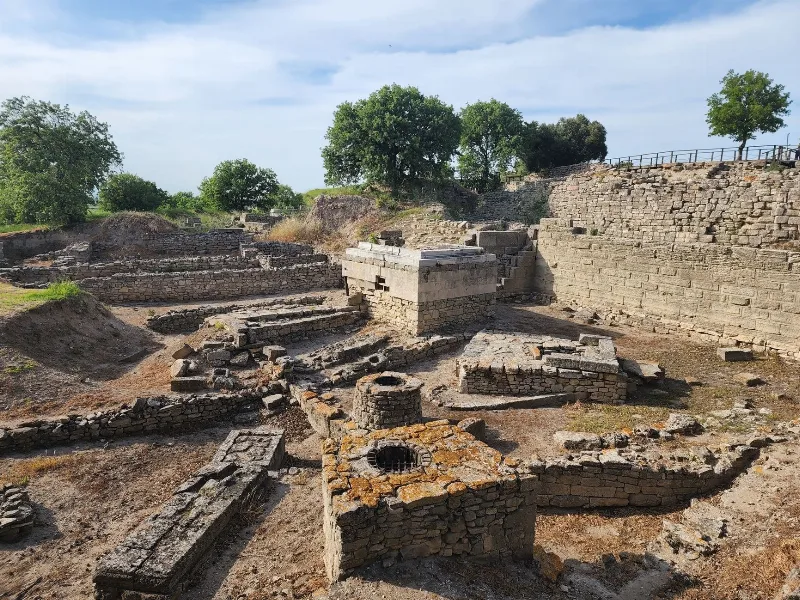
Troy
Troy is the excavated mound of Hisarlık in Çanakkale Province, Türkiye, inhabited from the Early Bronze Age to the Roman era and linked with the Ilion of Homer's Iliad. Its nine settlement layers and surviving Bronze Age fortifications make it one of the most important stratified sites in the eastern Mediterranean.
Explore →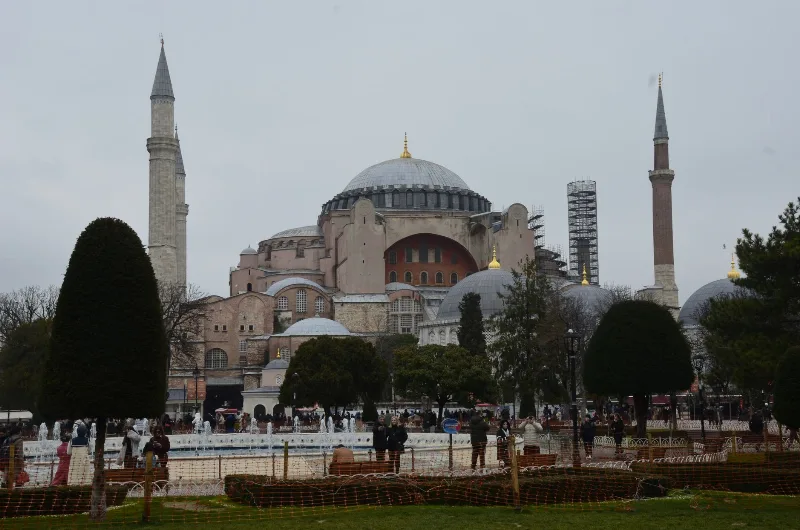
Hagia Sophia
Hagia Sophia in Istanbul is a monumental religious building begun under the Byzantine emperor Justinian I in 537 CE, later converted into an Ottoman mosque and today serving again as a mosque and UNESCO-listed monument.
Explore →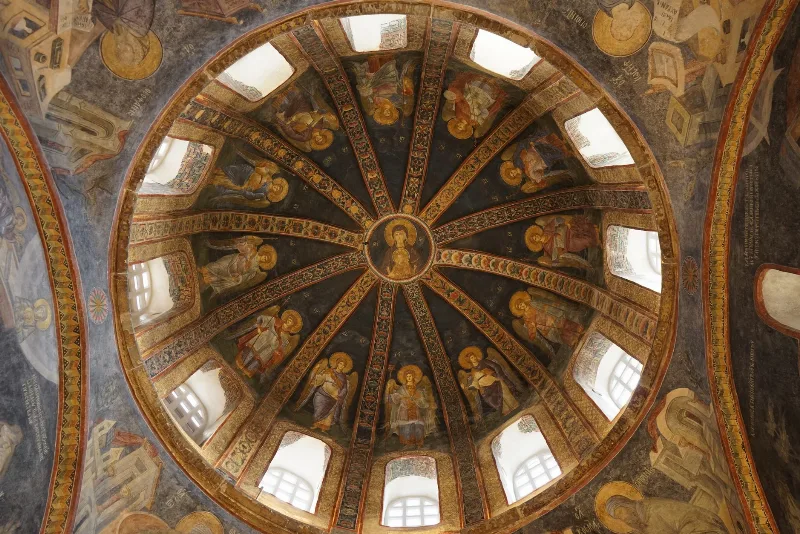
Chora Church
The Chora Church in Istanbul is a Byzantine monument whose 14th-century mosaics and frescoes are among the finest surviving examples of late Byzantine art, preserved inside a building that later served as a mosque.
Explore →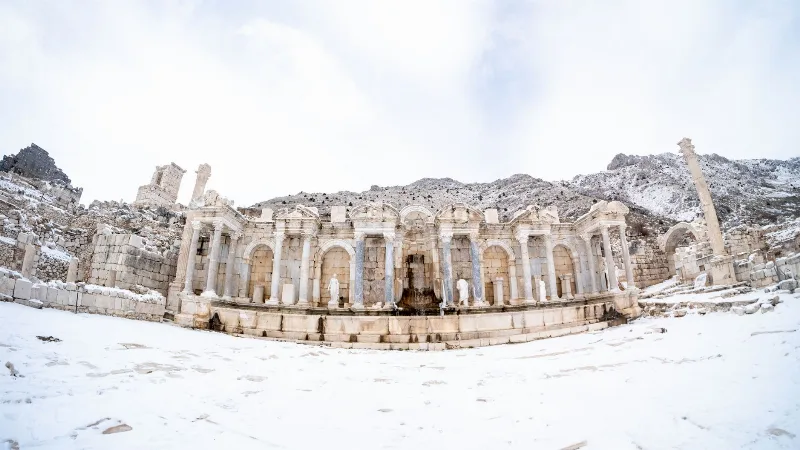
Sagalassos
Sagalassos was a major Pisidian city in the Taurus Mountains of Burdur Province, Türkiye. Its Roman theatre, bath complex and monumental fountain house make it one of the more fully understood ancient cities in the region.
Explore →Related content
Ihlara Valley
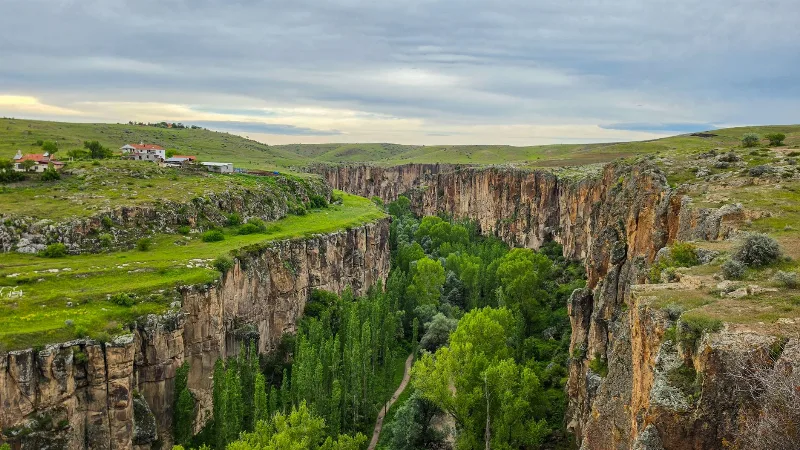
Ihlara Valley is a 14-kilometre canyon in Aksaray Province cut by the Melendiz River, lined with Byzantine rock-cut churches and frescoes. This guide covers its geology, the churches inside it, the walking route and the best time to visit.
Ihlara Valley
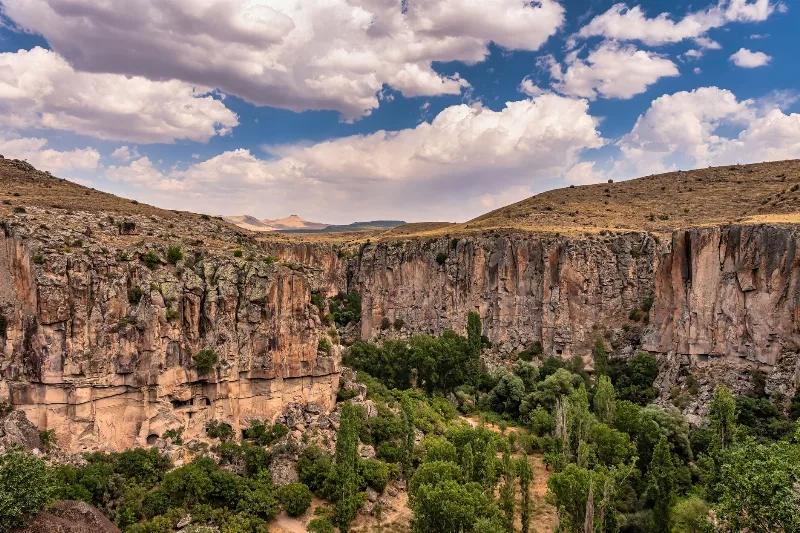
Ihlara Valley is a green canyon in Aksaray Province, cut by the Melendiz River through soft volcanic rock. Its steep walls, riverside vegetation and rock-cut churches make it one of the most distinctive landforms of the wider Cappadocia region.
Cappadocia
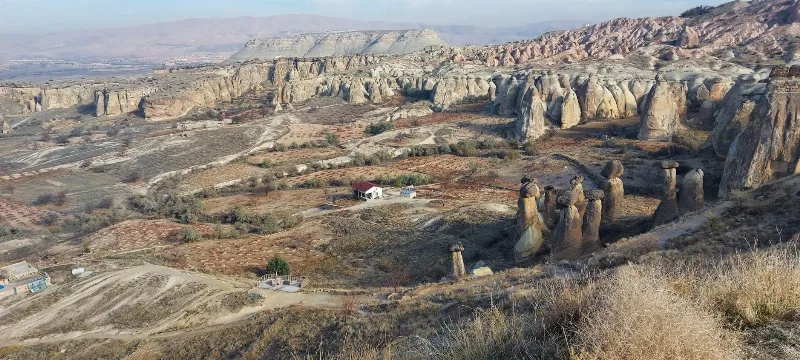
Cappadocia is a region of Central Anatolia in Turkey defined by eroded volcanic tuff, rock-cut Byzantine churches and multi-level underground cities. This guide explains how the landscape formed, what the main valleys and sites actually contain, and what to know before visiting.
2-Day Cappadocia Underground Cities Route
A two-day route from Nevşehir through the underground cities of Kaymaklı and Derinkuyu, finishing with a walk through the Ihlara Valley and the rock-cut complex at Selime.
Aksaray
Explore Aksaray, Central Anatolia: history, standout sights, landscapes, local food and practical travel advice for an unforgettable journey in Türkiye.
4-Day Cappadocia and Konya Route
A four-day linear journey from the rock valleys of Cappadocia to the Seljuk city of Konya, linking cave churches, underground cities and the Ihlara Valley with the Mevlana Museum on the central Anatolian plateau.