
Akdamar Island Church and Lake Van in Van
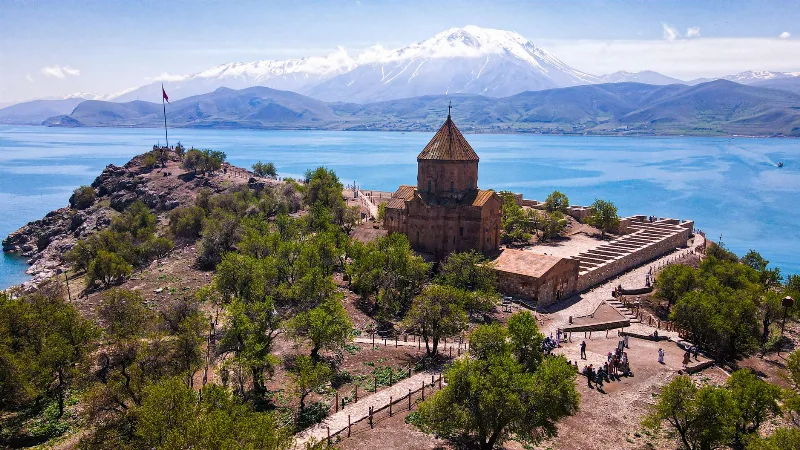
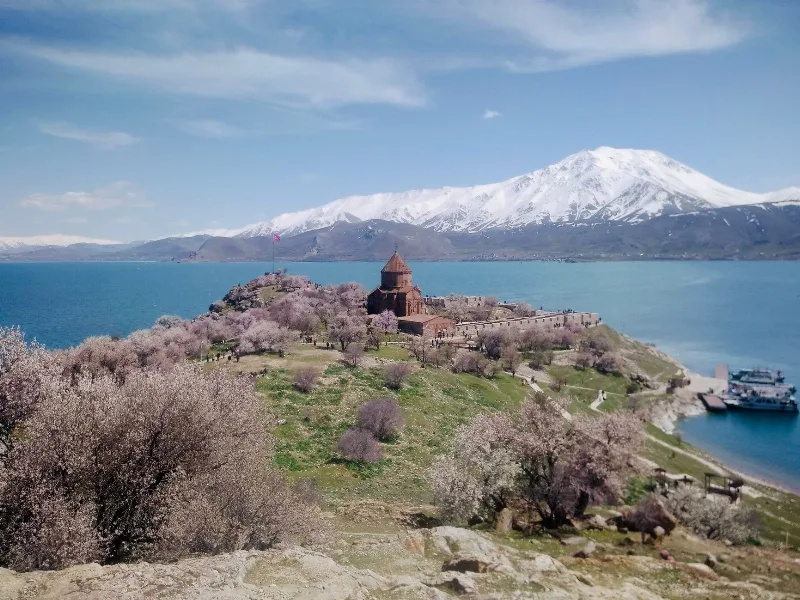
Akdamar Island rises from the soda waters of Lake Van in eastern Türkiye, where a tenth-century church covered in carved stone reliefs stands among almond trees and quiet shoreline.
Akdamar Island lies in the eastern part of Lake Van, in the Gevaş district of Van province in eastern Türkiye. The island is small, no more than a few hundred metres across at its widest point, and sits close enough to the southern shore for the mainland hills to fill much of the view. Its best-known monument is the Church of the Holy Cross, a building of the early tenth century whose outer walls carry an unusually rich programme of carved stone reliefs. Boats crossing from the mainland take visitors to a place that combines landscape, architecture and a long history of settlement in the Van basin.
An Island Setting on Lake Van
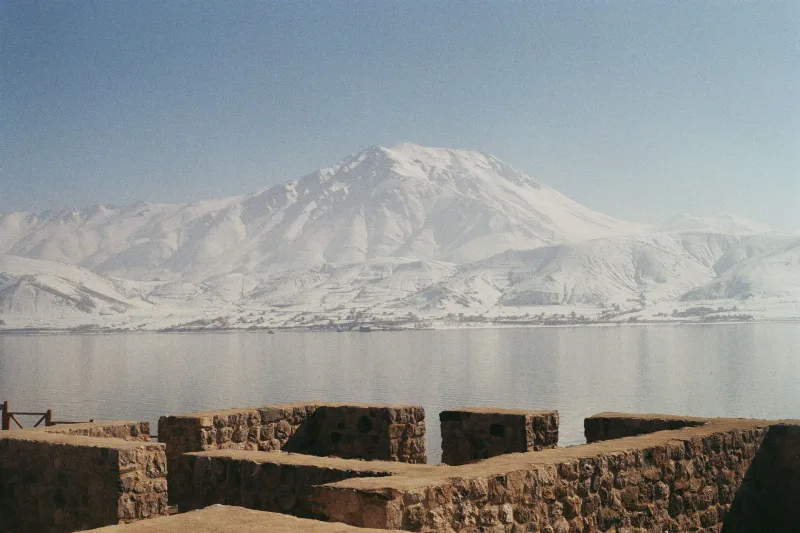
Lake Van is the largest lake in Türkiye and one of the largest in the region. It is a soda lake, with water that is saline and alkaline rather than fresh, and its surface lies at roughly 1,640 metres above sea level. The lake is enclosed by volcanic highlands: the crater of Mount Nemrut and the slopes of Mount Süphan both belong to the same wider landscape of lava flows, extinct cones and mineral-rich soils.
The water chemistry shapes the ecology. Only one species of fish, the pearl mullet, lives in the lake itself, and each spring it swims up the freshwater streams that feed the lake to spawn. The lake's edge is known for its pale, mineral-tinged shoreline and for the reeds, marshes and wet meadows where birds gather. On Akdamar itself, almond trees, fig trees and small orchards grow among grassy slopes and rocky outcrops, giving the island the character of a garden rather than a bare rock.
The Church of the Holy Cross
The church was built between about 915 and 921 on the orders of King Gagik I Artsruni, ruler of the Kingdom of Vaspurakan, and its architect is recorded as a man named Manuel. It served as part of a larger monastic complex, of which traces of a chapel, a harbour and a cistern can still be seen. The building has a cruciform plan with a central dome, and it is compact in scale, designed for a small community rather than a great congregation.
A restoration programme completed in 2007 stabilised the structure and revealed much of the stonework that had weathered over the centuries. The church now operates as a monument museum, and since 2010 it has hosted an annual religious service, drawing visitors of Armenian heritage from several countries.
Carved Reliefs and Their Subjects
The exterior is the church's most distinctive feature. Nearly every exterior surface is covered with bands of sculpture in low relief, arranged in registers that wrap around the walls. Scenes from the Old Testament appear alongside individual figures of saints, prophets and apostles. Among the more frequently identified panels are Jonah being swallowed by a great fish, David facing Goliath, Adam and Eve beside the tree, and Daniel among the lions.
Alongside the narrative panels are lions, eagles, cattle, goats and vines, carved with a lively sense of movement. A well-known relief on the western façade shows a seated ruler, widely identified as King Gagik, holding a model of the church itself. The combination of biblical narrative, animal subjects and royal portraiture makes the church a rare surviving example of regional stone carving from the period.
Crossing to the Island
Access is by small boat from the pier at Gevaş, on the southern shore of the lake, and the crossing is short. There is no bridge and no permanent settlement on the island, so visitors arrive, walk the paths among the trees, and return the same way. Local folklore, told in several variations, links the island to a princess named Tamar and a shepherd, a story that boatmen and guides still repeat.
The island's small size makes it easy to explore on foot. Paths lead between the church, the remnants of the monastery buildings and viewpoints over the water. Because the lake lies at high altitude, the light is clear and the weather changeable; mornings are often calm, while the afternoon wind can lift small waves across the surface.
The Wider Landscape around Gevaş
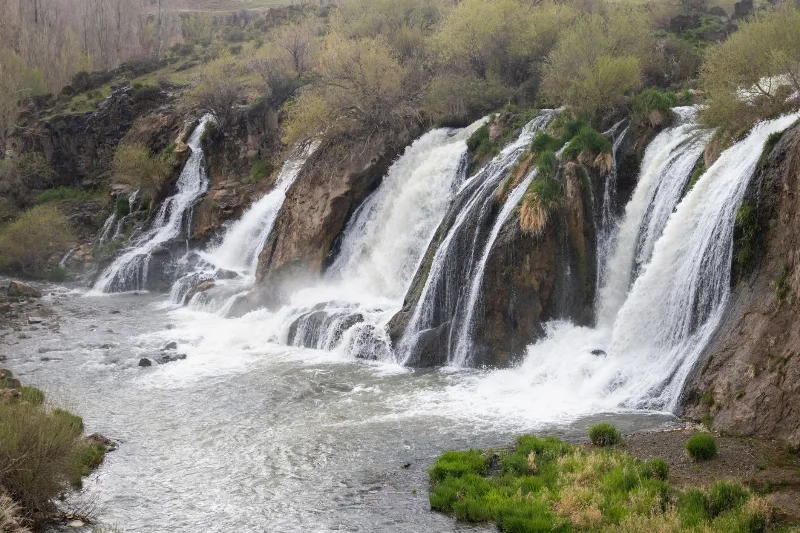
The surrounding district holds a number of significant sites. The Halime Hatun tomb in Gevaş is an example of Anatolian tomb architecture, while further east the site of Tuşpa and the rock-cut fortress of Van overlook the lake near the provincial capital. To the south-east, the castles of Hoşap and Çavuştepe trace the older routes through the mountains, and to the north the Muradiye waterfalls mark the edge of the volcanic plateau.
Flavours of the Van Basin
Food in the region reflects its highland setting and long pastoral tradition. Breakfast in Van is famously generous, built around white cheese, honey, walnuts, black olives and freshly baked flatbread. Herbed cheese, in which wild herbs are folded into the curd, is a local speciality, and the spring run of pearl mullet brings a seasonal dish of grilled or fried fish. Orchards and market gardens near the lake shore supply apricots, apples and vegetables, while sheep and goat husbandry supports a strong dairy culture.
Together, island, lake and shoreline form a compact landscape in which geology, architecture and local life remain closely connected, and where a tenth-century church still holds the centre of the view.
Related content
Akdamar Island
Akdamar Island is the largest island in Lake Van, eastern Turkey, and holds the 10th-century Armenian Cathedral of the Holy Cross, whose outer walls are covered in carved biblical reliefs. It is reached by boat from a pier near Gevaş and is usually visited as a day trip from Van.
Lake Van
Lake Van is Turkey's largest lake, a vast alkaline soda lake with no outlet, set in the volcanic highlands of Eastern Anatolia at around 1,640 metres. Its unusual chemistry, depth and islands give it a character unlike any other lake in the country.
Lake Van
Lake Van is Turkey's largest lake and the world's largest soda lake, located in Eastern Anatolia. It is known for Akdamar Island and its 10th-century Armenian Church of the Holy Cross.
Van's Spring Festival
Spring in Van brings Nevruz and Hıdırellez celebrations, blooming landscapes around Lake Van, and fresh local foods. Discover how eastern Türkiye welcomes the season with culture, nature, and community traditions.
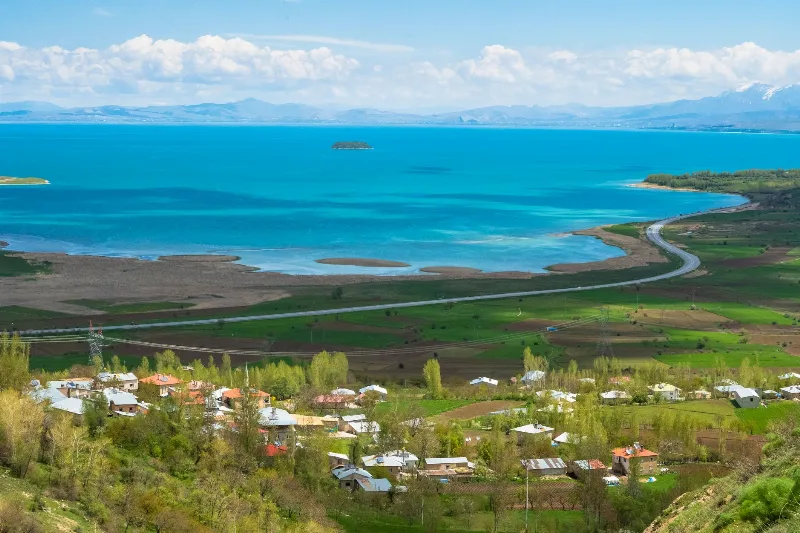
Lake Van and Surrounding Nature
Discover the tranquil beauty of Lake Van, Türkiye's largest lake, and its picturesque surroundings in eastern Türkiye.
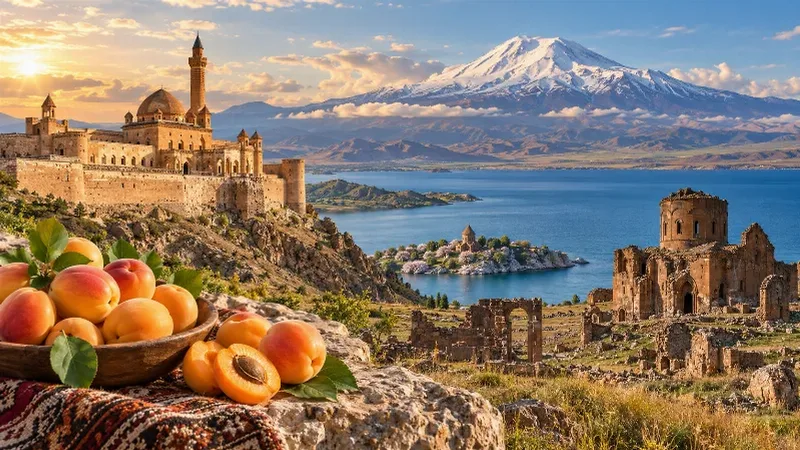
Eastern Anatolia Region
Eastern Anatolia is a region of majestic mountains, vast highlands, beautiful lakes and ancient cultural heritage. Home to Mount Ararat, Lake Van and historic settlements, it offers some of Türkiye's most dramatic natural landscapes alongside distinctive architecture, local traditions and regional cuisine.
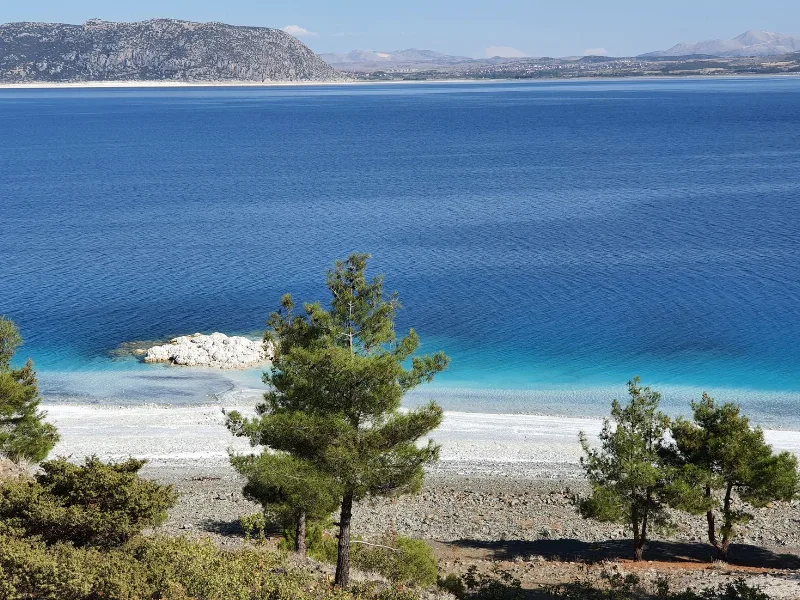
The Serene Lakes of Türkiye
Türkiye’s lakes range from vast soda lakes to salt flats and freshwater basins, each offering calm landscapes and rich wildlife. This page introduces notable lakes across different regions and their seasonal character.
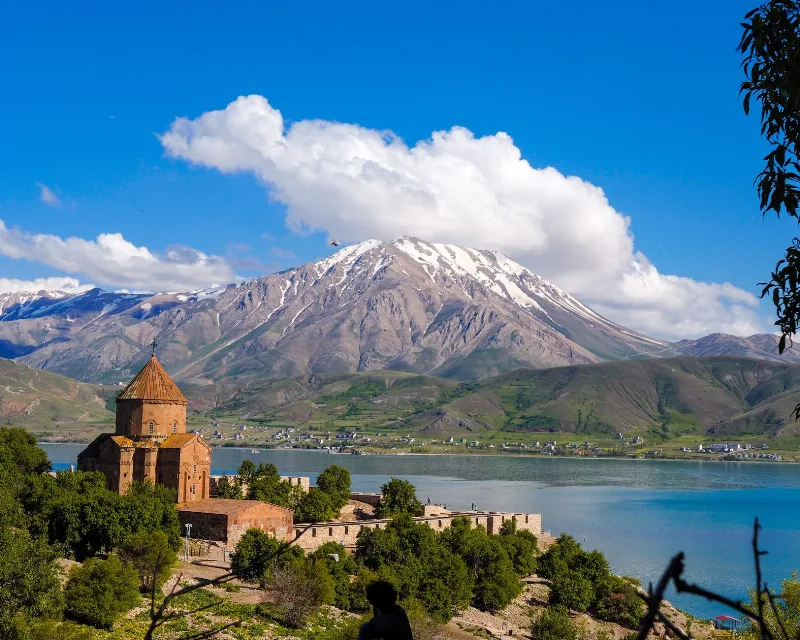
Lakes and Natural Beauty in Türkiye
A journey through the lakes of Türkiye, from the wide soda waters of Lake Van to forest pools in Bolu, salt flats on the Central Anatolian plateau and reed beds full of birds.