
Tillo
Tillo is a small historic town in Siirt Province, southeastern Türkiye, known for its madrasas, its stone architecture and its long association with Islamic scholarship.
Tillo is a small historic town in Siirt Province, in the far southeast of Türkiye, officially known as Aydınlar. It sits in a rocky valley a short drive from Siirt city and is recognised above all as a centre of traditional Islamic learning: for centuries it has hosted madrasas and produced scholars whose influence reached well beyond the town. What distinguishes Tillo from an ordinary Anatolian settlement is the way scholarship, religion and architecture are woven into a compact valley landscape of stone houses, tombs and teaching halls.
Where Tillo lies
Tillo belongs to Siirt Province and lies in the south-eastern corner of Anatolia, in a region where the plateau begins to fold toward the valleys running south and east. The town is set in a hollow surrounded by bare, rocky slopes, and the approach from Siirt passes through a dry, stony landscape typical of the wider province. Because it lies in a depression rather than on a ridge, the settlement has a sheltered, inward-looking quality; the surrounding hills frame almost every view, and the town's streets climb and descend with the terrain rather than following a flat grid.
The climate is continental and dry, with hot summers and cold, occasionally snowy winters. This shapes both the architecture, which relies on thick stone walls and small openings, and the rhythm of daily life, which in summer moves into the cooler parts of the day and in winter centres on the indoor rooms of the houses and the heated spaces of the religious buildings.
A town built around madrasas and scholarship
The defining feature of Tillo is its role as a place of learning. Madrasas here taught the classical Islamic sciences, and the town became known as a centre that attracted students and scholars from across the region. The tradition is not simply historical scenery: it is the reason the town has the shape, buildings and reputation it does.
Tillo is closely associated with İsmail Fakirullah, a scholar and spiritual figure buried in the town, and with İbrahim Hakkı, his student, who became one of the best-known figures of Ottoman-era religious and scientific writing and who spent much of his life here. Their graves and the buildings linked to them are among the most significant physical traces of the town's scholarly past. A well-known local tradition concerns a light phenomenon that occurs at the tomb of İsmail Fakirullah on particular dates, an alignment said to have been designed by İbrahim Hakkı; it is a subject of local pride and of interest to visitors who come to understand the town's history.
Stone houses, narrow lanes and the valley landscape
Walking through Tillo is largely a matter of moving between stone buildings. Many houses are built from the pale, locally quarried stone, with flat or gently pitched roofs suited to a dry climate, small windows and inner courtyards that keep the private life of the household away from the street. The result is a dense, light-coloured townscape that blends into the surrounding rock, especially in strong afternoon sun.
The lanes are narrow, sometimes stepped, and often too steep for comfortable driving, which means the town is best explored on foot. Between the houses there are small squares, walled gardens and the low domes and minarets of mosques and tombs that mark the religious core. The overall impression is of a settlement that was organised around teaching and worship rather than around a market or a port, and that has kept that structure even as much of the surrounding region has changed.
What to look for while walking around
Visitors can realistically spend a few hours moving between the main points of interest on foot. The historic mosques and the tombs of the town's scholars form the heart of a visit, and their stonework, simple interiors and quiet courtyards are the most memorable physical features. Around them, the madrasas and the older houses give a sense of how closely learning and everyday life were connected here.
The elevated parts of the town offer views back over the rooftops toward the rocky slopes that enclose the valley, and these viewpoints are a natural way to understand the town's geography. Because Tillo is small and the main sites are close together, it is not a place that requires a long checklist; the value of a visit lies in walking slowly, noticing the stonework and the arrangement of the streets, and understanding why such a modest settlement produced so many scholars.
Reaching Tillo and choosing a time to visit
Tillo is reached from Siirt city, which is the natural base for the area and the point of arrival for most travellers coming by road. The route is short and, in the warmer months, straightforward. As with most of south-eastern Türkiye, the most comfortable periods are spring and autumn, when temperatures are moderate and the surrounding hills are at their most varied in colour. Summer afternoons can be very hot, which makes early morning and late afternoon the best times for walking the lanes and climbing to the viewpoints. Winter is cold and the town can be quiet, but the stone architecture and the religious sites take on a different character in the cooler months.
Practical points before you go
Tillo is an active religious and residential town, not a museum, so visitors should be mindful of local customs and dress, particularly around mosques and tombs, and should avoid entering private courtyards. The terrain is uneven and often stepped, so comfortable shoes matter more than any other preparation. Facilities are limited and the town is small, so it is sensible to treat Siirt city as the base for food, supplies and accommodation rather than expecting these in Tillo itself.
Because the town is compact, a half-day is usually enough for the main sites, but anyone with an interest in the history of Islamic scholarship in the region may wish to allow more time. Photography is rewarding in the lanes and at the viewpoints, and the low winter light on the stone is a particular feature of the town's character.
Nearby places in the same part of Siirt
Tillo sits within easy reach of Siirt city, which has its own historic core and is the logical next stop for anyone exploring the province. The surrounding countryside is rocky and dry, with valleys and hills that reward a slow drive, and other small settlements in the area share the same stone-building tradition and the same close relationship between landscape and architecture. For travellers moving through south-eastern Anatolia, Tillo works well as a focused stop that adds a very different dimension to the region's better-known historic towns.
From the land
Find All →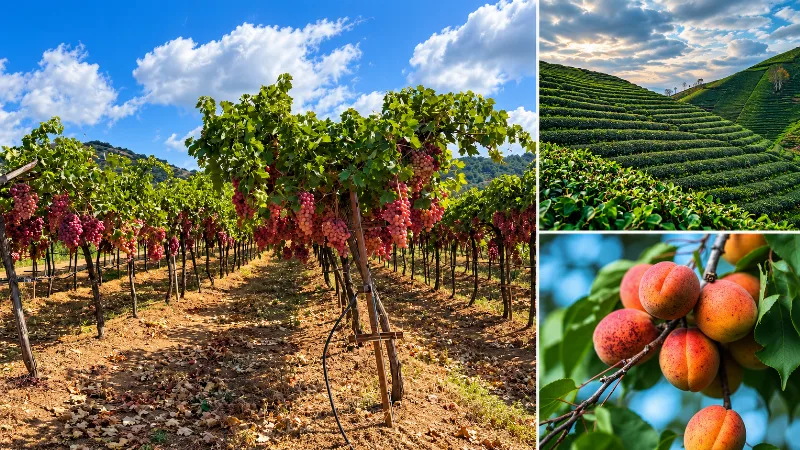
Malatya Apricots
Malatya apricots are the apricots grown in the upper Euphrates basin of eastern Türkiye, where cold winters and hot, dry summers shape the fruit that is mostly dried and traded far beyond the province.
Explore →
Kahramanmaraş Peppers
Kahramanmaraş peppers are the red peppers grown on the inland plains of southern Türkiye, where hot, dry summers and fertile soils give the crop its deep colour, moderate heat and smoky aroma.
Explore →
Taşköprü Garlic
Taşköprü garlic is a pungent, long-keeping garlic grown around the Taşköprü district of Kastamonu in northern Türkiye, where the Gökırmak valley's soils and seasons give the bulbs their dense structure and pronounced aroma.
Explore →Related content
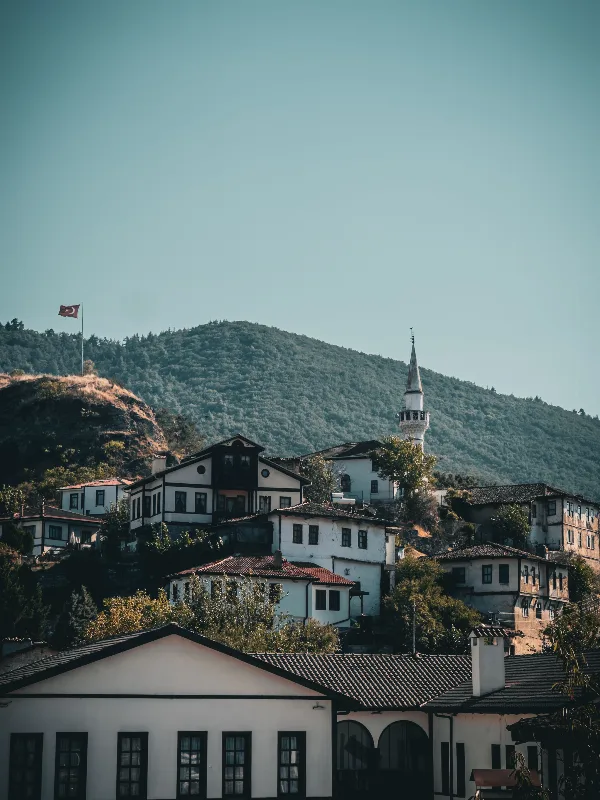
Beypazarı
Beypazarı is a district town in Ankara Province where a large stock of Ottoman-era houses still lines the old streets, and where mineral water springs, silver filigree work and carrot growing shape daily life. It is an easy inland counterpart to the better-known historic towns of Anatolia.
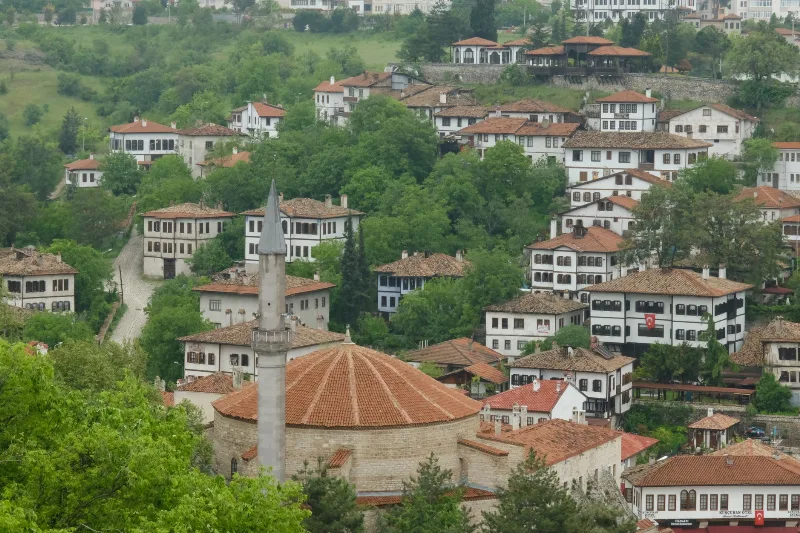
Safranbolu
Safranbolu is a UNESCO-listed Ottoman town in Karabük Province, built around a ravine bazaar and known for hundreds of timber-framed houses, historic bathhouses and the saffron that gave the town its name.
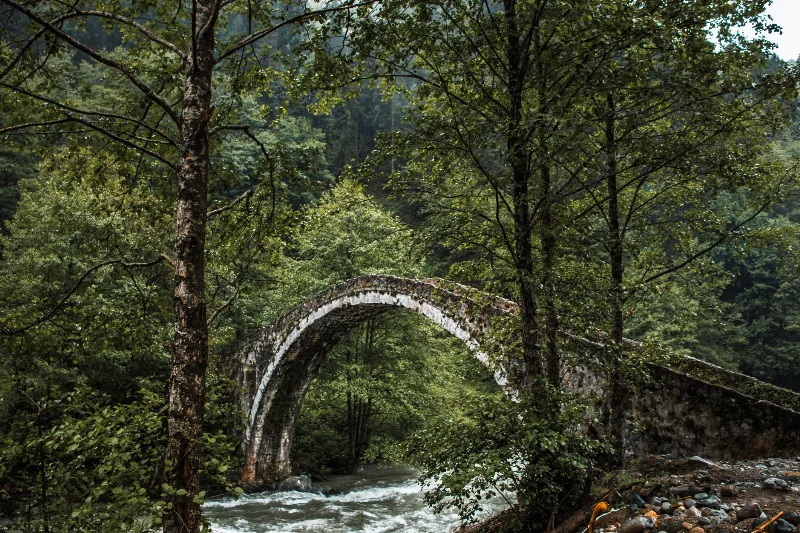
Şenyuva
Şenyuva is a small village in the Çamlıhemşin district of Rize, set in the forested Fırtına Valley and known for a historic stone arch bridge and its dense stock of traditional Black Sea houses.
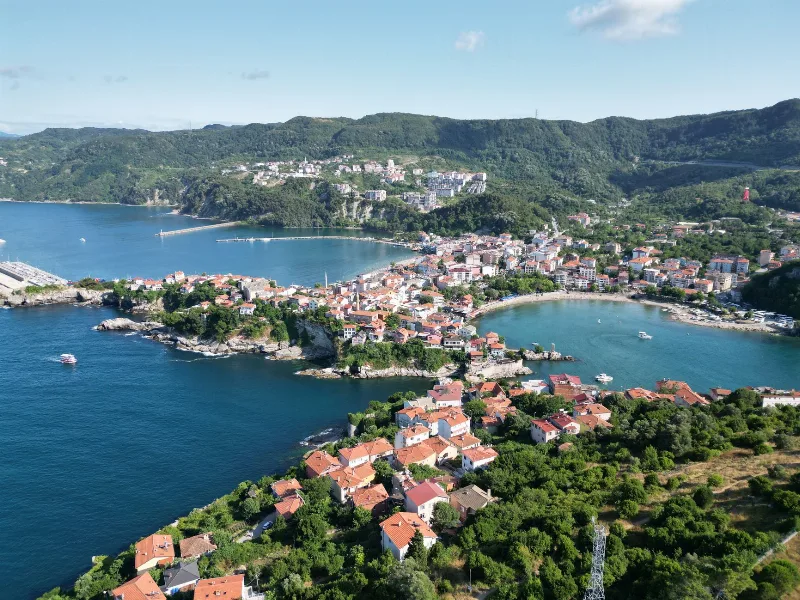
Amasra
Amasra is a small district town in Bartın Province, built on a fortified peninsula on Turkey's Black Sea coast, with two sheltered bays, Byzantine and Genoese walls, and a long history reaching back to the ancient city of Amastris.
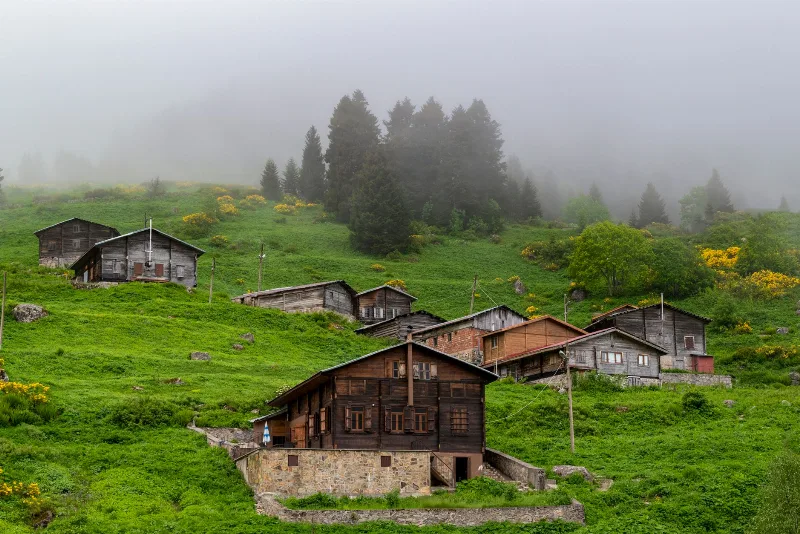
Huser
Huser is a seasonal yayla plateau in the Çamlıhemşin district of Rize, high on the Kaçkar slopes above the Fırtına Valley, known for timber houses, summer pasture life and fast-changing mountain weather.
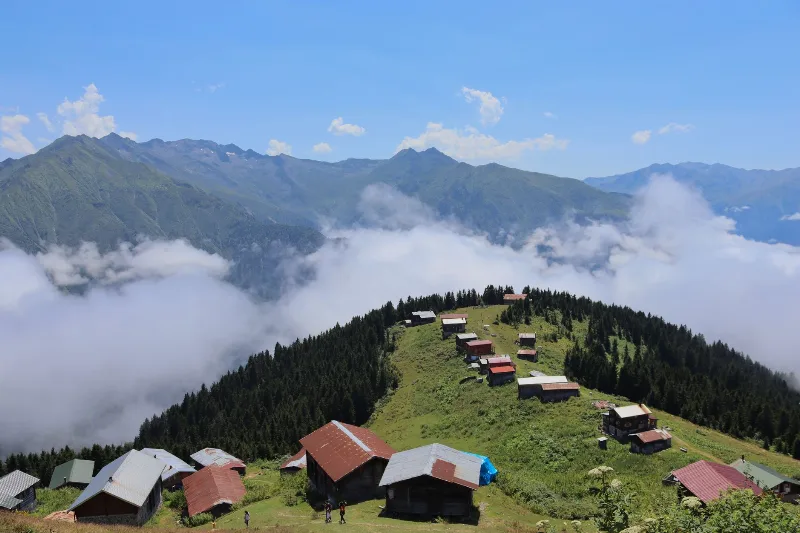
Gito
Gito Yaylası is a seasonal highland settlement in the Çamlıhemşin district of Rize, set in the Kaçkar Mountains above the Black Sea valleys and known for its wooden yayla houses, open meadows and summer pasture life.