
Sille Village: Rock Houses and Ancient Churches in Konya
Sille is an old village on the western edge of Konya, where dwellings cut into soft rock, historic churches and stone houses line a green valley. Its layered past reflects centuries of Anatolian village life.
Sille is an old village on the western edge of Konya, set in a green valley that opens onto the wide Anatolian plain. Its stone houses, the chambers cut into the pale rock above the stream and the remains of several churches give it a character quite unlike the modern city only a short drive away. For anyone interested in Anatolian history, vernacular architecture and the quiet details of rural life, it is a compact and rewarding place to explore.
A Valley Setting on the Edge of the Plain
The village lies roughly eight kilometres north-west of Konya city centre, where the flat plain meets a line of low hills. A small stream, the Sille Deresi, runs along the valley floor between poplars, willows and small orchards, and the slopes on either side are formed of soft, easily worked rock. Water, shelter and buildable stone explain why the site has been occupied for so long. A reservoir upstream holds water for the surrounding district, and the green corridor beside the stream contrasts sharply with the dry grassland beyond the hills. The valley is narrow enough to walk from end to end in an afternoon, yet it contains a remarkable concentration of historic fabric.
Rock-Cut Houses and Cave Dwellings
Many of Sille's earliest dwellings were not built up from the ground but carved directly into the valley sides. Whole rooms were hollowed out of the soft volcanic rock, with façades cut back to a vertical face, doorways and windows shaped by hand, and ledges left for timber beams. Some of these chambers later served as storerooms, stables and dovecotes, and a number are still used for storage today. Because the rock insulates well, the interiors remain cool in summer and mild in winter, a practical response to the continental climate of the Konya basin, where timber was scarce and summers are hot. Higher up, the cliff faces are dotted with smaller openings, some of them nesting holes for pigeons, others the traces of older dwellings that have since lost their outer walls.
The Churches of the Village
Sille's best-known monument is the church of Aya Eleni, dedicated to Helena, mother of the emperor Constantine, who is traditionally associated with the spread of Christianity in Anatolia. Local memory long placed an early place of worship on the site, and the church is generally described as having late antique origins, although the standing building was substantially rebuilt and repaired in the nineteenth century. It is a basilical structure with columns, a carved stone entrance and fragments of painted plaster, and after restoration it now serves as a museum and cultural venue. Other churches and chapels survive in the village in varying states, some roofless and overgrown, others adapted to different purposes, and together they record the importance of Sille as a Christian centre in an otherwise largely Muslim countryside.
A Village of Two Communities
For centuries the village was home to both Muslim and Greek Orthodox families, who lived side by side in the same narrow streets. That long coexistence ended with the population exchange between Greece and Turkey in 1923, when the Orthodox inhabitants departed and families from Greece settled in their place. Houses, churches, a mosque, workshops and gardens changed hands, leaving a layered heritage that is still legible in the street pattern and in the details of individual buildings. This history gives Sille an unusual depth: it is neither a purely Ottoman village nor a purely Christian one, but a record of how two communities shared a single stretch of valley.
Streets, Houses and Everyday Details
The traditional houses are built of rough stone with timber balconies and projecting upper floors, arranged around small courtyards and linked by lanes too narrow for cars. A restored Ottoman-era bathhouse, an old stone bridge repaired over the centuries and a small museum devoted to village life are among the buildings that have been brought back into use, while cafés and workshops now occupy others. The village mosque, with its simple stone walls and small minaret, stands close to the churches, a reminder of how closely the two communities lived. Local women sometimes sell needlework and garden produce in the main street, and tea gardens beside the stream provide a shaded place to sit in the warmer months.
The Surrounding Countryside
Beyond the last houses the valley narrows and the rock becomes steeper, with footpaths leading up to viewpoints over the plain. The stony ridge that closes the valley to the west is bare and dramatic in evening light, and the slopes support scrub, wild flowers and the birds that nest in the cliffs. Spring brings blossom in the orchards and water in the stream; autumn is mild and clear. Because Sille is so close to Konya, it can be visited in a morning, but the village rewards a slower walk through its upper lanes, where carved doorways, blocked-up cave rooms and fragmentary inscriptions appear at every turn.
Related content
Konya
Konya is a city known for its spiritual essence and cultural heritage, home to the Mevlana Museum and the whirling dervishes.
4-Day Cappadocia and Konya Route
A four-day linear journey from the rock valleys of Cappadocia to the Seljuk city of Konya, linking cave churches, underground cities and the Ihlara Valley with the Mevlana Museum on the central Anatolian plateau.
Konya and the Legacy of Rumi
Konya, a high-plateau city in central Türkiye, is closely tied to the life and writings of Rumi, the thirteenth-century poet and mystic. Its Seljuk architecture, Mevlevi traditions and local cuisine give the city a distinct cultural character.
4-Day Cappadocia to Konya Route
A four-day southbound route from Cappadocia's rock-cut valleys to Konya, linking the underground cities of Derinkuyu and Kaymaklı, the Ihlara canyon, Selime Monastery and the Mevlana Museum. It is a linear, self-drive journey across the volcanic plateau of Central Anatolia into the Konya plain.
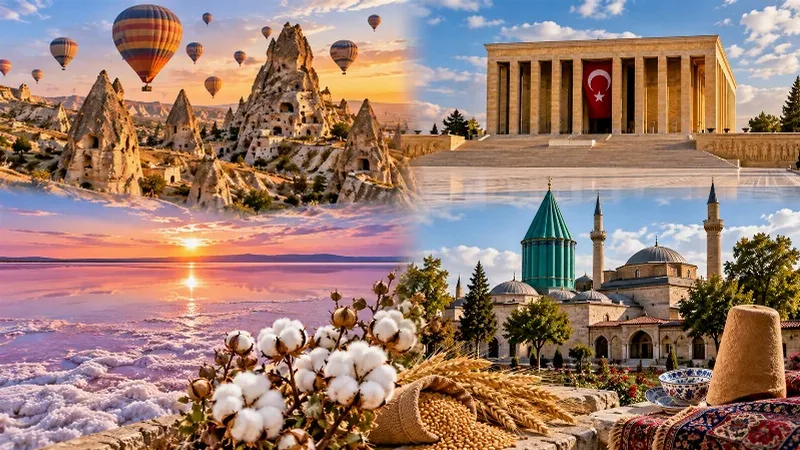
Central Anatolia Region
Central Anatolia is the historic heartland of Türkiye, known for its wide plains, extraordinary rock formations, ancient civilizations and traditional towns. From the fairy chimneys of Cappadocia to the cultural landmarks of Ankara and Konya, the region reveals the rich history and natural beauty of inner Anatolia.
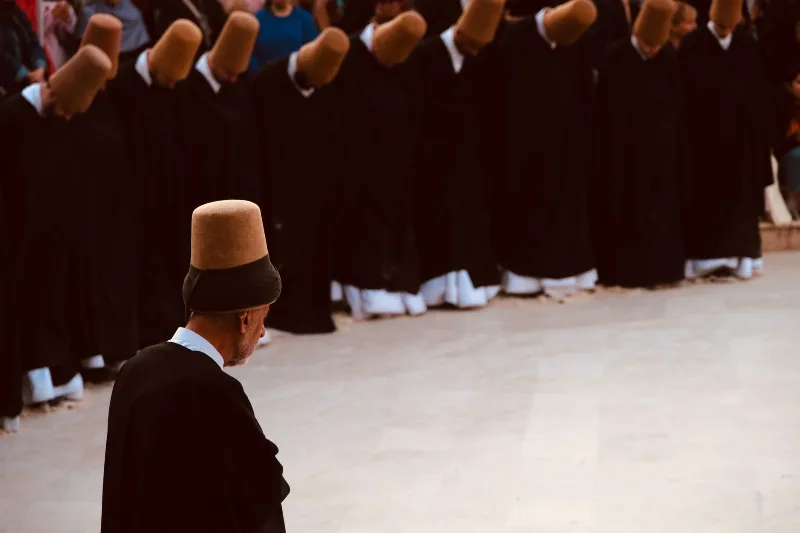
The Cultural Riches of Konya and the Whirling Dervishes
Discover the cultural heritage of Konya, home to the Whirling Dervishes, a city rich in history and spirituality.
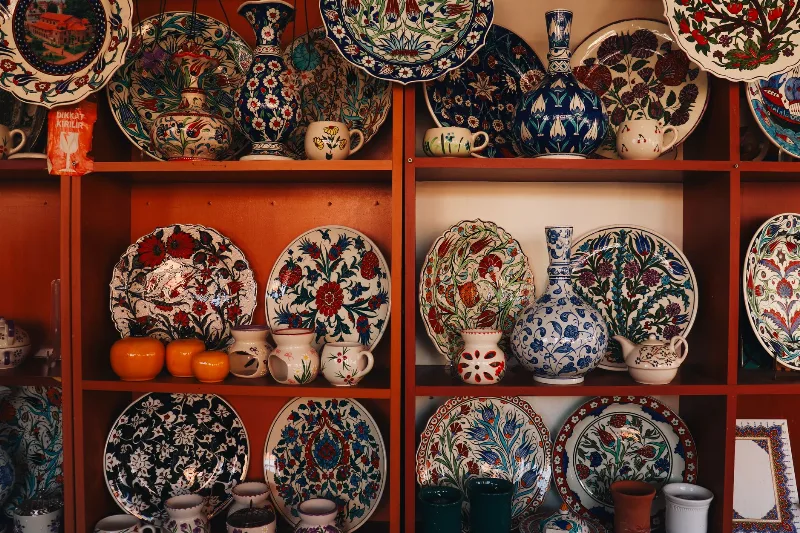
Turkish Ceramics and Pottery
Turkish ceramics and pottery reflect centuries of Anatolian craftsmanship, from Ottoman İznik tiles to the clay workshops of Avanos and Kütahya. Their colours, forms and motifs remain part of Türkiye's living cultural heritage.
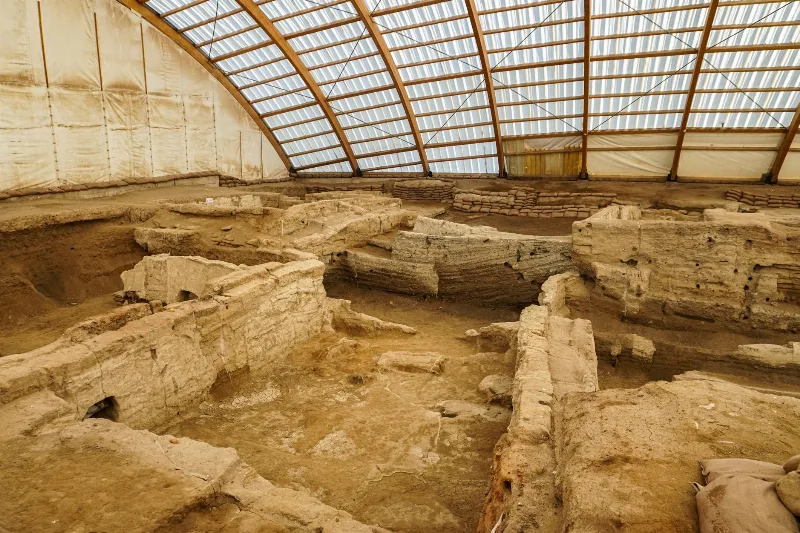
Çatalhöyük: A Neolithic Town on the Konya Plain
Çatalhöyük is a Neolithic and Chalcolithic mound settlement in Konya Province, Türkiye, occupied from around 7500 BCE. Its roof-access houses, painted walls and burials make it one of the most important early farming settlements ever excavated.