
Almond Blossom in Datça, Muğla
On the Datça Peninsula in Muğla, Türkiye, almond trees flower in late winter, usually across February and March. The brief pink-and-white bloom is the peninsula's earliest and most visible sign that spring is arriving.
Each year, usually between February and March, the almond trees of the Datça Peninsula in Muğla province, south-western Türkiye, break into flower and briefly cover the dry, stony slopes with pale pink and white blossom. The event marks the end of winter on this long finger of land between the Aegean Sea and the Gulf of Gökova, and it arrives weeks before most other trees show any sign of life. Because the flowering is short and its timing shifts with the weather, the almond bloom in Datça is best understood as a seasonal window rather than a fixed date on a calendar.
Where the Almond Blossom Happens in Datça
Datça is a long, narrow peninsula reaching west toward the ruins of Knidos, with the Aegean on its northern shore and the Gulf of Gökova on the southern side. Almonds are a traditional crop spread across the peninsula rather than concentrated in one commercial plantation. Groves and individual trees appear on the terraced land around the town of Datça and the old stone village of Eski Datça, in the inland farming villages such as Kızlan, Hızırşah and Emecik, and on slopes that rise behind coves along both coasts.
Because the trees sit among village houses, low stone walls and terraces instead of in a single open field, the blossom is something a visitor meets while moving through the landscape. Long views over the water from the higher ridges are part of the experience, and blossom is often seen against blue sea and pale rock rather than against a flat horizon.
What Causes the Almonds to Flower So Early
Almond is one of the first fruit trees of the Mediterranean to bloom. Like other stone-fruit trees, it needs a stretch of winter cold to break dormancy and then responds to the first sustained warming of late winter. Datça's climate — mild and sunny winters, relatively modest rainfall and sea air that moderates temperatures — allows that trigger to arrive earlier than in inland Anatolia.
The trees flower on bare wood, before the leaves open, which is exactly why the blossom is so conspicuous in an otherwise muted winter landscape. Several local almond varieties flower at slightly different times, so the peninsula's flowering is spread across several weeks instead of appearing all at once.
When the Almond Blossom Normally Appears
Typically the main flowering falls in February and March. In mild years the first trees on sheltered, sunny terraces may open in late January; in colder years the peak can slip into the second half of March. A single tree usually stays in flower for roughly two to three weeks, but because varieties, altitude and exposure vary, the peninsula as a whole often shows blossom for six weeks or more.
Mid-February to mid-March is generally the period when visitors have the best chance of seeing the trees at their fullest. This should be treated as a normal seasonal window rather than a promise: the bloom can be early, late or unevenly spread from one valley to the next.
How Weather Affects the Timing and the Show
Warm, dry late-winter spells bring the flowering forward, while a cold snap can hold it back by a week or two. Rain, strong wind and occasional late frost are the main risks to the display. Stormy weather can strip petals from open flowers and shorten the visible period considerably, and a hard frost during flowering can damage the crop itself.
Almond pollination depends on honeybees and wind, so groves are busiest on still, sunny days when bees are flying. A very mild winter, a dry autumn or an unusually cold one can all change the timing and the density of flowers from year to year. For this reason, the almond season in Datça is always approximate.
What the Landscape Looks Like During the Bloom
In late winter the peninsula is largely bare. Stony terraces, olive and carob trees, grey-green maquis, dry grasses and rocky ridges make up most of the scenery, and the almond trees stand out sharply against that background. Some trees carry white blossom, others soft pink, and a single tree can show both tones depending on the variety.
Near the groves there is a faint sweetness in the air, and beehives are sometimes placed among the trees while flowering is under way. Higher terraces open up views over the sea, so the blossom is frequently framed by water, pale stone and low winter light.
Almond Growing and the Seasonal Cycle
Flowering is the beginning of the almond year, not the harvest. In spring the young green almonds can be eaten fresh, while the mature crop is left on the trees through the summer and gathered later in the season, generally toward the end of summer and into early autumn, after which the nuts are dried and shelled. Almonds have been part of Datça's farming for generations, and many of the trees are old, gnarled and grown on traditional terraces.
Local almond celebrations, when they are held, follow the flowering itself rather than a fixed date, so their timing shifts along with the bloom. The blossom period, in other words, is the anchor for the whole seasonal calendar around the crop.
What Visitors Can Realistically Expect
This is not a dense, uniform field of colour like a lavender plateau. Expect scattered trees, small groves and blossom along the edges of villages and terraces. Moving along the peninsula roads is the most practical way to see it, with stretches of walking for those who want a closer look at individual trees.
Days are often mild and sunny but nights are cool, and rain is possible throughout the period, so layers are useful. Paths and terraces are uneven and stony, and some tracks become muddy after wet weather. Blossom photographs best in soft morning or late afternoon light, and because honeybees are active on warm, still days it is worth keeping a respectful distance from hives.
Places Around the Almond Country of Datça
Eski Datça, with its stone houses and narrow lanes, sits close to several old groves, while the inland villages of Kızlan, Hızırşah and Emecik are surrounded by terraced farmland where almonds have long been grown. The south-coast road toward Palamutbükü offers sea views with blossom on the slopes above, and the far western end of the peninsula around Knidos shows how the same dry, rocky terrain continues toward the ruins.
EXPLORE BY THEME
All themes →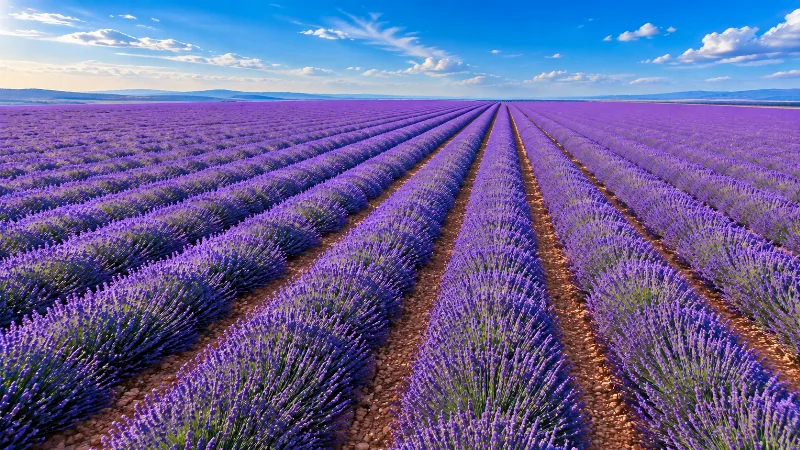
Related content
Datça
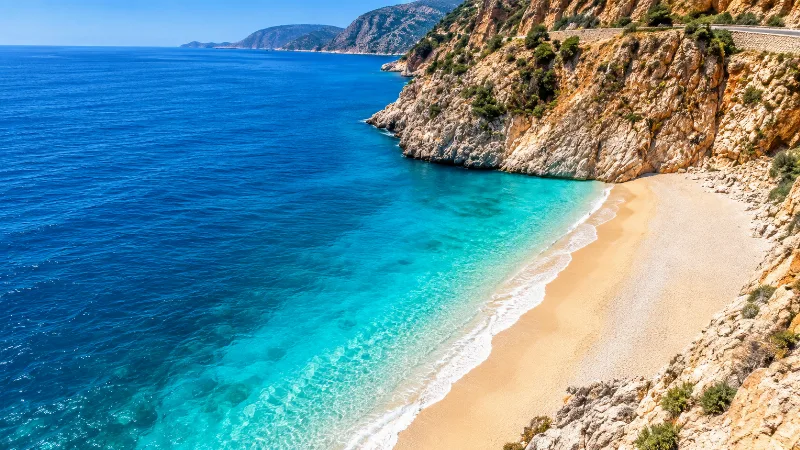
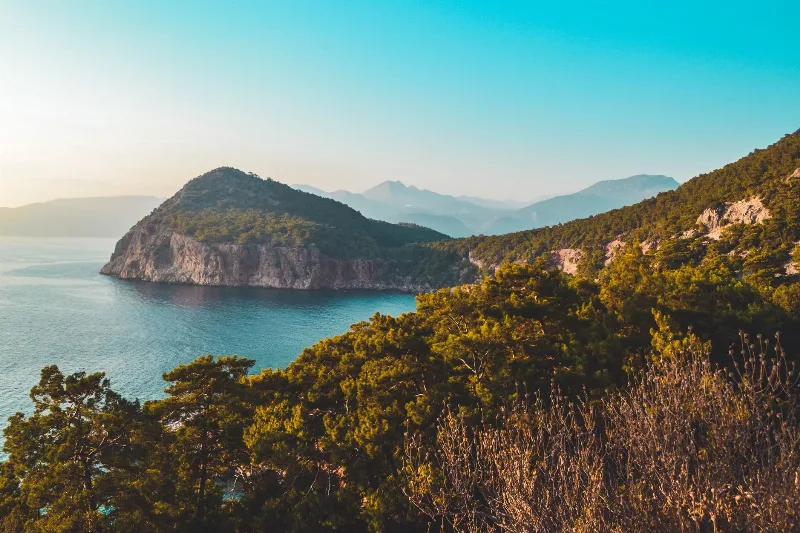
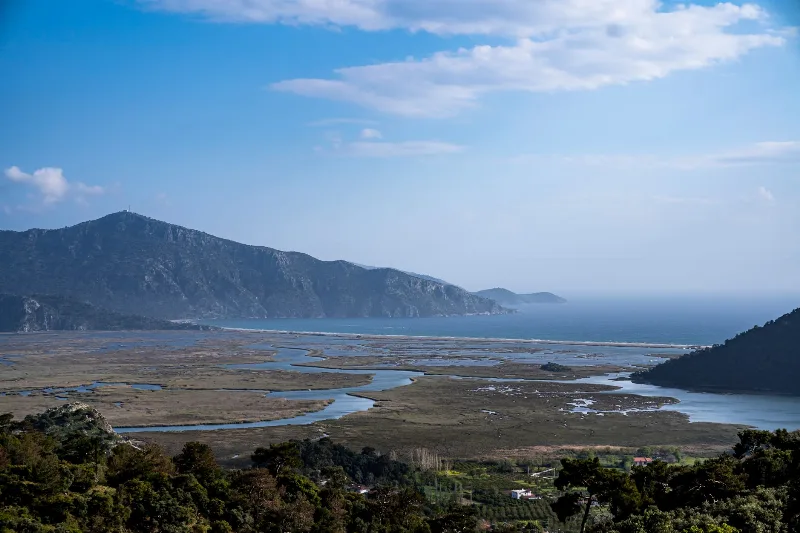
Datça Peninsula offers serene beaches, lush almond groves, and unspoiled beauty, making it a unique getaway in Türkiye.
Muğla
Muğla is a captivating province in southwestern Türkiye, renowned for its stunning Aegean coastline and rich cultural heritage.
Datça Almond Orchards and Olive Oil Tradition in Muğla
The Datça peninsula in Muğla pairs a dry, wind-shaped landscape with almond orchards and a long-established olive-oil culture. Its groves, terraces and seasonal harvests reveal a quieter side of the Aegean.

Datça Almonds
Datça almonds are the almonds grown on the Datça peninsula in Muğla province, southwestern Türkiye, where mild Mediterranean winters, sea air and rocky, well-drained slopes have shaped a local almond-growing tradition centred on sweet, firm kernels.
The Ancient City of Knidos at the Datça Peninsula
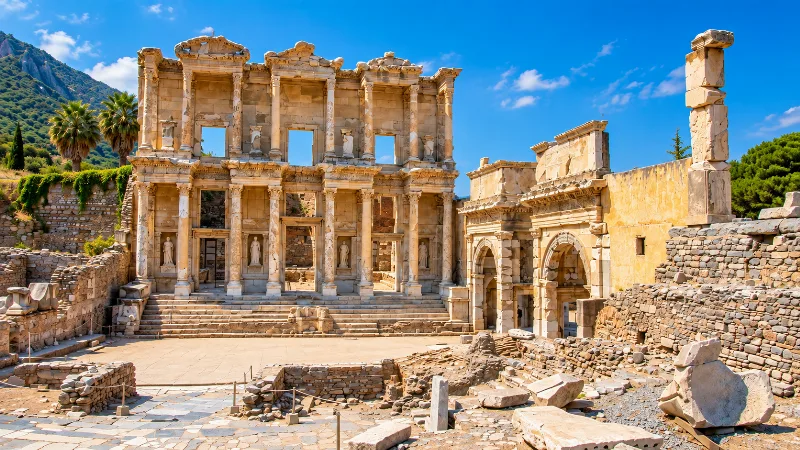
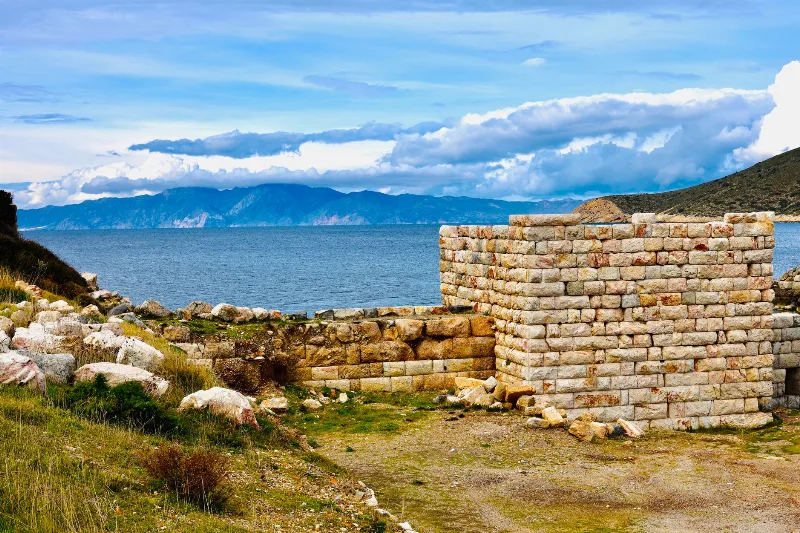
Where the Datça Peninsula narrows into a rocky point in Muğla, the ruins of Knidos spread across two harbours, carrying the memory of a busy trading city and a statue that drew travellers across the ancient world.
Pine Honey Harvest in Marmaris, Muğla
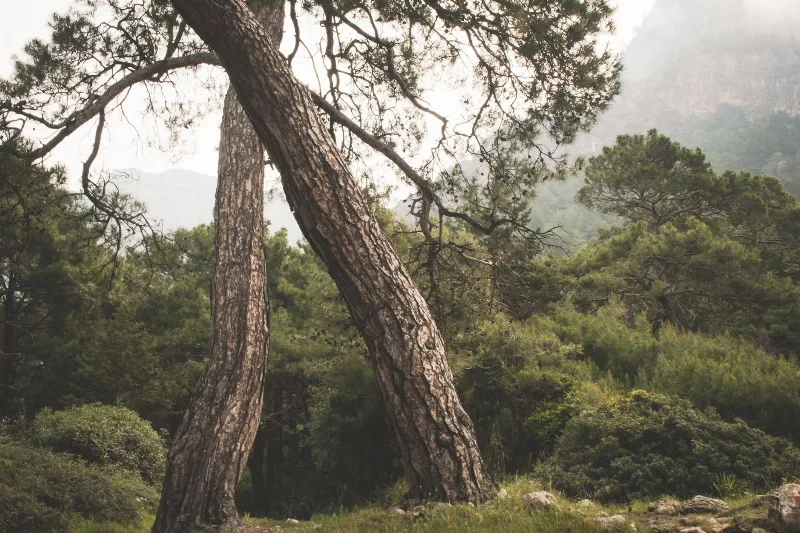
Every autumn, the pine forests around Marmaris in Muğla Province host Türkiye's pine honey harvest, when beekeepers collect honey made from pine-tree honeydew rather than flower nectar. The timing of this harvest depends heavily on how the season's weather unfolds.