
Alanya Castle
Alanya Castle is a 13th-century Seljuk fortress spread across a rocky peninsula above the Mediterranean in Antalya Province, Turkey. Its walls, towers and hilltop citadel form one of the most complete surviving Seljuk defensive complexes in Anatolia.
Alanya Castle is a medieval fortified complex covering the rocky peninsula that rises straight out of the Mediterranean at Alanya, in Antalya Province on Turkey's southern coast. The headland climbs to a plateau roughly 250 metres above sea level, and its surviving walls, towers and inner citadel were largely rebuilt in the 13th century under the Seljuk Sultan Alaeddin Keykubad I. Because the defences were never abandoned and still wrap around a lived-in district, the castle is both an archaeological site and a working neighbourhood, and it remains the single feature that defines the shape of the modern town beneath it.
Where the Castle Stands
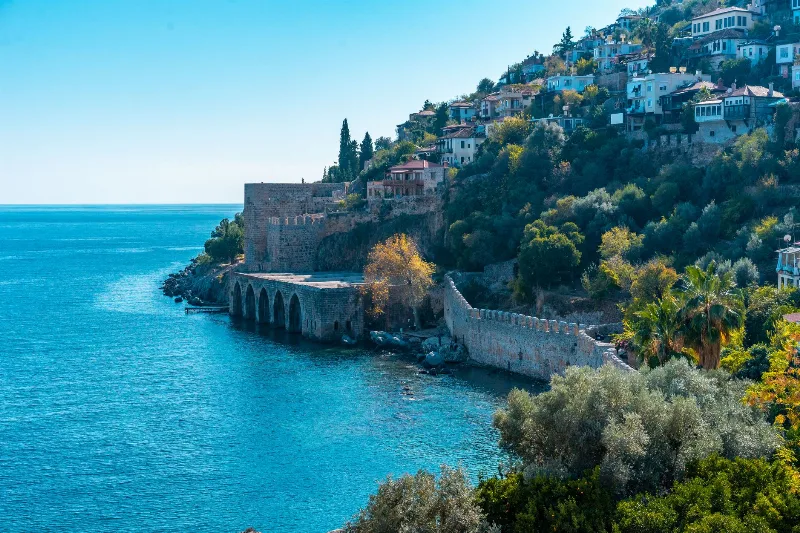
The fortress occupies a peninsula that juts south into the sea, with the Gulf of Antalya to the west and the open Mediterranean to the south and east. Two beaches sit on either side of the headland, narrowing the town into a strip between the water and the slopes of the castle hill. The historic harbour lies at the north-eastern foot of the peninsula, protected from the prevailing swell, and the landward approach is closed by a wall built across the narrow neck of the headland.
Alanya itself sits roughly 130 kilometres east of Antalya city, on the coastal road that continues towards Mersin and the eastern Mediterranean. The castle is not a detached monument on the edge of town; the old quarter and much of the town centre are located on or immediately below its lower slopes, so the fortress is visible from almost anywhere in Alanya.
Why the Seljuks Fortified This Point
The peninsula had been settled and defended long before the Seljuk period, with earlier Hellenistic, Roman and Byzantine activity leaving traces on the site. Its value was always geographical: a high, easily defended rock with a natural harbour at its base and a commanding view of shipping lanes along the coast. When Alaeddin Keykubad I brought the area under Seljuk control in the early 13th century, he turned it into a naval base and wintering port for the Seljuk fleet, which is why the fortification programme extended beyond the hilltop to include the harbour defences as well.
That dual purpose — a military stronghold on the summit and a working port below — is what makes Alanya Castle distinctive among Anatolian castles. Many Seljuk and Byzantine fortresses are hilltop eyries with little connection to the sea. Alanya was designed as a coordinated system linking the citadel, the walls on the slopes and the harbour installations at the waterline.
The Different Lines of Defence
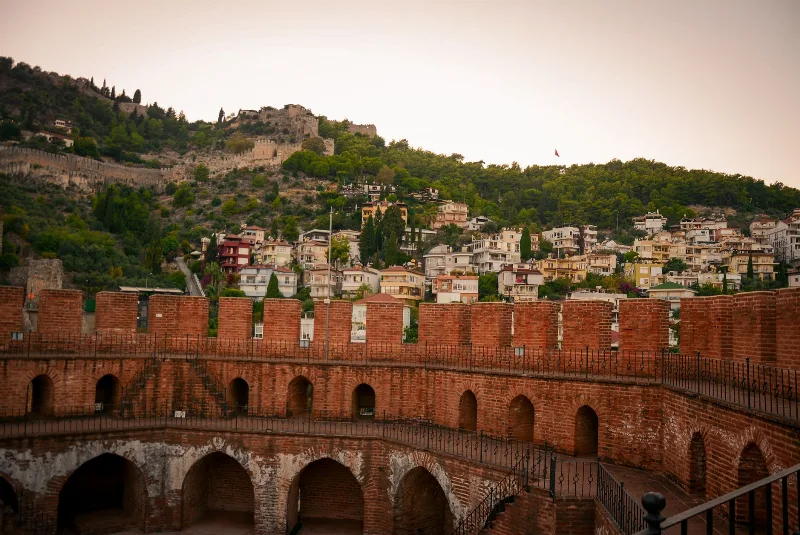
The fortification is organised in layers rather than as a single wall. An outer circuit runs across the base of the peninsula and up the slopes, dotted with towers placed at intervals to cover the approaches. Higher up, a second line narrows the defended area, and above that sits the inner citadel, the most strongly protected zone, occupying the highest part of the plateau.
The walls were built from local stone, with reused blocks from earlier structures appearing in places, and the towers are staggered so that attackers on one stretch could be fired on from the next. Walking the outer and middle circuits gives a clear sense of how the defences were meant to work: each gate and turning point is overlooked from above.
Inside the Inner Citadel
The summit area contains most of the structures a visitor would recognise as buildings. These include the remains of a mosque associated with the Seljuk period, a covered market building of the bedesten type, the traces of a caravanserai or lodging complex, and fragments of earlier Byzantine church architecture. Cisterns cut into the rock were essential to the site, since a garrison on a dry limestone plateau with no reliable spring depends entirely on stored rainwater.
The character of the citadel today is mixed. Ottoman-era houses and later buildings stand among the ruins, some restored and some simply weathered into the rock, and narrow lanes run between them. That layering is part of the experience: the castle is not an empty archaeological park but a settlement that has been continuously adapted over roughly eight centuries.
The Harbour Fortifications
Two structures at the harbour are closely tied to the castle and are usually understood as part of the same defensive scheme. The first is the octagonal stone tower on the waterfront, a landmark visible from far out at sea and traditionally attributed to a Seljuk architect working in the 1220s. The second is the vaulted shipyard beside it, a stone boathouse opening directly onto the water, which allowed vessels to be built, repaired and sheltered under cover.
Seen together with the walls above, these buildings show that Alanya's defences were about controlling the coast as much as holding a hill. The town walls once ran from the harbour up to the outer circuit, tying the two halves of the system into one continuous line.
Landscape and Terrain
The peninsula is limestone, steep on its seaward faces and terraced where people have built. Vegetation is Mediterranean: scrub, pine, carob, fig and olive, with banana groves appearing on the sheltered lower slopes around the town. Summer is hot and humid, with strong sun off the water, while winters are mild and wet, and occasional storms push spray high against the seaward cliffs.
Because the site is a hill, terrain matters. Paths inside the castle climb steadily, surfaces are often uneven cobbles or bare rock, and some stretches of wall walk have significant drops beside them. Anyone with limited mobility should plan around the steepest sections rather than assume the whole complex is easily walkable.
Getting There and Getting Around
The castle can be reached by road, with vehicles able to climb part of the way up before the lanes become too narrow, and by a cable car that connects the lower town with the upper castle area. Walking up from the harbour or the old quarter is possible and gives a gradual introduction to the walls, but it involves a sustained climb in the heat.
Once inside, the site is explored on foot. Distances between the outer gates, the middle walls and the citadel are greater than they look from below, so a visit usually takes a few hours rather than one. Sturdy shoes, water and sun protection are practical necessities rather than optional extras, and there are few places to sit in shade on the higher, more exposed parts of the plateau.
When to Visit
Spring and autumn are the most comfortable periods, when temperatures are moderate enough to walk the walls and slopes without exhaustion. Midsummer visits are best made early in the morning or late in the afternoon, since the plateau and the south-facing walls receive little shade through the middle of the day. Winter can be clear and quiet, with the bonus of greener slopes, but rain can make stone surfaces and steep paths slippery.
Visibility is a practical consideration too. On clear days the view takes in the coastal plain, the two beaches flanking the peninsula and the mountains behind Alanya; on hazy or overcast days the panorama that draws many visitors is considerably reduced.
Nearby Places Worth Knowing
The harbour area at the foot of the castle, with its tower and covered shipyard, is a natural extension of any visit and is walkable from the town centre. The Damlataş Cave sits close to the western beach, and the coastal road west leads towards Side and its own extensive Roman and Hellenistic ruins, while Antalya city offers the archaeological museum and the old quarter of Kaleiçi. East of Alanya, the road continues along the coast towards Gazipaşa and the less developed stretches of the eastern Mediterranean shore.
Related content
Alanya
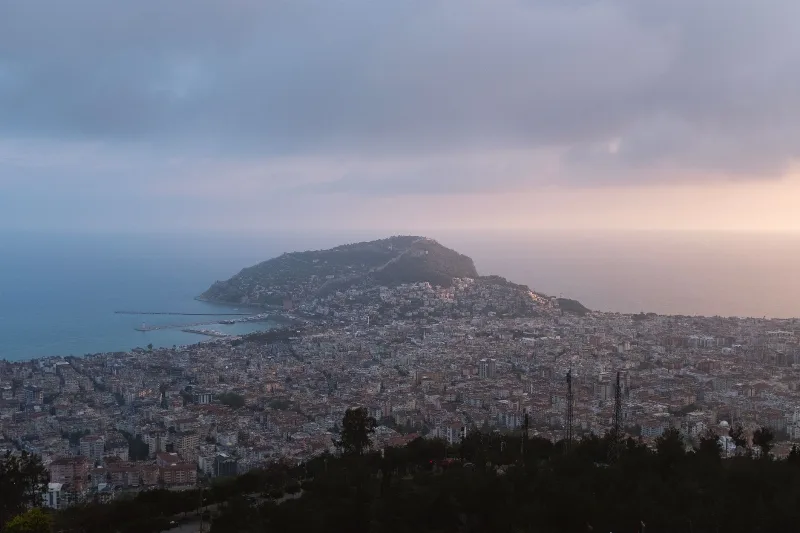
Alanya is a district and coastal city in eastern Antalya Province, Türkiye, built around a Seljuk fortress peninsula that carries the Red Tower, a medieval shipyard and an inhabited old town. Long beaches, a mountain backdrop and a long warm season shape its character.
Antalya
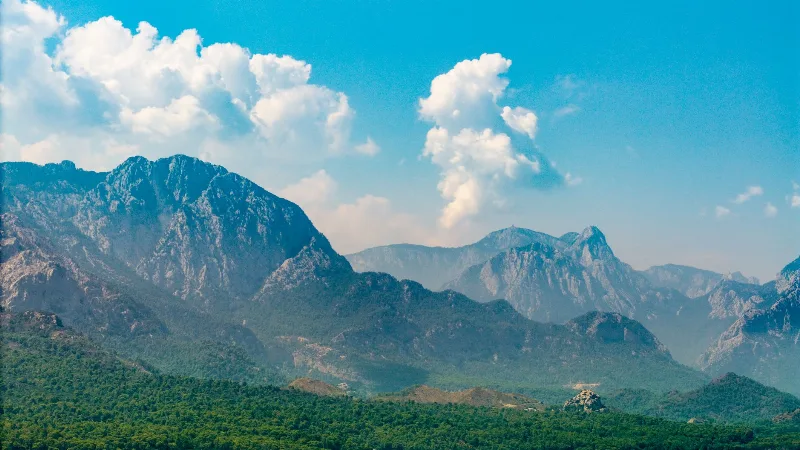
Antalya offers a unique blend of vibrant history and stunning natural beauty, making it a must-visit destination in Türkiye.
Damlataş
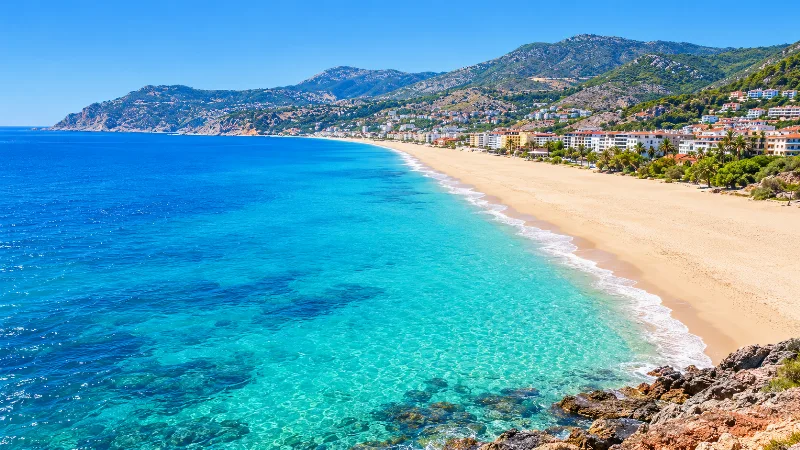
A short, sandy Mediterranean shoreline at the foot of Alanya's limestone headland, taking its name from the cave in the rock above it.
3-Day Alanya and Side Route
A three-day route along Türkiye's eastern Mediterranean coast, starting at Alanya Castle, continuing west to the ancient city of Side, and ending at the Manavgat Waterfalls.
Alanya Castle
Alanya Castle is a medieval fortress on a rocky Mediterranean promontory in Antalya Province, Türkiye, whose surviving defences were largely built under the Seljuk Sultanate of Rum in the 13th century. Its walls, inner citadel, Red Tower and vaulted shipyard form one of the most complete Seljuk military and maritime complexes in Anatolia.
Kurşunlu Waterfall
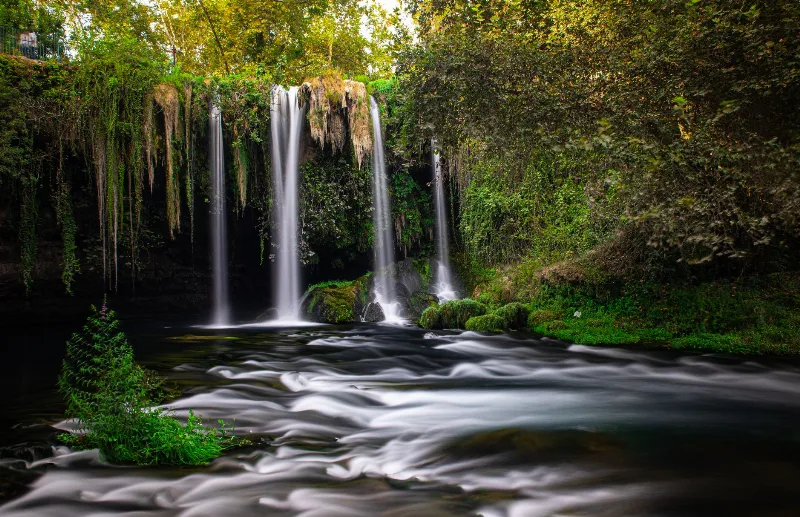
Kurşunlu Waterfall is a natural cascade in Antalya Province, Turkey, set within a lush forest and nature park. It is known for its series of falls, cave, and walking paths.