
Osmaniye Peanuts
Osmaniye peanuts are groundnuts grown in southern Türkiye, where the warm climate and light, sandy soils of the Çukurova give the province one of the country's best-known peanut crops.
Osmaniye peanuts are the groundnuts (Arachis hypogaea) cultivated in Osmaniye Province, in southern Türkiye, where the eastern part of the Çukurova plain meets the lower slopes of the Nur Mountains. Of all the crops grown in the province, the peanut is the one most closely identified with it. The Turkish name, yer fıstığı, means "ground nut", a reference to the pods that ripen beneath the soil. The bond between Osmaniye and this crop rests on two things: a long, hot, largely dry growing season and light, sandy, well-drained land of the kind a plant needs when its fruit must develop underground.
The Landscape and Soils Behind the Crop
Osmaniye sits in a transitional belt between the Mediterranean coast and the Anatolian interior. Summers are hot and dry, winters are mild and comparatively wet, and the frost-free period is long. Peanuts depend on accumulated warmth: the crop needs a sufficiently long warm season to flower, to drive its pegs into the earth and to fill and mature the pods before temperatures fall.
Soil matters just as much as heat. The province's sandy and sandy-loam soils drain quickly, which suits a crop that dislikes waterlogged ground, where pods can rot and lifting becomes difficult. Loose, light soil also makes harvest cleaner, because the pods come free of the earth without heavy compaction around them. Peanut fields in the area are normally rotated with other crops rather than grown in the same ground year after year, a practice that limits soil-borne disease and helps keep the land productive.
The Peanut Plant and Its Unusual Growing Cycle
The peanut belongs to the legume family and forms nitrogen-fixing nodules on its roots through soil bacteria, a trait that gives it extra value within a rotation. It is an annual, low-growing plant with paired leaflets and small yellow flowers produced through the summer.
Its most distinctive habit explains why it is fussy about soil. After a flower is pollinated, a stalk-like peg grows downward and burrows into the ground, and the pod with its seeds develops underground rather than hanging on the stem. Because this happens below the surface, the soil has to be loose enough for the pegs to enter and for the pods to swell. Sowing takes place in spring, once the soil has warmed, and the crop then progresses through flowering and pod formation across the summer months. Harvest generally arrives in early autumn, typically during September and October in this part of Türkiye, depending on the variety grown and the weather of the season.
Lifting, Drying and Storage
At harvest the plants are dug or lifted so that the pods come free of the soil, then left to dry. Reducing moisture is the essential step before storage, since damp pods spoil quickly. Both mechanised lifting and more manual methods are used, and on smaller holdings plants may be pulled, stacked and dried in the field before the pods are stripped from the vines. The vines and leaves that remain are not wasted; they have fodder value for livestock. Once dried, the pods are stored and later shelled to separate the kernels from the husks.
How Osmaniye Peanuts Are Used
Roasting is the most familiar treatment. Peanuts are roasted and salted, sold either in the shell or shelled, and eaten as a snack; roasted peanuts from the province are a common sight in local markets and beyond. Shelled kernels are also ground into peanut butter, fıstık ezmesi, a spread found in most Turkish households, and peanuts enter confectionery, including nut-and-sugar sweets. Part of the crop is pressed for oil. The shells, meanwhile, have minor uses as fuel and as a material in some industrial processes.
What the Crop Means to the Province
For Osmaniye, the peanut is a genuine cash crop. It supports farming families across the plain, and because it is handled, shelled and roasted within a relatively compact area, those steps have become part of the province's rural economy rather than something that happens far away. The crop fits into a Mediterranean farming calendar alongside other warm-season production, and it returns value twice over: once through the kernels, and again through the fodder from the vines.
Its local identity is reinforced by the way the product travels. Peanuts from Osmaniye are known to buyers as a distinct regional item, which is why the province's name tends to be attached to the crop even though the plant is grown far beyond its borders.
Other Parts of Türkiye Where Peanuts Grow
Osmaniye is not the only place in Türkiye where peanuts are cultivated. The crop also grows in the neighbouring Mediterranean provinces of Adana and Hatay, along the coast towards Mersin, and in parts of the Aegean and southeastern regions where the climate is warm enough for the growing season the plant requires. What sets Osmaniye apart is the concentration of the crop within its farmland and the way peanut growing, handling and roasting have become a recognised part of the province's agricultural character.
Reading the Crop Through Its Region
Understanding Osmaniye peanuts means understanding the place. A warm, sunlit growing season and free-draining sandy ground are not incidental details; they are the conditions that allow a plant with an underground pod to be grown at scale. The result is a crop that is at once ordinary in its botany and particular in its geography — a legume that has found in the eastern Çukurova a combination of heat, light soil and agricultural habit that keeps it tied to Osmaniye in the minds of Turkish consumers.
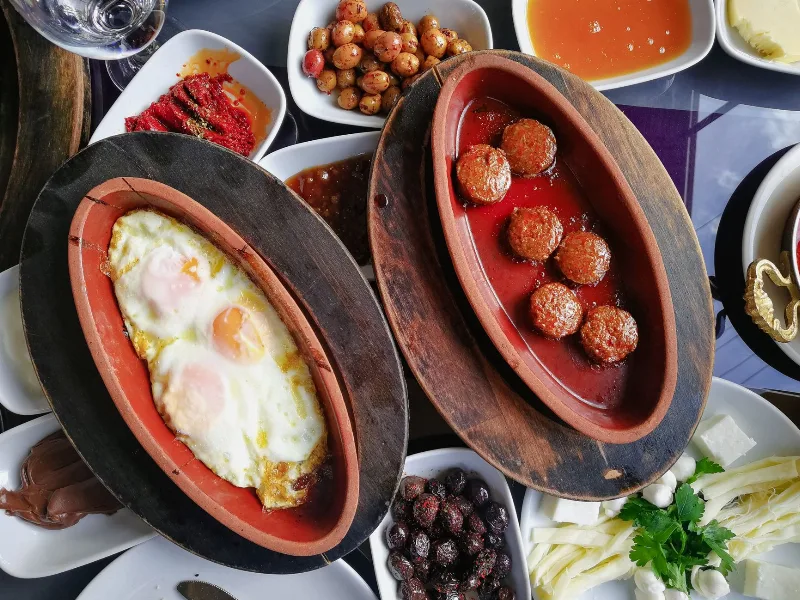
Menemen
Menemen is a Turkish breakfast dish of eggs cooked with tomatoes and green peppers in olive oil or butter, traditionally eaten with bread. It takes its name from a district of İzmir Province and is prepared in households across Türkiye.
Explore →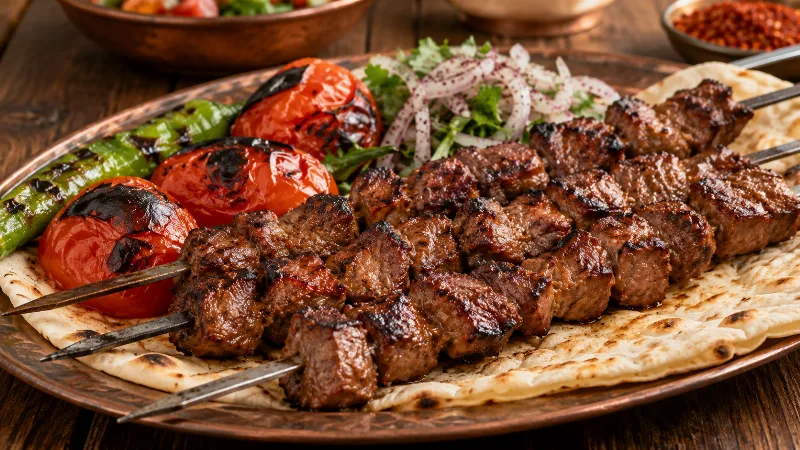
Şiş Kebap
Şiş kebap is built from cubes of marinated meat threaded onto a skewer and grilled over charcoal. It is one of the simplest forms of Turkish kebab, defined by the cut of meat, the marinade and the skewer itself.
Explore →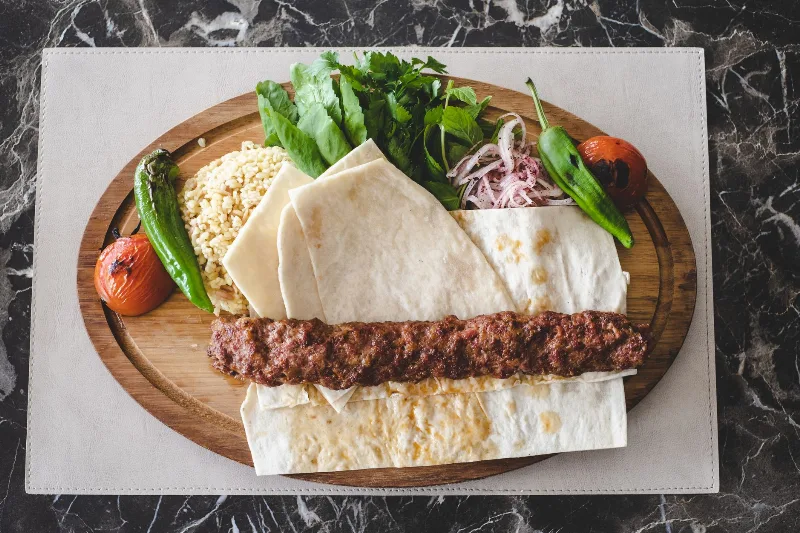
Adana Kebap: Spicy Hand-Minced Lamb Kebab from Adana
Adana kebap is a charcoal-grilled minced lamb kebab from the Çukurova plain, defined by hand-chopped meat, tail fat and generous chilli heat. This article explains its ingredients, preparation, flavour and how it differs from Urfa kebap.
Explore →Related content
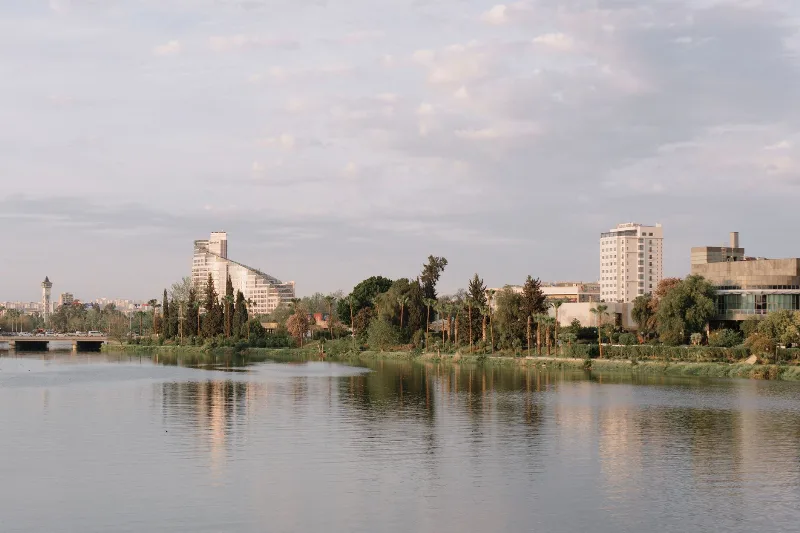
Adana
Adana is a major metropolitan city in southern Türkiye and the urban heart of the Çukurova plain, defined by the Seyhan River, a Roman-era stone bridge and a deeply rooted kebab and agricultural culture.
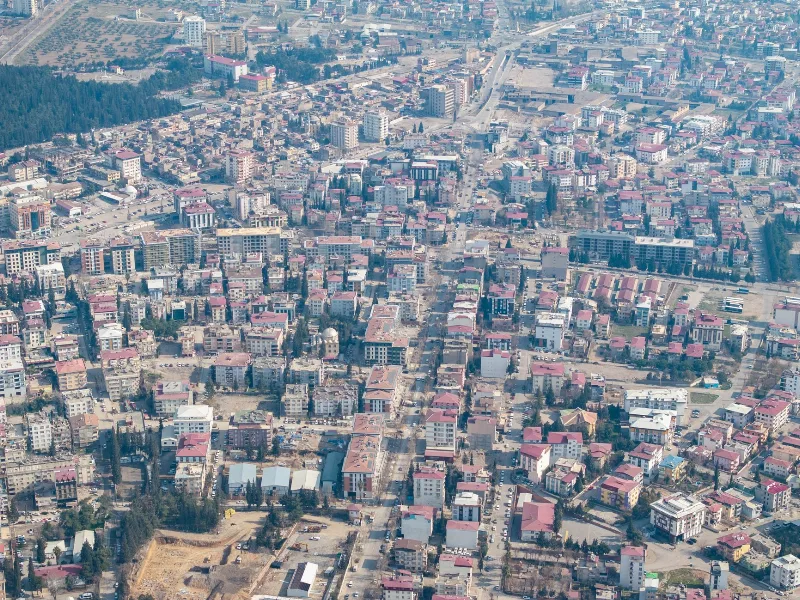
Kahramanmaraş
Kahramanmaraş is an inland city in southern Türkiye, set on a plain below the Taurus Mountains, known worldwide for its elastic salep-based dondurma and for a textile industry built on denim.

Mediterranean Region
Türkiye's Mediterranean Region combines turquoise coastlines, dramatic mountains, ancient cities and fertile landscapes. From Antalya's beautiful beaches to the historic settlements of the eastern Mediterranean, the region offers a rich blend of natural scenery, cultural heritage and traditional local life.
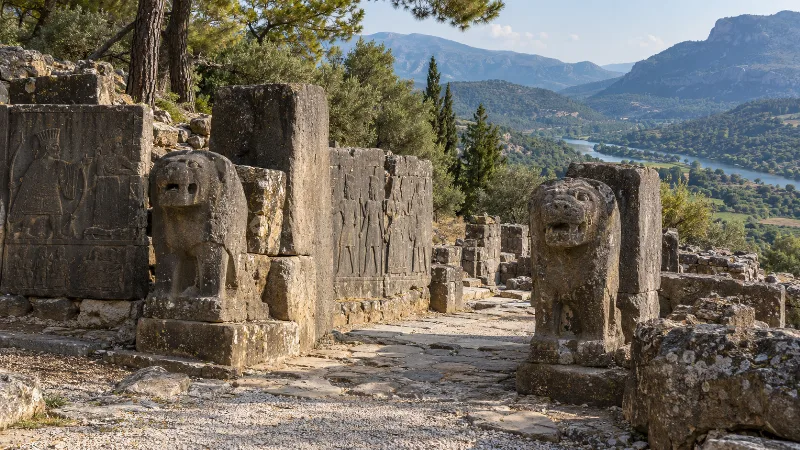
Karatepe
Karatepe is an 8th-century BC Hittite fortress above the Ceyhan River in Osmaniye Province, whose Phoenician–Luwian bilingual inscriptions unlocked the reading of Anatolian hieroglyphs.
Adana Kebap: Spicy Hand-Minced Lamb Kebab from Adana
Adana kebap is a charcoal-grilled minced lamb kebab from the Çukurova plain, defined by hand-chopped meat, tail fat and generous chilli heat. This article explains its ingredients, preparation, flavour and how it differs from Urfa kebap.
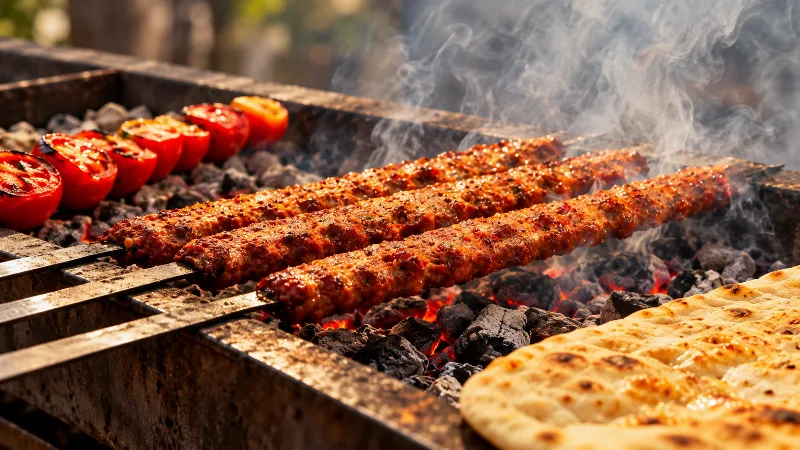
Adana Kebabı
Adana kebabı is a spicy minced-lamb kebab from the southern Turkish city of Adana, moulded onto wide flat skewers and grilled over charcoal. Its heat, its hand-chopped meat and its distinctive flat skewer set it apart from other Turkish kebabs.