
Erzurum Potatoes
Erzurum potatoes are highland potatoes from Erzurum province in Eastern Anatolia, shaped by cool summers, volcanic soils and a short growing season. They are known for their starch-rich texture and full flavour.
Erzurum potatoes are the tuber crop associated with the high plateau country of Erzurum province in Eastern Anatolia. The province’s cool summer conditions and volcanic soils are central to the crop’s local reputation: they are linked with a comparatively high starch content and a full, well-developed flavour. This is not a generic potato story transferred onto a map; it is a crop identity built around a specific highland environment in eastern Türkiye, where altitude, season length and soil character all influence what the potato becomes.
The High Plateau Setting of Erzurum Province
Erzurum lies in eastern Türkiye, in a province known for elevated terrain, broad plateau surfaces and a climate with a marked cold season. Potato growing here belongs to that highland setting. Potatoes are a cool-climate tuber crop rather than a crop that demands a long, hot lowland summer, and in Erzurum they grow in fields where summer heat is moderate and nights are cool. The growing season is shorter than in many lowland agricultural districts, so the crop must establish, flower and bulk up its tubers within a narrower window. This helps explain why Erzurum is associated with potatoes: the province offers the kind of cool, elevated growing conditions in which the crop can perform well, rather than conditions better suited to heat-loving crops.
Why Volcanic Soils Matter for the Crop
Volcanic soils are part of the explanation for the character of Erzurum potatoes. Soils formed from volcanic material are generally loose, well drained and mineral-rich, and for a potato plant these qualities are important. The crop forms its tubers underground, so a soil that drains freely and does not remain waterlogged supports healthy root and tuber development. The combination of cool summers and volcanic soils is what gives Erzurum potatoes their regional identity. They are described as starch-rich and well flavoured, qualities tied less to a single named variety than to the growing environment and the local agricultural tradition. The land is not merely a backdrop to the product; it is part of what the product is.
From Planting to Lifting in a Short Season
Potato growing in Erzurum follows the rhythm of a highland year. Planting must wait until the risk of hard frost has passed and the soil has warmed enough for seed tubers to sprout. Because the growing season is shorter than in lowland districts, the crop has to establish quickly, flower and then bulk up its tubers before autumn temperatures fall. Fields are tended through the summer, with hoeing and earthing up around the plants to keep tubers covered and protect them from light. Harvest comes in late summer or autumn, when the foliage dies back and the tubers are lifted from the soil. In a province at this elevation, the harvest window is shaped by the approach of cold weather, so timing matters.
Appearance, Cooking Texture and Flavour
Erzurum potatoes are valued for their cooking character. Their high starch content gives them a relatively dry, floury texture when cooked, and they tend to produce a light, fluffy mash rather than a waxy, dense one. This makes them useful for baking, mashing and frying, as well as for hearty dishes. Flavour is part of the reputation: the potatoes are described as having a full, rounded taste rather than a bland, watery one. Skin colour and tuber shape can vary according to the variety planted, but the regional identity of Erzurum potatoes is based on the growing conditions and the way the crop is handled after harvest, not on a single fixed appearance.
A Potato Landscape in Eastern Anatolia
The potato has a visible place in the agricultural landscape of Erzurum. Fields on the plateaus and around settled areas are worked in rotations with other crops suited to the short season. Potatoes are a practical crop for households and for local markets because they store well and can be used through the winter. In this sense the crop supports the rhythm of highland life: it is planted in spring, lifted before the cold closes in, and kept for use over the months when fresh garden produce is limited. The association between Erzurum and potatoes is therefore not just a matter of soil chemistry; it is also a matter of farming practice, household storage and the local preference for a filling, starchy crop that grows well in a cool summer climate.
Harvest Handling and Kitchen Use
After lifting, potatoes are usually allowed to dry and cure briefly so that the skin sets and minor damage heals. They are then stored in cool, dark, well-ventilated conditions to slow sprouting and keep the tubers firm. Good storage is especially important in a region with a long cold season, because the potato is a winter staple. In the kitchen, Erzurum potatoes are used in soups, stews, casseroles, mashes and simple fried or roasted preparations. They can also be used in local home cooking alongside other Eastern Anatolian ingredients, but the potato itself remains the defining product: a raw agricultural crop tied to the province’s high plateau fields.
What Sets Erzurum Potatoes Apart
Erzurum potatoes are distinct because of the place in which they grow. The high plateaus of Erzurum provide cool summers, a short growing window and volcanic soils, and these conditions are reflected in the potato’s starchiness, texture and flavour. The same crop grown in a warmer, longer-season lowland area may be heavier, wetter or less floury. This is why the name Erzurum potatoes carries meaning for cooks and growers: it points to a highland Eastern Anatolian environment, not merely to potatoes sold in Türkiye. The product’s identity rests on the relationship between land, climate and crop.
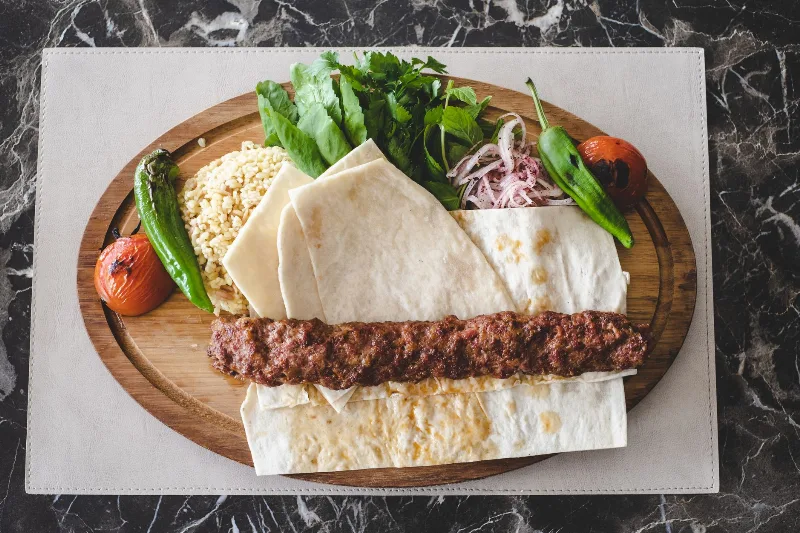
Adana Kebap: Spicy Hand-Minced Lamb Kebab from Adana
Adana kebap is a charcoal-grilled minced lamb kebab from the Çukurova plain, defined by hand-chopped meat, tail fat and generous chilli heat. This article explains its ingredients, preparation, flavour and how it differs from Urfa kebap.
Explore →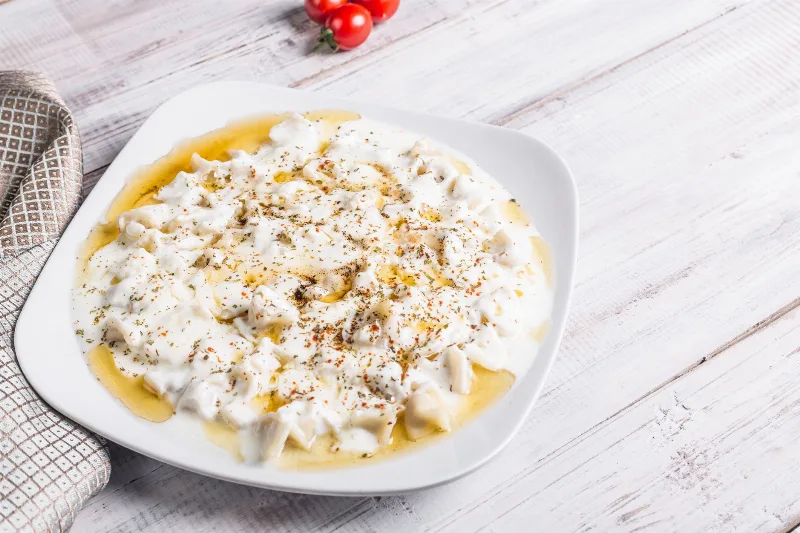
Mantı
Mantı are small boiled Turkish dumplings filled with minced meat and onion, traditionally served with garlic yogurt and melted butter. The dish is most closely associated with Kayseri, where the dumplings are folded exceptionally small.
Explore →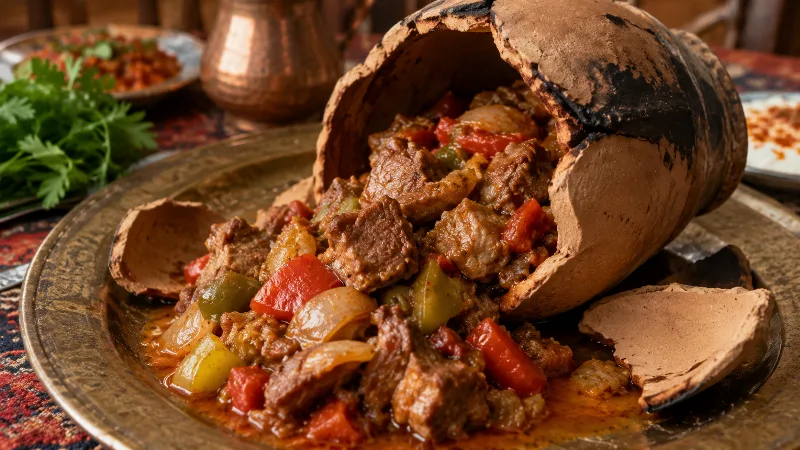
Testi Kebabı
Testi Kebabı is a traditional Turkish dish from Cappadocia where meat and vegetables are slow-cooked in a sealed clay pot that is broken open at the table. The result is tender meat and rich, aromatic vegetables.
Explore →Related content
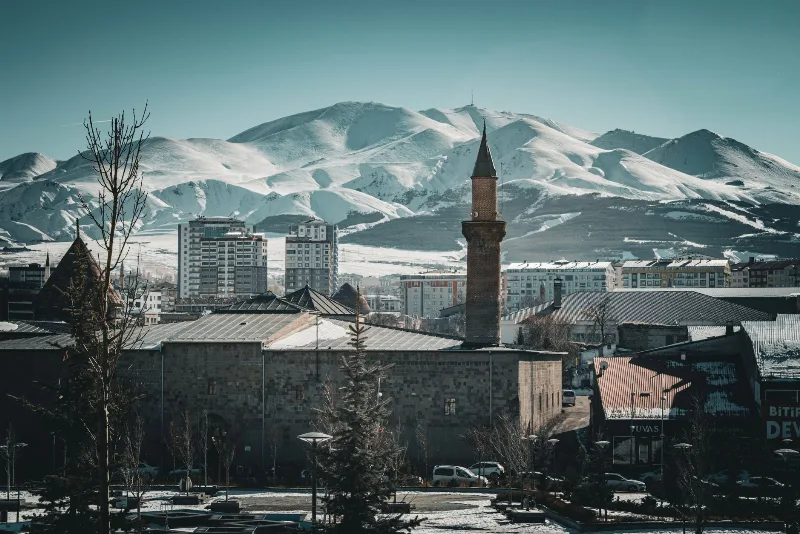
Erzurum
Erzurum is a high-plateau city in eastern Türkiye and the capital of its province, set at roughly 1,900 metres among mountains. It is known for severe winters, the long ski season on Palandöken and a historic centre of Seljuk and Ottoman monuments.
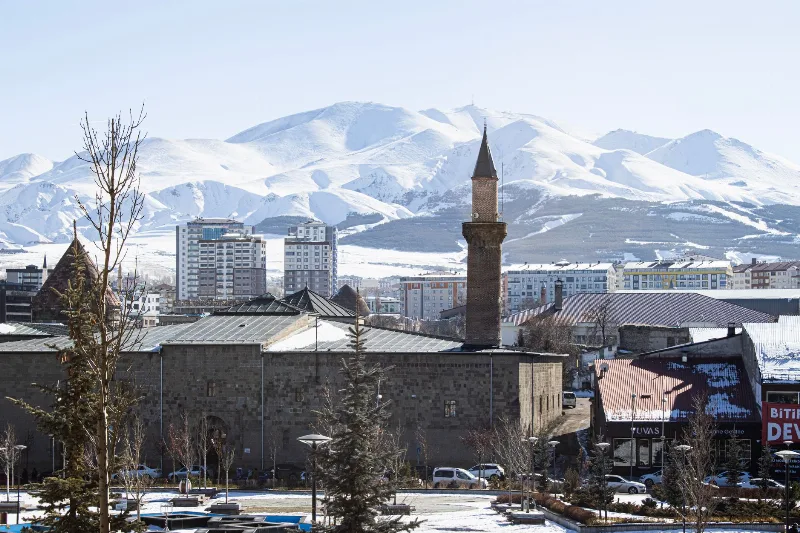
Skiing Escapades in Erzurum
Erzurum is a high-elevation city in eastern Türkiye where long winters and dependable snowfall support skiing and winter sports. Its mountain slopes, historic landmarks and cold-weather cuisine give a snow adventure here a distinct character.
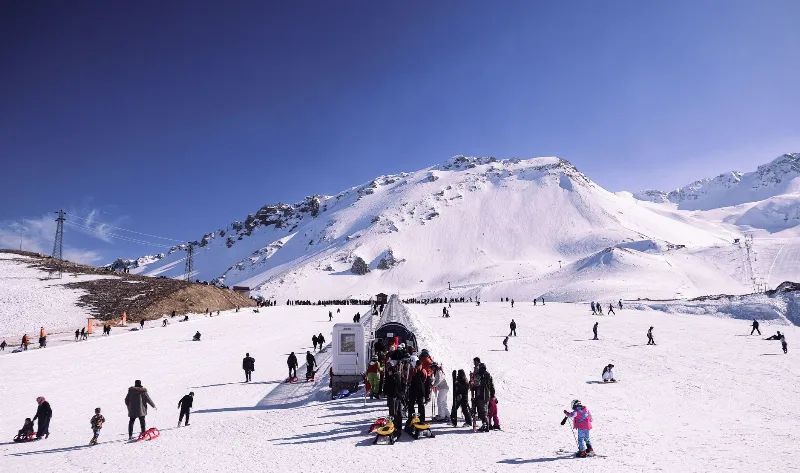
Snow Season in Palandöken, Erzurum
Palandöken, the mountain rising above Erzurum in eastern Türkiye, holds a long snow season that typically runs from December to March. Its dry, cold continental climate produces light powder snow, which is why the area has become one of the country's main winter sports destinations.
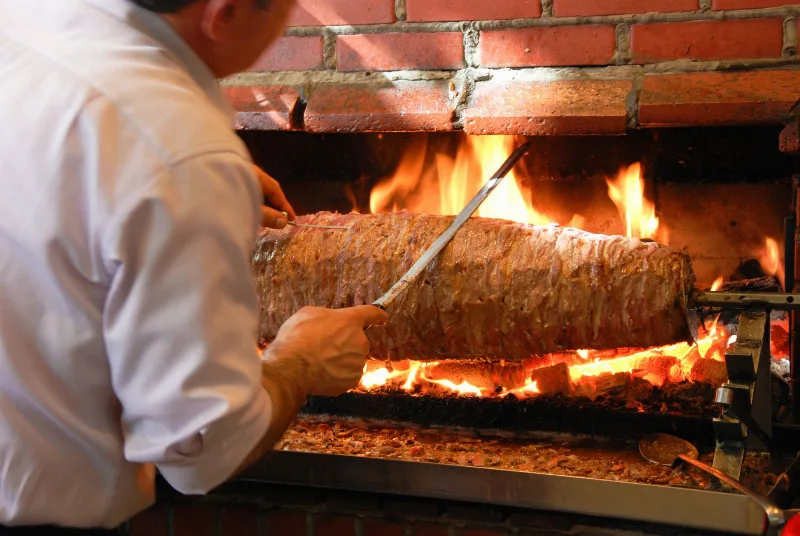
Cağ Kebabı
A regional lamb kebab from Erzurum, Cağ Kebabı is cooked on a horizontal rotisserie and served on skewers. Its tender, juicy meat and simple accompaniments make it a celebrated dish in eastern Turkey.
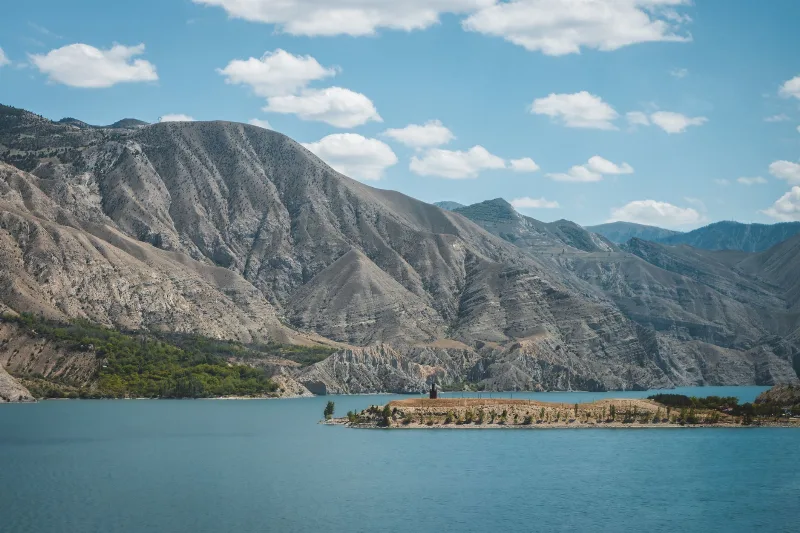
Lake Tortum
Lake Tortum is a landslide-dammed lake in Erzurum Province, northeastern Türkiye, created when a huge rock slide blocked the valley of the Tortum River. Its overflow spills over the Tortum Waterfall, one of the country's best-known cascades.
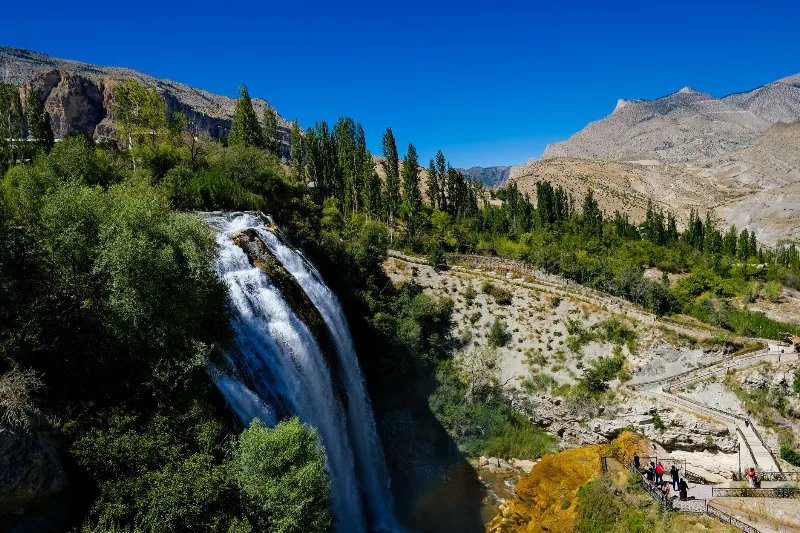
Tortum Waterfall
Tortum Waterfall in Erzurum Province is the outflow of Lake Tortum, a large landslide-dammed lake, and the drop marks where the lake spills over the natural barrier that formed it.