
Snow Season in Palandöken, Erzurum
Palandöken, the mountain rising above Erzurum in eastern Türkiye, holds a long snow season that typically runs from December to March. Its dry, cold continental climate produces light powder snow, which is why the area has become one of the country's main winter sports destinations.
Each winter, the mountain of Palandöken above Erzurum in eastern Türkiye is buried under a snow cover that generally lasts from December until March, and sometimes lingers longer on the highest slopes. What makes this period distinctive is not simply the presence of snow but its character: the cold, dry air of the eastern Anatolian plateau tends to produce light, powdery snow rather than the heavy, wet snow common in milder coastal mountain ranges. That combination of a reliably long season and favourable snow texture is what has made the area one of Türkiye's leading winter destinations, drawing skiers and snowboarders from across the country and beyond.
Where the Snow Season Takes Place
Palandöken is the mountain mass that rises directly to the south of Erzurum, a city that sits on a high plateau in eastern Anatolia at roughly 1,900 metres above sea level. The ski terrain itself begins above the city and climbs considerably higher, which means the mountain has a vertical range that supports snow at different depths and for different lengths of time.
The setting is not alpine in the forested, postcard sense. Much of the upper mountain lies above the tree line, where the landscape is open steppe grassland and bare rock. Lower down, patches of pine and juniper appear, but the dominant impression in winter is of broad, treeless slopes covered in white, with the city and the surrounding plain visible below. This openness means the snow is fully exposed to wind, sun and cold air, all of which shape how the season develops.
When the Snow Season Normally Runs
The core of the season typically falls between December and March. In an average year, the first substantial falls arrive in late November or December, and the cover builds through January and February, which are usually the coldest and most consistently snowy months. March often remains fully skiable, and the days grow longer and the sun stronger, so the snow can become softer and heavier in the afternoon while staying firm and fast in the morning.
This is an approximate window rather than a fixed calendar. The exact start depends on when the first heavy systems move in, and the end depends on how quickly spring warmth arrives. At higher elevations and on shaded, north-facing slopes, snow can persist well past the point where it has disappeared from the lower runs and from the city itself.
What Creates the Light, Dry Snow
The snow quality on Palandöken is largely a product of geography and climate. Erzurum lies far from the sea, so the air is dry and the winter temperatures are low and stable. Snow that falls into cold, dry air and settles onto already frozen ground tends to stay light and loose instead of compacting into wet, heavy layers. This is the same reason eastern Anatolian winters are known for powder rather than slush.
Wind is the other major factor. On exposed upper slopes, strong winds can move loose snow, stripping some areas and depositing deep drifts in others. Wind-packed surfaces and wind-loaded gullies are therefore part of the normal picture, and the snow conditions can differ noticeably from one part of the mountain to another on the same day.
How Weather Affects the Timing Each Year
The season is never identical twice. A year with early, sustained cold and frequent snowfall can produce good cover by early December, while a milder autumn can push the usable season back by several weeks. Mid-winter warm spells sometimes bring rain to lower elevations and heavier, wetter snow higher up. Fog, low cloud and blowing snow can reduce visibility on the upper mountain even when the snow depth itself is excellent.
Because of this year-to-year variation, it is more useful to think in terms of a normal window than a guaranteed date. January and February are generally the safest months for consistent snow depth and cold temperatures; December can be excellent but is more variable; March offers good snow with milder, sunnier weather and longer daylight.
What the Landscape Looks Like in Season
Through the heart of winter, the mountain becomes a continuous white surface broken only by rock outcrops, lift structures and the occasional dark line of trees on lower slopes. On clear, cold days the sky is a hard, deep blue and the views extend across the snow-covered Erzurum plain towards distant ranges. On overcast days the mountain can look almost featureless, which flattens the terrain visually and makes navigation harder.
The city of Erzurum itself is also under snow for much of this period. Its streets, surrounding fields and orchards remain white for weeks at a time, and the plain to the east and north stays frozen and covered well into the winter.
What Visitors Can Realistically Expect
A winter visit here is a genuine cold-weather experience. Temperatures often stay well below freezing, and wind chill on exposed slopes can make conditions feel considerably harsher than the thermometer suggests. Layered clothing, windproof outerwear, eye protection and proper gloves are practical necessities rather than optional extras.
On the mountain, visitors can expect groomed runs of varying difficulty, terrain suitable for different skill levels, and off-piste areas that open or close depending on snow stability and wind. Snow quality usually changes through the day: firm and fast early, softer and more forgiving after midday sun, and icy again once the temperature drops in late afternoon.
For anyone wanting the full winter character of the place — deep snow, reliable cover and cold, clear conditions — the period from late December to early March is generally the most dependable. Outside that window, the mountain may still be white, but the experience becomes more dependent on what a particular winter has delivered.
Snowy Places Nearby
The wider Erzurum plateau shares the same long, cold winter, and the surrounding high ground stays snow-covered far longer than the city centre. Travellers moving through eastern Anatolia often find that other upland areas in the region, such as those around Sarıkamış, follow a broadly similar pattern of heavy, extended snow cover, though each location has its own terrain and its own microclimate. Within Erzurum province itself, the contrast between the snowy mountain slopes and the frozen plain below remains the defining winter image.
EXPLORE BY THEME
All themes →
Hidden Places
Less-known villages, coves, valleys, historic sites and natural areas across Türkiye.
Explore →
Nature
Lakes, forests, rivers, canyons, mountains, wetlands and national parks across Türkiye.
Explore →
Historic Places
Ancient cities, monuments, castles and archaeological sites across Türkiye.
Explore →Related content
Erzurum
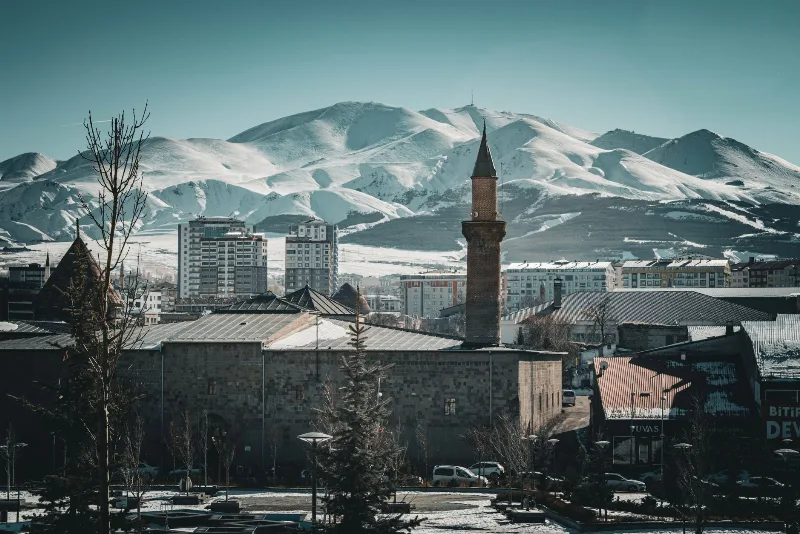
Erzurum is a high-plateau city in eastern Türkiye and the capital of its province, set at roughly 1,900 metres among mountains. It is known for severe winters, the long ski season on Palandöken and a historic centre of Seljuk and Ottoman monuments.
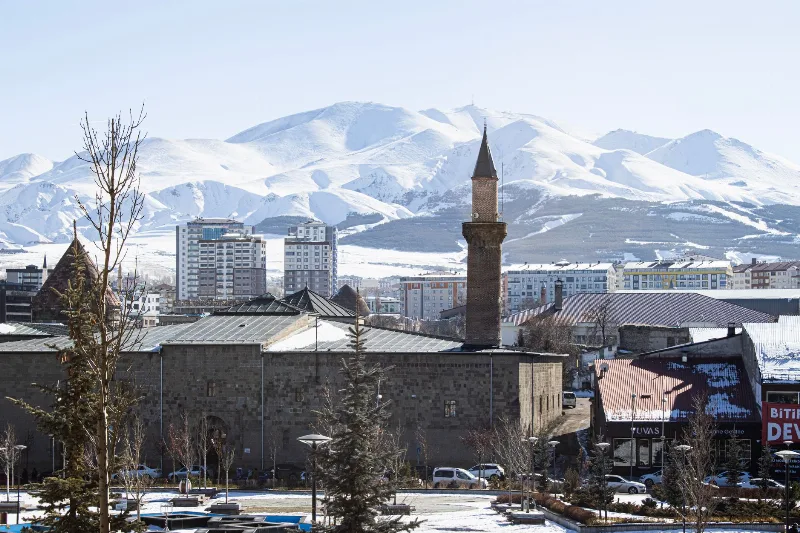
Skiing Escapades in Erzurum
Erzurum is a high-elevation city in eastern Türkiye where long winters and dependable snowfall support skiing and winter sports. Its mountain slopes, historic landmarks and cold-weather cuisine give a snow adventure here a distinct character.
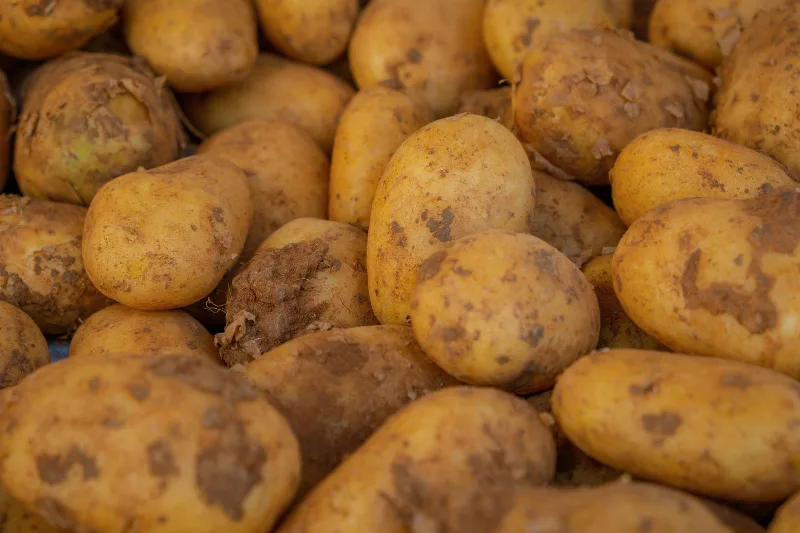
Erzurum Potatoes
Erzurum potatoes are highland potatoes from Erzurum province in Eastern Anatolia, shaped by cool summers, volcanic soils and a short growing season. They are known for their starch-rich texture and full flavour.
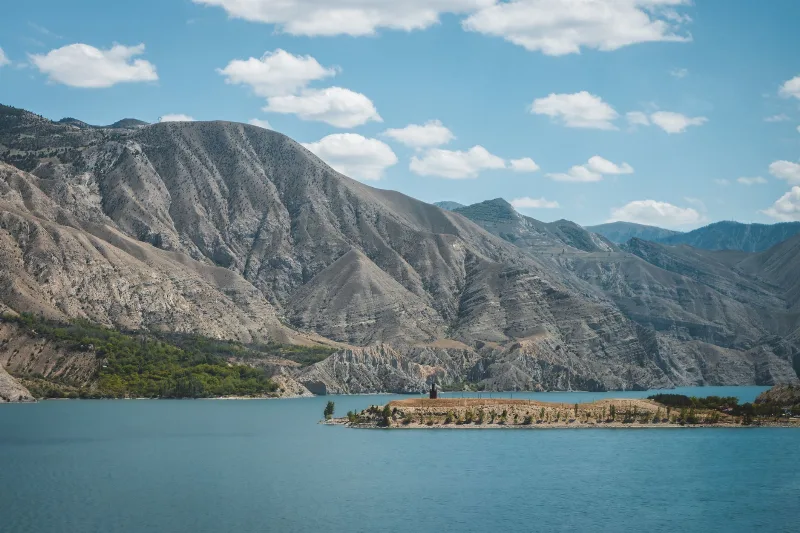
Lake Tortum
Lake Tortum is a landslide-dammed lake in Erzurum Province, northeastern Türkiye, created when a huge rock slide blocked the valley of the Tortum River. Its overflow spills over the Tortum Waterfall, one of the country's best-known cascades.
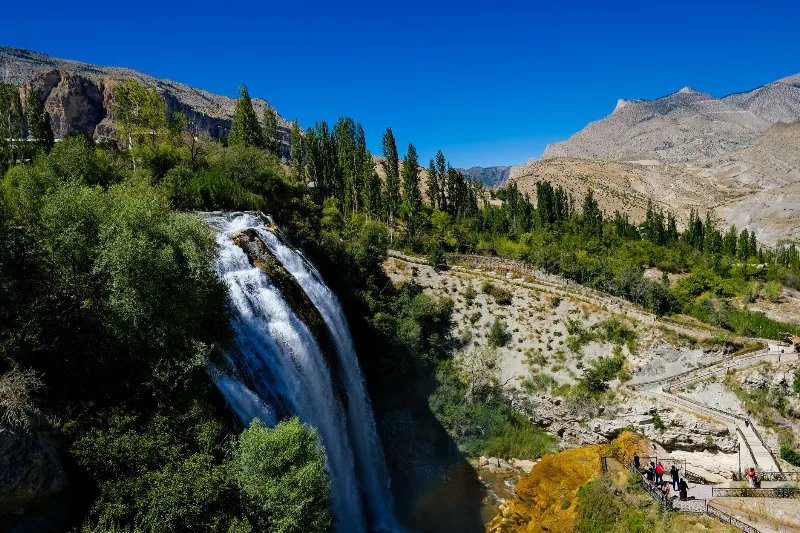
Tortum Waterfall
Tortum Waterfall in Erzurum Province is the outflow of Lake Tortum, a large landslide-dammed lake, and the drop marks where the lake spills over the natural barrier that formed it.
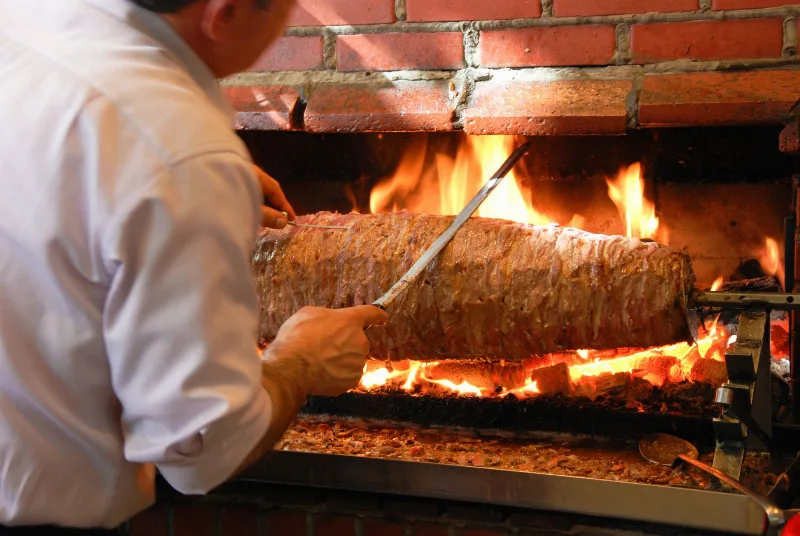
Cağ Kebabı
A regional lamb kebab from Erzurum, Cağ Kebabı is cooked on a horizontal rotisserie and served on skewers. Its tender, juicy meat and simple accompaniments make it a celebrated dish in eastern Turkey.