
Edremit Olives
Edremit olives are grown around the Gulf of Edremit in Balıkesir province, western Türkiye, where a Mediterranean climate and a long olive-growing tradition produce both table olives and olive oil.
Edremit olives are the olives grown in and around the district of Edremit, on the shores of the Gulf of Edremit in Balıkesir province, western Türkiye. The town sits on a coastal plain where the Aegean meets the forested slopes of Kaz Dağı, also known as Mount Ida, and the groves that spread across the low hills between sea and mountain are one of the most recognisable features of the area. Edremit olives are used both as table olives and as the raw material for olive oil, and the district's name has become closely tied to the olive-growing culture of Türkiye's northern Aegean coast.
The Olive-Growing Belt Around the Gulf of Edremit
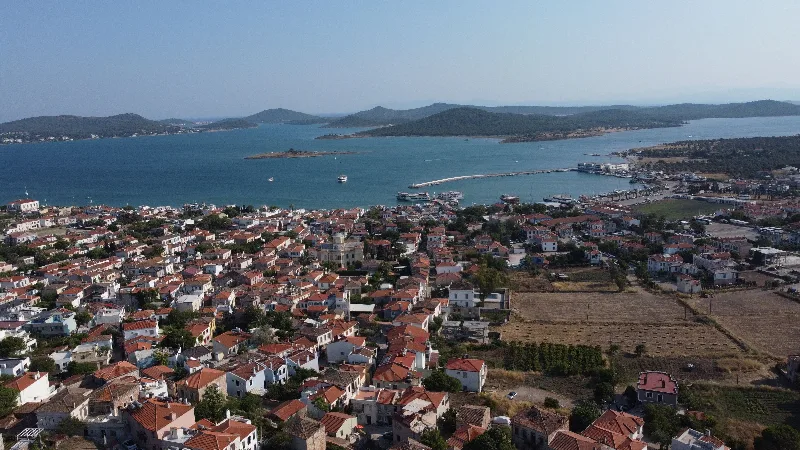
The Gulf of Edremit is a broad bay on the Aegean coast of Balıkesir province, and the land around it forms one of the country's most concentrated olive belts. Groves surround not only Edremit itself but also neighbouring districts and coastal settlements of the same bay, including Burhaniye, Havran and Gömeç, with the olive country continuing south towards Ayvalık and north along the shoreline through Akçay and Altınoluk. Cultivation reaches inland and uphill onto the lower flanks of Kaz Dağı, where orchards gradually give way to pine and oak forest at higher elevation. Because the whole shoreline shares a comparable climate and soil structure, the olives of Edremit belong to a broader northern Aegean olive landscape rather than to an isolated pocket of farming.
Why the Local Climate and Terrain Suit the Olive
The olive is a Mediterranean tree, and the Gulf of Edremit supplies the conditions it needs. Summers are hot, dry and long, with strong sunshine and very little rain, while winters are mild and wet. The sea moderates temperatures along the coast and reduces the likelihood of the hard frosts that can injure olive trees further inland, and the steady coastal air movement helps keep dense groves ventilated. Rainfall in this part of the Aegean arrives mainly in the cooler months, which suits a tree that grows actively in spring and autumn and tolerates summer drought.
Terrain matters as much as temperature. Olive trees dislike waterlogged ground, and the groves around Edremit generally occupy gently sloping land and terraced hillsides where water drains away freely. Soils here are typically thin, stony and calcareous, which limits vigour and keeps yields moderate, a situation that growers have long regarded as favourable for oil quality. The proximity of Kaz Dağı adds a further dimension: air that cools as it descends the mountain at night reaches the groves below, and the elevation range between the coastal plain and the lower slopes creates a series of slightly different growing conditions within a relatively small area.
The Trees and the Olives Grown Here
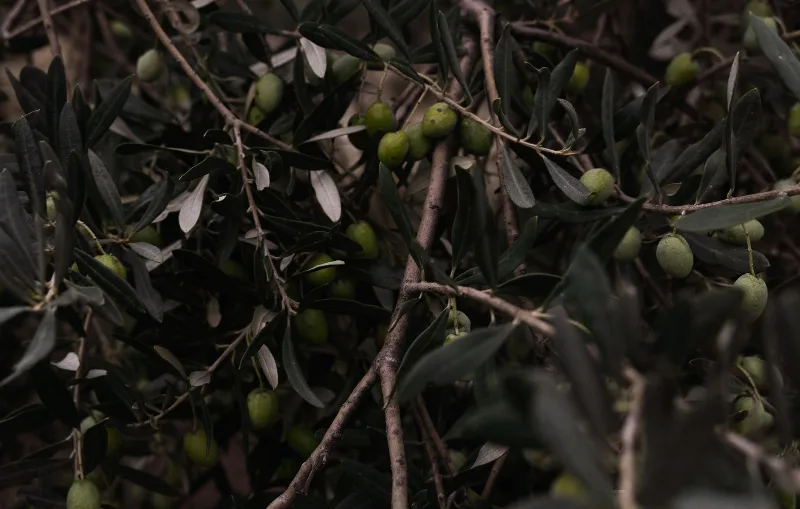
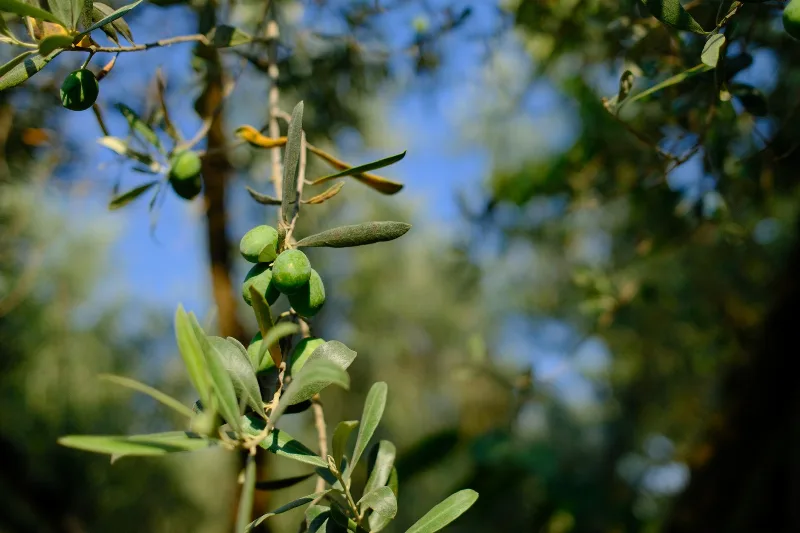
The olive, Olea europaea, is a slow-growing, long-lived evergreen with slender silver-green leaves and a gnarled, twisting trunk that becomes hollow with age. Its fruit is a drupe, botanically similar to a plum or cherry, consisting of a thin skin, a fleshy pulp and a single hard stone. Trees are grown from cuttings and grafted stock rather than seed, so individual groves are effectively clones of established local types.
The oil olive most widely planted across this stretch of the northern Aegean is a cultivar commonly called Ayvalık, which in the Edremit area is also referred to as Edremit yağlık. It is an oil-type olive with a relatively high oil content and fruit that ripens to a deep purple-black. Alongside it, some groves are planted with larger, firmer olives that are handled as table fruit, since these hold their shape better through curing and packing. Growers generally describe the local olives as having a clean, slightly bitter and peppery character, a profile that is commonly linked to early harvesting and to the stony soils of the region.
Flowering, Ripening and the Harvest
Olive trees flower in late spring, producing small, creamy-white blossoms in loose clusters on the previous year's wood. Pollen is carried by wind rather than by insects, so a period of calm, dry weather during flowering is important for a good fruit set. Once the flowers are fertilised, the tiny green drupes begin to swell through the summer, drawing on stored water in the soil and on the long hours of Aegean sunlight.
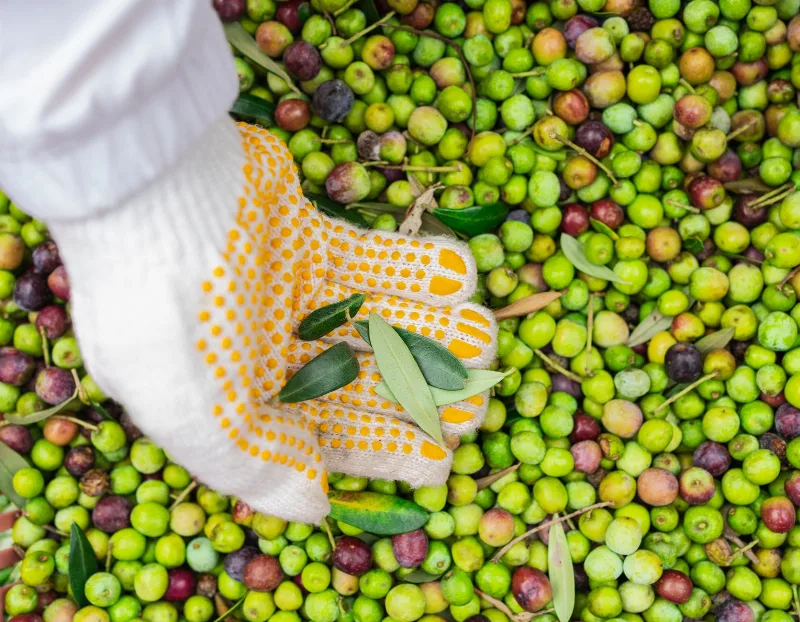
Ripening is gradual. Fruit that is green in early autumn turns yellow-green, then purple, and finally almost black as the season advances into winter. Olive trees also tend to alternate, carrying a heavy crop one year and a lighter one the next, a pattern that shapes the rhythm of work in the groves. Harvest is carried out by hand or with small rakes and combs that draw the fruit from the branches onto nets spread beneath the trees. Timing is decided by the intended use: olives for oil are often taken later, when the fruit has coloured, while table olives are picked earlier while the flesh is still firm. Picking by hand avoids bruising, which matters particularly for fruit destined for the table.
From Grove to Table and Press
Olives cannot be eaten straight from the tree. The fruit contains bitter compounds, chiefly oleuropein, that must be removed before it is palatable. Table olives from the Edremit area are traditionally treated by soaking and then curing in brine, sometimes after a brief lye treatment, a process that leaches out the bitterness over weeks or months. The result is the familiar range of green, semi-ripe and black olives that appear on Aegean tables.
Oil olives follow a different route. Fruit is delivered to mills soon after picking to limit deterioration, washed, crushed and then stirred slowly to allow the oil droplets to gather. The paste is separated by pressing or centrifugation, and oil extracted without heating the paste is described as cold extracted. Early-harvest fruit tends to give a greener, more intensely flavoured oil, while later fruit yields a softer, rounder oil. Some local olives are also simply sun-dried or dry-salted for storage, and olive leaf is collected in the region for herbal infusions. What remains after pressing is used as pomace, as fuel, or as feed, and olive wood is valued as a dense, decorative timber.
Olives in the Landscape and Daily Life of Edremit
Olive growing has shaped the countryside around Edremit for a very long time, and groves rather than open fields define much of the coastal plain and the lower hills. The work is seasonal and communal: pruning in late winter, flowering in spring, irrigation in the driest weeks where water allows, and the concentrated harvest push from autumn into winter, when families and hired pickers move from grove to grove. Small mills and cooperatives in the district handle much of the crop close to where it is grown.
Olives and olive oil sit at the centre of the Aegean kitchen. Table olives are a standard part of breakfast and of the small plates served before a meal, while olive oil is the base for cooked vegetable dishes, salads and simple dressings across the region. Olive oil also underpins a long-standing soap-making tradition in the northern Aegean, and Ayvalık, just to the south of Edremit, is closely associated with that craft. For the district, the olive is not only an agricultural product but part of the identity of the coast.
Edremit Olives Among Türkiye's Other Olive Regions
Türkiye grows olives along several coastlines: the Aegean, the Marmara shores and parts of the Mediterranean south. Edremit belongs firmly to the northern Aegean group, sharing its general character with the groves of Ayvalık, Burhaniye and Havran around the same gulf. What distinguishes olives from this stretch of coast is the combination of a maritime climate moderated by the sea, stony sloping ground, a mountain backdrop in Kaz Dağı and a harvest tradition in which fruit is handled carefully and often pressed locally. Visitors travelling the Gulf of Edremit see the belt change with the seasons, from pale flowering branches in late spring to nets and ladders in the groves once the fruit has darkened.
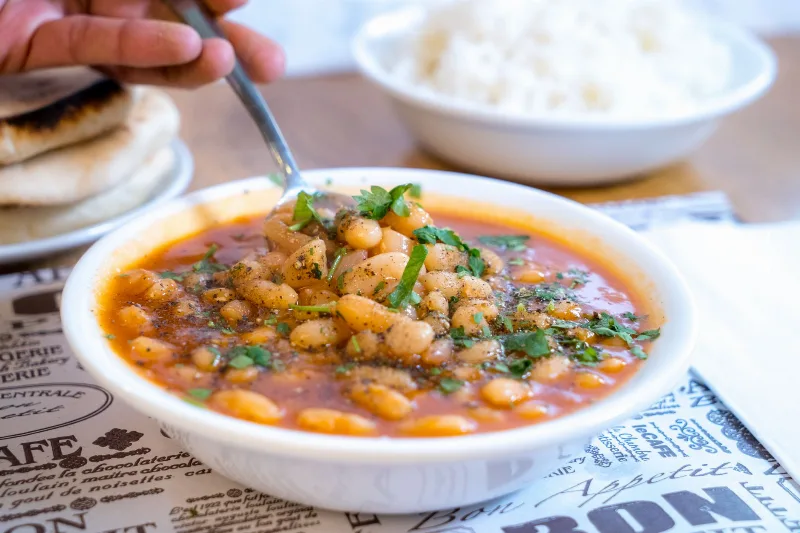
Kuru Fasulye
Kuru fasulye is a traditional Turkish stew of dried white beans slow-cooked with onion, tomato and pepper paste, eaten across the country with rice pilaf and pickles.
Explore →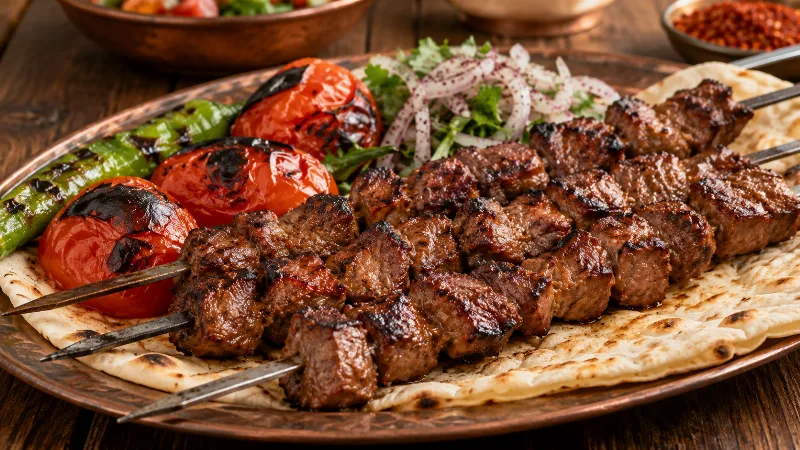
Şiş Kebap
Şiş kebap is built from cubes of marinated meat threaded onto a skewer and grilled over charcoal. It is one of the simplest forms of Turkish kebab, defined by the cut of meat, the marinade and the skewer itself.
Explore →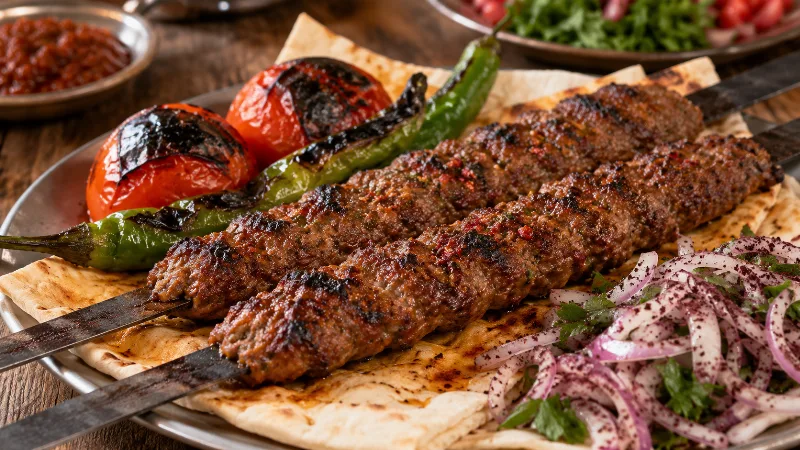
Urfa Kebap
Urfa Kebap is a charcoal-grilled minced lamb kebab from Şanlıurfa, seasoned without hot chilli and shaped around flat skewers. Its mildness is what sets it apart from the region's other minced kebabs.
Explore →Related content
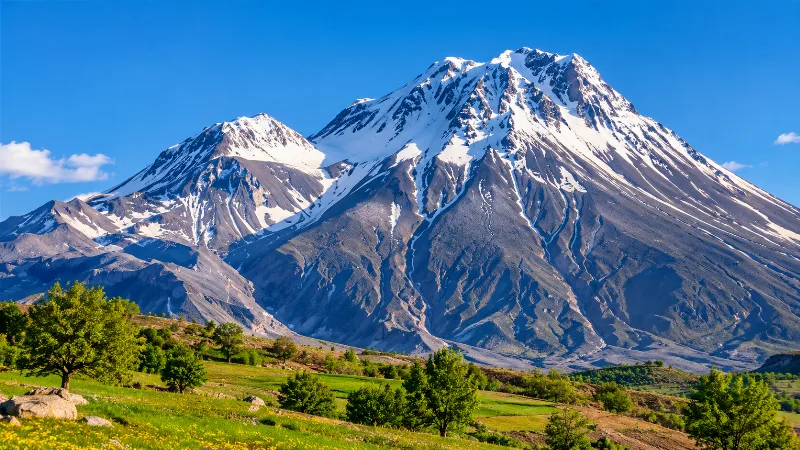
Mount Ida
Mount Ida, called Kaz Dağı in Turkish, is a forested massif in Balıkesir Province on the Biga Peninsula, rising from the Gulf of Edremit coast to a summit of about 1,774 metres and known for its endemic fir forest.
Ayvalık
Ayvalık is a coastal district of Balıkesir Province in western Türkiye, known for its olive oil, its Greek-influenced old town and the offshore island of Cunda.
The Lush Olive Groves of Aegean Türkiye
Silver-green groves stretch along the Aegean coast of Türkiye, shaping the region's landscape, cuisine and seasonal traditions from Ayvalık to Bodrum.
Ayvalık Olives
Ayvalık olives are the fruit of a named olive cultivar grown around Ayvalık on Türkiye's northern Aegean coast, valued both for pressing and for curing as table olives. The stony, sloping groves of the Edremit Gulf in Balıkesir province give the variety its strong regional identity.
Olive Harvest in Ayvalık, Balıkesir
Each autumn, the olive groves around Ayvalık in Balıkesir turn from green to deep purple as the harvest season begins. Between October and November, growers pick the fruit and press it into one of Türkiye's most respected olive oils.
4-Day North Aegean Coast Route
A four-day linear route along the North Aegean coast from Assos to İzmir, with stops at Ayvalık, Cunda, Dikili, Çandarlı, Bergama and Foça. The itinerary is designed for a realistic coastal and inland road trip by car.