
Odunpazarı Historic Houses and Meerschaum Carving in Eskişehir
Eskişehir's oldest quarter is known for its restored timber houses and for a craft tradition built on a rare white stone, meerschaum.
Odunpazarı spreads across a hill to the south of the Porsuk river in Eskişehir, and it is here that the city keeps its oldest surviving fabric. The district takes its name from the timber market that once stood on these slopes, and its identity rests on two things that have little in common at first glance: a collection of Ottoman-era houses restored over the past few decades, and a craft tradition built around meerschaum, the pale mineral dug from the surrounding countryside and carved into pipes and ornaments. Together they give Odunpazarı a character that is unusual among Turkish city quarters, where domestic architecture and a specialist workshop trade occupy the same narrow streets.
A Hillside of Timber and Whitewash
The houses of Odunpazarı are set on sloping ground in narrow, mostly traffic-free lanes, arranged so that each building catches light and air without blocking its neighbours. Most date from the nineteenth century, though the building method is older. Ground floors are generally of rough stone, holding the structure steady on uneven terrain, while the upper storeys are timber-framed and filled with plaster or mud brick, then finished in white. Roofs are covered in reddish pantiles, and the upper floors frequently project beyond the line of the ground floor, supported on carved wooden brackets.
That projection, known locally as a cumba, is the district's most recognisable feature. It creates a small bay window with wooden latticework, allowing the household to look along the street while remaining screened from it. Behind high walls, many houses have a courtyard with a well, a small garden and sometimes a fruit tree, so that domestic life turned inward rather than towards the road.
Rooms Arranged Around a Central Hall
Inside, the plan follows a pattern common to Ottoman Anatolian towns. A central hall, the sofa, gives access to the rooms, which open off it and are used for both sitting and sleeping. Wooden ceilings, built-in cupboards and wall niches are typical, and many interiors include a hearth or a small bathing alcove. Much of Odunpazarı was dilapidated by the late twentieth century; a long programme of restoration, supported by the municipality and by private owners, has brought a significant proportion of the houses back into use as homes, cafés, small guesthouses and workshops, while keeping the street pattern and the scale of the buildings intact.
The White Stone of Eskişehir
Meerschaum, called lületaşı in Turkish, is a soft, lightweight mineral with a high magnesium content. It occurs in sedimentary deposits around Eskişehir and is worked from shallow pits, where blocks are lifted out while still damp and easy to cut. On contact with air the stone gradually hardens, and once dry it is remarkably light, porous and resistant to heat, qualities that made it the classic material for tobacco pipes. It is also unusually absorbent, so an unglazed pipe slowly colours from cream to amber as it is smoked.
Eskişehir's stone has been carved for centuries and was exported to Europe in quantity from the eighteenth century onwards, when pipe makers in Austria and Germany built an industry around it. Local carvers developed their own repertoire in response, drawing on the same raw material but working in a smaller, more personal scale.
From Damp Block to Finished Object
Carving begins while the stone is still moist. The block is kept in water, then scraped and shaped with knives and files; a pipe bowl and stem are hollowed out before the surface decoration is added. The piece is left to dry, sanded progressively finer, and finally polished with wax and heat until it takes on a smooth, faintly waxy sheen. Motifs range from simple chequered and floral patterns to figures, animals and portrait heads, and the same techniques produce beads, cigarette holders, chess pieces and small sculptural objects.
Workshops, Museums and the Living Craft
Odunpazarı holds the workshops where this work continues, several of them open to visitors who can watch a block of damp stone being reduced to a finished pipe. The district also has a museum devoted to meerschaum, displaying historical pieces alongside contemporary carving. Nearby, the Kurşunlu complex, a sixteenth-century foundation with a mosque, madrasa and dervish lodge, and the restored Atlıhan building, now used by craftspeople, sit within the same network of lanes. The result is a quarter where architecture, trade and daily life remain close together, and where a mineral lifted from the local soil is still shaped by hand.
Related content
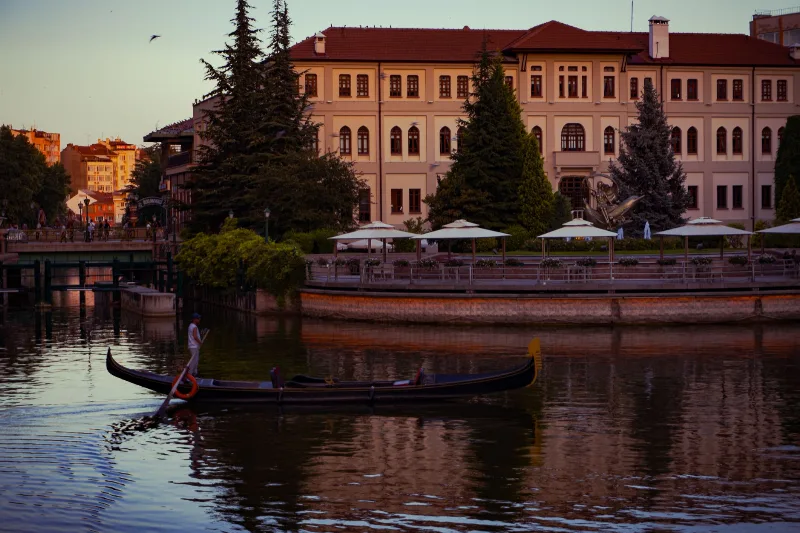
Eskişehir
Eskişehir is a university city on the Porsuk River in northwestern Central Anatolia, where a restored Ottoman-era quarter and a modern, pedestrian-friendly centre sit side by side.
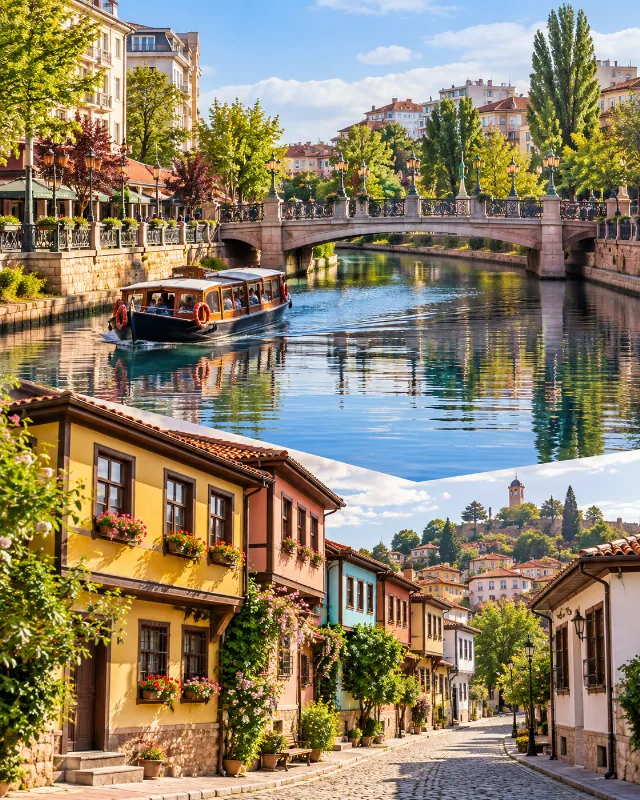
1-Day Eskişehir Route
A one-day route through Eskişehir combining Odunpazarı’s historic streets, local food, the Porsuk River and some of the city’s best-known public spaces.
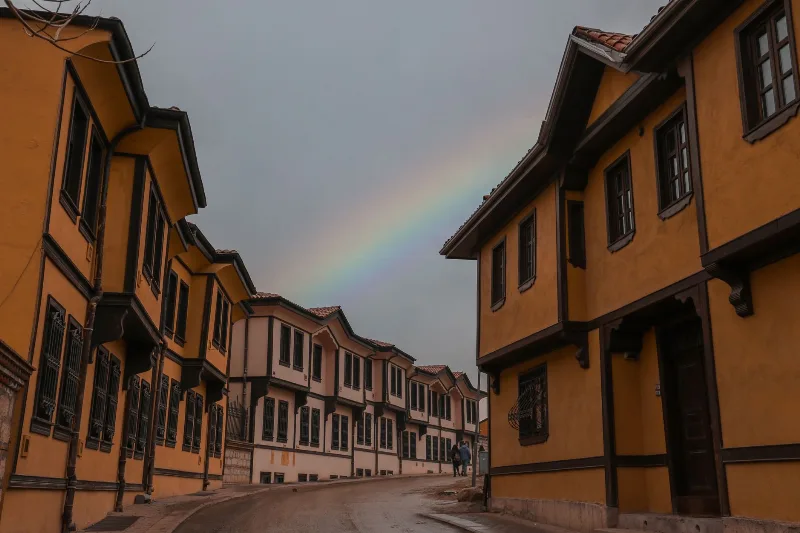
1-Day Eskişehir Route
A compact one-day walking route through Eskişehir, moving from the timber houses of Odunpazarı down to the Porsuk River promenade and finishing among the cafés and trams of the modern centre.
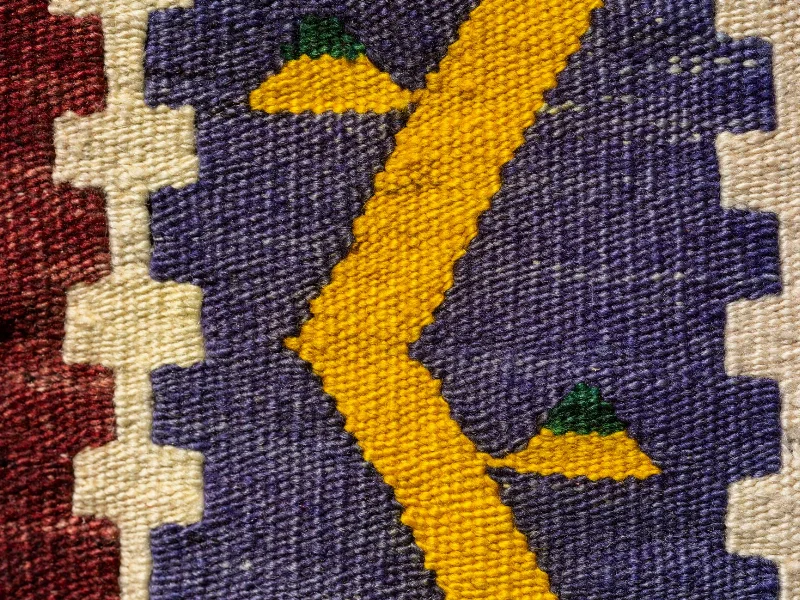
Traditional Crafts of a Turkish Bazaar
Türkiye's bazaars are living archives of craft, where copper, çini ceramics, kilims and ebru marbling are still shaped by hand. This page explores the trades, materials and traditions behind them.
Ankara
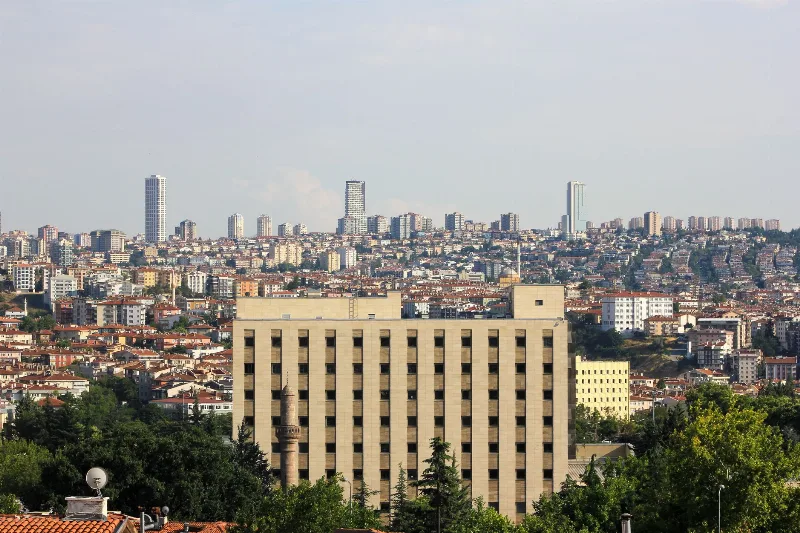
Ankara is the capital of Türkiye and the country's second-largest city, set on the high plateau of Central Anatolia and defined by its republican institutions, its long pre-Ottoman history and the mausoleum of Mustafa Kemal Atatürk.
Spring in Turkey
From flowering valleys and green highlands to mild coastal towns, spring changes the landscape across different regions of Turkey.
Central Anatolia Region
Central Anatolia is the historic heartland of Türkiye, known for its wide plains, extraordinary rock formations, ancient civilizations and traditional towns. From the fairy chimneys of Cappadocia to the cultural landmarks of Ankara and Konya, the region reveals the rich history and natural beauty of inner Anatolia.
The Seven Geographical Regions of Turkey
An introduction to Turkey’s seven geographical regions and the landscapes, climates and cultural characteristics that distinguish them.