
Eskişehir
Eskişehir is a university city on the Porsuk River in northwestern Central Anatolia, where a restored Ottoman-era quarter and a modern, pedestrian-friendly centre sit side by side.
Eskişehir is the capital of Eskişehir Province in northwestern Central Anatolia, Türkiye, and the largest settlement in that province. The city spreads across the Porsuk River, a tributary of the Sakarya, on a wide plain that lies roughly 800 metres above sea level. Its urban core is divided between two central districts, Odunpazarı and Tepebaşı, which face each other across the river valley. What sets Eskişehir apart from most inland Anatolian cities is the scale of its student population, drawn by Anadolu University and Eskişehir Osmangazi University, together with a centre that has been deliberately reorganised around the river, tram lines and pedestrian streets.
Where Eskişehir Lies and How the Land Is Shaped
The city occupies a plain that opens toward the Sakarya River system, with the Porsuk cutting a shallow valley through the middle of the built-up area. To the north, the wooded slopes of the Sündiken Mountains rise above the plain; to the south and southeast the land climbs gradually into higher plateau country that continues toward the Phrygian highlands. Because the Porsuk flows through the city rather than skirting it, bridges, embankments and riverside parks organise much of the central layout.
Eskişehir province borders Bilecik and Bolu to the north and northwest, Ankara to the east, Konya to the southeast, Afyonkarahisar to the south and Kütahya to the west. That position places the city on long-established routes between the capital and the Marmara region, and it has shaped the city's role as a transport and education centre rather than a coastal or agricultural one.
A City Built Around Its Universities
Anadolu University, founded as an academy of economics and commercial sciences and reorganised under its present name in 1982, is best known for its open and distance education faculty, which serves students far beyond Eskişehir. Eskişehir Osmangazi University and Eskişehir Technical University complete the higher-education landscape. The result is a city whose daily rhythm is tied to the academic calendar: lecture halls and libraries fill the two central districts, and the student presence supports bookshops, art venues, small theatres, music spaces and cultural festivals that are unusual in a city of this size.
The Porsuk River and the Modern Centre
The Porsuk is the spine of the modern city. Along its banks, landscaped promenades, footbridges and small pleasure boats have turned what was once a working watercourse into the main public space of Eskişehir. The tram network connects this riverside zone with the surrounding districts, and several central streets are reserved for pedestrians. This combination of a walkable core, river frontage and student energy gives Eskişehir an urban character closer to a European university town than to a typical Central Anatolian provincial centre.
Odunpazarı: The Historic Quarter
The name Odunpazarı means "wood market", a reminder of the district's commercial past. Built on a slope above the newer city, it preserves a dense cluster of traditional houses with timber frames, projecting upper floors, whitewashed walls and deep bay windows, many of them restored and reused. The quarter is also the museum heart of Eskişehir: the Odunpazarı Modern Museum, a contemporary art building with a striking timber-clad design, stands among smaller museums devoted to meerschaum carving, glass art and wax figures. The sixteenth-century Kurşunlu Complex, attributed to the patronage of Çoban Mustafa Pasha, groups a mosque, a madrasa, a hospice and a caravanserai around a courtyard and remains the focal point of the old street pattern. Craft workshops, antique dealers and small galleries occupy the surrounding lanes.
Meerschaum and Local Craft Identity
Eskişehir is closely associated with meerschaum, known in Turkish as lületaşı, a soft, light mineral dug from deposits in the surrounding countryside. The raw stone is easily worked while damp and hardens as it dries, which has made it a traditional material for carved tobacco pipes, figurines and ornaments. Workshops and a dedicated museum in Odunpazarı keep the craft visible, and meerschaum objects are among the few genuinely local products of the city.
Phrygian Monuments and Historic Sites in the Province
The countryside south of Eskişehir holds some of the most important Phrygian remains in Anatolia. The area known as the Phrygian Valley spreads across plateaus and rocky valleys, where an ancient population cut facades, altars, stepped platforms, cisterns and dwellings directly into the volcanic tuff. Near the Han district, a monumental rock facade is traditionally identified with the Phrygian king Midas. These are open-air monuments rather than museum exhibits, and they sit within a landscape of gorges and farmland.
Closer to the city, Karacahisar Castle is remembered as an early Ottoman conquest from the late thirteenth century, a step in the expansion of the nascent principality. Further east, the district of Sivrihisar preserves a historic core with a thirteenth-century congregational mosque and a covered market area, while Seyitgazi is centred on an Ottoman-period religious complex that has long served as a place of pilgrimage. The district of İnönü, west of the city, is linked to the battles fought there in 1921 during the War of Independence, and monuments in the area commemorate them.
Springs, Forests and the Provincial Countryside
Beyond the urban core, Eskişehir province mixes forested hills, thermal springs and farmland. The Sündiken Mountains and the wooded country around Çatacık provide the main forested recreation area, while thermal waters in the province have supported bathing settlements for generations. In the Sakarya valley, the districts of Mihalgazi and Sarıcakaya benefit from a milder microclimate and are known for orchards, market gardens and fruit growing. Villages scattered across the plain and foothills maintain a rural economy of grain, sugar beet and livestock that contrasts sharply with the university city at the centre of the province.
Climate and the General Best Time to Visit
Eskişehir has a continental inland climate. Winters are cold and often snowy, with frost lasting well into the season; summers are hot and dry with strong sunshine; spring and autumn are mild and comparatively short. For walking the city, exploring Odunpazarı and reaching the Phrygian monuments in the countryside, the most comfortable conditions generally fall between April and June and again from September to October, when temperatures are moderate and the landscape is green or turning. Midsummer heat and winter snow both make long days outdoors less practical.
Reaching Eskişehir and Moving Around
The city sits on a major rail corridor and is served by high-speed trains that connect it with Ankara and with the Istanbul region, which has made day trips and short stays straightforward. Hasan Polatkan Airport handles domestic flights, and long-distance buses link Eskişehir with most large Turkish cities. Inside the city, trams, buses and a compact, walkable centre reduce the need for a car, although a vehicle is useful for reaching the Phrygian Valley, Sivrihisar and the rural districts.
How Eskişehir Relates to Its Region
Eskişehir occupies an intermediate position between the capital, Ankara, to the east and the Marmara cities to the northwest, and it functions as the main urban centre of a province that otherwise relies on agriculture, mining of meerschaum and small-scale industry. Its neighbours are Kütahya, a centre of tile-making, to the west; Afyonkarahisar, known for its own thermal resources and food culture, to the south; and Bilecik to the northwest. For travellers moving across inner western Anatolia, Eskişehir works as a base from which the Phrygian highlands, the Sakarya valley and the historic towns of the surrounding districts can be approached, while the city itself offers a compact, river-centred urban experience shaped by its universities and its restored old quarter.
Discover Food in Türkiye
All food →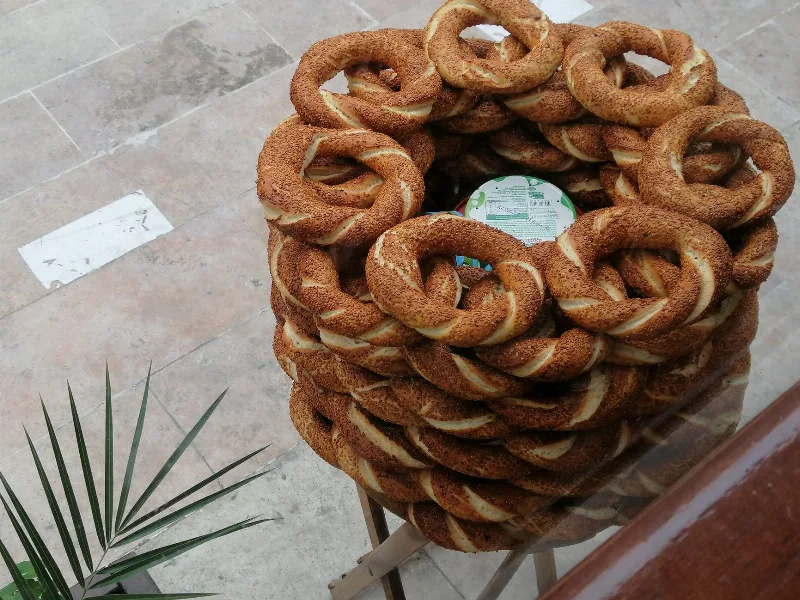
Simit
Simit is a ring-shaped Turkish bread covered in sesame seeds, strongly associated with Istanbul and sold as everyday street food. It is eaten fresh, most often with tea, and has a crisp crust around a chewy crumb.
Explore →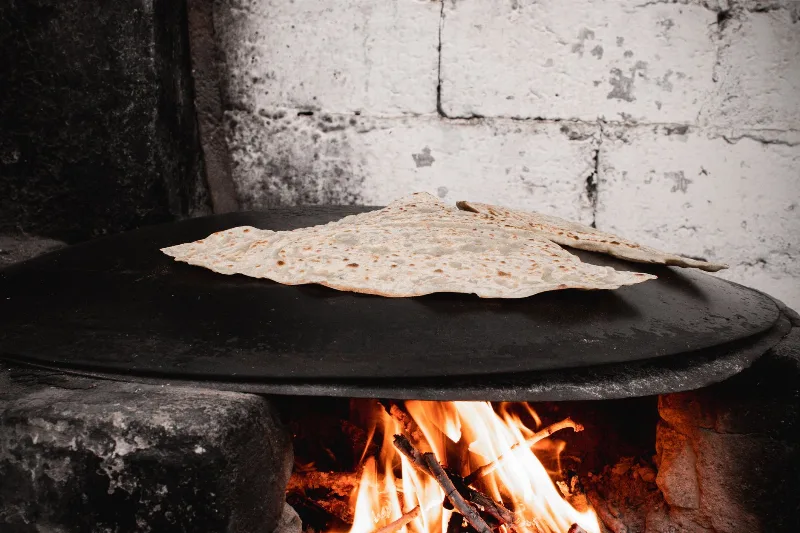
Bazlama
Bazlama is a soft, thick Turkish flatbread made from a leavened dough and cooked on a hot griddle. It is a staple of village baking across Anatolia, eaten warm with butter or used to wrap other foods.
Explore →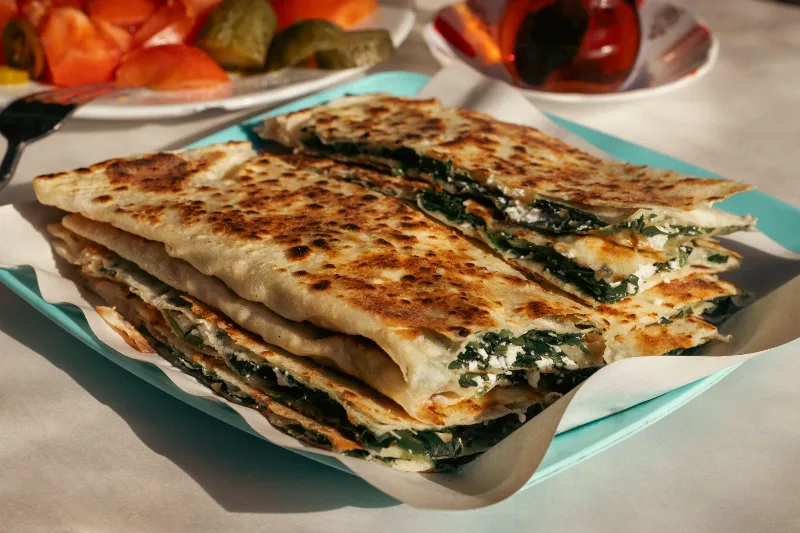
Gözleme
Gözleme is a thin, hand-rolled Anatolian flatbread folded around savory fillings such as cheese, spinach, or minced meat and cooked on a sac griddle. The article covers its regional variations, cooking method, texture, and traditional serving style.
Explore →Related content
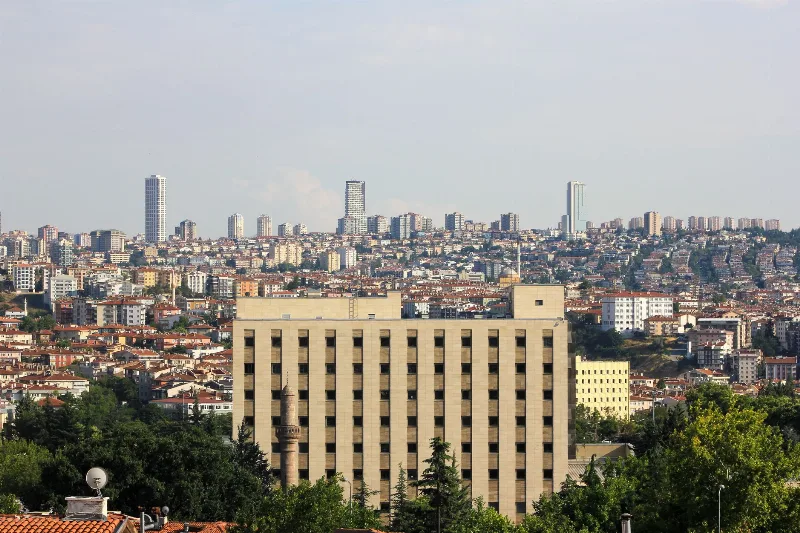
Ankara
Ankara is the capital of Türkiye and the country's second-largest city, set on the high plateau of Central Anatolia and defined by its republican institutions, its long pre-Ottoman history and the mausoleum of Mustafa Kemal Atatürk.
Konya
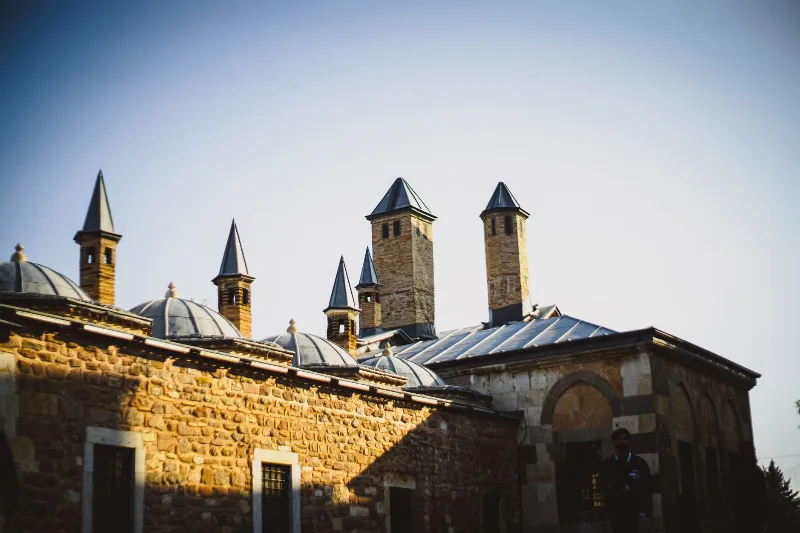
Konya is a city known for its spiritual essence and cultural heritage, home to the Mevlana Museum and the whirling dervishes.
Afyonkarahisar
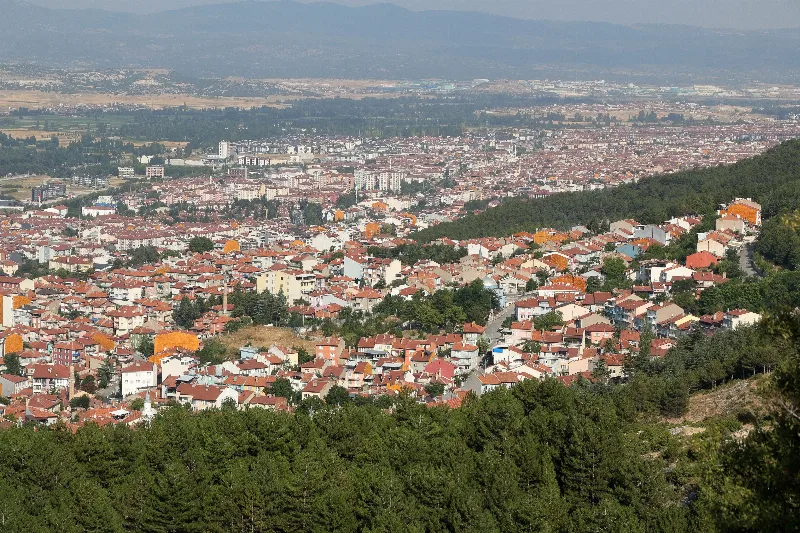
Explore Afyonkarahisar, western Central Anatolia: history, standout sights, landscapes, local food and practical travel advice for an unforgettable journey in Türkiye.
Central Anatolia Region
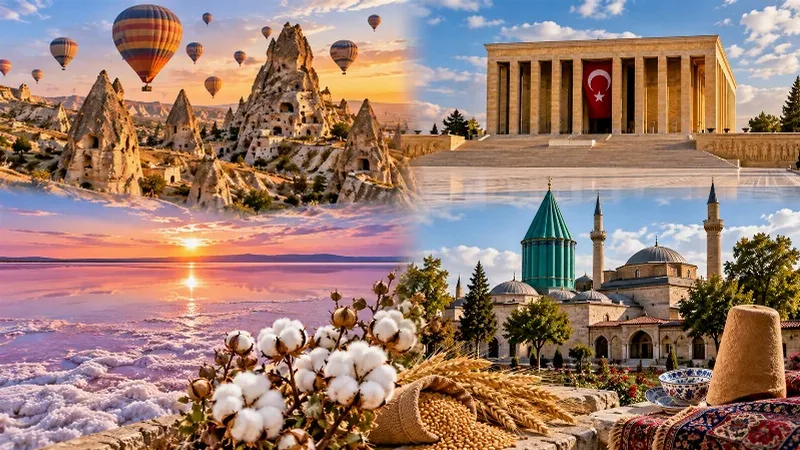
Central Anatolia is the historic heartland of Türkiye, known for its wide plains, extraordinary rock formations, ancient civilizations and traditional towns. From the fairy chimneys of Cappadocia to the cultural landmarks of Ankara and Konya, the region reveals the rich history and natural beauty of inner Anatolia.
The Seven Geographical Regions of Turkey
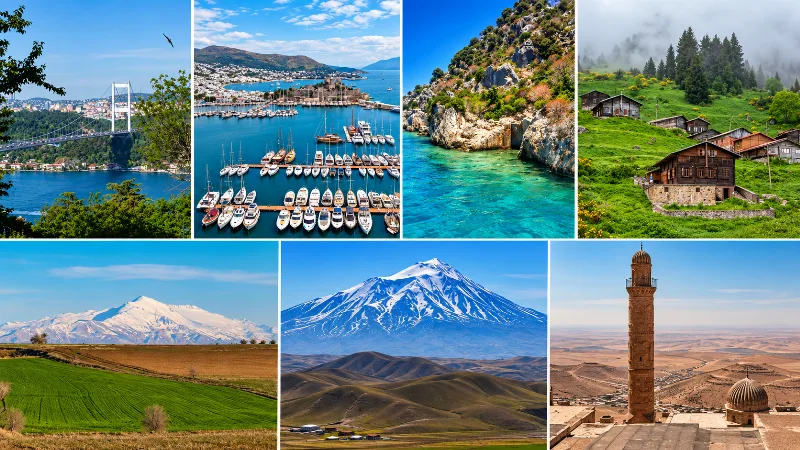
An introduction to Turkey’s seven geographical regions and the landscapes, climates and cultural characteristics that distinguish them.
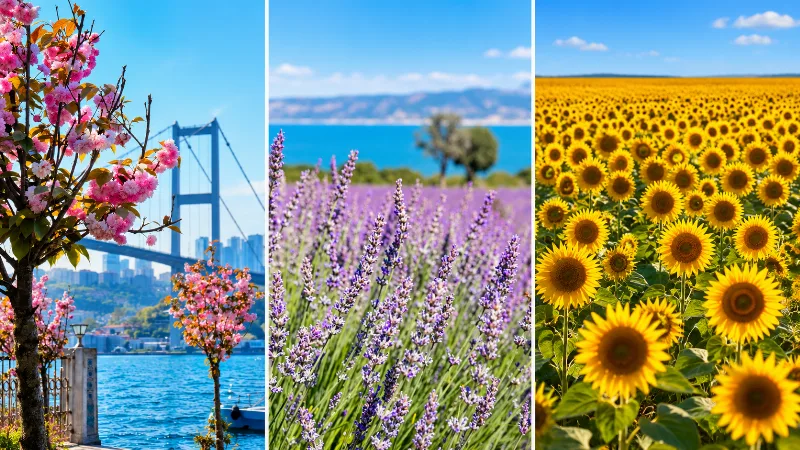
Spring in Turkey
From flowering valleys and green highlands to mild coastal towns, spring changes the landscape across different regions of Turkey.