
Köprülü Canyon: Roman Bridge and Rafting in Antalya
Köprülü Canyon brings together a Roman bridge, the rushing Köprüçay River and pine-covered cliffs in the Taurus Mountains. Rafting, ancient ruins and quiet highland villages lie within easy reach of one another.
Köprülü Canyon takes its name from the bridge at its heart. In the Taurus Mountains of Antalya province, the Köprüçay River has cut a deep, winding gorge through pale limestone, and for close to two thousand years a Roman bridge has carried people across the water. The combination of sheer rock walls, pine-covered slopes, cold fast-flowing river and a working ancient crossing gives the canyon a character quite unlike the beaches further south.
A gorge shaped by the Köprüçay
The Köprüçay rises high in the Taurus range and runs southwards to reach the Mediterranean near the coastal plain east of Antalya. In antiquity it was known as the Eurymedon and was already a significant river in the classical world, both as a route inland and as a source of water for the cities of the region. In its middle course the river enters a limestone gorge, and the protected area around it was designated a national park in 1973, covering the canyon itself together with the wooded slopes on either side.
Near the village of Beşkonak the valley narrows noticeably. The gorge runs for several kilometres between walls of rock, and the road follows the river for much of the way, so the landscape can be seen without leaving the vehicle. The canyon is also rich in smaller features: springs emerging from the rock, side streams joining the main river, and terraces of scrub and pine clinging to ledges above the water.
The Roman bridge at the heart of the canyon
The stone bridge known as Oluk Köprü is generally dated to the second century AD. It spans the river on a pair of arches of unequal size, built from local stone in a style typical of Roman engineering in Asia Minor, and its position was clearly chosen with care: the abutments rest on solid rock where the gorge sides come closest together. What makes the bridge remarkable is that it has never fallen out of use. A narrow road still crosses it today, and traffic continues to pass over masonry laid by Roman hands.
The name Köprülü simply means 'with a bridge' in Turkish, a reminder of how completely the structure has shaped the identity of the place. Upstream and downstream, the remains of older paths and retaining walls can be seen along the banks, traces of the routes that once connected the coast with the highlands.
Rafting through the rapids
Below Beşkonak, a stretch of roughly a dozen kilometres of the Köprüçay is used for rafting. The rapids are generally graded II and III, lively enough to be exciting without demanding previous experience, and guided rafts leave from bases close to the bridge throughout the warmer months. Spring is when the river runs strongest, fed by meltwater from the Taurus snows, and the current carries rafts swiftly through the narrowest sections. By late summer the flow eases, the water clears, and the same route becomes gentler and more relaxed. Kayakers and canoeists also use the river, and the canyon walls often allow only one route through, so the descent has a pleasing sense of travel through a closed landscape.
Forest, wildlife and side gorges
The slopes above the river are covered mainly with Turkish pine, mixed with cedar higher up and with maquis scrub near the valley floor. Oleander lines the banks, laurel and wild olive grow in sheltered spots, and fig trees appear around the villages. The cliffs and forest support wild goats, wild boar, foxes and a variety of birds of prey, while the colder stretches of the river hold trout. The canyon is also several degrees cooler than the coast, which is one reason it has long been a summer retreat for people from the lowlands. Narrower side gorges branch off from the main valley, including the shaded Tazı Canyon, where a tributary stream runs between walls that close in above the walker's head.
Selge and the highlands above the gorge
A switchback road climbs from the canyon to the ruins of Selge, a Pisidian city set on a terrace high above the river. Its remains include a theatre, a stadium, cisterns, stretches of city wall, an aqueduct and a large necropolis, spread among fields and scattered houses. The site is extensive and quiet, with views back down towards the gorge. Lower on the canyon slopes, the Adamkayalar reliefs show groups of carved figures — men, women and children — cut into a rock face in the Roman period, a reminder that this valley was closely settled long before it became a place for rafting.
Village life along the river
Beşkonak and the smaller settlements nearby keep a rhythm tied to the land. Smallholdings produce olives, fruit and vegetables, and stone houses with wooden balconies stand among the trees. Walking routes follow old mule paths between the villages and along the rim of the canyon, and spring and autumn are especially pleasant for them, when the heat is mild and the river is at its most dramatic. For travellers interested in geology, ancient engineering and rural Anatolian life alike, the canyon offers all three within a single valley.
Related content
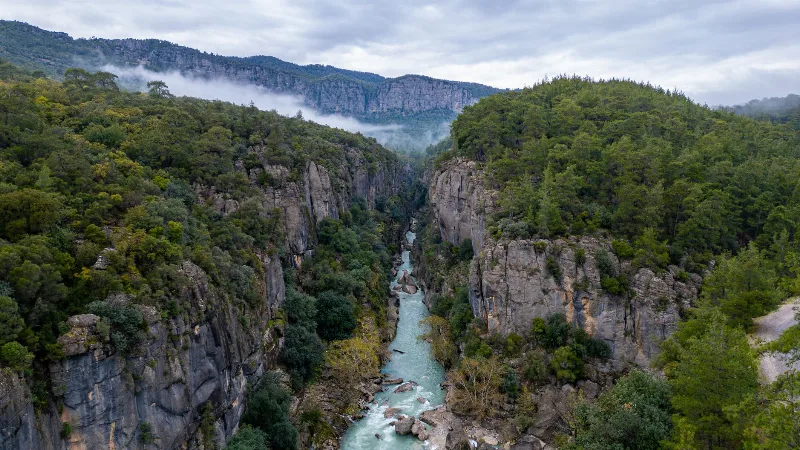
Köprülü Canyon
Köprülü Canyon is a deep river canyon in Antalya Province, carved by the Köprüçay River. It is part of a national park and is known for its steep walls, Mediterranean vegetation, and seasonal river conditions.
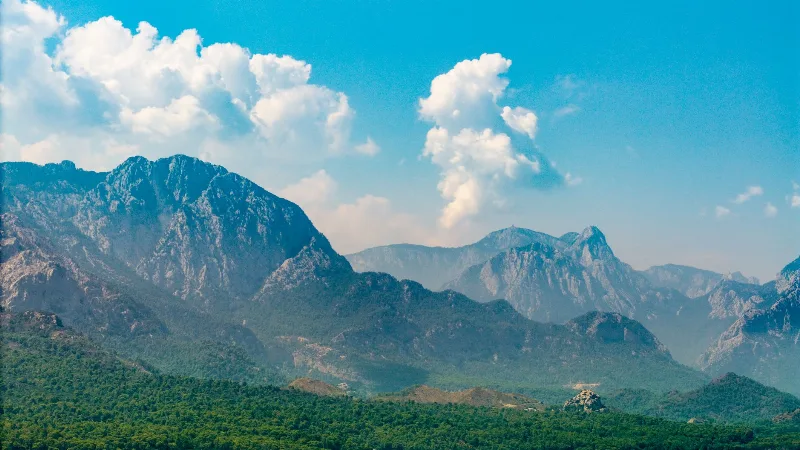
Antalya
Antalya offers a unique blend of vibrant history and stunning natural beauty, making it a must-visit destination in Türkiye.
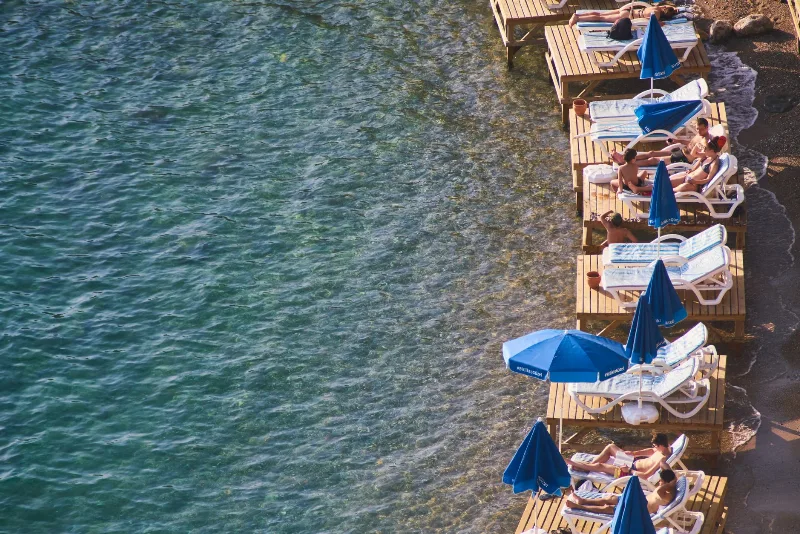
Antalya's Mediterranean Coast
Antalya's Mediterranean coast, located in Türkiye, offers stunning beaches and rich historical sites, making it a captivating destination.
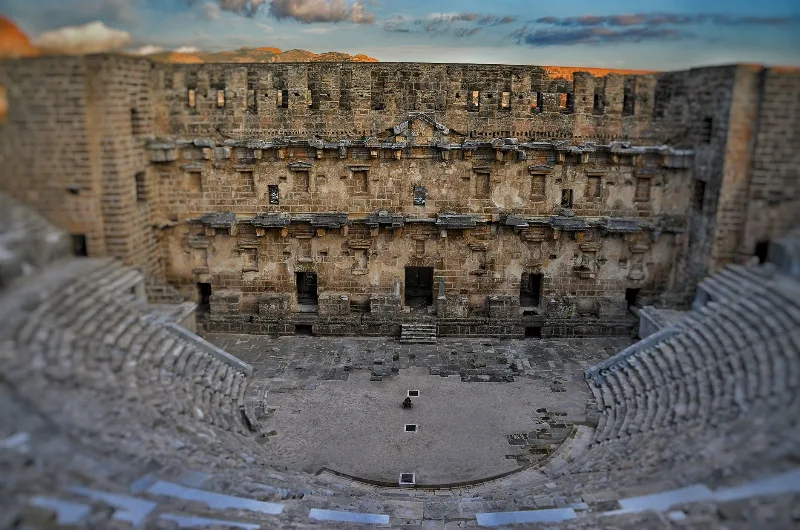
Aspendos and its Roman Theatre
Aspendos in Antalya Province preserves a strikingly complete Roman theatre, where tiered seating, a towering stage wall and a nearby aqueduct reveal how Roman Pamphylia was built and lived.
Aspendos
Aspendos is a Pamphylian ancient city near Serik in Antalya Province, dominated by a second-century Roman theatre that survives almost intact. Its aqueduct, acropolis and lower-city ruins sit in the flat farmland of the Köprüçay plain.
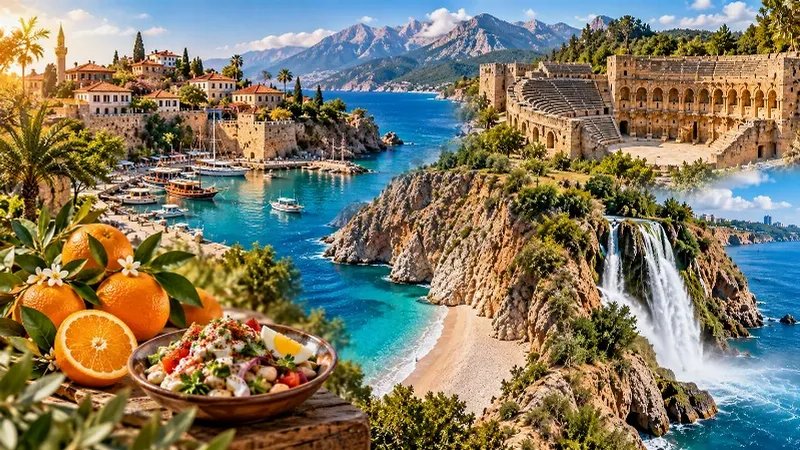
Mediterranean Region
Türkiye's Mediterranean Region combines turquoise coastlines, dramatic mountains, ancient cities and fertile landscapes. From Antalya's beautiful beaches to the historic settlements of the eastern Mediterranean, the region offers a rich blend of natural scenery, cultural heritage and traditional local life.
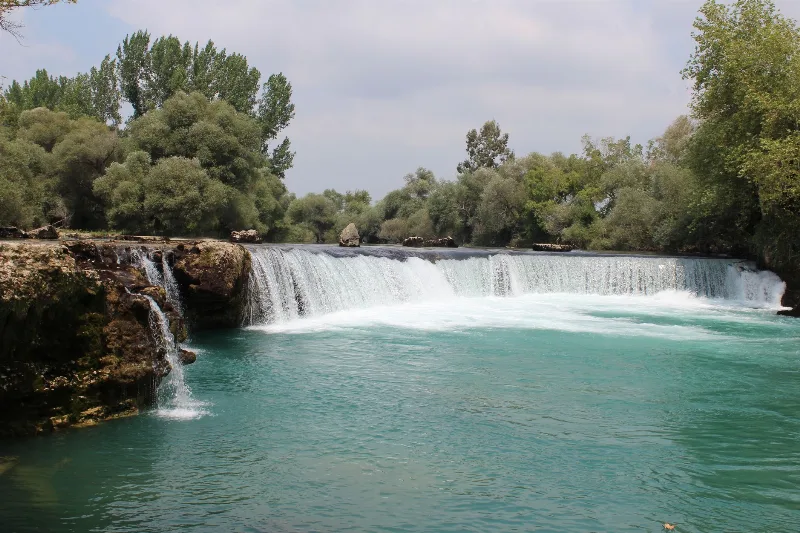
Manavgat Waterfall
Manavgat Waterfall is a broad, low cascade on the spring-fed Manavgat River in Antalya Province, close to the town of Manavgat and the Mediterranean coast. Its defining feature is width and steady water volume rather than height.
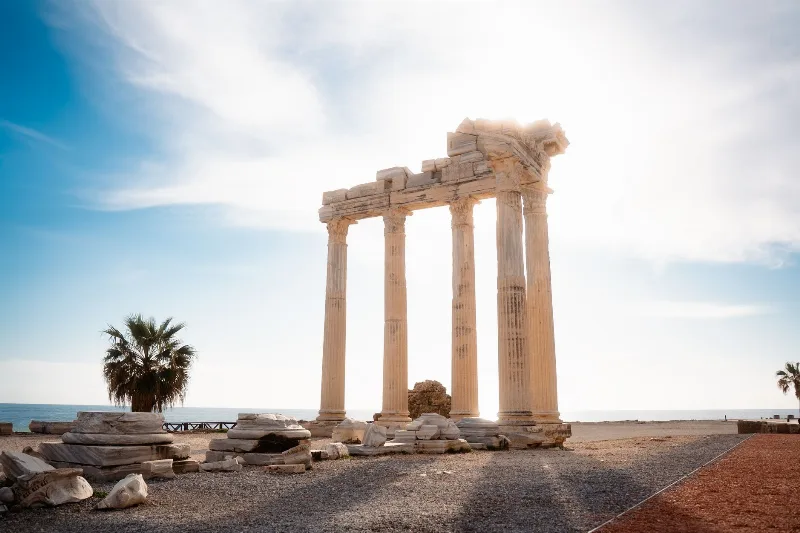
Side
Side is an ancient Greek harbour city on Türkiye's Mediterranean coast, known for the Temple of Apollo, a large Roman theatre and streets of ruins that visitors can still walk through. Its remains sit inside a modern town in the Manavgat district of Antalya Province.